Palace of Mafra
João V's vast Baroque palace-convent with a library guarded by bats

Essential info
Overview
The Palace of Mafra is the largest building in Portugal, a Baroque palace, basilica and Franciscan friary 28 km north-west of Lisbon that João V vowed in 1711 if his queen gave him a child and built with Brazilian gold from 1717 to 1755: a facade 220 m long, some 1,200 rooms, 4,700 doors and windows, 156 staircases, a library of 30,000 books, six organs and two carillons of over 90 bells, the largest historic set in the world. It became a World Heritage site in 2019 and is the setting of José Saramago’s novel Baltasar and Blimunda.
The visit is long: the basilica with its Italian statues and organs, the royal apartments 200 m apart at either end, the hunting trophy room furnished in antlers, the friary’s infirmary and pharmacy, and the library, a long barrel-vaulted hall of Rococo bookcases where a colony of bats is kept to eat the insects that would eat the books.
Visiting
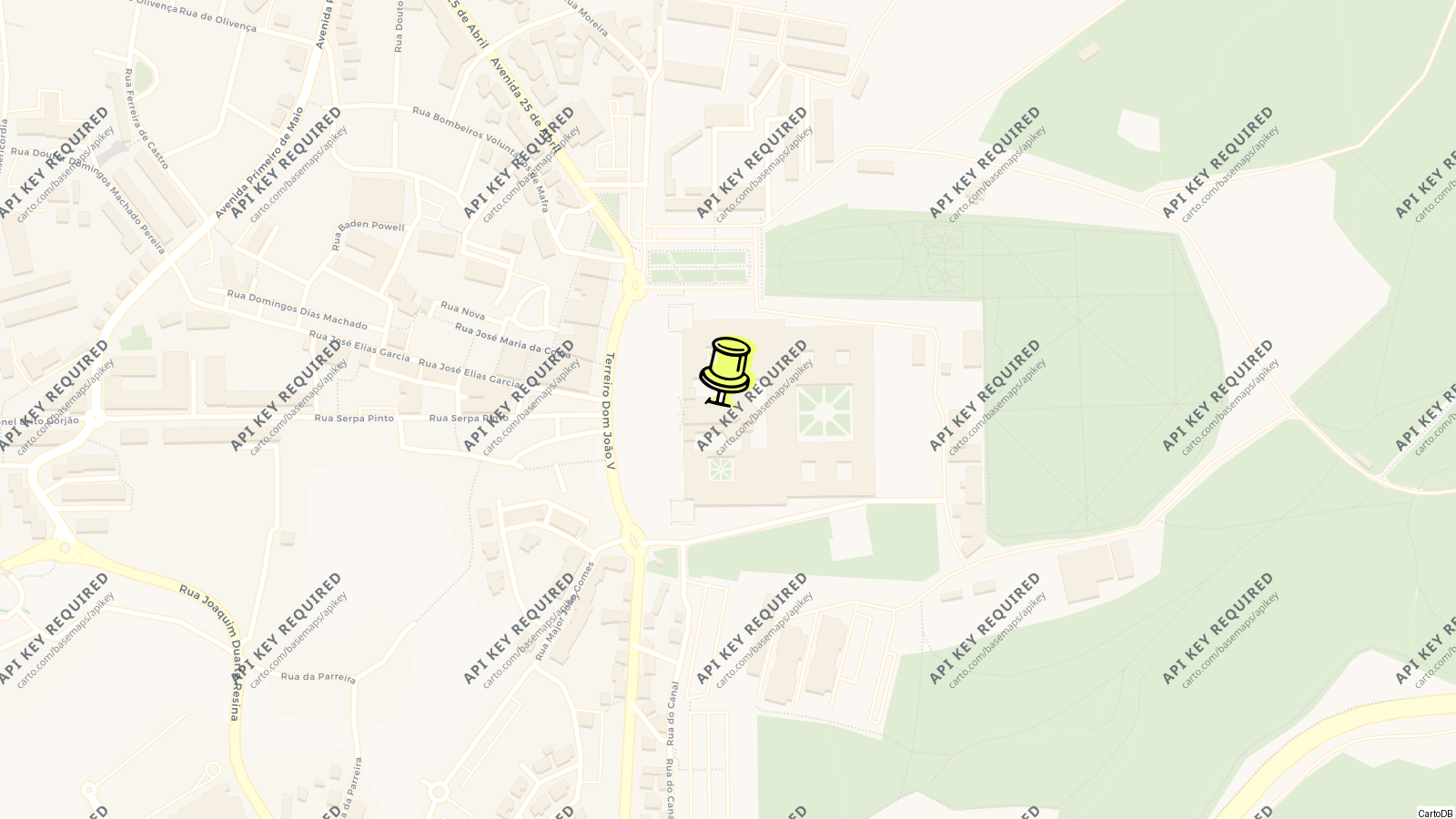
The facade faces the town across a square, in local limestone with a white marble basilica at its centre, flanked by the palace and ended by two towers with bulbous domes; the church towers, 68 m high, hold the carillons cast in Antwerp, whose founders asked to be paid in advance when they saw the size of the order, and the king doubled the fee. Inside the basilica are the Carrara statues, the six organs, restored and played in concert, and the benediction balcony from which João V, not the clergy, intended to bless the crowd.
The palace route runs through the royal apartments on the second floor, the king’s at one end and the queen’s at the other, so far apart that a trumpet announced his approach; the Sala dos Troféus with its deer-skull walls and antler chairs; the throne room, guard room and Diana room with their murals; the Benediction Gallery opening on to the basilica; the friary’s infirmary, where the beds face the altar; and the library, with its 30,000 volumes in marble and exotic woods. The Tapada, the walled hunting park north of the palace, is a separate visit with its deer and wild boar.
History
The vow was fulfilled when the Infanta Barbara was born, and the first stone was laid on 17 November 1717 for a modest friary of 13 Capuchins; as the gold and diamonds of Brazil poured in, João V turned it into a palace and a house for 330 friars under the German architect João Frederico Ludovice, who had trained in Rome. Up to 45,000 workers, with 7,000 soldiers to keep order, laboured for 13 years, 1,383 of them died, and the basilica and friary were inaugurated on the king’s 41st birthday, 22 October 1730, with eight days of festivities; the dome lantern followed in 1735 and work stopped in 1755 when every mason was needed in Lisbon.
The royal family found the rooms gloomy and came mostly to hunt in the Tapada; the regent João lived here for a year in 1807 and fled to Brazil with the best furniture ahead of the French, and Junot took up residence until Wellington drove him out. The Franciscans left in 1834, the friary became a barracks in 1849 and remains army property, and on 5 October 1910 Manuel II left from here for Ericeira and exile. The organs were restored between 1998 and 2010 and won the Europa Nostra award in 2012.
Tips
- Allow three hours for the palace and carry water; the route is over 2 km of corridors and there is no shortcut.
- Carillon and organ concerts are announced on the palace website; the six organs playing together is the event of the year.
- Ericeira, the surf town, is 10 km west and the better lunch; Mafra town is quiet.
- Buses from Lisbon’s Campo Grande take about an hour; there is no train.
Nearby
- Tapada Nacional de Mafra: the hunting park north of the palace.
- Ericeira: 10 km west.
- Sintra: 25 km south.
- Jardim do Cerco: the palace garden beside the friary.
Know this destination? Help us improve
Your local experience is valuable to other travelers.