Seville Cathedral
Inside the world’s largest Gothic cathedral, you’ll find Columbus’s tomb and 80 side chapels packed into 2.4 hectares of Seville’s old town

Visit details
Overview
You walk into Seville Cathedral and realize it’s not just Spain’s largest Gothic building, it’s the size of 2.4 hectares, taking up a chunk of central Seville’s old town. Cathedral, Alcázar and Archivo de Indias have been a joint UNESCO site since 1987, but the Cathedral itself now pulls in over 2.2 million visitors a year (not just tourists from abroad, you’ll see huge groups of Spanish schoolkids and local worshippers mixing in with the tour groups).
General admission to both the Cathedral and the Giralda tower is €13 if you book online, or €14 at the ticket office. Book online, save yourself a euro, and skip the worst of the lines. Most people spend around 75 minutes on the visit but if you’re into details and chapels, you’ll want more. The core hours (except Sunday) are 11:00 to 18:00, double check before coming during Semana Santa or Corpus Christi, because schedules get shifted for those.
This place literally replaced Hagia Sophia as the world’s biggest cathedral when it finished up in the 1500s. When locals say “visit the Cathedral,” it means way more than a quick photo: this is where you’ll find the tomb of Christopher Columbus, the bones of kings like Ferdinand III, about 80 chapels crammed with altars and art, remnants of a 12th-century mosque (the Patio de los Naranjos and the Giralda tower), and a scale that’s just overwhelming. The Giralda, originally a minaret, is 104.5 meters with ramps (not stairs) spiraling up for the climb and a reward of city views at the top.
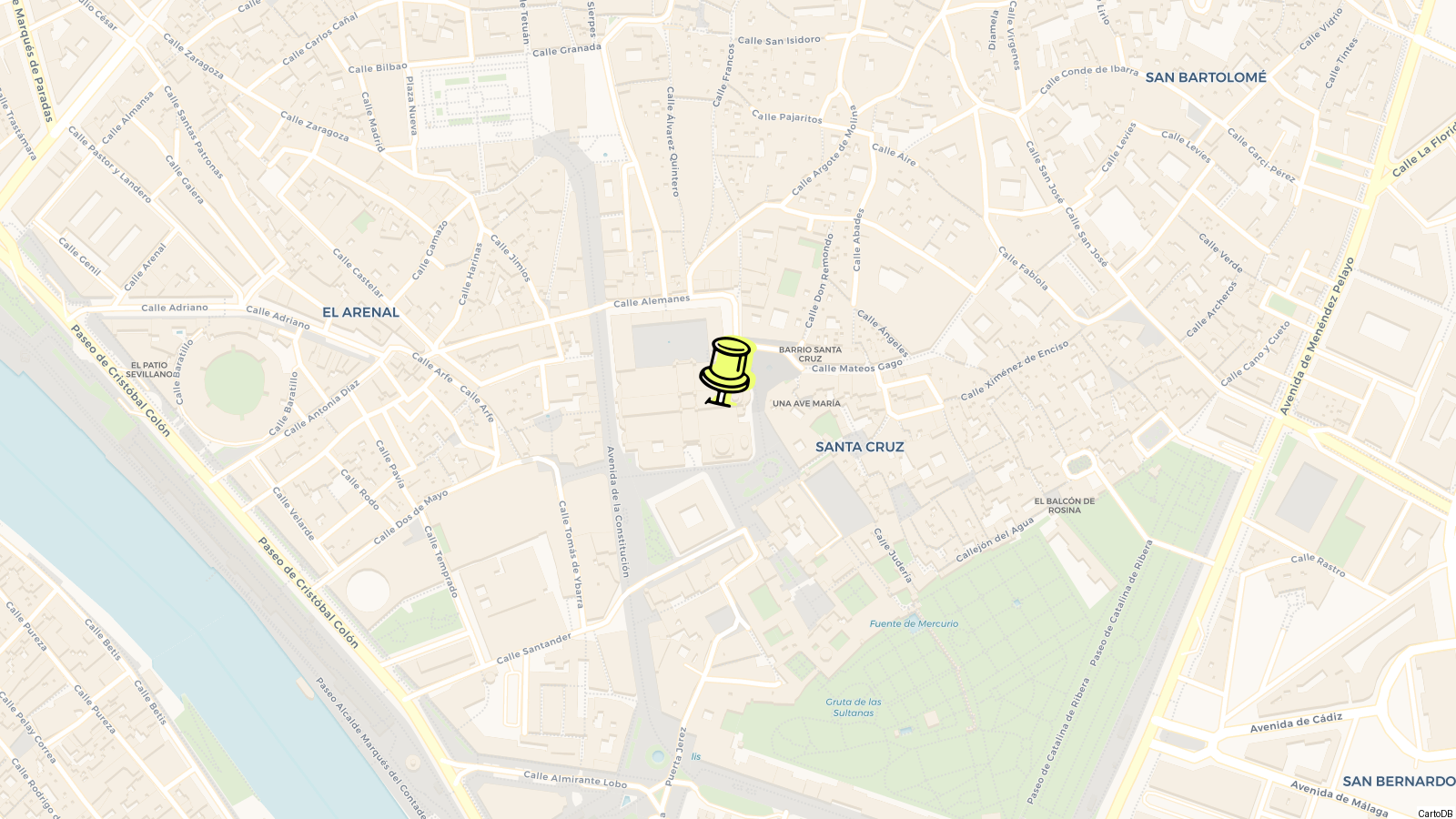
It sits at Avenida de la Constitución, s/n, smack in the Centro district’s Casco Antiguo, so you’ll stumble on it just walking anywhere central in Sevilla. If churches aren’t your thing, you’re still going to appreciate the absurd scale, the mashup of Gothic vaults and Islamic leftovers, and the fact that 500 Masses were once said daily here (that was 1896, don’t worry, it’s quieter now).
How the cathedral fits into the city
You’ll notice the Cathedral forms a triangle with the Alcázar palace and the Archivo de Indias archives, all three count as a single UNESCO-inscribed ensemble. The Cathedral is the anchor: the Alcázar is right next door, and the Archivo is across the street. If you want to see them all, do the Cathedral first (including the Giralda climb), then the Alcázar after lunch when ticket slots open up again.
Visiting quirks
Online booking is always a good idea: official site here. Audio guides run €4-5, but skip unless you want a deep dive. On Sunday afternoons, locals get free access 16:30–18:00 (with online preregistration), so expect crowds and slower lines.
Fatigue and scale
Overwhelm is normal, most first-timers spend ages in the massive central nave and under the organ, then realize they missed the whole right side. The Patio de los Naranjos works as a breather spot (orange trees, original mosque fountain), and leads you towards the Giralda entrance.
History
In 1402, city officials in Seville decided to tear down the old mosque-turned-cathedral and start fresh: their order, according to records, was to build something “so good that none will be its equal.” The bones of the place, though, go back to 1172, when the Almohads started work on a mosque here. The surviving parts of that mosque, the Patio de los Naranjos (still planted with orange trees) and the massive Giralda tower, still define the Cathedral’s footprint.
The mosque opened in 1198, but everything changed in 1248 when Ferdinand III’s army conquered Seville. Suddenly, Muslim Seville was Christian, and the mosque was reworked to serve as a cathedral, walls carved out, chapels added, and orientation changed. You’ll still spot the old horseshoe Door of Forgiveness, leading into the Patio de los Naranjos, complete with original Islamic details.
Full Gothic construction started in the early 1400s. The first stones went in at the northeast corner, and work stretched for over a century, nave begun in 1402, eastern end reached by 1467, choir stalls finished in 1478. The big Gothic lantern dome topped off in 1506. Some things just would not go smoothly: the crossing collapsed in 1511, and again in 1888, always after earthquakes. They rebuilt the dome each time, which is why you can pick out a patchwork of architectural styles: medieval ribs, flamboyant Renaissance, and even patches from restoration campaigns into the 20th century.
Who Built It and How Much Did It Cost?
The Cathedral’s original construction flicked between foreign and local architects. There was a Dutch master named Ysambert in 1434, then Frenchman Carlín, and Juán Normán (possibly Norman), later Simón de Colonia, and finally local architect Alfonso Rodríguez in the 1500s. It didn’t come from royal coffers so much as the canons’ pockets, the cathedral’s own clergy cut their pay in half for years to keep construction moving. Part of why the Cathedral sprawls like it does: old, tight urban blocks choked the work, so they built it in awkward phases and demolished bits of the old mosque as needed.
The Giralda, still the iconic city symbol, started as a minaret designed by Ahmad ben Basso, completed in 1198 with four massive balls of gilded copper at its top. These came down after the 1365 earthquake; in the 16th century, architects like Hernán Ruiz the Younger added a Renaissance belfry with the bronze “El Giraldillo” statue in 1568, supposedly symbolizing the triumph of Christianity.
As for what happened inside: by the late 1800s, the Cathedral was so rammed with priests that more than 500 Masses could be said daily among its 80 chapels. The Royal Chapel, the heart of Seville’s kings, still houses the actual tombs of Ferdinand III (Saint Ferdinand), Alfonso X the Wise, and Peter the Cruel (all Castilian kings). If you want something more global, Christopher Columbus and his son Diego are also buried here, step up close and you’ll see the elaborate tomb carried by four heralds.
There are still traces of the city’s Islamic past blended with centuries of Christian art and architecture. Check the Patio de los Naranjos (the original ablution courtyard from the mosque’s heyday) or peer up at the Giralda’s lower brickwork with its diamond reliefs and pointed horseshoe arches, direct echoes of North Africa.
The cathedral’s evolution didn’t really stop with its “completion” in 1519. Prosperity kept bringing new projects: the ornate Renaissance Chapterhouse was added by 1593, the Capilla Real finished in 1575, and the swirling Baroque details that now fill the sacristy crept in during later centuries.
Construction Timeline Highlights
- 1172: Almohad mosque started
- 1198: Mosque completed
- 1248: Mosque Christianized after Ferdinand III’s conquest
- 1402: Gothic nave begun
- 1432: Nave completed, moved on to east end
- 1466: Royal Chapel demolished to make way for more construction
- 1467: East end done, Gothic vaults go up
- 1482–1526: Enrique Alemán and others work on the vast wood-and-gold main altarpiece (retablo), which claims to be the largest in Christendom
- 1506: Main dome finished (then collapsed in 1511, fixed by 1519)
- 1551–1593: Chapterhouse and Capilla Real built
- 1888: Earthquake collapse forces major rebuild
Doors turned into local shrines: Puerta del Perdón kept its original Islamic horseshoe arch, while Puerta de San Miguel still hosts the Holy Week pasos. The best visual clue that the place grew over centuries: every façade looks slightly different, from the late-Gothic and Renaissance north and west fronts, to the more plain east and south sides. Glasswork is another clue: the best windows went in after 1478, done by Enrique Alemán (German, not Spanish), whose signature you can spot in stone.
Not everything survived. The 1888 earthquake destroyed cabinets, altars, and the original 1700s organs, which were only replaced in the early 20th century. The modern organs, the four-manual beast you see today, were refitted for electric operation in 1973 and overhauled in the 1990s.
The cathedral, the Alcázar, and the Archivo de Indias were inscribed as a joint UNESCO site in 1987 with reference number 383‑001, each a property in the set. The cathedral remains a key civic symbol and a working church, still holding major Masses and festivals, and drawing millions,2,274,518 visitors in a typical recent year.
Visiting
You enter through the Puerta de la Asunción on Avenida de la Constitución, unless you have a special booking (tours sometimes use different doors). General admission is €13 online, €14 at the ticket office, which covers both the Cathedral and the Giralda tower. There are discounts for students under 25 and seniors 65+ (€7 online, €8 in person), and children under 13 enter free. Buy your ticket from the official site, it’s €1 cheaper and you skip the ticket office line.
Weekday visiting hours are 11:00–18:00 (last admission at 17:00, though staff start clearing the place out by 17:40). Sundays, don’t even bother until after lunch: doors open at 14:30 and close at 19:00 (last entry 18:00). Mass times and holy days can affect these, especially during Semana Santa and Corpus Christi, double-check the agenda if you’re in town at those times.
Once inside, you’ll see the nave first. The choir sits right in the middle, no sneaking a 360° view, you have to loop around. Look for the Capilla Mayor, with its wild, gold-clad altarpiece behind the main altar. The side chapels start here and continue along the aisles; keep an eye out for number markers and the big Royal Chapel (Capilla Real).
You’re really here to see two things up close: the tomb of Christopher Columbus and the main Retablo Mayor. The tomb sits to the left as you face the altar, Columbus is hoisted by heralds representing Castile, León, Aragon, and Navarre. (If you expected sober or simple, this is neither.) The Retablo Mayor, biggest altarpiece you’ll ever see, is a wall of gold-leafed scenes, finished in the 1500s.
The side chapels are a maze, there are 80 of them. Most visitors miss the Chapel of St. Anthony (Capilla de San Antonio), which has Murillo’s “The Vision of St. Anthony”, that’s the painting stolen in 1874, then returned after someone tried to pawn the missing bit in New York. If you like out-of-the-way oddities, look for the Puerta del Lagarto (Lizard’s Gate), which leads to the Patio de los Naranjos and has a stuffed crocodile hanging overhead.
The Patio de los Naranjos is a quiet place to regroup if the crowds are heavy, and shows off the mosque origins of the complex. You’ll walk through it on the way to the Giralda tower.
The Giralda is included in your ticket. Don’t expect stairs: the 35 ramps to the top were built so the muezzin could ride up on horseback. No shade, no places to rest, but the only “step” is right at the belfry at the very top. The view is the best in the city. If there’s a queue at the base, wait times are shorter after 4pm. The ascent is gradual but there’s no elevator, so anyone with mobility issues will have a hard time.
A typical visit lasts about 75 minutes. Audio guides are €4 via app or €5 for a physical handset, paid separately. You can try one of the guided tours (€20–21) if you’re into details, but most people go self-guided.
If you’re coming with a wheelchair or stroller, the Cathedral’s main floor is accessible, but not the Giralda. Staff are helpful at the entrance and there are accessible bathrooms.
Lockers are available next to the entrance, but skip bringing a big backpack, they’ll make you check it. Photos are allowed except during Mass in active chapels or when events are going on.
Quick step-by-step
- Buy ticket online and skip the queue.
- Arrive via Avenida de la Constitución, main entrance.
- See main nave, Capilla Mayor, Columbus’s tomb.
- Wander side chapels (peek into Capilla de San Antonio and Capilla Real).
- Cross to the Patio de los Naranjos.
- Climb the Giralda tower for the view.
- Return through the patio to the exit, or browse the shop/café by the gate.
You can exit back onto Avenida de la Constitución, a short walk from tram and bus stops, or blend back into local crowds on Calle Alemanes.
Tips
-
Buy your ticket online at the official site; it’s €13 instead of €14 at the door, and you’ll skip the main queue. Guided tours cost €20 online (€21 at the ticket office). Basic audio guides add €5 (device) or €4 (app download) at the entrance desk.
-
You can visit for free on Sundays between 16:30 and 18:00, but only with a spot booked in advance online. These go quickly, book at least a week before.
-
Weekends and Spanish holidays are packed, especially spring (March–June) and autumn (September–October). If you don’t like crowds, show up just after lunch (14:30-15:00) or toward the end of the last admission slot, Sundays after 17:00 are often better.
-
Last admission is always one hour before closing (so, 17:00 Mon–Sat, 18:00 Sun). They start clearing people out about 20–30 minutes before official closing, so don’t cut it too close.
-
Dress code: officially, “modest attire” (shoulders and knees covered) is required, but enforcement is inconsistent. You can’t climb the Giralda barefoot, in swimwear, or with large luggage.
-
The climb up the Giralda is ramps, not stairs, manageable for most people, but be prepared for a steady uphill walk. There are resting spots along the way.
-
Give yourself about 75 minutes to see both the interior and the Giralda tower at a relaxed pace (not including ticket queues).
Navigating the Cathedral
Once inside, grab a free printed map by the ticket check. Chapel numbers aren’t always visible, don’t stress, just follow the crowd for the main altarpiece and royal tombs. Murillo’s “Vision of St. Anthony” is in the Chapel of St. Anthony, on the left as you face the altar.
Special Closures
Watch out for special closures during Semana Santa and Corpus Christi; these can affect both hours and access routes. Schedules are posted on their agenda.
Free entry quirks
Sunday free entry isn’t advertised outside; explain at the desk that you reserved online (“tengo reserva gratuita para el domingo”) and bring your email confirmation.
-
Photos are allowed (no flash), but not during Mass or in smaller chapels if signage says otherwise.
-
Bags are checked at security. Large backpacks, umbrellas, and suitcases must be checked in a cloakroom.
-
The official address is Avenida de la Constitución s/n, 41001 Sevilla. The closest tram stop is “Archivo de Indias”; several TUSSAM buses stop within 200m.
-
There are no toilets inside the main nave. Use facilities in the cloister area before you begin.
Know this destination? Help us improve
Your local experience is valuable to other travelers.