Murcia's Cathedral
Murcia’s Cathedral mixes Gothic spires with a 93-meter Baroque bell tower, and you can still spot Islamic arches from its days as a mosque.

Visit details
Overview
The cathedral in Murcia opens to visitors Tuesday through Saturday, 10:45 to 17:00, with tickets costing €6 for adults as of early 2026. This is not some mass-produced Spanish Gothic; the building started as a mosque, and then construction began in 1385, stone by stone, continuing for four centuries until its Baroque façade was completed in the 18th century. You spot that variety immediately: step in from Plaza Cardenal Belluga and start in the shadow of Jaime Bort y Meliá’s monumental baroque entrance, but find yourself winding through dark, spiky Gothic, Renaissance, and even neoclassical elements as you move through the naves.
The Gothic cloister, now a cathedral art museum, is the oldest part and sits directly atop the old mosque’s prayer grounds. The inside is worth pausing over: three naves, a forest of chapels devoted to centuries’ worth of noble families, and a main altar that literally hides a royal secret, King Alfonso X’s heart and entrails are buried right beneath your feet.
Climbing the tower (ticketed separately, often as a combo with the museum for €12) gets you the best views over Murcia and the Segura valley. The bells up there aren’t just for show; La Campana Mora, the oldest, now sits in the museum, but “La Catalana” and “La Fuensanta” still mark celebrations and floods.
You’ll see people darting in just for mass, services run daily, but cultural visiting hours don’t coincide, so check before planning your visit if you want a proper look around. No photography with flash, no video, no food or drink inside; this isn’t a selfie-factory.
What you’re looking at
Stop at the Vélez Chapel and look up: the ten-pointed star vault is pure late Gothic drama. The Merklin-Schütze organ, installed after the catastrophic fire of 1854, boasts nearly 4,000 pipes and occasionally gets used for concerts. Every nook, from Plateresque choir stalls donated by Queen Isabel II to the Apostles’ Door adorned with 15th-century sculptures, layers on centuries of local pride and taste changes.
Local tip
If you’re in Murcia during the Feria (early September), the cathedral’s role is even bigger, it’s the ritual home for the Virgen de la Fuensanta, who is brought in by crowd-heavy procession and honored with a week-long Novenario, so crowds, special masses, and altered visiting hours ramp up around then.
History
Construction of Murcia Cathedral didn’t even start until 1385, over a century after the city was conquered from Muslim rule and its mosque was claimed for Christianity. The first stone went down in 1388, and the main building wasn’t finished until 1467. But they kept tweaking things for centuries. Walk around the outside and you’ll see how styles pile up: the west façade is Baroque (designed by Jaime Bort y Meliá in the 18th century), but step inside and you hit pure Gothic, especially in the high vaults and the cloister.
The site itself is layered. The current cathedral sits directly on top of the Muslim city’s main mosque, which itself had only stood for three centuries. So when you see the slightly odd orientation of the main nave compared to the street grid, that’s why: they literally built the altar where the prayer hall once was.
Alfonso X el Sabio, one of the most important Castilian kings of the 13th century, is physically part of the cathedral, at least, his organs are. By his own will, his heart and entrails are buried beneath the high altar as a thank-you to the city for its loyalty. You won’t find this marked with anything flashy, but locals like to point to the floor and say, “the king’s here.”
After the basic Gothic shell was complete, new chapels kept being added for another two hundred years. The Capilla de los Vélez, with its flamboyant flaming Gothic vault, is from the late 15th century and sticks out for its weirdly star-shaped dome. Next to it, the Capilla de los Junterones is pure Spanish Renaissance: lots of carved stone, sharp corners, all built as family mausoleums by Murcia’s big-shot nobility.
The bell tower went up in stages from 1521 to 1791 and mashed together Renaissance, Baroque, and Neoclassical styles. It has five stacked levels and was meant to dominate the city skyline, locals will tell you it used to literally serve as Murcia’s flood alarm. Whenever the Segura River threatened to burst, the “Campana de las Espantás” was rung to warn the population. These bells all have names, La Catalana, La Fuensanta, La Campana Mora (the latter now retired in the Cathedral Museum).
The cathedral took several major hits in modern times, especially in the fire of 1854. That blaze destroyed the main altar and most of the choir stalls. The city commissioned a giant organ from Merklin-Schütze (Belgian pipe organ builders), and installed nearly 4,000 pipes, most of what you see dominating the choir is from that massive 19th-century repair job.
There are Gothic side doors, a Renaissance portal, and Baroque additions everywhere. The main entrance, on Plaza del Cardenal Belluga, is the most photographed: wait there at 2pm and you’ll see tourists and locals in equal numbers, most looking up in confusion at all the architectural mashup on display.
Digging Deeper: Muslim Origins and the Reconquista Swap
When Christians took Murcia back in the mid-1200s, they often reused existing mosques as “starter” cathedrals. Here the main mosque (Aljama) was immediately consecrated, keeping much of the original structure in use during the city’s first century under Christian control. That remained the status quo until Murcia started booming after its integration with Castile and the church had the funds to start from scratch.
The Evolution in Styles
You can see exactly which century you’re standing in depending on where you look:
- 14th-15th centuries: Gothic bones, especially in the nave and original cloister.
- Late 15th: Capilla de los Vélez (look for the ten-pointed star dome).
- 16th: Big expansion, with Renaissance elements and noble chapels.
- 18th: Baroque bombast on the façade, led by Jaime Bort y Meliá.
- 19th: Post-fire neo-Gothic high altar and organ installation.
Cathedral’s Role in Daily Life
Centuries ago, most of Murcia’s civic announcements were made at the cathedral steps. Major local holidays still revolve around this building, from the arrival and departure of the Virgen de la Fuensanta (the city’s patroness) to processions that spill out from the naves every Easter and September.
Visiting
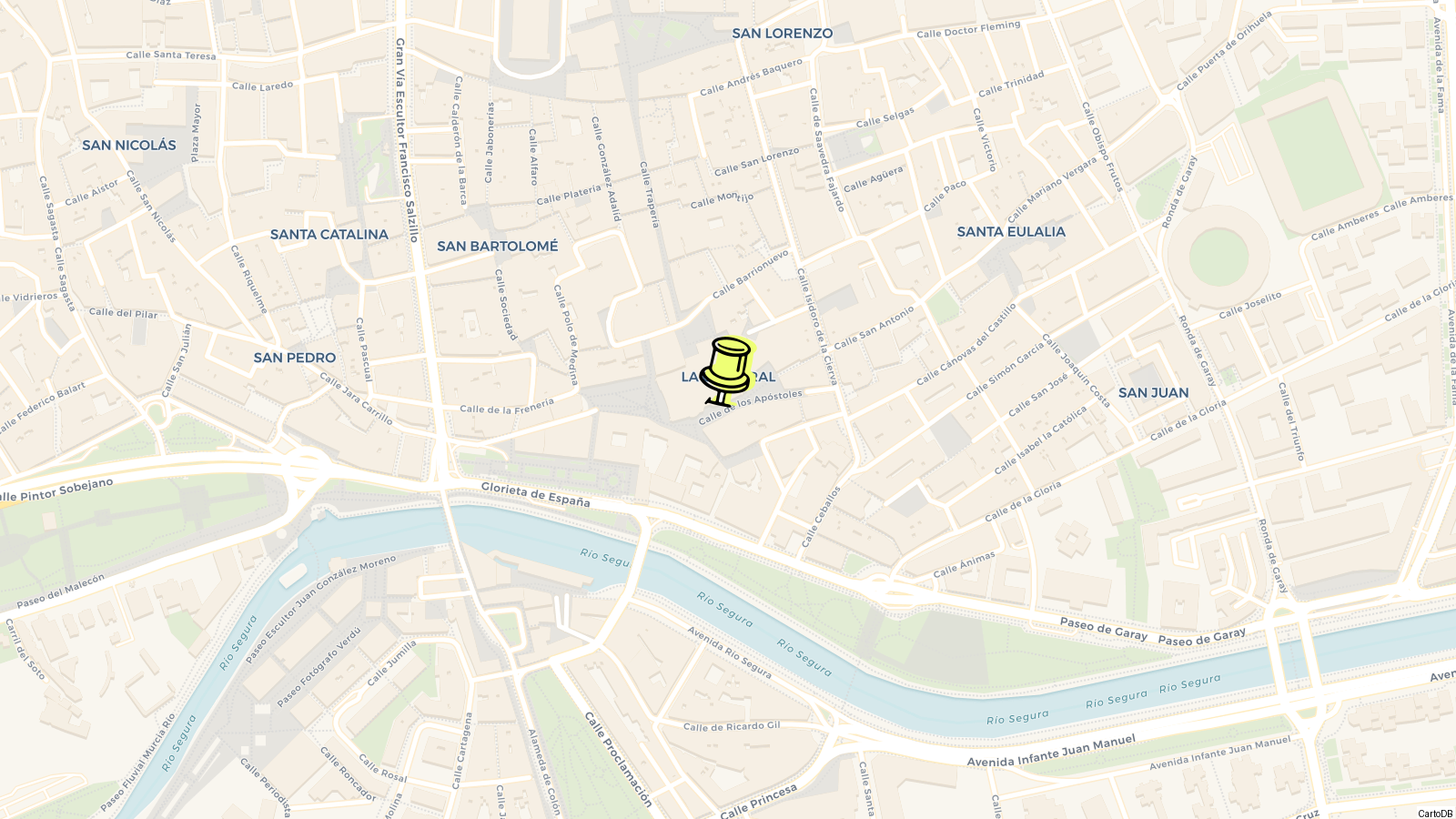
Entrance is through Plaza Cardenal Belluga 1, right in the city center, usually a mess of people and photographers pointing their phones at the baroque façade. Inside, you’ll need a ticket: €6 for adults, €5 for discounted rates (children 5–16, pensioners, unemployed, disabled, groups of 20+). Under-5s, clergy, or Murcia residents with ID get in free, but only for the cathedral proper.
Once inside, you’re in the middle nave. It’s mostly dim, look up for the trunk-like Gothic columns and the rib-vaulted ceiling. The chapels off the sides are a grab bag: some are locked, others open on a rolling schedule. The main showpieces are the Capilla de los Vélez (apparent from its star-shaped Gothic dome), Capilla de Junterones (all Renaissance marble and intarsia work), and the main altar (where King Alfonso X’s heart and entrails are literally buried, makes the mind wander).
The cloister museum is tucked behind the nave, and it’s worth the basic detour. This is the oldest part of the whole building, mostly untouched since the 1300s. Inside are vestments, medieval carvings, and the Campana Mora, the oldest bell, now retired from the tower. The full cloister + tower visit is a separate ticket, €12 for adults.
If you’re even remotely interested in organs, the Merklin-Schütze pipe organ is a beast. Nearly 4,000 pipes, it fills one wall behind 16th-century plateresque choir stalls originally donated by Queen Isabel II. It sometimes gets played for concerts or special masses, though you’ll only hear it by luck.
Climbing the campanile (bell tower) is the other big reason to stick around. It’s 90 meters up, a slow spiral climb with regular stops for knees and air. Not for you if stairs, vertigo, or claustrophobia are issues; there’s no lift and no exit until the descent. The tours are Spanish-only, but even if you don’t catch most of the talk, the city and valley views are the point. You’ll see some of the 25 named bells, though the Campana Mora is now in the museum.
Bell Tower Details
The climb is guided and happens at set times, buy tickets at least 30 minutes in advance at the ticket office or official website (catedralmurcia.org). The route includes stops on several levels: the conjuratory (where priests once did storm rituals), the bell chamber, and finally the viewing terrace. It’s a bit under 300 steps. Group sizes are usually 15-20. If you want photos without crowds, aim for the earliest slot.
You can spend between 45 minutes (just the interior) and almost two hours (full museum + tower package), depending on your energy and interest.
Cultural visiting hours are Tuesday to Saturday, 10:45 to 17:00, last entry about 16:00 at the latest. On Sundays and Mondays, the place is mainly for worship, tourist entry is either closed or very limited, and masses run throughout the day (7:30 am, 10, 12, and 8:30 pm on Sundays; fewer on weekdays).
Guided tours are usually only in Spanish. There are printed brochures in English and other languages at the ticket desk.
If you’re timing your visit for early September, the Virgen de la Fuensanta arrives with a late-night procession on September 4th for Murcia Fair. The cathedral will be extra busy that week, with a constant stream of locals coming to see the statue and major events during the Solemn Novenario (September 6–15); expect crowds and some areas closed off.
Getting There and Nearby
The cathedral is a 10-minute walk from Murcia’s old Mercadillo de Verónicas market and the Segura river promenade. Public buses stop on Gran Vía, less than 5 minutes away. If you’re driving, parking is tough, underground garages like Glorieta de España are convenient but tend to fill up fast.
Accessibility
Wheelchair access covers the main nave and cloister, but the tower is absolutely not accessible. Seating is limited, but there are some benches along the side chapels for breaks.
Tips
- Arrive early if you want photos without huge crowds. Right after doors open (10:45) you’ll get fewer tour groups piling in.
- The bell tower climb is only for the seriously able-bodied; it’s a lot of spiral stairs, hot, and has no lift. Don’t even try it if you’ve got knee, heart, or breathing issues, or hate tight spaces.
- Tuesday to Saturday, last entry is one hour before closing (so 16:00 sharp). Don’t cut it fine, the staff are strict about kicking people out on time.
- Expect everything (tickets, guided tours, signs) to be in Spanish by default. There are basic brochures in English, but the guided tours are not adapted.
- Flash photography, filming, selfie sticks, food, and drink are all banned inside. If the staff catch you, they’ll tell you off or even ask you to leave.
- If you’re on a tight budget, skip the tower and museum: the extra cost nearly doubles the ticket, but the main church already covers most of the wow factor.
- The building is not air conditioned, and in summer it’s an oven from midday, morning visits are cooler.
- Locals go to mass at 7:15, noon, or 20:30. Those times are only for worship, not “just looking,” so plan your entry for visiting hours if you want to move around freely.
- If you’re a resident of Murcia (bring your DNI), clergy, or have a small child (0–4), you get in free to the main church.
- Ticket office and entrance are at Plaza Cardenal Belluga 1, right in the old quarter. The south façade is the “postcard” spot, but the real action is inside at the Vélez and Junterones chapels.
- Plan for just over an hour to see everything comfortably, but add 45 minutes if you’re climbing the tower.
- Annual festival surge: from about September 4–15, the cathedral fills up for the Feria, so lines are longer and some areas may close for ceremonies.
Know this destination? Help us improve
Your local experience is valuable to other travelers.