Reales Alcázares
Over 2 million people a year wander through rooms where Game of Thrones scenes were filmed and orange blossoms scent the air.

Essential info
Visit details
Overview
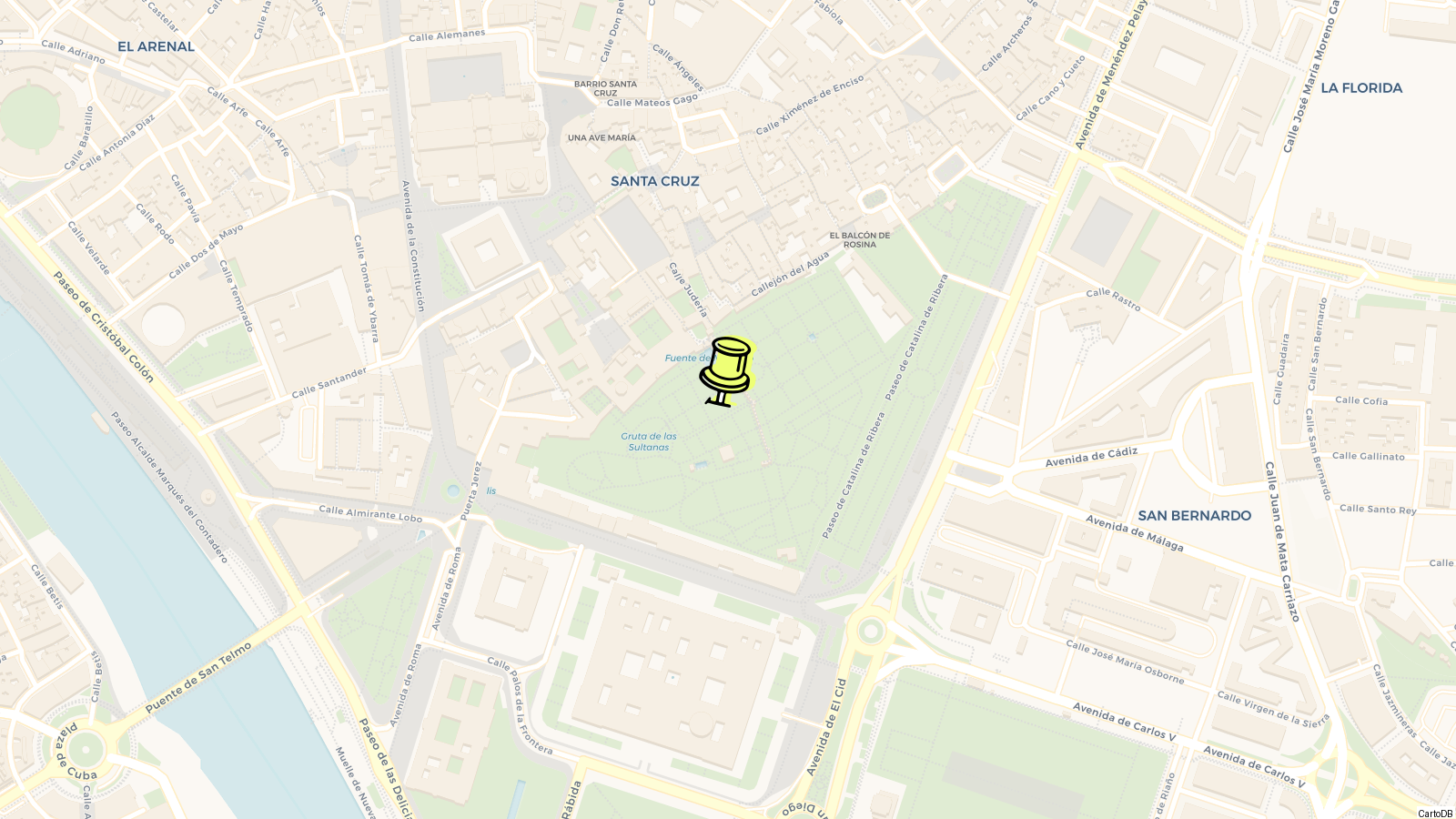
The Reales Alcázares sits right in the center of Seville, on Patio de Banderas, and pulls over 2.1 million visitors a year, more than any other monument in the city. It’s a palace complex that mixes Islamic, Mudéjar, Gothic, and Renaissance architecture, with buildings and gardens stretching over 9.8 hectares. This isn’t some fossilized ruin: the Spanish royal family still sleeps upstairs when they’re in town, and you’ll spot guards that look like they mean business.
Inside, there’s nothing subtle, blinding azulejo tiles, ceilings that play optical tricks, courtyards lined with orange trees, and gardens that go on forever. Every part shows off a different era: the oldest surviving walls date back to around 1090, from the Taifa period, while the Palacio de Pedro I was built in 1366 by bricklayers and artisans shipped in from Granada, Toledo, and Seville. The result is a mashup where a massive horseshoe arch will be a few steps from a Renaissance tiled room or a Baroque fountain.
Want numbers? General admission costs €13.50 for adults, with an extra €5.50 if you want to peek into the Royal Bedroom upstairs. Kids under 13 and residents of Seville get in free with ID.
If you get excited about Game of Thrones: scenes from Dorne were filmed in the palace gardens, but the real-life drama is even better. Emperor Charles I and Isabella of Portugal held their 1526 wedding in the Hall of Ambassadors, a room that’s all gold and geometry and impossible to photograph well. Unlike the Alhambra in Granada, tickets rarely sell out months in advance, but online booking is a lifesaver, lines for same-day tickets often start before sunrise in high season.
The Alcázar is a UNESCO World Heritage Site, grouped with Seville Cathedral and the nearby Archivo de Indias. It’s one of those rare places that earns the hype, especially if you ignore the crowds and sneak off into the gardens. In December, locals queue here for free mantecados and polvorones from Estepa (seriously, bring a bag). In summer, plan for heat: Seville’s 36 °C July–August averages mean most shade is occupied.
Why the Alcázar still fills up
The Alcázar isn’t just old, it’s lived in, a patchwork of 11th-century Islamic walls, Gothic palace vaults from the mid-1200s, Pedro I’s wild Mudéjar halls (mid-1300s), plus Renaissance, Mannerist, and even 17th-century tweaks. That means you swing from Moorish arches in the Patio del Yeso to Gothic ribbed cisterns (Baños de Doña María de Padilla) to gardens constantly re-shaped for royal weddings or Italian trends.
Every Spanish king since the 1200s left fingerprints here. Not a static museum, more an ever-changing labyrinth with something fresh being uncovered or renovated each decade. (The Patio de las Doncellas’ sunken garden was buried under marble for 400 years, dug up and restored only in the 2000s.) Even if you’ve seen other palaces, the Alcázar’s mix of living history and today’s security cordons is tough to match.
History
Pedro I started building his new palace at the Reales Alcázares in 1356, but the site is much older. The oldest surviving walls go back to the late Taifa or early Almoravid period, roughly 1090 ± 40 years, the time when Seville was an independent Muslim-ruled city before the Almohads took over and turned it into their main base in al-Andalus. The Abbadid dynasty then expanded the palace south and east, building the Al-Mubarak palace right under what’s now the Patio de la Montería. The Almohads (mid-12th century) nearly doubled the complex, adding nine palaces and broad gardens, parts of which still lurk under the current courtyards. If you glimpse the Patio del Yeso or the Palacio del Yeso, you’re staring at construction from that period, their plasterwork and arches are pretty much the last visible remains of the original Islamic palaces.
When Ferdinand III’s troops took Seville in 1248, the Christians didn’t raze everything, but they seriously changed the place by layering on their own priorities. Alfonso X (mid-13th century) wanted a new Gothic palace. Only fragments of it survived, Sala de las Bóvedas with its vaults and the Baños de María de Padilla hidden beneath the Patio del Crucero.
Alfonso XI left his mark in 1340 with the mudéjar Hall of Justice, decorated after the taste of the Moorish artisans who were still the best craftsmen around. The next big wave happened under Pedro I, ‘the Cruel’ (or ‘the Just,’ depending who you ask). Between 1356 and 1366, he called in artisans from Seville, Toledo, and Granada to build a palace so ornate it still makes visitors double-take, look closely and you’ll see Arabic script calling him “Sultan Don Pedro.” Pedro’s Mudéjar Palace gives you the Patio de las Doncellas, the Hall of Ambassadors with its wooden dome, and walls sheathed in geometric tilework and calligraphy. It was a “collaboration” with Granada’s Nasrid court, so there’s plenty of Alhambra DNA here.
Pedro’s palace building was as much politics as taste. His alliances with Granada’s Muslim kings and his rivalry with local Castilian nobles are literally built into the walls. The fusion of Christian symbols and Arabic motifs wasn’t just decoration, the inscriptions and designs signal a ruler straddling both worlds. The Patio de las Doncellas is especially loaded: on the lower level, pure mudéjar; upstairs, the Renaissance work by Charles V’s architects from the 1500s, mixing in a very different vibe. In excavations between 2002-2005, archaeologists pulled up the marble floor and found the original sunken garden and reflecting pool from 1366 almost entirely intact, confirming that Pedro’s version lay buried for centuries by later modifications.
Over the centuries, kings kept using and upgrading the Alcázar. Catholic Monarchs Ferdinand and Isabella added upper floors, some still off-limits, since they’re where the Spanish royal family sleeps when in Sevilla. When Charles I (also the Holy Roman Emperor Charles V) married Isabella of Portugal here in 1526, the walls literally changed again: his wedding meant new gardens, galleries, and a flair for Renaissance touches. The Jardín de las Damas dates exactly from that wedding.
Earthquakes did their part too. The big one in 1755 (the same that flattened Lisbon) wrecked sections of the Gothic palace, so what you see now is more of a patchwork than a time capsule. Italian architect Vermondo Resta left his stamp in the early 1600s, especially in the Galería de Grutesco, the long elevated gallery overlooking the gardens.
The Reales Alcázares didn’t become a public monument overnight. For most of its history, it was a working palace or military fortress, then gradually turned into a ceremonial site. Public events (including theater) went on in the courtyards, they even ran a full theater, the Corral de Montería, here until a fire in 1691. The tile lion on the Puerta del León that marks the main entrance today dates only to 1892, made in Triana by Manuel Tortosa y Fernández. For a while, this spot was informally called the Gate of the Hunt, since kings and their retinues passed through on the way out to the countryside.
In the 20th century, the Alcázar went through cycles of neglect and restoration, but starting in the 1970s it became one of Spain’s most heavily protected historic sites. In 1987, UNESCO added it to the World Heritage roster, bundled with the Sevilla Cathedral and the Archivo de Indias. Visits soared after film and TV shoots (including “Lawrence of Arabia,” “Kingdom of Heaven,” and “Game of Thrones”) but palace life goes on, the upper floors and some gardens still close when royals come to town.
Walking the Alcázar now, you’re seeing pieces from nearly every period of Andalusian history, but very little is exactly as its builders intended. Layers pile up: Almohad foundations under the Patio de la Montería, Christian Gothic vaults under Mudéjar ceilings, Renaissance tile, 19th-century reconstructions, 21st-century archaeological dig sites. The main loop most visitors follow (Gate of the Lion → Hall of Justice → Patio del Yeso → Peter I’s Palace → Charles V’s rooms → gardens) is a lesson in how rulers rewrite not only the city’s story, but its actual walls.
Small details tell their own tales. There’s an organ fountain in the Jardín de las Damas that plays music using water and air pressure, still working today. Tile inscriptions mix Castilian and Arabic. The lion that greets you over the entrance holds both a crucifix and a banner, a not-so-subtle attempt at blending power symbols from both worlds.
The Alcázar’s role has always been more than just a royal residence. It controlled access to Sevilla’s port and later served as nerve center for the House of Trade (Casa de la Contratación), the admin that controlled all trade with the Americas from the 1500s. If you want to stand where news of the New World first reached Europe, you’re in the right building.
Nothing in the Alcázar stands still, every century leaves its mark, and the patchwork you see is half accident, half performance. If anything, the surprise is how much survives from a site that’s been refashioned by almost every regime to claim power in southern Spain.
Visiting
Buy your ticket online in advance at alcazar.heriobbdev.es and do not wait until the day of your visit, lines for day-of tickets can begin at 6 AM in peak months, and last-minute entry is never guaranteed. The main entrance is the Puerta del León (Lion Gate) on Patio de Banderas, right by the Archivo de Indias T1 tram stop.
Inside, you move through a set route (though there’s no enforced single path): after you clear security, you’ll cross the Patio del León, a rectangle with benches and the tiled mural of the lion above the gate. Next is the Patio de la Montería, a broad courtyard where you get your first view of the palace’s ornate Mudéjar façade.
The usual route continues into the Palacio de Pedro I, with its patterned tiles and carved wood. You’ll see the Patio de las Doncellas (Courtyard of the Maidens), often mobbed since the days of Game of Thrones filming. The reflecting pool is original (14th century) but the sunken garden you see now was only uncovered again in the 2000s. Look for Arabic inscriptions calling Pedro I “Sultan Don Bidru”, that detail tends to get missed by groups racing through with a guide.
Next: the Salón de Embajadores (Hall of Ambassadors). The gilded dome is the architectural highlight. This is where Charles I married Isabella of Portugal in 1526, stand under the center and look up for the best effect. Access to the upper-floor Royal Bedroom (Cuarto Real Alto) requires a separate timed ticket (€5.50) and tight security, no photos, small groups only, guards shepherding you through rooms with original tapestries and oil paintings.
The Palacio Gótico is colder and starker: expect big vaulted halls (the Sala de las Bóvedas and Tapestries Room) rather than the tile and stucco of the Mudéjar wing. The Baños de Doña María de Padilla is down a staircase in the basement, photogenic on a hot summer day but always slightly damp.
You exit to the gardens, most people angle straight to the Estanque de Mercurio, with its 16th-century statue of Mercury and the Galería de Grutesco, a raised walkway along a mannerist wall for garden views. Further in lie the Jardín de las Damas (with its water-powered ‘Fountain of Fame’ that actually plays musical notes) and secluded spots like the Jardín Inglés. Peacocks patrol the lawns. If you’re visiting around Christmas, free mantecados (shortbread) and polvorones from Estepa are sometimes handed out at garden kiosks.
The main visit runs 2–3 hours at a comfortable pace, but you can spend longer if you linger in the gardens.
The full garden circuit
After the Estanque de Mercurio, follow signs for the Labyrinth (Jardín de Troya), a small but real hedge maze. Push on to the Dance Garden, the English Garden (not very English, but quieter than central sections), and the Pabellón de Carlos V, tiled floor and vaulted ceiling included. The Galería de Grutesco gives the only elevated panoramic of the gardens, you get the best photos from this walkway, especially late afternoon when the shadows get long.
On some evenings (October to mid-March in recent years), the gardens host an illuminated light-and-sound show (“Naturaleza Encendida - Arras”), separate ticket required, entry slots every 15 minutes from 19:00 and capped at 200 people each. Expect higher than usual crowds if you’re aiming for those hours.
Prices, hours, and practicalities
General admission is €13.50 for adults (book online, or risk hours in line if you try the ticket window). EU students 14–30 and seniors over 65 pay €6 with valid ID. Under-13s, residents of Seville, and people with disabilities enter free, but you’ll need proof. Add €5.50 if you want to see the Royal Bedroom on the upper floor. Entry is timed but they’re pretty forgiving if you arrive up to 30 min late, unless it’s the Royal Bedroom slot.
October–March the Alcázar is open 09:30–17:00, April–September it’s 09:30–19:00, closed only January 1, January 6, Good Friday, and December 25. Last entry is one hour before closing. The midday time slots (11:00-14:30) are peak tour group hours, first and last slots are quietest.
The whole site is technically accessible, but many thresholds and the garden section have uneven steps; wheelchair access is limited in parts. There are no food or drink stands inside, just basic vending machines near the bathrooms. Bring your own water, especially April through October.
Lockers are available for small bags, and you’re usually required to check big backpacks.
Tips
- Buy your ticket online in advance on the official website, even in winter, last-minute tickets are extremely limited, and in spring and autumn the day-of line can start before 7am. Don’t bother showing up on the day hoping for sympathy.
- Your entry slot (“franja horaria”) is fixed. If you miss it, staff typically won’t let you in late, even if the line is long.
- General admission is €13.50. The “Royal Bedroom” (Cuarto Real Alto) is a separate €5.50 and must be booked with your main ticket; there’s no buying it once inside. Access is always with a guided group at a set time.
- EU residents over 65, students (14–30), and European Youth Card holders pay €6 (valid ID required). Locals or kids under 13 are free but must still book in advance.
- April to September, last entry is 18:00; October to March, it’s 16:00. Plan at least two hours if you want to see both palaces and the gardens without rushing.
- No food or large bags allowed inside. Water bottles are fine, and you’ll want one: shaded garden benches are the only places to sit, and Seville regularly hits 38°C between May and September.
- The “Patio de las Doncellas” and “Salón de Embajadores” are crowded right when group tours come through (9:30–12:30 and 15:00–17:00). The first hour after opening is calmest.
- The gardens are much quieter. After 16:00, most tours are gone and you’ll have orange trees, peacocks, and fountains nearly to yourself.
- Photography is allowed everywhere but the Royal Bedroom; staff will ask you to put your phone away for those upper rooms.
- Wheelchair access is limited, many rooms (especially upstairs and garden terraces) have steps and uneven floors.
- There’s no re-entry if you leave, even to get a snack outside. Restrooms are in the garden near the exit and behind the Patio de las Banderas.
- For a split-second Game of Thrones vibe, the “Ambassadors’ Hall” and the pond by the Galería de Grutesco are the TV filming spots.
Navigating crowds and timing
Peak season (April–June and September–October) is also when cruise tours and school groups flood the palaces. If you want uncrowded photos of the main patios, pick a weekday and the first or latest slot of the day, the difference is huge. Rainy days in winter see a fraction of the normal visitor numbers, but parts of the garden are muddy and the tile floors get slippery.
Saving money
The €6 rate for students and EU seniors is only valid with a hardcopy ID, digital cards on your phone sometimes get refused. Locals book free spots weeks ahead for the Friday evening “nocturnal” visits during off-peak months, but there’s no walk-up option.
Getting to the entrance
The tram stop “Archivo de Indias” is literally one block away. If you’re driving, the nearest paid lots are Cano y Cueto or Paseo Colón, both about 8–10 minutes on foot. Street parking is a fantasy at any hour.
Miscellaneous
Bags are X-rayed at security but lockers are only for umbrellas, not big items. Strollers must be folded. There’s no café inside, if you want a snack, the little bars by Plaza del Triunfo are your best bet after your visit.
Know this destination? Help us improve
Your local experience is valuable to other travelers.