Basilica of Our Lady of the Pillar
Eleven domes and four watchful towers fill Plaza del Pilar, with Goya’s frescoes overhead and local musicians outside until late.

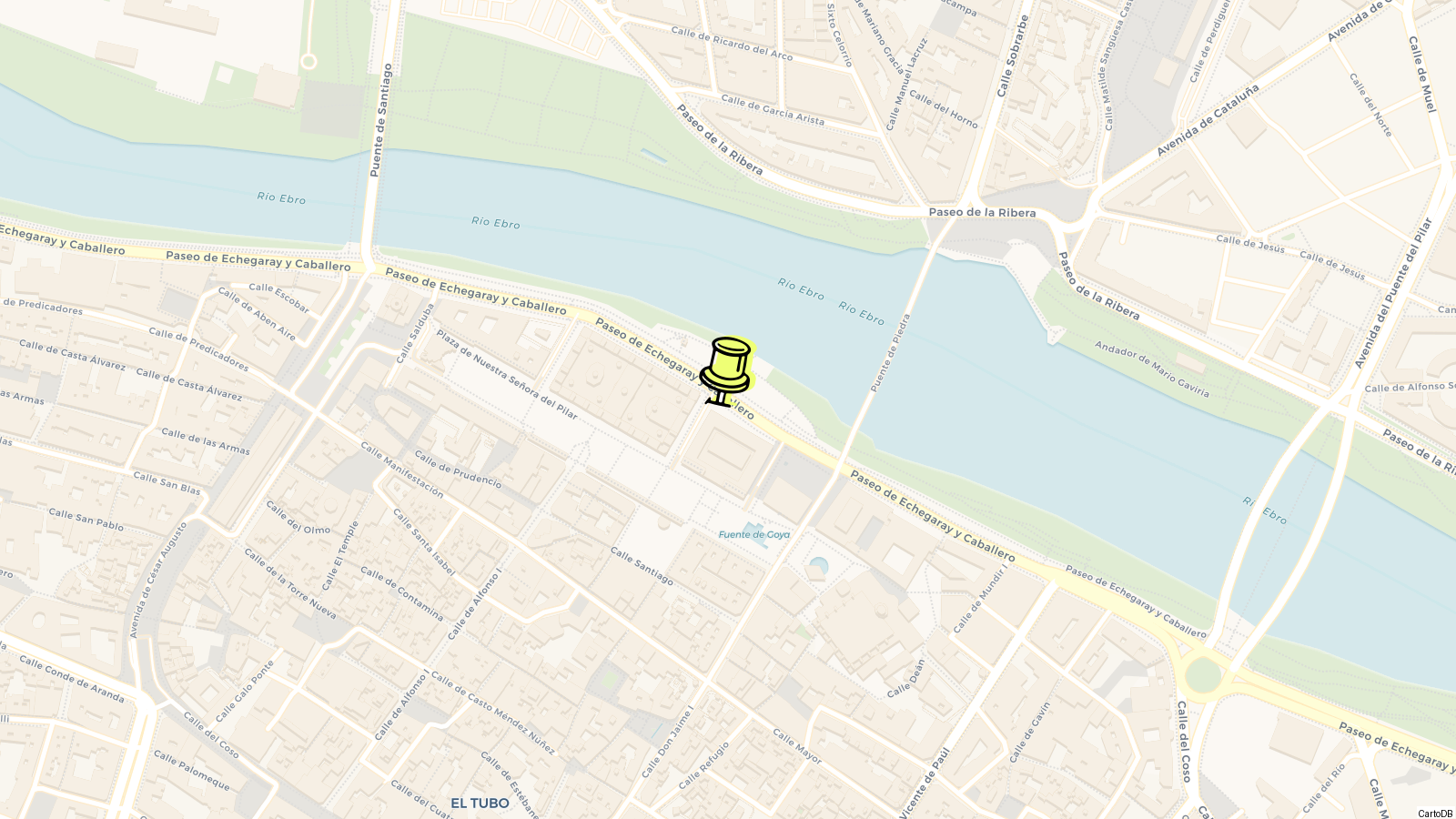
Essential info
Visit details
Overview
You walk into Plaza del Pilar and the Basilica’s Baroque bulk dominates everything: four corner towers, eleven domes, and a footprint of 130 by 67 meters, huge even by Spanish standards. This place has been drawing pilgrims since at least 1299, long before its current incarnation was started in 1681. “El Pilar” isn’t just a church, locals see it as a point of pride, a symbol for Zaragoza, and a magnet for Latino visitors from across the world. You’re in the co-cathedral of the city (the other one is La Seo, just a five-minute walk east), but this is the one visitors remember.
It’s a working Catholic basilica famous for the pillar itself, a stubby jasper column inside a gilded chapel, with a 39cm wooden statue of the Virgin perched on top, half-hidden by a riot of silver and gold. Local tradition claims the Virgin Mary appeared here in 40 AD to the apostle James, which is why you’ll see lines of people queuing to touch, or even kiss, the pillar through a small opening. Most people walk right past Goya’s frescoes above, painted in the 18th century, not realizing they’re under the same roof as two works by Spain’s most controversial painter.
If you time it right in early- to mid-October, you’ll see the Fiestas del Pilar, huge parades, flower offerings from 120,000 people, and the square outside heaving with 300,000 or more on a single day. The Basilica’s appeal is universal: in 2025, the US alone sent more than 1,800 pilgrims, more than any other country. If you want actual numbers, Plaza del Pilar in front is 24,000 square meters, making it the single biggest pedestrian square in any EU city.
Baroque, Political, and Local
There’s a reason the Basilica became so large and ornate: from the late 1600s, the Aragonese elite used it as a symbol of their independence and status. Felipe Sánchez and Francisco Herrera el Mozo were two of the architects, but dozens of others added towers, domes, and chapels as funds rolled in from royal banquets and papal attention. Popes and kings kept showing up, John Paul II visited twice in the 1980s, calling El Pilar the “Mother of the Hispanic Peoples.”
What’s Inside
Past the main doors, the nave is a riot of colored marble, gold, and curved arcades. Walk right and you’ll see side chapels dedicated to saints like Braulio and Joseph, typical for Spanish cathedrals. But the crowds always curve left toward the Holy Chapel. The altar is ringed by daily worshippers and the statue is tiny compared to the columns and domes. If you look up, Goya’s “Queen of Martyrs” fresco dominates one dome, and near the high altar you find “Adoration of the Name of God.”
History
You walk into a place where locals say the Virgin Mary appeared to Saint James, on the banks of the Ebro, in the year 40 AD. That’s the legend: Mary, still alive in Jerusalem, shows up for James, who is flagging in his mission. She leaves a jasper column as proof and tells him to build a chapel. Whatever you make of that story, there’s archaeological consensus that Christian worship existed here early: Roman, then Visigothic records point to some kind of church by late antiquity, and the first known written reference dates to at least the early 12th century.
Pilgrims have been coming since at least 1299, when Zaragoza’s city council promised them safety and privileges. The original wooden Virgin, just 39 centimeters high, sits above the pillar, a relic still visible today. You’ll see her: she’s worn down, darkened by centuries of kisses and smoke, and is encased in layers of bronze and silver. Many popes have encouraged pilgrimage here, Pope Calixtus III issued a bull in 1456 confirming the devotion, and as recently as 1982 and 1984 Pope John Paul II dropped by and called her the “Mother of the Hispanic Peoples.”
Fires, wars, and constantly evolving tastes have shaped what you see now. A Romanesque church stood here by the 1100s. That was mostly lost to a fire in 1434, replaced by a Gothic structure, then a series of expansions as Zaragoza prospered. Only fragments survive, look for the Gothic choir stall and Damián Forment’s alabaster altarpiece, which survived the later Baroque renovations.
The Long Remodel: From Gothic to Baroque Domes
The Baroque basilica you enter now got started in 1681, on the orders of Charles II. The main architects were José Felipe de Busiñac and Felipe Sánchez; later, Francisco Herrera the Younger made more changes. Construction lasted decades (longer than it took to build Sagrada Família up to now), with finishing touches dragged out until 1872. The iconic towers were so delayed that the last was set in 1961. The local nickname for the project was “el obra sin fin” (“the never-ending construction”).
All these rebuilds were funded partly by donations and partly by wealthy Aragonese merchants showing off. Each expansion brought a new style: Romanesque, then Mudéjar, then Gothic, and finally Baroque. You won’t see much Mudéjar traces, but the Baroque domes and towers are what everyone photographs today.
Aragon’s Golden Age called for grandeur, and by the 18th century, Ventura Rodríguez was brought in to overhaul the Holy Chapel (Capilla de la Virgen), turning it into a space worthy of massive Marian celebrations. His version is what forms the heart of the current basilica, with the (then cutting-edge) eleven domes and four towers that define the skyline. Francisco Goya frescoed two of the domes as a young painter. Look up: “The Queen of Martyrs” and “Adoration of the Name of God” are his.
The story isn’t all ancient: the statue was officially crowned in 1905 with a jewel-encrusted diadem designed by the Marquis of Griñi, valued at the time at 450,000 pesetas, over $2.5 million in today’s money. By 1904, the basilica had already earned “Bien de Interés Cultural” status, a sort of Spanish national heritage register.
This evolution, from a tiny Visigothic chapel into one of Spain’s Baroque landmarks, mirrors the rise, crisis, and recovery of Zaragoza itself. After centuries of fires and rebuilding, plus the Civil War bombs, physical scars are part of the walls. What you see now is as much a palimpsest of faith, politics, and memory as it is architecture.
Legends, Devotion, and Pilgrims
The legend of the apparition is so embedded that every year on October 12, the Fiestas del Pilar flood the city. In 2025, more than 300,000 came through Plaza del Pilar, and a record 120,000 people participated in the floral offering. Contemporary Spanish identity ties itself to this spot: the date even coincides with Spain’s national holiday, Día de la Hispanidad.
The image’s international reach goes far: by 2025, Americans made up the biggest foreign pilgrim group. Newcomers came from China, Uganda, Vietnam, and Angola for the first time, showing the site’s expanding pull. Every country in the Americas with Spanish roots has donated traditional vestments for the Virgin.
Visiting
Doors open at 07:30 every day. You can walk straight into the main nave from Plaza del Pilar, and entry to the basilica itself is free. The central aisles are enormous, but everyone gravitates to the Holy Chapel (Capilla de la Virgen), that’s where the 39 cm statue of the Virgin Mary stands on its jasper pillar, sealed inside ornate bronze and silver covers. On Sundays you’ll see a mix of regular worshippers and clusters of tourists craning for a photo.
Behind the altar, locals line up to touch or kiss the relic, technically, you reach through a small oval opening to rest your hand on the pillar for a second, a quiet tradition hundreds of years old. Security is low-key, but move with the line; there’s staff to keep things moving on busy days, especially around 12 October.
Frescoes by Goya hang above you in the domes around the Holy Chapel (look for “The Queen of Martyrs” overhead). Most visitors skip the chapels lining the side aisles, but take five minutes to walk along both sides: there’s alabaster, 18th-century organ pipes, and a quiet spot to see the Civil War bombs that failed to detonate, still on display in a glass case.
If you see people queuing near the south tower, they’re waiting for the Mirador. The climb is via elevator (no stairs), and the view is the best panorama of the Ebro river and all of Zaragoza. In 2026, tickets cost €6 per adult, or €5 for residents and youth; kids under 12 go free. You buy tickets right at the entrance, cash or card, no need to prebook.
The main doors close at 20:15 (21:30 Sundays), but they start shooing people out about fifteen minutes earlier. The Holy Chapel and altar follow the same hours, though they sometimes close for weddings or special masses. There’s usually a small gift shop by the north entrance, scarves, rosaries, and tiny virgins, cash or card.
How to pace a visit
Most people finish in under an hour, but if you want to catch a mass, the schedule is posted by the door. Services run daily, sometimes every hour in the morning. If you want to see daylight through the dome stained glass, go mid-late morning; sunset shadows the whole nave. Photographs are tolerated but don’t push your luck with flash, especially near altars.
Venue logistics
Bathrooms are at the back, up a short set of steps, look for the unmarked door on the left as you exit. There’s step-free access via the Plaza del Pilar main doors, but some chapels have a ramp or two.
You’ll leave right onto Plaza del Pilar, the biggest pedestrian square in the EU with space for 24,000 people. Grab an ice cream or a coffee across the way, this is the heart of Zaragoza, and the basilica is the reason the city exists at all.
Tips
-
Sundays after lunch, the basilica gets crowded, locals come for mass and groups are constantly cycling through. Early mornings (especially weekdays) are the quietest for walking around and seeing the Goya frescoes up close.
-
Access to the Mirador Tower isn’t through the main entrance: go outside to the rear left (facing the river). Tickets are €6 for adults, €5 for local residents or youth, free for kids under 12 and people with >50% disability. The lift takes you halfway; then you’ll climb the last 60 or so spiral steps. Last entry is about an hour before closing, ask on the day.
-
Entry to the main basilica, including the Holy Chapel, is free; only the Mirador Tower charges. Donations are encouraged but not expected.
-
If you want to see the infamous Civil War bombs (the ones that didn’t explode), look for the side wall near the Holy Chapel, they’re mounted and labeled.
-
On October 12 (Fiestas del Pilar), Plaza del Pilar goes into festival mode: expect crowds, morning flower offerings, parades, and big concerts at night. If you want to avoid this, steer clear that weekend. If that’s your thing, book any accommodation half a year ahead.
-
Photos are allowed, but no flash and absolutely no tripods. During mass, keep the phone in your pocket.
Insider angle on devotional practices
If you see a queue near the Holy Chapel’s back wall, it’s for kissing the pillar. Locals and pilgrims line up to press lips (or just a hand) to a small oval in the silver casing that covers the jasper column. The surface is polished smooth by centuries of kisses. You don’t have to be Catholic to queue up, just follow the line and move along at the pace of the crowd.
Save your legs: facilities
Toilets are inside the basilica, down a corridor near the main entrance, but they’re partly hidden, ask a staffer if you get lost.
Good to know
Wheelchair users can access most of the basilica, but the Mirador Tower’s top section is stairs-only. For big festivals, there are dedicated sections for people with reduced mobility near the altar, and help points are staffed on busy days.
Know this destination? Help us improve
Your local experience is valuable to other travelers.