Bellver Castle
You won’t find another circular castle like this in Spain, perched 112 meters above Palma since 1311 with views over the bay and city rooftops

Visit details
Overview
Bellver Castle has been standing on its hilltop 112 meters above Palma since 1311, and its round shape is the first thing you’ll notice, hardly any castles in Europe look like this. The building curves in a big circle, with a central courtyard, three defensive towers, and a hefty main keep joined by a bridge and moat.
The name Bellver comes from old Catalan for “beautiful view,” and it doesn’t exaggerate: from up top you’ll get Palma’s marina, the city rooftops, and, on clear days, the Tramuntana mountains. Most locals have at least one blurry graduation or concert photo from the upper terrace.
It started as a royal palace, but in reality Bellver spent more centuries as a prison than anything else. Republican prisoners during the Civil War were even put to work hacking the access road out of the hillside. These days, the city runs it as a monument and history museum. You’ll share the place with a steady stream of school groups and out-of-towners, about 270,000 people in 2023, which is more than double what came during the pandemic bottom.
Getting here you’ll cross a big pine forest that acts like the city’s backyard. The hike from El Terreno takes 30–40 minutes on an easy slope, or you can grab EMT bus 50 up for a lazier approach.
The €4 entry doesn’t just get you into the towers and ramparts: the museum covers everything from Mallorca’s Roman relics to old city maps, and the inner courtyard hosts concerts, markets, and weddings year-round. Bellver is more a city landmark than a tourist attraction, and unless you visit on the weirdest of days, you’ll overhear as much Mallorquín as English or German up there.
The best time to visit is late afternoon, especially in warm months, the way the light hits Palma Bay from the top terrace is the only excuse you’ll need for lingering too long with your camera. Locals still keep up the tradition of Diumenge de l’Àngel: the Sunday after Easter, families haul baskets and barbecues into the woods for picnics, and the courtyard fills with food stalls. The castle sometimes hosts public ceremonies, concerts, and even civil weddings, especially in summer.
History
The foundation stone for Bellver Castle was laid in 1300, and by 1311 the main structure was up and running as King James II of Majorca’s hilltop retreat. It wasn’t exactly a cozy home, think defensive over comfort. Pere Salvà, the architect, borrowed features from his other royal commission (Palma’s Almudaina Palace) but then threw in a circular blueprint that still gets architecture nerds excited. The workers quarried the actual bedrock on-site, which saved on transport but led to cracks showing up over the centuries as the soft marès stone settled.
Right from the start, Bellver saw more drama than royal banquets. It outlasted two major attacks in its first 80 years: Peter IV of Aragon’s siege in 1343, which aimed to annex Mallorca for the Crown of Aragon, and an ugly anti-Jewish revolt in 1391, when locals stormed the Jewish quarter and the governor holed up in the keep with Muslim, Jewish, and Christian refugees. Bellver didn’t fall to force until the 1521 Revolt of the Brotherhoods, when rioting guilds overran it after a brutal fight.
Bellver doubled as a prison pretty much from the late 1300s forward. Early on, it was the holding pen for the family of the beaten King James III after he died at Llucmajor in 1349. In the centuries that followed, the castle kept switching sides and uses, sometimes a royal residence, sometimes the ultimate lockup for political headaches. Supporters of the wrong cause during the War of Spanish Succession (mainly the pro-Bourbon or pro-Habsburg crowd, depending on who was on top) sat out their luck behind these walls. When the Napoleonic Wars hit Spain, captured French officers ended up in Bellver’s cells. In the early 1800s, Gaspar Melchor de Jovellanos, a famous reformist minister, spent six years imprisoned here for writing the wrong essays, he used his time to document the castle with sketches that historians still reference.
During the Spanish Civil War, up to 800 Republican prisoners were shoved into Bellver, forced to build the steep access road as part of their punishment. Both Alexandre Jaume (the politician who campaigned for Palma to claim the castle) and Mayor Emili Darder were held and executed in its dungeons.
Revolts, Royal Favors, and Church Hands
In 1408, King Martin I of Aragon gave Bellver and its land to the Carthusian monastery in Valldemossa. This didn’t stick long, ownership and control ping-ponged between the crown and the church for decades. Charles of Viana arrived in 1459 with documentation in hand but had to fight local bureaucrats over the keys. The “lord warden” was the king’s direct appointee, usually a local noble.
On the lighter side, from the late 1800s Bellver also became a ceremonial site. By the time the Second Republic came along in 1931, the castle had spent more than five hundred years as a mix of palace and prison, with the balance heavily tilted toward punishment. The city of Palma finally took over and opened the place to locals as a museum in 1932.
Bellver was officially declared a national monument in 1931 (the exact Spanish wording is “Monumento histórico-artístico,” a legal status that protects architecture from demolition and radical changes). The city’s history museum lives inside the old halls now, but you’ll still pass barred doors and graffiti from political prisoners scratched into bedroom and cell walls.
The Prison Era’s Human Record
Some of the darkest graffiti, names, dates, crude pictures, were etched by the prisoners held here during Franco’s regime and earlier conflicts. The cells beneath the parade ground are stark, with window slits facing the sea but offering zero comfort, just enough light to write your last wish on the stone. Most visitors walk the main courtyard and breeze through the upper galleries, but if you catch one of the special tours focused on the prison era, you’ll see rusty shackles, letters written under surveillance, and restored rooms with stories of real people who spent years locked away just for supporting the “wrong” side.
Modern restoration projects have prioritized protecting these traces, which means even some recent graffiti is preserved under glass, a record of the turbulence of recent Mallorcan history.
Since the 1970s, the main courtyard and terraces have hosted open-air concerts, official ceremonies, and (surprisingly) civil weddings. But every so often, on the Sunday after Easter, old-timers and families walk up for Diumenge de l’Àngel, a secular-pagan picnic that links back to spring feasts long before the castle was built.
The cracks in the marès stone are visible reminders that Bellver was built for kings but repurposed for every invading army and power struggle that washed through Mallorca. The castle you walk through now is a stubborn survivor, scarred by sieges, patched up by prisoners, and never purely museum, no matter how pretty the view looks at sunset.
Visiting
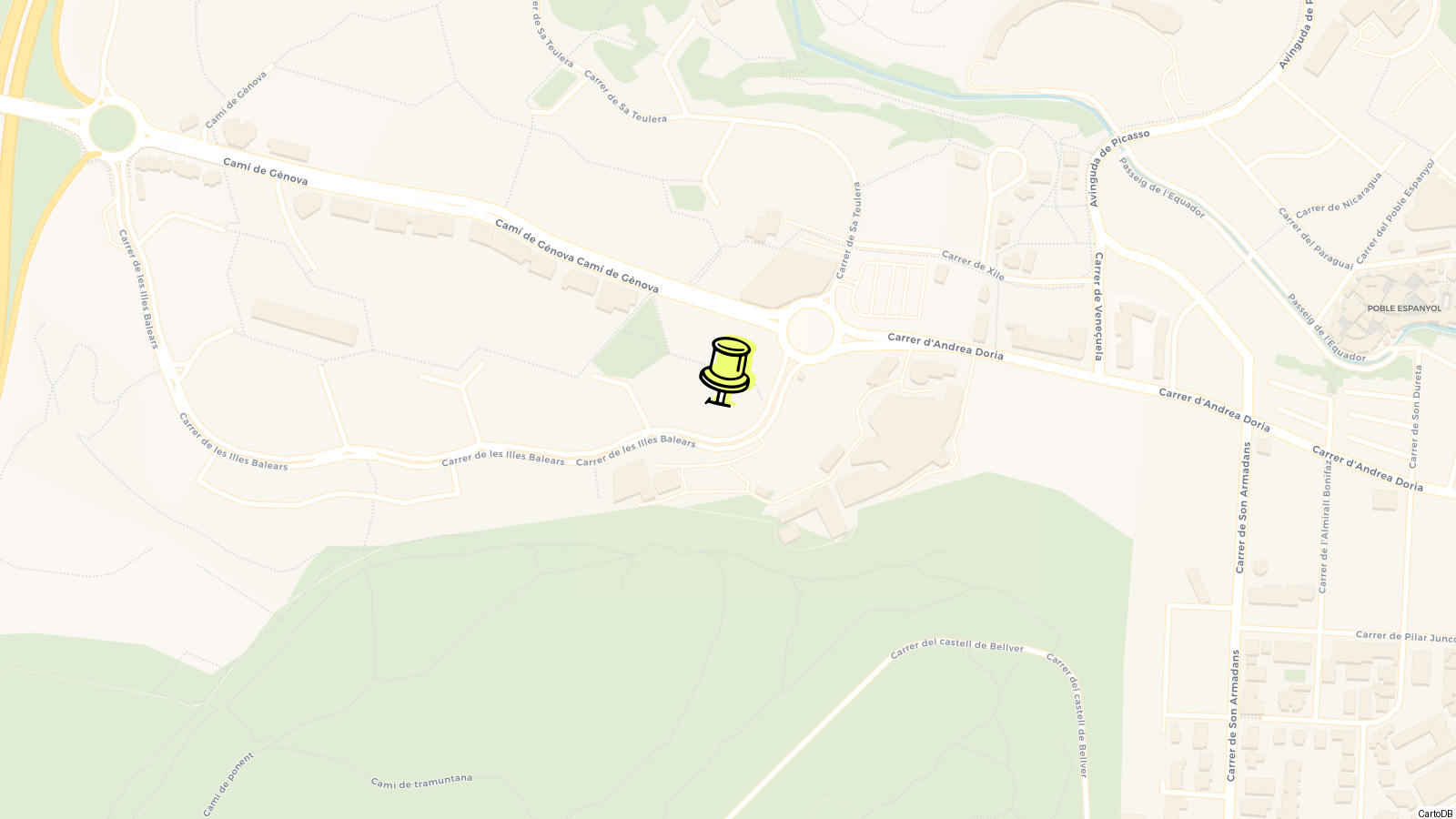
Start at the main entrance on Carrer de Camilo José Cela. If you came by car, there’s a free lot nearby, but if it’s full (often by noon in peak months), park farther down the hill and prepare for a short uphill walk. Bus users: EMT Palma lines 3, 20, or 46 drop you at the foot of the hill; add 15–20 minutes’ walk up through pine woods. The hop-on tourist Bus 50 stops higher up, shaving off most of the climb. On foot from Passeig Mallorca or Santa Catalina, give yourself 30–40 minutes for the proper hike and views.
The ticket booth is just below the actual gate. Adult admission is €4, youth/seniors €2, kids under 14 go free; bring ID for discounts. No online tickets; pay at the booth (cash or card). No need to worry about lines except in July–August late mornings.
Inside, enter the circular central courtyard, this is the castle’s heart and usually the spot for public events and summer concerts. Two stacked galleries run around the ring: the lower arcade is Gothic, the upper with open views over Palma Bay. Take the stone staircase to the upper ramparts for 360° city, sea, and mountain panoramas. On a clear day you spot the cathedral, the port, and planes landing at Son Sant Joan.
Most rooms off the main courtyard house city history exhibits, labels are in Catalan, Spanish, and patchy English. The royal chapel and old kitchen are usually open; the tower (the tallest turret, reached via a little bridge across the moat) is sometimes closed for maintenance, but if open, it’s the highest point in the castle.
New from 2025: the visitor centre has finally re-opened after four years shut, and now includes a small café for overpriced sandwiches and cold drinks, plus a decent little bookshop for Palma histories and postcards.
Allow at least 90 minutes to wander the ramparts, visit the exhibits, poke around the old dungeons (dark and echoey, sometimes part of audio guide routes), and detour through a couple of the forest paths beside the walls. The shade from the pines helps on hot days. There are a handful of picnic tables just outside the southern side of the castle.
Full route (on foot or by bus)
If you walk, start at Plaça del Progrés or Av. Argentina, follow Carrer de Bellver to the forest entrance, then cut up through the pines following signs marked “Castell de Bellver.” There’s a broad path and a few steeper shortcuts, the main path is stroller- and kid-friendly but does climb steadily for 20–25 minutes, taking you right to the gate. Bring water. The walk is worth it for the breeze and forest, locals jog this route.
Bus riders (especially with mobility issues) can use the EMT Palma 50 tourist line, which stops closest, but check the timetable; service is usually April–October, every 30–40 mins. Normal EMT lines 3, 20, 46 stop at “Camilo José Cela” or “Castell de Bellver” at the base. From either, follow road and steps up, 15–20 mins by foot. Taxis can drop at the upper parking, but prices in 2026 are €8–11 from the centre, not metered if coming from the port cruise terminal; set the price before boarding.
What spaces are actually open
The courtyard is nearly always accessible except the day before big events. The upper ramparts follow a full circuit around the outer wall, no barriers. Some rooms on the ground floor rotate exhibits, but the permanent city history displays are always open (19th–20th century: postcards, prison artefacts, old local papers). The royal chapel is modest inside: a single nave, reflectively cool. The “towers”: minor turrets can be entered, the donjon (main tower) opens for guided visits in high season and is best for photos. Look for the well at the centre, still used for rain catchment.
Facilities
The café is new as of spring 2025, and cashless. It has limited shade on the terrace; only cold sandwiches, ice creams, and drinks (expect to pay €3 for water, €7 for a sandwich). Toilets are spotless. There’s a small playground just outside the entrance, handy for families. The bookshop is compact but has some English-language books on Mallorca and a reliable stock of locally printed postcards (€1 each).
Opening hours shift with the season: April–September, Tuesday to Saturday 10:00–19:00, Sunday 10:00–15:00. October–March: Tuesday to Saturday 10:00–18:00, same Sunday hours. Mondays it’s always closed. Last entry is 30 minutes before closing, but the guards do start herding people out a bit before.
Sunset is gorgeous from the ramparts if you time it for a late afternoon arrival. Mornings have softer light and coolness, better if you plan a longer walk or bring kids. At peak midday in July–August, bring a hat and sunblock; there’s little shade up top apart from inside the walls.
Tips
-
The newly reopened visitor center finally means indoor bathrooms and a cafeteria, but if you’re thirsty on the walk up or coming late afternoon, bring water, vending machines and the café have both been randomly out of service since the reopening.
-
Mondays are pointless, nothing’s open. For regular visits, come Tuesday to Saturday, 10:00–19:00 in summer (April–September), or until 18:00 in winter (October–March). Sundays and holidays close at 15:00. Box office shuts 30 minutes before closing; aim for at least 1.5 hours to wander at a sane pace or you’ll be hustled out.
-
Skip the mid-morning coach influx: aim for opening time if you want quiet, or late afternoon for killer bay views (especially for sunset photos, this angle nails the Palma skyline, with far fewer people than mid-day).
-
General admission is €4 for adults. Reduced rate €2 for kids 14–20, students, retirees with ID. Under-14s: free. Sundays and public holidays = free for everyone, which makes it busier, but if you’re budgeting, it’s a clear win.
-
The top terrace and ramparts are exposed, no shade, and that stone bakes by noon in Mallorcan summer. Hat and water are essential from May–September.
-
The pine forest trail from central Palma (30–40 minutes on foot) is pleasant, but wear trainers or decent sandals, the last stretch is uneven dirt with some loose rock. The walk up from bus routes 3, 20, or 46 is also a proper hill, not a gentle slope.
-
If you want to see an event or concert in the courtyard, check the official site (castelldebellver.palma.cat) a week ahead, local symphonies and even civil weddings sometimes close off sections with no warning.
-
Locals head up for Diumenge de l’Àngel (the Sunday after Easter), with picnics in the forest, crowds and local color, but not the day for a quiet visit.
-
Audioguides/leaflets are in Catalan, Spanish, and English; updates are rolling out now the museum’s finished its refresh, so QR codes sometimes point to dead pages.
Quick decision grid
| Situation | Best Move |
|---|---|
| Want empty ramparts? | Arrive Tues-Fri at 10:00 sharp |
| Budget-conscious | Go Sunday/free holiday |
| Mobility issues | Stick to courtyard/museum, avoid tower |
| Want photos | Arrive ~18:30 Apr–Sep for sunset |
| With kids | Bring snacks, ground’s stroller-friendly only in parts |
Pro tip
No cash? As of early 2025, both the box office and cafeteria have functioning card terminals; but don’t count on mobile pay, as the cellular signal is spotty indoors.
Know this destination? Help us improve
Your local experience is valuable to other travelers.