Palma Cathedral
Watch the morning sun turn La Seu’s 14-meter rose window into a kaleidoscope of color across the nave each November and February.

Visit details
Overview
The rose window over the altar is almost 14 meters across, and it’s not just for show: at certain times of year, the morning sun turns the nave into a kaleidoscope of colored light. Most people call this building La Seu, but its full name is the Cathedral of Santa Maria of Palma, and the locals have been trying to finish and perfect it since 1229, first as a statement right after the conquest from Islamic rulers, and then as a kind of running obsession. No other building in Mallorca gets more visitors: if you only have time for one “sight” in Palma, this is it.
Gaudí (yes, the Sagrada Familia guy) spent 11 years personally working on the interior, stopping after a huge falling-out in 1914. You’ll notice the crazy altar canopy, his exposed iron chandeliers, and even stained glass windows that never made it into the final design. In the nave, you get an uninterrupted 44-meter vertical drop (they love to remind you that’s the eighth-highest church nave anywhere), but look at the pillars: they’re so thin compared to the size of the vault, it’s a structural dare no one else tried in mainland Europe.
Everything here is maxed out for spectacle: the cathedral sits right on Palma’s city walls, about 44 meters above sea level, with views out to the Mediterranean. If you time your visit on a sunny morning, the inside turns into a disco of light filtering through stained glass, especially in early February or November, when the “spectacle of the eight” lines up the east rose window and its twin on the opposite wall.
Why the cathedral looks so different up close
You’ll notice a mashup of styles, the base is classic Catalan Gothic, but the west façade is actually a 19th-century Neo-Gothic reconstruction, rebuilt after the original top started collapsing. The oldest surviving part is the Chapel of the Holy Trinity from 1327, where you’ll see the marble tombs of James II and III of Mallorca. Sixteen chapels edge the main nave, with everything from Baroque altars to full-on contemporary art: the Chapel of Sant Pere was radically redone by artist Miquel Barceló in the 2000s, and not everyone loves it.
Not just sightseeing: locals actually use the place
La Seu still runs an active schedule of masses all week (even when tourist hours are over), and it feels like a working church first and a museum second. Local weddings and religious festivals use the space, so depending on the day, you might see queued-up ticket holders and local grandmothers crossing themselves at the same time.
History
When Jaume I of Aragon conquered Madina Mayurqa in 1229, Palma’s largest mosque still stood right where the cathedral stands today. Construction started almost immediately after the conquest, and the site was consecrated as a Christian place in 1230 by Bishop Pere de Morella. You can’t see the traces of the old mosque anymore: by the late 1300s, the last remnants were gone, replaced with Mallorcan limestone.
The earliest part you can still visit is the Chapel of the Holy Trinity from 1327, built as the burial spot for the early Mallorcan monarchs. If you find the marble tombs of James II and James III, that’s the original royal burial plan in action.
Building the main nave and side chapels dragged on for centuries, huge projects like this always took longer than planned. The bell tower was only finished in 1498. By then, you had a working cathedral, but workers, stonemasons, and artists kept changing and adding things for generations. This wasn’t just a religious building; every addition tracked political drama and changing taste.
The choir stalls and the big stone choir screen landed right in the middle of the nave. It’s weird placement if you know other cathedrals, but that was on purpose, and it’s still unique today.
After the Council of Trent in the 1500s, the place got a face lift the Mallorcan way, with lots of baroque decoration, murals, and golden altarpieces. The cathedral chapter was growing and needed space, so a new chapterhouse went up as well.
Fast forward to the mid-1800s, serious structural problems hit, so the whole west facade had to be rebuilt. The flat original was replaced with the current pointed gable and spiky pinnacles in neo-Gothic style. Blame 19th-century taste (think of Paris’ famous cathedral renovations), but it fixed what was about to fall apart.
The 20th century brings the most famous intervention: Antoni Gaudí showed up in 1903 after being invited for a full interior rethink. Gaudí’s changes are hard to miss: he moved the choir stalls and big screen to the edges, inserted more light by opening up windows that had been bricked over for centuries, and added his signature touch on a suspended canopy above the altar. He even designed new ceramic heraldic panels and rolled back a lot of the baroque excess, putting the focus back on medieval pieces like the Bishop’s Throne and the royal tombs. The local chapter never fully warmed up to Gaudí, and after a bitter falling-out, he walked away in 1914, leaving some of his plans unfinished.
Gaudí’s Touches, What Remains Today
You’ll spot Gaudí’s marks right above the altar, where he hung an enormous, crown-like baldachin, mixing wrought iron and glass. The choir was physically pushed aside, literally moving the focus to the congregation. He designed several ceramic panels for the choir walls with stylized floral and heraldic motifs, not his most famous work, but pure Gaudí if you pay attention.
Not everyone loved the work. Critics still argue that Gaudí destroyed valuable older features, gutting some baroque and mudejar details in favor of his “purist” Gothic vision. If you have time to read the panels or talk to a guide during your visit, the transition from baroque bulk to Gaudí’s minimalism tells you a lot about 20th-century church politics in Spain.
The last big shake-up happened in the early 2000s. Local artist Miquel Barceló was given almost free rein over the Sant Pere Chapel and the Holy Sacrament space (southernmost end). What you see there, tons of Italian ceramic plastered across the apse with a Mediterranean, almost undersea color palette, and minimalist furnishings, is unmistakably contemporary and much debated. Barceló replaced the stained glass with “grisaille” glass designed to evoke the sea floor, and got criticized for both his artistic choices and generous paycheck. Still, his project finished in 2006 and stands as a marker of modern Mallorca in the middle of a mainly medieval space.
The Barceló Chapel, Modern Art Invasion
If you walk down to the Sant Pere Chapel, the difference is wild: undulating handmade ceramics flow from the wall to the apse, representing loaves, fish, cana, and Mallorcan sea life. The ceramics are mostly white and blue, dense with texture, and completely unlike the flat stone or gothic ribbing everywhere else. Locals argued about whether it belonged, but bishops and city powerbrokers pushed it through. The stained-glass swap is especially obvious, the muted, foggy pane lets sunlight turn milky and strange, miles away from classic Gothic jewel tones.
Administrative milestones: In 1905, the Vatican gave the cathedral the honorary status of minor basilica. In 1931, the Spanish government set it down as a “bien de interés cultural”, Mallorca’s way of saying “untouchable monument” under state protection.
Construction here was never frozen for long. Every chapter of history left something behind, from the original mosque foundations to the baroque flourishes and the sharp lines Gaudí insisted on. If you go now, you’re moving through a patchwork: one end medieval, one rebuilt after a near-collapse, and pockets of ultra-modern art. Even now, don’t be surprised if you find a chapel or wall closed off for the next restoration: Palma Cathedral is never really finished.
Visiting
Tickets for the main nave cost €10 for adults, and you enter through the sea-facing doors on Plaça de la Seu. Doors open Monday to Friday at 10:00; closing is at 17:15 from April to October and 15:15 from November to March. Saturdays it’s 10:00 to 14:15, closed to tourists on Sunday. The guards can be picky about the closing time, so don’t aim to show up last minute.
Inside, the main event is the central nave,44 meters high, weirdly luminous because Gaudí reopened blocked rose windows. Walk straight down to the Royal Chapel at the end, where the tombs for Mallorcan kings James II and III are set by the bishop’s throne from 1346. The side chapels are an oddball mix of styles: Sant Jeroni is all Plateresque, the Chapel of Our Lady of the Crown is baroque overload, and the south side’s Holy Sacrament chapel got a complete 2000s treatment by Miquel Barceló, skulls, sea motifs, and clay straight from Felanitx. If you want the full Gaudí, look up for his floating iron canopy over the altar, but know the original choir and screens have been shuffled since his renovations.
You can access the Museum of Sacred Art (inside the Episcopal Palace next door) with a combined ticket, or separately if you ask at the ticket counter. It’s mostly reliquaries, vestments, processional crosses, and everything a bishop doesn’t want to lose track of.
Terrace access (the rooftop walk) is a separate ticket, usually April–October, Monday–Friday 10:00–16:30, Saturday until 13:30, closed Sunday. The combined cathedral, terrace, and museum ticket is €25, or €8 if you’re a Balearic resident with ID. Kids must be over 9 and expect a long spiral staircase, don’t bother if you have vertigo or mobility issues.
What you’ll see on the terrace
You’ll snake up more than 200 steps in tight spiral stairs, popping out above the nave. The view sideshow: the old city rooftops, the Bay of Palma, the marina, and the Almudaina palace next door. On some free terrace opening days in early March (5th–7th), anyone can go up, but queues can be brutal. The rooftop walk lets you get eye-to-eye with the east rose window, almost 14 meters across, and gives you a close look at the flying buttresses that make the interior columns so slender compared to most gothic cathedrals.
Rooftop tours with a guide (in English, Catalan, or Spanish) run around €30 and may include sunset slots, but book at least 2–3 days ahead in high season.
If you’re there on a weekday morning, you’ll hear mass echoing from one of the chapels. Regular services are: weekdays at 8:30 and 9:45, Saturdays 8:30, 9:30 and 18:30, Sundays at 10:30 and 19:00. They let visitors in for free during mass, but you’re not allowed to roam the cathedral outside of the nave and chapel areas then.
Wheelchair users have step-free access through the main doors and ramps inside, but the terrace is strictly stairs only. If you want the audio guide, they’ll hand you a QR code at the entrance for your phone (bring headphones), or rent a physical device for a couple of euros.
The main ticket office can get crowded before midday in July and August, especially right after cruise ships dock. Buy online if you can: official ticket sales and slot calendar here.
Tips
-
Buy tickets online at catedraldemallorca.org so you can skip the main queue, especially on Saturdays when the line often stretches into Plaça de la Seu.
-
If you want to see the terraces (the rooftop walk with panoramic bay views and a close-up of the giant rose window), look for the combined “Cathedral + terraces + Museum” ticket (€25 for adults as of 2026). Book ahead, terrace slots often sell out, especially in spring and early summer.
-
The Cathedral is closed to tourists on Sundays and public holidays except for services. Mass is held early (8:30–9:45 on weekdays), which is the only time you’ll see locals, not just tourists, inside.
-
Avoid midday in July or August unless you love crowds and heat. Between noon and 14:00, the nave is thick with guided groups.
-
Shoulders and knees must be covered for entry. Staff enforce the dress code, even in 35ºC heat. If you forget, kiosks near the entrance sell disposable cover-ups for €1–2.
-
Photography is allowed, but tripods aren’t. Silence your phone, especially during mass times.
-
Wheelchair access is possible via a ramp near the main entrance. Ask staff if you need extra help.
-
If you’re a resident of the Balearic Islands, bring your DNI: you get a huge price break, with terrace+museum tickets at €8 and sometimes free terrace entry on Fridays.
-
Free public toilets are just outside the exit, through the courtyard and on the right.
-
Want quiet photos of the rose window? Arrive at opening (10:00 sharp) on a weekday from November to March, when tourist numbers are lowest.
Getting here
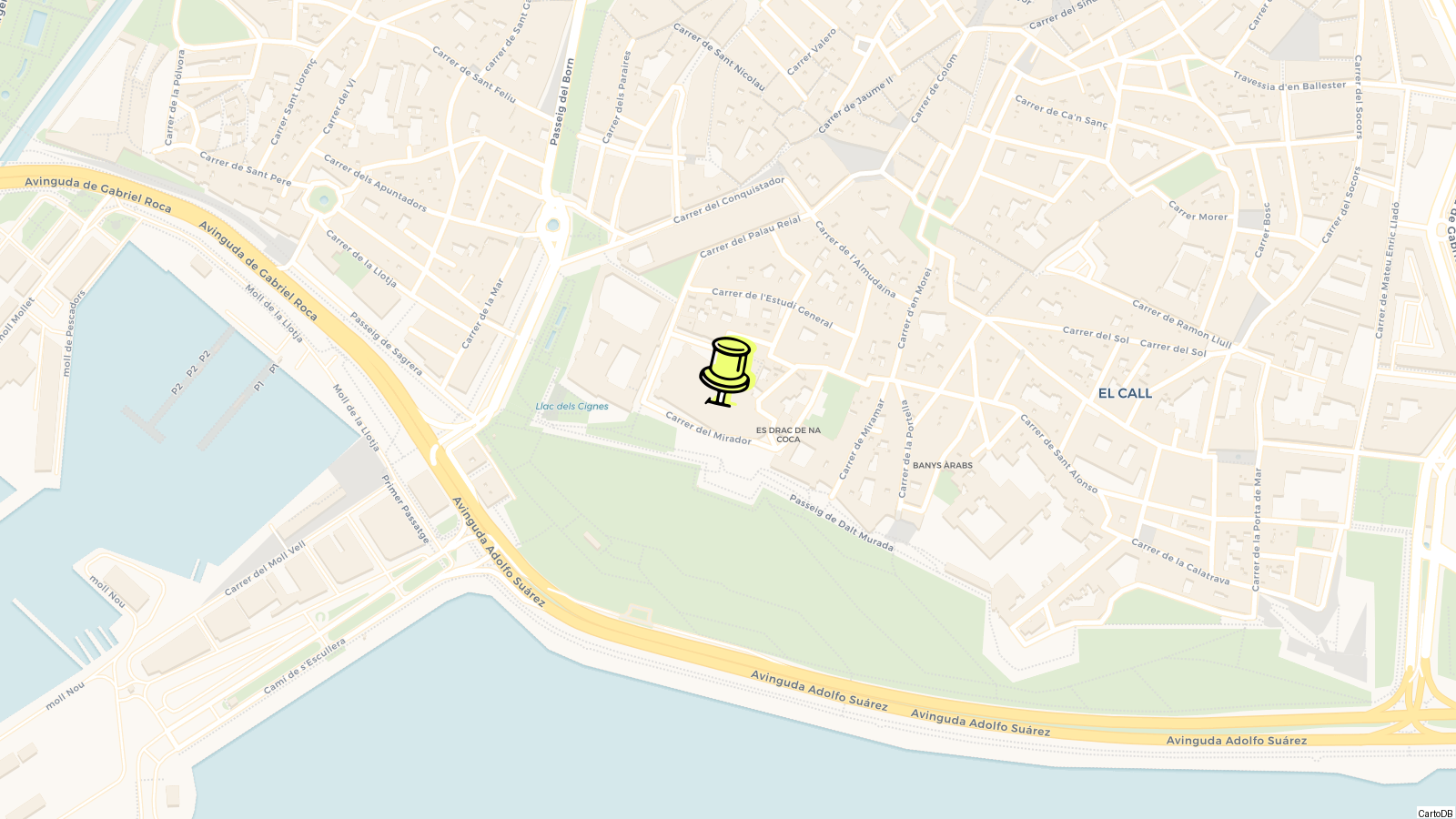
The best local bus stop for the Cathedral is “Plaça de la Reina”, served by EMT bus lines 15, 25, and 35. There’s no parking by the Cathedral itself; use the Parc de la Mar underground lot (entrance on Avenida Antoni Maura, about 4 min walk).
Tickets and budget overview
| Ticket | Price (2026) | Notes |
|---|---|---|
| Cathedral interior (adult) | €10 | Entry only, no terrace |
| Cathedral + terraces + museum | €25 | Bookable online; 90-min guided option avail. |
| Resident combined ticket | €8 | DNI or resident proof required |
| Children under 10 | Free (most sources) | Check current website |
- You can buy guides or audio guides at the entrance (usually €4–6).
Small kids & strollers
The Cathedral interior is stroller-friendly, but the rooftops aren’t. Leave the buggy at the base if you go up.
Know this destination? Help us improve
Your local experience is valuable to other travelers.