Llotja de la Seda
Gothic columns twist like palm trees inside the Llotja de la Seda, where merchants once signed silk deals across from Valencia’s Central Market

Visit details
Overview
You pay €2 to get into the Llotja de la Seda, which sits right across from the Central Market and Santos Juanes church at Carrer de la Llotja, 2. This is one of the best surviving pieces of late Gothic civil architecture anywhere, built for silk merchants between 1483 and 1533 under Pere Compte, a name you’ll see on the blue bands of painted Latin running around the main trading hall.
A walk through the building is basically a crash course in Valencia’s “Golden Age” when exports and traders poured into town. Most visitors head straight for the Hall of Columns: sixteen meters high, floors paved in colored Alcublas marble, and spiral columns stretching up to ribbed vaults, all designed to look like a forest of stone. Outside, 28 stone gargoyles act as downspouts and hand out moral lessons, at least according to whoever carved their strange faces. The Llotja covers about 2,000 square meters including its courtyard and side wings.
Your ticket also gets you into the former Consulate of the Sea, Valencia’s mercantile tribunal, plus the tower (if you’re up for the helix staircase), and the orange-tree patio, a rare silent patch in a busy neighborhood. The building is a UNESCO World Heritage site since 1996.
What you actually see inside
After passing the ticket desk and security, you’re in the orange courtyard, which is surrounded by colonnaded galleries. The famous Sala de Contratación or Hall of Columns fills half the whole building: intricate ceilings, light filtering down stone pillars, and a continuous inscription in Latin spelling out proper merchant behavior. Upstairs in the Consulado, two rooms still keep their carved wooden ceilings and handle small exhibitions. The tower,“Caracol del Mercado”, is essentially a stone corkscrew, and was occasionally used as a debtor’s jail when silk deals went bad. Give yourself about 45 minutes if you skim, an hour or more if you want to spot every carved detail.
Context in the city
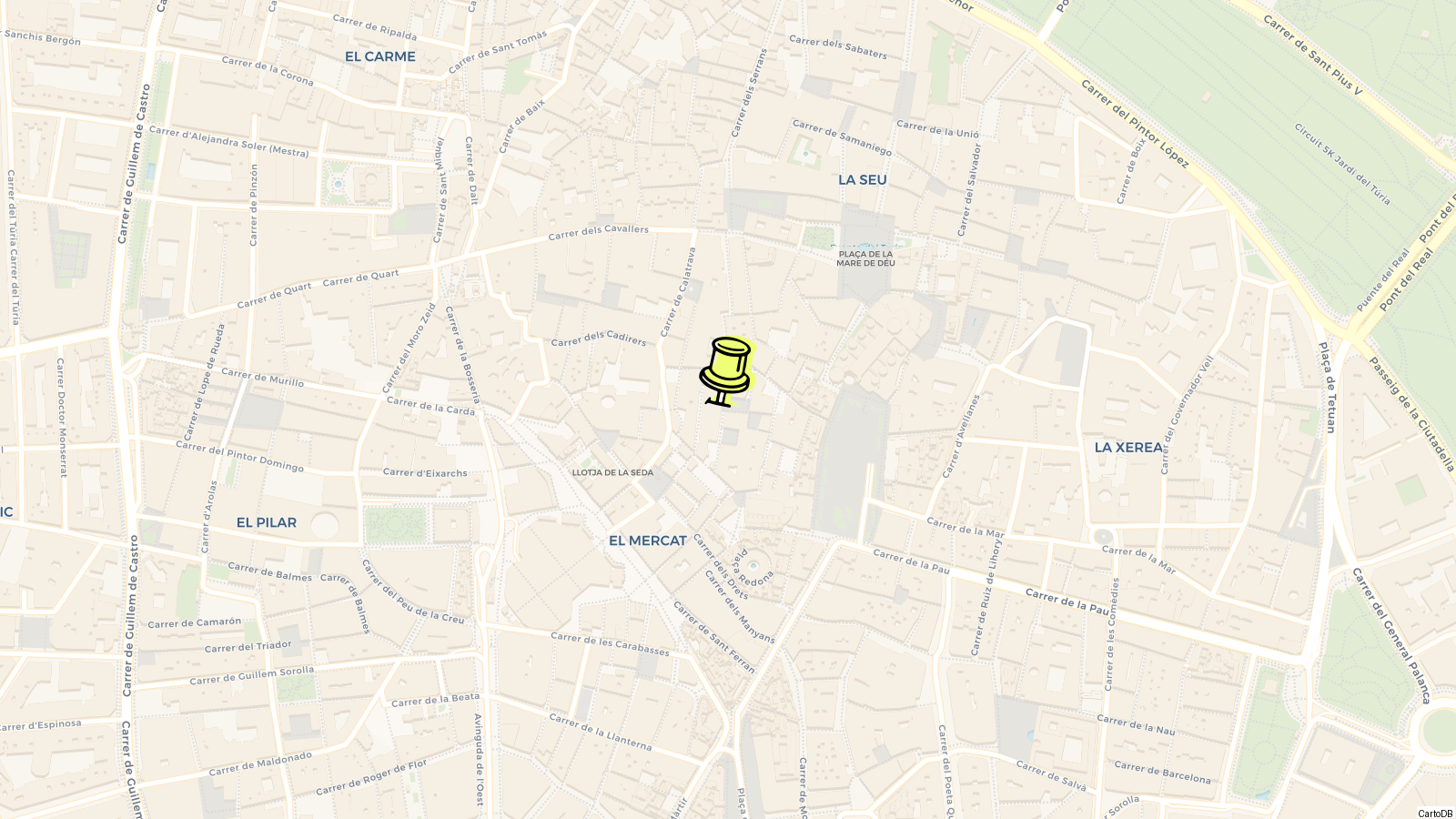
Location matters: the Llotja is wedged between Mercat Central and Plaza del Mercado, right in the heart of Valencia’s commercial triangle from five centuries ago. The area gets busy (school groups, bus tours), but late afternoons are quieter, and on Sundays entry is free.
History
Construction kicked off in 1483 and spanned a full fifty years, finally wrapping up in 1533. Architect Pere Compte handled most of the heavy lifting, particularly the main trading hall, what you see today as the Hall of Columns, between 1483 and 1498. Those twisted columns and cross-vaulted ceilings, almost 16 meters high, went up shockingly fast for the time. Francesc Baldomar did the groundwork back in 1470–1471, but Compte’s approach, with visual nods to the Lonja of Palma de Mallorca, set the tone.
Before silk got big, the site hosted a 14th-century building called the Oil Exchange (Llotja de l’Oli/Lonja del Aceite), originally for trading things like olive oil and (from as early as 1348) percale, a kind of silk. By the late 1400s, Valencia was rolling in commerce, and the city decided it was time for something grander to show off its muscle. They gave the new hall a literal mission statement: blue bands of text snake around the four walls, declaring in Latin that honest trade (no lies, no usury) leads to wealth and even eternal life. It’s classic Mediterranean merchant moralizing, prosperity, but only the virtuous kind.
What the Builders Left: Guilds, Merchants, and Marine Law
The Llotja became headquarters for the Velluters Guild in 1479, back when Valencia’s silk trade could rival any in Europe. The building’s grand trading hall wasn’t just for fancy deals. On market days, it was packed with noise, contracts cut and sealed right under those columns. The scale is very deliberate: the hall covers nearly half the monument’s footprint, designed to impress both locals and the foreign merchants who flocked to Valencia.
Next door, the Consulate of the Sea (Sala del Consulado del Mar) handled maritime disputes. This was Spain’s first official marine merchant tribunal, a cross between a trade court and a port authority, with serious clout for Mediterranean shipping. Got caught cheating, or refused to pay up? Off you went to the tower, where debtors and fraudsters could cool their heels until things got sorted.
Timeline Jitters: Renaissance Add-ons and Changing Fate
The building didn’t stop evolving in 1533. Decor and add-ons trickled in up to 1548, especially on the consulate side, which sports Renaissance detailing that looks nothing like Compte’s original Gothic design. For centuries after, this was the epicenter for the silk trade, even after the city’s golden age waned.
Napoleonic troops sacked the place during the Peninsular War. By the 19th century, silk had faded, replaced by random government use, until restoration picked up in the 20th century. Modern preservation started in earnest when the Llotja was named a National Monument in 1931, then capped by the UNESCO World Heritage Site badge in 1996.
By the numbers, the complex sprawls over 2,000 m², including the famous orange-tree courtyard. During Valencia’s heyday in the 15th and 16th centuries, thousands of silk bolts swapped hands here, and the Sala de Contratación’s inscription hammered home the official expectation: be honest, get rich, and be remembered for it.
If you spot the 28 gargoyles glaring down from the facade, thank the original stonemasons, each is an allegorical water spout, half practical, half in-joke about civic virtue. There are stories of plague, bankruptcy, and more than one merchant locked up in the tower for creative accounting, but the building itself kept outlasting the scandals.
The Llotja wasn’t just about silk. For about 350 years, the Consulate of the Sea enforced maritime law as trade boomed. Sailors, insurers, and grain dealers hashed out deals, contract disputes, and fraud cases in rooms that still have the same carved furniture and ceiling beams as 500 years ago. The inscription running around the Hall of Columns isn’t just fancy decoration, it was supposed to keep everyone honest, under watchful eyes.
The Modern Story: Decline, Rediscovery, and Why It’s Still Here
By the late 18th century, global silk prices crashed, and the building lost its original purpose. Authorities bounced from using it as an administrative HQ to leaving it mostly empty, with locals using the patio for Sunday gatherings or coin-markets (which actually still happen). Renewed attention followed in the 1900s, as early conservationists fixed war damage and patched up neglected rooms. The National Monument status in 1931 set the rules: no more alterations, only careful restoration.
World War II and Franco’s dictatorship slowed further work, but after democracy returned, Llotja got a new burst of life, structural repairs, opening to the public, and the 1996 UNESCO nod that finally put it on every short list for Europe’s best Gothic spaces. Today, the building is practically unchanged from how Compte left it (except for the foot traffic and the gift shop).
Visiting
The entrance is on Carrer de la Llotja, not from Plaza del Mercado, and you’ll need to buy a €2 ticket at the booth just inside. Step in and you’re directly in the main attraction: the Hall of Columns (Sala de Contratación). Sixteen spiral pillars stretch up 16 meters, supporting a ceiling of stone vaults and colored marble floors, almost half the whole complex is just this room. If you’re into details, walk the perimeter and look up for the Latin inscription in gold on blue, a constant reminder about honesty in trade, literally carved into the walls.
Don’t miss the 28 gargoyles on the outside if you loop around. They aren’t just decorations, each one vents rainwater and represents an allegorical figure or civic theme, some serious, some almost cartoonishly mischievous.
Off the hall, you can walk out to the open Orange Tree Courtyard (Patio de los Naranjos). It’s smaller than it looks in photos, but if the city is loud, you catch a whiff of oranges and a little moment of calm. Head up the stairs and you find the Sala del Consulado del Mar, once where trade disputes and maritime law cases got sorted, have a look at the coffered wood ceiling with carved shields. Some original furniture survives in here, but most people breeze through.
If you get curious, check the attached tower, accessed by a spiral staircase known as the “Caracol del Mercado.” The stairs aren’t just tight, they have no central axis, so you really do feel the climb in your legs. The view at the top is mostly rooftops, not postcard cityscapes, but you can sense how this whole block was once the commercial engine of Valencia. The rooms in the tower once doubled as debtor’s jail cells, not just offices.
Allow 45 minutes to an hour for a full circuit if you like reading plaques or snapping photos; most people are in and out in 30-40 minutes. Audio guides are available in several languages for an extra euro, and organized tours run periodically, especially on weekends.
Farmers’ Market on Sundays
If you’re here on a Sunday morning, the Llotja hosts a weekly farmer’s market with people trading not just produce, but also coins, stamps, and odd collectibles. It’s a peculiarity that’s lasted decades, and gives you an easy excuse to linger in the courtyard, eavesdrop, or just people-watch.
Seasonal Exhibitions and Events
The building sometimes holds exhibitions or concerts, mostly classical, sometimes painting or photography, especially during festivals or holidays. Check Valencia’s municipal culture site before your visit if you’re hoping for more than the architecture.
If you’re driving, there’s underground parking at Mercado Central across the street, figure €2-3 an hour, or easier, take the metro to Àngel Guimerà, Xàtiva, or Colón stations (all roughly 10 minutes on foot).
Look for small marble plaques with merchant’s names in the courtyard floors: these were literal “reserved benches” for silk traders, first come, first served, the closer you could sit to the entrance, the more business you’d get.
Architectural Tricks
The columns are shaped like palm tree trunks by design, and the ceiling ribs branch out like leaves. They weren’t just showing off, this let them hold up the huge roof without pillars in the middle of the trading space. Most of the stone came from local quarries, and if light hits just right, you’ll notice pink and grey streaks running through the marble paving.
You’ll spot the inscription around the hall literally telling traders to reject usury and fraud, promising prosperity for honest merchants, a medieval “code of conduct” that’s stuck around in local legend.
Tips
-
Sundays and public holidays = free entry, so plan accordingly if you’re on a tight budget. The rest of the week, bring €2 for adults, €1 for students, pensioners, or kids 7-12. Under 7s are free.
-
The entrance is NOT on the main market-facing facade, go around to Carrer de la Llotja, near the ticket booth.
-
Best time to visit is Tuesday–Saturday late afternoon (around 17:00-18:00) when there’s a lull between tour groups and before closing. Sunday gets busy early for the coin & stamp market in the courtyard.
-
Expect to spend 30 to 60 minutes if you care about sculpture, inscriptions, and peeking up close at the roof details. It can be a fast 20-min walkaround if you just want the highlights.
-
The spiral staircase up the tower (“Caracol del Mercado”) is not always open to the public, and when it is, it’s a tight squeeze, don’t bother unless you like medieval stairs for their own sake. No lift.
-
Multi-language audio guides/rental tablets are usually available, but supplies are limited on busy days; nothing is signposted inside, so this makes a difference if you want anything beyond visuals.
-
Outside food and drinks aren’t allowed, and there’s nowhere to sit inside except the Orange Tree Courtyard. If you want a rest or snack, duck back out to the Central Market’s food stalls.
-
No large luggage or strollers allowed inside. They may ask you to check daypacks at the entrance if it’s crowded.
-
Photography is fine, but no flash, tripods, or drones. For the best light, midday sun floods the Sala de Contratación through the high Gothic windows.
-
The place is mostly accessible at ground level, but the upper floors and tower are not set up for wheelchairs or parents with toddlers.
-
Combine the visit with the Central Market: 1 hour at the Llotja, followed by lunch at one of the market bars or stands. The market closes at 15:00, so time your visit.
-
If you want peace and quiet to actually read the Latin inscription circling the trading hall, come before 11:00 or after 18:00 on weekdays.
What’s worth a closer look
- The 16-metre columned Hall is the showstopper, but stick your head into the Consulado del Mar rooms for the star-shaped carved ceilings and portraits of old merchant bigwigs.
- The gargoyles lining the outside are a weird mix: some are pretty graphic, some just odd, bring binoculars if you’re into them.
- Check out the painted wooden doors; some are original from the 16th century, including graffiti from bored merchants.
Quick orientation
- Closest metro stations: Àngel Guimerà (650 m), Xàtiva (750 m), and Colón (900 m).
- If you drive, underground parking is cheapest and easiest at Mercado Central right across the street.
Know this destination? Help us improve
Your local experience is valuable to other travelers.