Clock Tower in Tsim Sha Tsui, Hong Kong
The 44-metre red-brick clock tower that survives from the 1916 Kowloon-Canton Railway terminus beside the Star Ferry pier

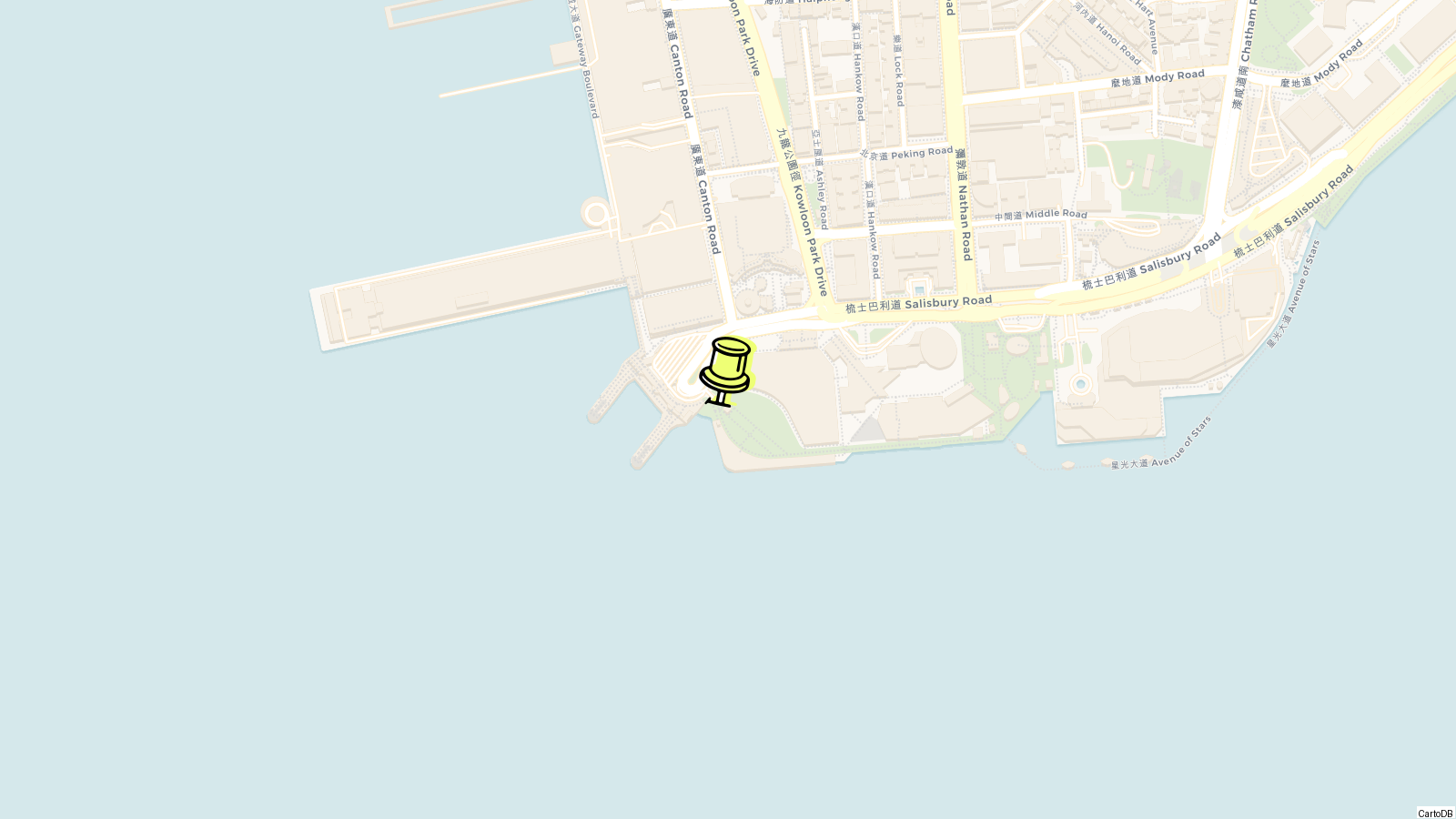
Essential info
Visit details
Overview
The Clock Tower is the 44-metre red-brick tower on the Tsim Sha Tsui waterfront that survives from the 1916 Kowloon station of the Kowloon-Canton Railway, and it stands next to the Star Ferry pier. It is the only piece of the old terminus left, and everything else on the site, the Hong Kong Cultural Centre, the Hong Kong Space Museum and the Hong Kong Museum of Art, was built on the station grounds after the building came down. Officially it is the Former Kowloon-Canton Railway Clock Tower; locals call it the Tsim Sha Tsui Clock Tower, and it is a declared monument.
You come for two things: the building itself and where it stands. The tower is red brick and granite in the Edwardian Classical Revival style, with an octagonal domed belfry at the top and a seven-metre lightning rod above that. Around it is a concrete waterfront of 1980s public buildings, and the brick reads as the one warm thing in view. In front is Victoria Harbour and the full Hong Kong Island skyline, which is why the base of the tower is where most people take their first photograph of the city.
The tower is free to look at, open air, and takes ten minutes unless you make it the start of a promenade walk. There is one catch in 2026, maintenance scaffolding, which the Visiting section explains.
The railway it once served was the British colony’s line to Canton (Guangzhou), and the terminus sat right on the seafront, so the line ended where the harbour crossing began. The trains left in 1975, but the ferry pier is still next door, and arriving by boat from Central is still the right way to see the tower for the first time.
History
The plan for a Kowloon-Canton Railway with its terminus in Tsim Sha Tsui was settled in 1904. The design went to A. B. Hubback, an architect then working for the government of the Federated Malay States, partly because he had already built railway stations there, including Kuala Lumpur’s. The line itself opened on 1 October 1910, but the station was another matter. Trains used a temporary wooden station at Hung Hom while the government chose a site, built sea walls and reclaimed the land, and construction at Tsim Sha Tsui did not begin until 1913. The First World War then held up deliveries of materials and stopped work for a spell. The tower was finished in 1915, and the whole terminus opened on 28 March 1916.
The clock arrived in pieces. The first face was second-hand, taken from the Pedder Street Clock Tower in Central, a 24-metre tower of 1862 that had been pulled down in 1913; for its first five years the new tower told the time on one side only. The other three faces were fitted in 1920 and all four started running on the afternoon of 22 March 1921. The bell was cast in 1919 by John Taylor and Co of Loughborough in England and reached Hong Kong in 1920.
The bell’s long absence
The bell chimed for three decades and then fell silent for seventy years. In 1950 the clock was converted to four separate motors, one per face, which meant the four dials no longer quite agreed with each other, and the bell was taken out of use. After the terminus closed it left the building altogether: it was displayed at Sha Tin station from the mid-1980s to 1995, then kept at the Kowloon-Canton Railway Corporation offices in Fo Tan into the early 2000s, and only in 2010 did the government put it back inside the tower. Chiming resumed on 9 December 2021, though not by the old mechanism: a digital bell system synchronised with the Hong Kong Observatory’s clock now sounds the hours between 8am and midnight.
The building took damage in the fighting before the Japanese occupation in 1941, and the occupiers painted it camouflage grey and stopped the chimes. The clock was restarted on 2 October 1945, and the paint came off to reveal the red brick and grey stone again. The oddest chapter is the early 1970s, when the tower housed a government dental clinic.
By the 1970s the station had no room to grow on its harbour-front plot. A new Kowloon station at Hung Hom, on freshly reclaimed land to the east, was inaugurated on 24 November 1975, and the Tsim Sha Tsui terminus closed on 29 November 1975; the first train left Hung Hom the next morning at 8:26. Demolition of the old building began on 7 June 1978 over the objections of the Heritage Society and other campaigners, and keeping the tower was the compromise. Cross-border trains to the mainland started running from Hung Hom on 4 April 1979, and that station handled them until through services were dropped for good in 2024, by which time high-speed trains from West Kowloon had taken over the job.
The Space Museum opened on the cleared site in 1980 and the Cultural Centre in 1989, its plaque unveiled by Prince Charles and Princess Diana on 8 November that year; the Museum of Art followed in 1991. The tower was gazetted as a declared monument under the Antiquities and Monuments Ordinance on 13 July 1990, which gives it statutory protection.
Visiting
The tower is an exterior visit only. There is no ticket and no admission charge, the surrounding concourse is open at all hours, and the interior, which was open to visitors in the past, is closed for maintenance; a wooden staircase inside leads to the top, but you will not be climbing it.
Getting there
Arrive by Star Ferry from Central if you can. Boats run from 06:30 to 23:30 in both directions, every 6 to 8 minutes for most of the day and every 10 to 12 minutes early and late, and the Tsim Sha Tsui pier delivers you onto the concourse beside the tower. The adult fare from Central is HK$4 on the lower deck and HK$5 on the upper deck Monday to Friday, HK$5.60 and HK$6.50 at weekends and on public holidays; pay with an Octopus card or buy a token at the pier, because coins are no longer accepted at the turnstile. There is also a Star Ferry route from Wan Chai to the same pier, less frequent, with boats every 8 to 20 minutes from 07:30 until about 23:00. By MTR, the waterfront is a walk from exit E of Tsim Sha Tsui station (Tsuen Wan line) or exit J of East Tsim Sha Tsui (Tuen Ma line); the two stations are linked underground.
What to look at
Once the scaffolding is down, the details worth a slow circuit are the ones the Antiquities and Monuments Office picks out: the red brickwork of the octagonal belfry set against the white-painted classical features, the scroll-shaped buttresses, the columns and the cornices, with granite in the lower courses. Stay near the base on the hour and you will hear the bell; it sounds hourly from 8am to midnight.
The tower sits between the Cultural Centre and the ferry pier, with the Space Museum and the Museum of Art just east along Salisbury Road, so a natural route runs off the ferry, round the tower, then east along the waterfront past all three buildings. Wikivoyage’s suggested Tsim Sha Tsui walk starts at the ferry terminal, takes in the tower, and carries on along the promenade to the Avenue of Stars; that is the sensible order, and the tower alone will occupy you for ten to fifteen minutes.
Tips
- Ride the lower deck from Central on a weekday and the crossing costs HK$4, the cheapest way over the harbour; the upper deck is HK$5. On the lower deck you are next to the engine room, so expect noise and diesel.
- Crossing more than a few times? A four-day tourist pass costs HK$50 and gives unlimited rides on the Central and Wan Chai routes; buy it at the Tsim Sha Tsui pier control centre.
- Come after dark and stay for A Symphony of Lights, the harbour light show that starts at 8pm every night and runs for about ten minutes; the Tsim Sha Tsui waterfront is one of the two official vantage points with live music and narration.
- English narration for the show is on Mondays, Wednesdays and Fridays; Tuesdays, Thursdays and Saturdays are Mandarin, Sundays Cantonese.
- The show is cancelled for the evening if the Observatory has a typhoon signal 3 or higher, or a red or black rainstorm warning, in force at or after 3pm, even if it is lifted before 8pm. On a stormy afternoon, do something else.
- If you want the bell rather than the building, time a pass for the top of the hour between 8am and midnight; there is nothing to hear outside those hours.
- The Tsim Sha Tsui to Central route does not take bicycles. The Wan Chai route does, on the lower deck for an extra HK$14, except during the evening peak from Wan Chai.
Nearby
- Hong Kong Cultural Centre, immediately east of the tower at 10 Salisbury Road. Home of the Hong Kong Philharmonic, with a 2,019-seat concert hall and an 8,000-pipe Rieger organ; open 9am to 11pm, so the foyer is a useful shelter.
- Hong Kong Space Museum, next along Salisbury Road, a few minutes on foot. Hong Kong’s only planetarium is under the egg-shaped dome, with two exhibition halls alongside; it opened in 1980 and is closed on Tuesdays.
- Hong Kong Museum of Art, beyond the Space Museum on the same block. Almost 20,000 works, free entry to the permanent galleries, reopened in 2019 after a four-year rebuild.
- Avenue of Stars, further east along the promenade. Hong Kong’s answer to the Hollywood Walk of Fame, with handprints of film stars and a statue of Bruce Lee; it reopened in January 2019 after a redesign by the New York High Line’s landscape architects.
- Harbour City, next to the ferry pier on the other side. Hong Kong’s largest shopping mall, useful mainly for air conditioning and a harbour view at night.
- Hong Kong Museum of History, 100 Chatham Road South, about 20 minutes’ walk from the pier. Its permanent Hong Kong Story exhibition runs from prehistory to the 1997 handover.
Further afield in Hong Kong, the ferry itself is the link: Central and Wan Chai are one crossing away.
Know this destination? Help us improve
Your local experience is valuable to other travelers.