Hong Kong Museum of Art
Hong Kong's main public art museum on the Tsim Sha Tsui waterfront, free to enter and strongest in Chinese painting and Wu Guanzhong

Visit details
Overview
The Hong Kong Museum of Art is the city’s first and main public art museum, a glass-fronted building on the Tsim Sha Tsui waterfront with a collection of about 19,700 items and free entry to its permanent galleries. It reopened on 30 November 2019 after a four-year rebuild that took the exhibition area from about 7,000 to 10,000 square metres and the number of galleries from seven to twelve, so what you walk into today is in effect a new museum wrapped around a 1991 core.
You come for Chinese painting. Four core collections underpin the place: Chinese antiquities, Chinese painting and calligraphy, China trade art, and modern and Hong Kong art. Layered on top are private collections given to the museum whole. The two that matter most are the Xubaizhai Collection of Ming and Qing literati painting and calligraphy, donated by Low Chuck-tiew in 1989, and the largest holding of Wu Guanzhong’s work anywhere, more than 450 items built up through gifts from the painter and his family. If you only know Chinese art through the Palace Museum, this is where you see what happened to it after 1900, and what happened to it in Hong Kong specifically.
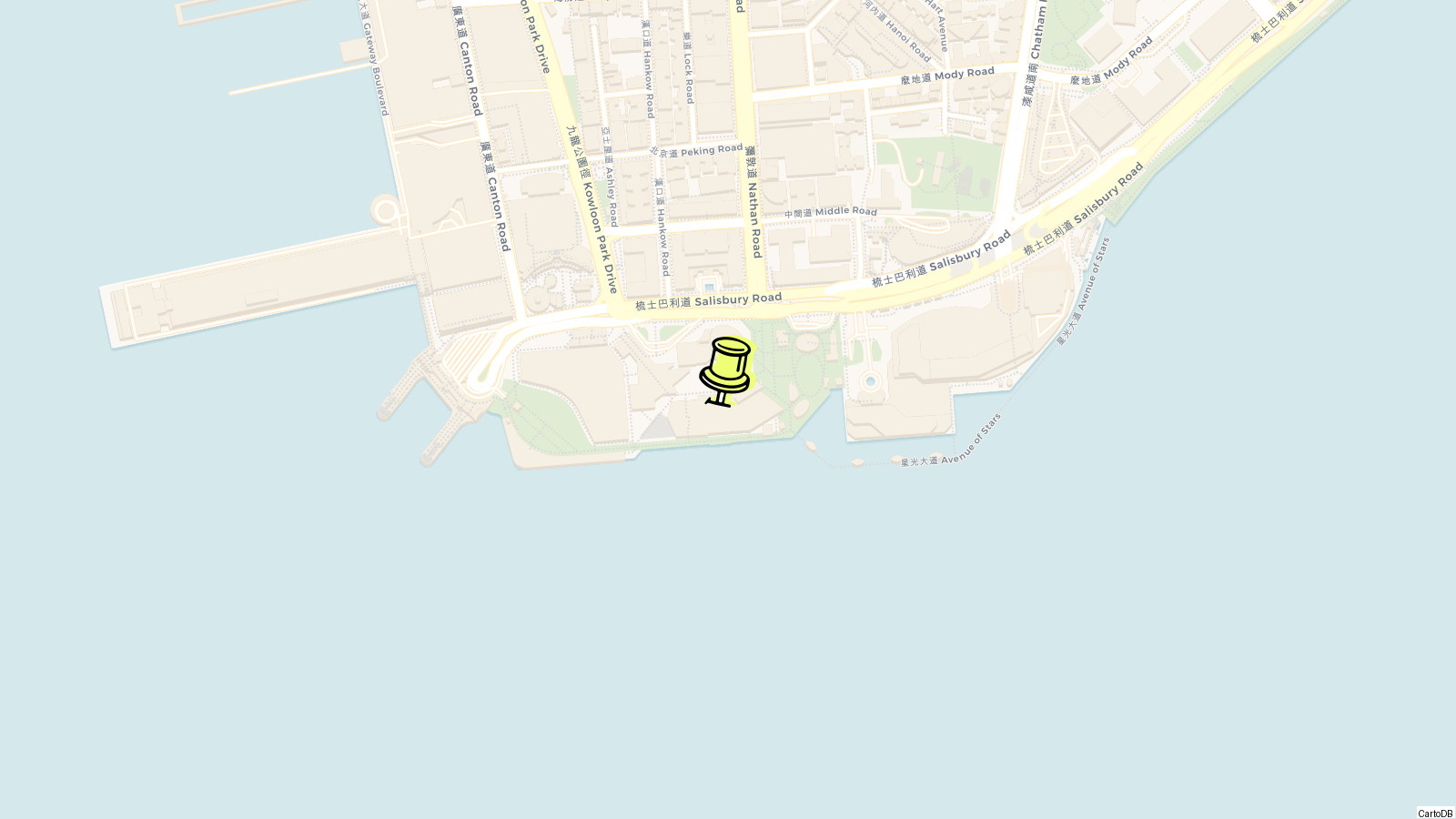
The other reason to come is the position. The building shares 10 Salisbury Road with the Hong Kong Cultural Centre and the Hong Kong Space Museum, all three standing on the ground of the old Kowloon railway station whose Clock Tower is still on the corner by the Star Ferry pier. The 2019 rebuild moved the cafe and restaurant to the harbour side and gave the lobby four entrances at ground level, which means the museum works as a way station on a Victoria Harbour walk even if you never look at a scroll.
Visiting
Hours are 10:00 to 18:00 on Mondays, Tuesdays, Wednesdays and Fridays, and 10:00 to 21:00 on Saturdays, Sundays and public holidays. The museum is closed on Thursdays (unless the Thursday is a public holiday) and on the first two days of Lunar New Year, and it shuts early at 17:00 on Christmas Eve and Lunar New Year’s Eve. Admission is free except for special exhibitions, and the box office closes 30 minutes before the museum does.
Getting there is simple. The museum is a walk from Exit E of Tsim Sha Tsui MTR station and Exit J of East Tsim Sha Tsui station, and closer still to the Tsim Sha Tsui Star Ferry pier, which has services from Central and Wan Chai. The lobby is at ground level with entrances on several sides, so you can come in from Salisbury Road or from the promenade.
What to see, in order
Give the place two to three hours and go straight to the Chinese painting galleries, which are the reason the museum exists. The Xubaizhai Collection covers the Ming and Qing dynasties into the 20th century and is strongest in the Wu School, the Songjiang School, the Four Monks, the Orthodox School and the Eight Eccentrics of Yangzhou; the collection is named after a calligraphic plaque by Yi Bingshou (1754 to 1815), Low’s most treasured piece. Displays rotate, so a particular scroll may or may not be out, but there is always something of this quality on the wall.
The other painting collections
The museum’s own Chinese painting and calligraphy collection, begun in 1964, runs to over 5,400 works and concentrates on Guangdong: Guangdong painting, Guangdong calligraphy, the Lingnan School founded by Gao Jianfu, Gao Qifeng and Chen Shuren, and modern Chinese painting by names such as Huang Binhong, Zhang Daqian and Lin Fengmian. The Chih Lo Lou Collection adds the 17th-century loyalists, including Bada Shanren and Shitao of the Four Monks, whom Ho Iu-kwong collected on the principle that the character of the artist mattered more than the polish of the work.
The Wu Guanzhong Art Gallery is the one room to see even on a short visit. The holdings trace his path from oils to ink and from figurative to abstract, and include pictures from his 1970s “dung basket” years of rural labour, his sketches and manuscripts, his paint box and tools, and the medal the French government gave him.
The Chinese antiquities collection, more than 4,700 items with ceramics making up over half and running from the Neolithic to the 20th century, is where to go for objects rather than paper: bronzes, jade, lacquer, enamel, glass, bamboo carving and furniture, with southern Chinese material such as Shiwan pottery from Guangdong given particular weight. It has been reinforced recently by 490 sets of Qing snuff bottles from the Fuyun Xuan Collection of Christopher and Josephine Sin.
Finish with the modern and Hong Kong art galleries, which follow the city’s own art from the societies of the 1920s and 1930s, through the mainland masters who arrived after 1949 and the New Ink Painting Movement of the 1950s and 1960s, to the cross-media work of artists born here after the war. Special exhibitions are the only ticketed part of the museum; the current list and a real-time crowd tracker are on the museum website.
History
The museum began on the other side of the harbour. The Urban Council opened it as the City Hall Museum and Art Gallery on 2 March 1962, inside the new City Hall complex in Central, and its first big show, Hong Kong Art Today, ran from 25 May to 4 July that year as the first exhibition anywhere to take Hong Kong art as its subject.
The founding collection predates the museum. Two businessmen, Sir Paul Chater and Sir Robert Ho Tung, had already given the colonial government their private holdings of paintings, photographs and maps of the Pearl River Delta and the China coast in the 18th and 19th centuries; the government later bought further China trade pictures collected by Wyndham Law and Geoffrey Sayer, and custody of the lot passed to the new gallery in 1962.
What survived the war
Chater, born in Calcutta in 1846, gave the colony some 400 historical pictures, but the collection was dispersed and largely destroyed during the Japanese occupation and only 94 works remained after 1945; they are now a core part of the museum’s China trade holdings. The trade art collection has since grown to over 1,300 sets of pictorial objects, including work by George Chinnery, and is worth seeing for the record it gives of Hong Kong before 1841, Macao’s Praya Grande and the foreign factories of Canton.
In July 1975 the institution split into the Hong Kong Museum of History and the Hong Kong Museum of Art. The art museum stayed in City Hall, on the eighth to eleventh storeys of the High Block, until 1991, when it moved to its purpose-built home at 10 Salisbury Road beside the Cultural Centre; Governor Chris Patten formally inaugurated the new building on 11 September 1992. The move coincided with the museum’s most important gift. Low Chuck-tiew (1911 to 1993), who had studied painting in Shanghai under Huang Binhong and started collecting after arriving in Hong Kong after the Second World War, alarmed at the volume of Chinese art being sold abroad through the territory, donated his Xubaizhai Collection in 1989, and the Xubaizhai Gallery was built in 1992 to house it.
Gifts kept arriving. The Chih Lo Lou Collection of Ho Iu-kwong (1907 to 2006), strongest in the Ming loyalist painters of the 17th century, and the K.S. Lo collection of 605 pieces of tea ware, now shown at the museum’s branch, the Flagstaff House Museum of Tea Ware in Hong Kong Park, both came from local collectors. By then the 1991 building was too small for all of this, and the Leisure and Cultural Services Department closed it on 3 August 2015 for expansion.
The rebuild added a new annex block with a 9-metre-high gallery for large works, two more galleries on an extended roof floor, a ground-level lobby in place of the old first-floor reception, and a glass façade whose ripple pattern is meant to echo the harbour. It reopened on 30 November 2019 with 11 exhibitions, among them a centenary show of more than 100 Wu Guanzhong paintings,. The most recent large gift, Leo Wong Kwai-kuen’s Jingguanlou Collection of 1,110 works of 20th-century Shanghai School painting and calligraphy, arrived in November 2021 and has its own gallery on the fourth floor.
Tips
- Come on a Saturday or Sunday if you can. Weekend hours run to 21:00, and A Symphony of Lights starts at 20:00 every night on the harbour outside, so you can watch the ten-minute show from the waterfront and go back in for the last hour. The Star Ferry crossing is itself a good place to watch it from.
- Arrive by Star Ferry from Central rather than the MTR. The lower deck costs HK$4 on weekdays and the pier is nearer the museum than either MTR exit.
- Check the real-time crowd tracker on the museum website before a public-holiday visit; the page sits next to the opening hours.
- Sculpture is outside too. The 2019 rebuild extended the Art Square in Salisbury Garden and added an outdoor Art Corridor, so do a loop of the grounds before you go in.
- Tea ware is not here. The K.S. Lo collection lives at the museum’s branch, the Flagstaff House Museum of Tea Ware in Hong Kong Park on the Island side, so plan it as a separate stop.
- The China trade art rooms are the ones to show anyone who claims not to like Chinese painting: harbour views of Hong Kong before 1841 and Canton’s foreign factories, painted by the traders and studio artists who were there.
Nearby
- Hong Kong Cultural Centre, next door. Opened on 8 November 1989, it houses a 2,019-seat concert hall with an 8,000-pipe Rieger organ, the largest in Asia, and is home to the Hong Kong Philharmonic Orchestra.
- Hong Kong Space Museum, also at 10 Salisbury Road. Opened on 8 October 1980, its hemispherical dome holds Hong Kong’s only planetarium.
- Clock Tower, between the Cultural Centre and the Star Ferry pier. The 44-metre tower was finished in 1915 and has been a declared monument since 1990.
- Avenue of Stars, east along the promenade. The 440-metre walk of fame for Hong Kong cinema opened in 2004, reopened on 31 January 2019 after a three-year rebuild, and has the 2005 Bruce Lee statue and the 2014 Anita Mui statue. K11 Musea, the shopping centre inside the Victoria Dockside development at 18 Salisbury Road, sits beside it.
- The Peninsula, across Salisbury Road at the corner of Nathan Road. Open since 11 December 1928, it serves an English-style afternoon tea in the Lobby if you want to end a museum day the colonial way.
- Hong Kong Museum of History, at 100 Chatham Road South in Tsim Sha Tsui East. Its permanent exhibition, The Hong Kong Story, reopened on 1 April 2026 after nearly six years of rebuilding, now occupying the whole ground floor.
- M+, across the water in the West Kowloon Cultural District, is the contemporary counterpart: opened on 12 November 2021 in a Herzog & de Meuron building with 17,200 square metres of exhibition space, it covers 20th- and 21st-century visual culture, design and moving image, and overlaps very little with the Museum of Art.
Know this destination? Help us improve
Your local experience is valuable to other travelers.