Macau Tower
Macao's 338-metre observation tower, with a 223-metre viewing deck and a 233-metre bungy jump off the outer rim

Overview
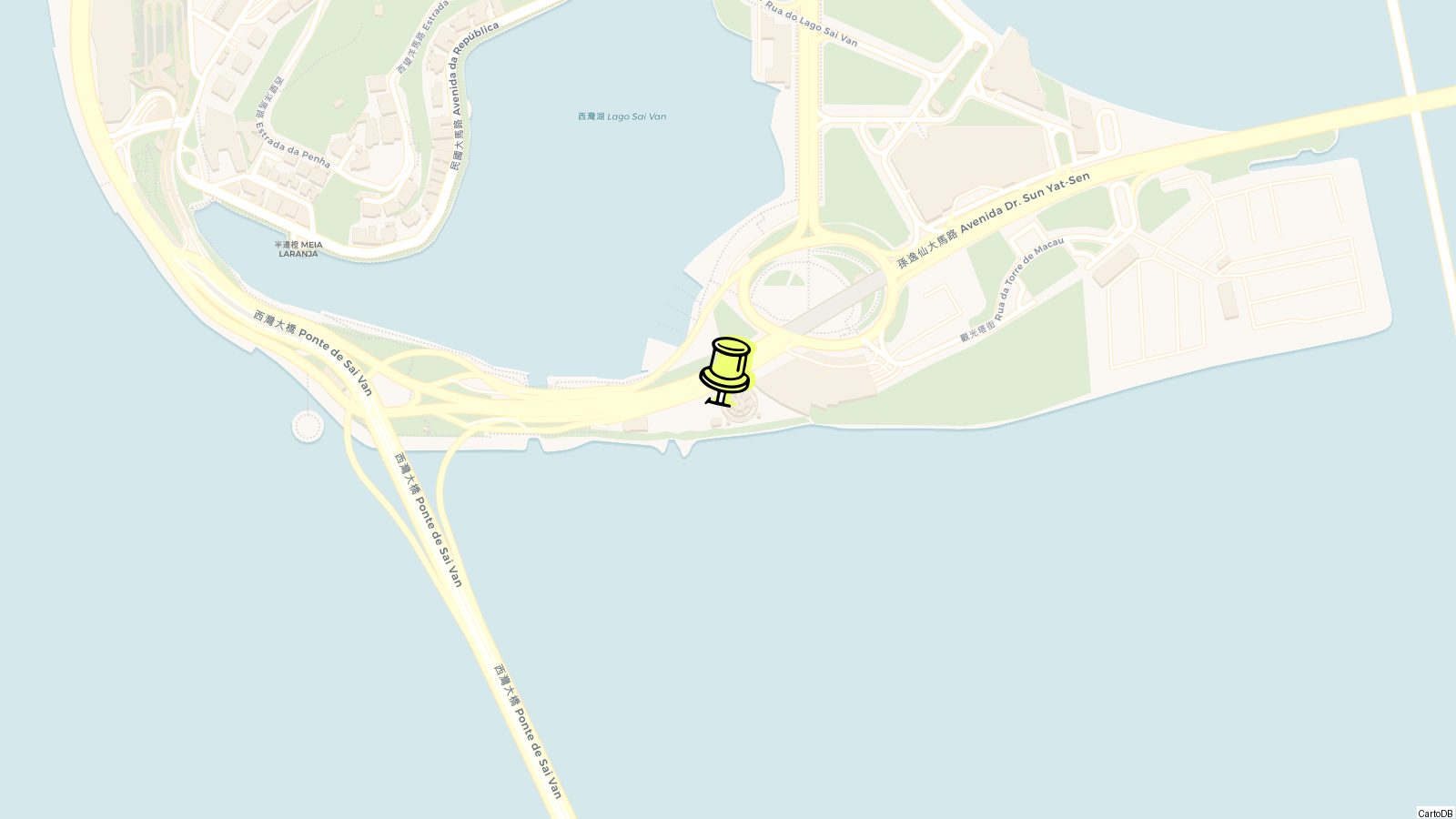
Macau Tower is a 338-metre observation and telecommunications tower on reclaimed land at the southern tip of the Macao peninsula, opened in December 2001, and you go up it for one of two reasons: the view from 223 metres, or the 233-metre bungy jump off the outside of it. With the Grand Lisboa casino it is one of the two shapes that define the Macao skyline, and it is the one you can actually go inside.
The full name is the Macau Tower Convention and Entertainment Centre, which tells you what fills the wide base: a convention centre, theatres, shops and a run of restaurants that keep the building busy even when nobody is heading upstairs. The pod near the top holds the two public levels covered by a standard ticket, the Level 58 Observation Lounge behind three-storey glass and the open-air Level 61 Adventure Deck, with a lounge and a revolving restaurant on the floors between them. On a clear day the panorama takes in the peninsula, the three bridges to Taipa and the Pearl River estuary beyond.
The tower belongs to Sociedade de Turismo e Diversões de Macau (STDM), the company built by casino magnate Stanley Ho, and is run by Shun Tak Holdings. Besides the tourism side, the mast carries broadcasting and telecommunications equipment, and the tower is a member of the World Federation of Great Towers.
The adventure products are what set it apart from other observation towers. AJ Hackett’s operation on the outer rim offers a bungy jump, a tethered Skyjump, a Skywalk around the edge with no handrail and a Tower Climb up the mast, all launched from 233 metres, and the bungy holds the Guinness World Record for the highest bungee jump from a building. If you are not jumping, the deck is still worth an hour; if you are, the deck ticket comes with a rather more expensive package.
History
The tower exists because Stanley Ho went to Auckland. Ho’s STDM had held Macao’s gaming monopoly since winning the public tender in 1961, and on a visit to New Zealand he was impressed enough by the Sky Tower there to commission a similar one for Macao. The Auckland tower, 328 metres and opened on 3 August 1997, had been designed by Gordon Moller of Craig Craig Moller, with Les Dykstra as project architect; the same pair produced Macau Tower, with the New Zealand engineers Beca Group handling the structure. The family resemblance is obvious once you know: a slim concrete shaft, a pod near the top and a mast that adds a good deal of the total height.
Construction started in 1998 and cost US$130 million. The site did not exist a decade earlier. The tower was one piece of the US$1 billion Nam Van land reclamation project, which closed off the old Praia Grande bay to create the Nam Van and Sai Van lakes, added 130 hectares of land and enlarged the peninsula by a fifth.
The reclamation scheme began in 1991, when a causeway partially closed Praia Grande Bay and turned the water behind it into Nam Van Lake; Sai Van Lake, the one the tower stands beside, was a bay closed off by infill in the same programme, and the two lakes together cover 80 hectares. Avenida Dr Stanley Ho, the road that separates them, is named after the man who paid for the tower. Everything you see from the base of the tower looking north, the lakeside promenade, the government buildings on the Nam Van shore, was open water when Ho first had the idea.
The tower opened on 19 December 2001, two years into Macao’s life as a Chinese special administrative region, and immediately became the post-handover landmark the territory had lacked: the old skyline was churches, a lighthouse and a fortress, none of them tall. Three years later, on 19 December 2004, the 2.2-kilometre Sai Van Bridge opened beside it, a double-deck crossing to Taipa with an enclosed lower deck for typhoon days, which is why the view from the deck now has three bridges in it rather than two.
The commercial bungy dates from that same December. Hackett’s jump broke his own record set from the Eiffel Tower in 1987, and the Hong Kong actor Edison Chen made the inaugural public jump on the same day to launch the tower’s bid for the highest bungy facility in the world. The Skyjump, Skywalk and Tower Climb followed as the operation grew, and at 233 metres the descent point is now second only to the 252-metre SkyJump at The Strat in Las Vegas among commercial decelerator drops.
Television did the rest of the marketing. The tower has hosted Roadblock tasks on The Amazing Race (the All-Stars episode aired on 22 April 2007), The Amazing Race Canada in 2014 and two episodes of The Amazing Race Asia, plus a walk around the rim by Karl Pilkington and Warwick Davis for An Idiot Abroad and a bungy by Anthony Bourdain for No Reservations. Macao’s government gave the building its Tourism Medal of Merit in 2006.
Visiting
The observation decks open daily from 10:00 to 20:00. An adult ticket is MOP 208, children aged 3 to 11 and seniors of 65 and over pay MOP 138, and infants under three go free with a paying adult; any child under 11 must be accompanied by an adult with their own ticket. Tickets are sold on site and online at macautower.com.mo; the deck’s own number is +853 8988 8612.
The ticket covers two levels. Level 58 is the Observation Lounge, 223 metres up, an enclosed floor behind three storeys of glass with a full 360-degree sweep and glass panels set into the floor for anyone who wants to look straight down. Level 61 is the Adventure Deck, the open-air platform where the bungy, Skyjump and Skywalk launch, so you can watch people step off the edge from a few metres away without paying for the privilege yourself.
The adventure activities are booked separately through the operator, now trading as Sky Park Macau, and the tower asks you to reserve on the operator’s site rather than at the door. Current prices on skyparkmacau.com are MOP 3,088 for a solo bungy (MOP 5,488 tandem), MOP 2,188 for the Skyjump (MOP 3,288 tandem), MOP 788 for the Skywalk and MOP 2,688 for the Tower Climb. The bungy, Skyjump and Skywalk also run evening sessions after dark, from 18:00 in winter and 19:30 in summer, when the city lights are on and the drop looks a good deal further.
Eating at altitude means the 360 Café on Level 60, a buffet restaurant that completes a full rotation roughly every hour and a half. It serves lunch in two sittings (11:30 to 13:00 and 13:30 to 15:00) at MOP 348 for adults and MOP 174 for children aged 3 to 11, high tea from 15:30 to 17:30, and dinner from 18:30 to 22:00 at MOP 568 and MOP 284; reservations are on +853 8988 8622, and a meal does not include the observation deck ticket except on specific event nights.
Getting here is easy from anywhere on the peninsula. Buses 9A, 18, 18B, 23, 26, 32, 60 and 65 all stop at M177 Torre de Macau; bus 32 from the Macau Ferry Terminal runs about every 15 minutes and takes about 15 minutes, and bus 26 links the Cotai ferry terminal (around 30 minutes) and the airport (around 35 minutes). The light rail stop is Barra, and free shuttle buses run from several casino hotels including Hotel Lisboa, Grand Lisboa Palace, MGM Macau and MGM Cotai. On foot it is around 20 minutes from the town centre.
Tips
- The deck shuts at 20:00, so in summer you can be up there for sunset and the first hour of lights without paying for an evening package; in winter the sun is down well before closing and the last hour is the cheapest night view in Macao.
- Do not buy a 360 Café meal expecting it to double as your deck ticket. It doesn’t, apart from occasional event nights bundled with a deck entry, so budget for both if you want the rotation and the open-air level.
- The cheaper meal is downstairs. Tromba Rija on the ground floor, a Portuguese buffet that opened at the tower in 2014, does a weekday lunch at MOP 218 (MOP 298 at weekends, MOP 368 for dinner), runs Tuesday to Sunday from 12:00 to 22:00 and costs a lot less than the revolving floor.
- If you are jumping, look at the tandem options: a tandem bungy is MOP 5,488 for two against MOP 6,176 for two solo tickets, and it takes the “who goes first” argument out of it.
- The Skywalk at MOP 788 is the budget way onto the outside of the tower. You get the harness, the rim and the 233-metre drop under your feet, without the free fall.
- All four outdoor products depend on the weather, and Macao gets typhoons and heavy summer storms. Book a jump early in your stay so there is a day spare if it is called off.
- Driving is pointless unless you are eating: parking is MOP 30 an hour, but spending MOP 100 or more in the building gets the first two hours free.
- Under-11s cannot go up alone, so a parent watching from the café while the children do the deck is not an option.
Nearby
The southern tip of the peninsula is quiet, residential and Portuguese in feel, and everything below is walkable from the tower base.
Penha Hill rises to 62.7 metres just north-west of the tower, the third-highest hill in Macao, with the Chapel of Our Lady of Penha on its summit. The chapel dates from 1622 and took its current form in 1935, and the lookouts around it give the best free view of the tower, the two lakes and the three bridges to Taipa.
Avenida da República curves around the headland below the hill, lined with Portuguese residential buildings looking out over Nam Van and Sai Van lakes, and ends at the Pousada de São Tiago, a hotel built into the walls of the ruined Barra fortress.
Follow the avenue west and you reach Barra Square and the A-Ma Temple, built in 1488 to the sea goddess Mazu and the source of the territory’s name: Portuguese sailors asked what the place was called and were told “A-maa-gok”, the pavilion of the goddess. It has been part of the UNESCO Historic Centre of Macao since 2005, the same inscription that covers Mandarin’s House a few streets up the hill.
Opposite the temple is the Maritime Museum, open since 1987 and in its current building since 1990, covering Macao’s seafaring and fishing history with an aquarium gallery attached; it closes on Tuesdays. For a meal in the same corner, A Lorcha at 289 Rua do Almirante Sérgio, near the temple, is a long-standing Macanese and Portuguese place known for clams and African chicken; it also closes on Tuesdays, and you should book for weekends.
Across the water, the light rail from Barra crosses the Sai Van Bridge to Taipa in a few stops, so the tower pairs neatly with an afternoon on the other side of the bridge you have just been looking at.
Know this destination? Help us improve
Your local experience is valuable to other travelers.