Terracotta Army
About 8,000 life-size Qin soldiers in three pits at Lintong, 35 km east of Xi'an

Visit details
Overview
The Terracotta Army is the clay garrison buried beside the tomb of Qin Shi Huang, China’s first emperor, in three pits at Lintong, 35 km east of Xi’an. Estimates from 2007 put the contents of the three pits at more than 8,000 soldiers, 130 chariots with 520 horses and 150 cavalry horses, most of them still in the ground; the figures were buried in 210 to 209 BCE to protect the emperor in the afterlife. You go because nothing else from the ancient world matches it for scale: a life-size army, no two faces alike, standing in formation about 7 metres below the fields where farmers found it in 1974.
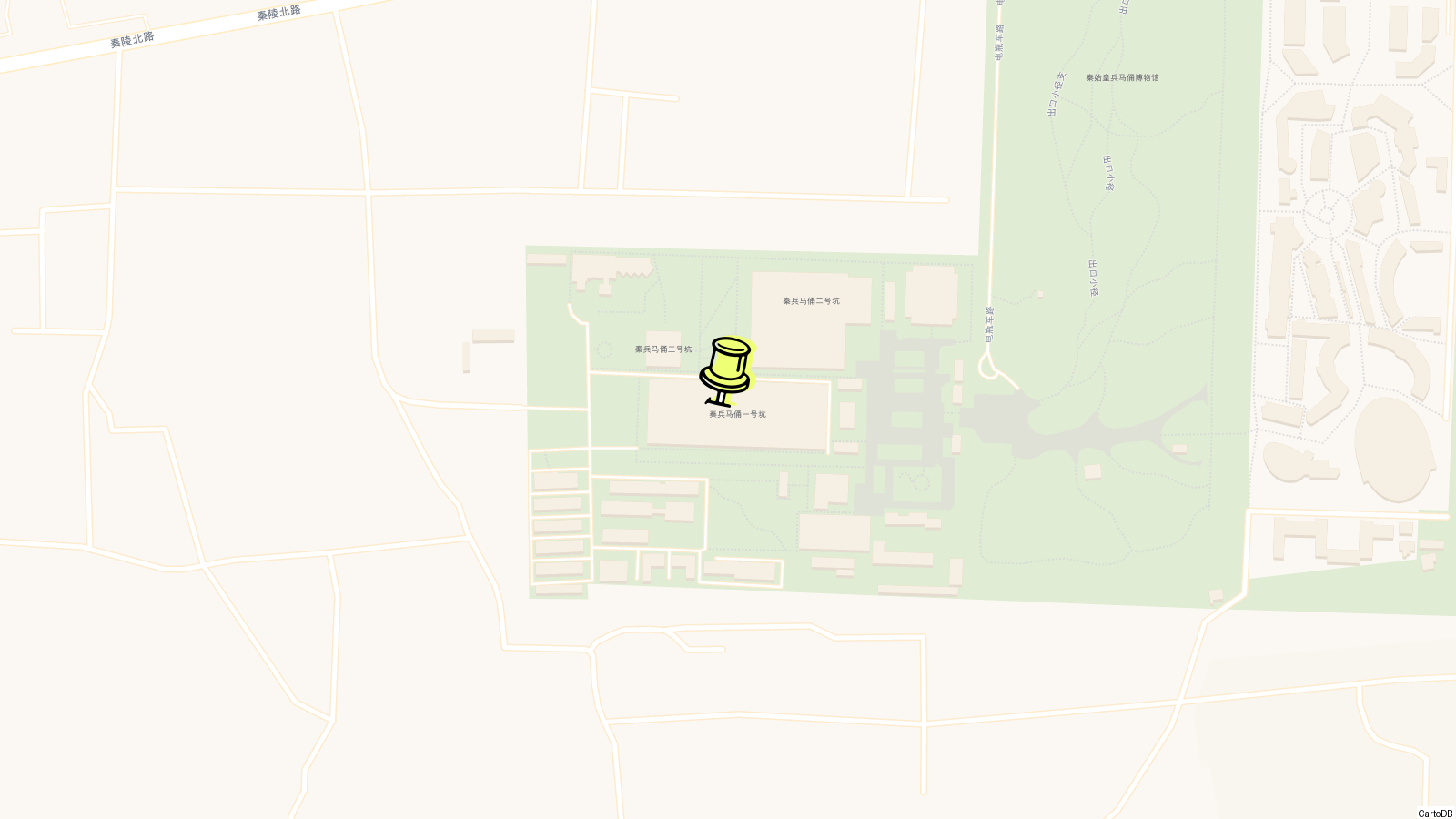
The pits sit under protective halls roughly 1,500 metres east of the tomb mound, and the soldiers face east, towards the conquered states the emperor had most reason to fear. Pit 1 is the one everybody photographs: 230 metres long, 62 metres wide, eleven parallel corridors holding the main army of more than 3,000 figures. Pit 2 holds cavalry, infantry and war chariots and is read as a military guard; Pit 3 is the command post, with high-ranking officers and a single chariot. A fourth pit was found empty, perhaps never finished.
The warriors are only the famous corner of a much bigger site. Ground-penetrating radar and core sampling put the necropolis at about 98 square kilometres, and other pits have produced terracotta officials, acrobats and strongmen, stone armour suits, and bronze cranes and ducks arranged in an underground park. The visitor site, run as Emperor Qinshihuang’s Mausoleum Site Museum, has two halves: the Terracotta Warriors Museum around the pits, and the Lishan Garden archaeological park around the unexcavated tomb mound, with a free shuttle between them. Do the warriors first and treat the mound as an optional second half.
History
Ying Zheng became king of Qin in 246 BCE at the age of 13, conquered the six remaining warring states (Han, Zhao, Yan, Wei, Chu and Qi) between 230 and 221 BCE, and took the new title Shi Huangdi, First Emperor. He standardised the script, the currency, weights and measures and even the axle width of wagons, and joined existing northern fortifications into an early form of the Great Wall. Work on his tomb began the year he took the throne; full-scale construction started after unification in 221 BCE and ended around 208 BCE, some 38 years in all.
Sima Qian, writing in the Records of the Grand Historian about a century later, said 700,000 men were sent to build it, that the burial chamber held palaces and towers for a hundred officials, rivers and seas of mercury, and crossbows rigged to fire at intruders, and that the craftsmen who knew its secrets were sealed inside after the funeral. His account never mentions a terracotta army at all. It was the discovery of the pits, and later the high mercury readings in the soil of the mound, that made historians take the rest of him more seriously.
Not everyone accepts the 38-year timeline. Duan Qingbo, who led the mausoleum’s archaeological team for more than a decade, argued that Sima Qian’s account was written to persuade a Han emperor, and that the real project started after unification and took about seven years, from 219 to 213 BCE. What nobody disputes is that the work stopped early: when a peasant rebellion broke out in the late Qin, the general Zhang Han redeployed the entire workforce from the mausoleum to fight it. Xiang Yu is said to have looted the tomb after entering Xianyang, and a later story blames a shepherd who wandered into the dug pit with a torch looking for his sheep and set the structures alight. No solid evidence of destruction has been found at the tomb itself, but the warrior pits do show fire damage and burnt roof rafters.
The figures were made in workshops by government labourers and local craftsmen using local clay. Heads, arms, legs and torsos were produced separately and luted together, the faces came from at least ten moulds and were then individualised with added clay, and the legs were probably made the same way as the drainage pipes of the period. The sculptors signed their names in the figures’ armpits. Every figure was then painted: iron oxide, cinnabar, malachite, azurite, charcoal and the synthetic pigment now called Han purple, over a lacquer base. That lacquer is why excavation has been so slow. In Xi’an’s dry air it can curl within fifteen seconds of exposure and flake off in four minutes, which is also the main reason the tomb mound itself stays sealed.
Most figures held real bronze weapons. The majority were looted soon after burial or have rotted away, but more than 40,000 bronze items have been recovered, mostly arrowheads in bundles of 100, plus swords, spears, lances, battle-axes and crossbow triggers; some swords carry inscriptions dating them to between 245 and 228 BCE. The famous claim that the blades were coated in chromium to stop corrosion was overturned in 2019: the chromium had leached from nearby lacquer, and the slightly alkaline soil did the preserving.
On 29 March 1974, in the middle of a drought, the farmer Yang Zhifa, his five brothers and a neighbour, Wang Puzhi, were digging a well near the village of Xiyang when they brought up a terracotta head and a bronze arrowhead. Yang was paid 10 yuan for two cartloads of fragments, and the district cultural centre then bought back the arrowheads he had already sold on. Shaanxi archaeologists began excavating what became Pit 1 in May 1974, found Pit 2 by drilling in May 1976 and Pit 3 that July, and the first protective hall was finished in 1979; by 2008 the wider necropolis had been surveyed at around 600 pits. The figures first travelled abroad to the National Gallery of Victoria in Melbourne in 1982, and UNESCO inscribed the whole mausoleum in 1987. Yang spent years signing books in the museum souvenir shop, and asteroid 267017 Yangzhifa carries his name.
Visiting
Peak-season hours (16 March to 15 November) are 08:30 to 17:00, with the site closing at 18:30; off-peak (16 November to 15 March) it is 08:30 to 16:30, closing at 18:00. Ticket checks stop at 17:00 in both seasons, and the museum reckons on about 1.5 hours for each of its two halves, the warrior pits and the Lishan Garden around the tomb mound, which the free shuttle connects. The adult ticket is CNY 120; the student rate is for Chinese students only.
From Xi’an, bus 306 (also signed Tourist Bus 5) leaves from the lot in front of Xi’an Railway Station, on the east side as you face the building, costs CNY 7 paid on board, takes about an hour (up to three in bad traffic) and stops at the hot springs on the way. Bus 307 ends at the same car park, and local bus 914 is slower on ordinary roads but runs more often. From the airport, bus 2 (CNY 27) reaches the railway station, or a taxi is about CNY 85 plus CNY 15 in tolls. Metro Line 9, opened in 2020, runs from Fangzhicheng to Qinlingxi via Huaqingchi and serves the warriors at the eastern end; join it from the end of Line 1 or Line 6.
The ticket office sits by the car park, a 5 to 10 minute walk from the museum entrance; a small bus covers the gap for CNY 5. On the way out you walk, along avenues of souvenir stalls. Take the pits in the order 3, 2, 1: each is bigger than the last, and Pit 1 makes the finale rather than the anticlimax.
Pit 3 is the headquarters: a handful of high-ranking officers around one war chariot. Pit 2 mixes cavalry, infantry and chariots. Pit 1 is the army proper, laid out in eleven corridors, most more than 3 metres wide, paved with small bricks and originally roofed with timber on beams and posts, reed mats and clay, then mounded about 2 metres above ground level. Everything standing today has been restored from fragments after the roof burned and collapsed onto the ranks.
The figures stand 1.75 to about 2 metres, officers taller than the men, and rank is written into hairstyle, uniform and armour. Look for the types: armoured infantry and unarmoured infantry, cavalrymen in pillbox hats, helmeted chariot drivers with extra armour, spear-carrying charioteers, armoured kneeling crossbowmen, unarmoured standing archers, and the generals. Details vary inside each rank too, from shin pads to long or short trousers to padding, and terracotta horses stand among the men.
Finish at the bronze chariots, found in 1980 beside the west passage of the tomb inside the inner wall. Restored over five years from fragments, they are near half life-size and each is drawn by four bronze horses: Number 1 is an open chariot with a standing driver and an umbrella stand, Number 2 a closed carriage with two seats and an umbrella-shaped roof. They are on the national list of relics forbidden to travel abroad, so here is the only place you will ever see them.
The Lishan Garden half is the 76-metre truncated pyramid of the tomb mound, ringed by an inner wall 2.5 km round and an outer wall of 6.3 km, laid out on the plan of the Qin capital Xianyang. There is nothing excavated to see, just gardens, the hill, two small pits and a dim reconstruction museum, and carts run to it for a fee. Go for the quiet and the sense of scale, not for objects.
Tips
- Finish your online booking before you set out. The museum asks for this explicitly to keep the roads clear, and the gate will not sell you anything once the daily cap is hit.
- Guides approach you at the ticket office, especially if you look foreign. The opening price is CNY 200 a head; CNY 75 to 100 is normal for the two to three hours they stay with you. Talk to them first: if you cannot follow their English at the start, it gets worse inside. The museum’s own guide desk is on +86 29 8139 9047.
- Hostel and hotel tours get you there without the bus, but budget a chunk of the day for the “terracotta factory”, the “museum” and the medicine shop they route through.
- Inside Pit 1, left of the entrance, a paid “photo spot” gives you 15 minutes at the railing with nobody jostling for CNY 200, picture included. You miss nothing by skipping it.
- The hawkers along the exit avenue are among the most persistent in China. A box of 15 cm warriors is offered at CNY 45 and sells for CNY 15 to 25, or CNY 5 to 10 if you hold out; stay quiet and they bargain themselves down.
- Wheelchairs can be borrowed on site, and there is a nursing room, drinking-water points and a medical room; the help and complaints line is +86 29 8139 9174.
Nearby
Huaqing Palace (Huaqing Pool), at the northern foot of Mount Li about 25 km east of Xi’an, is the sixth stop of bus 306 on the way back and has its own metro station, Huaqingchi, on Line 9. Emperor Xuanzong rebuilt the hot-spring complex in 723 and used it with his consort Yang Guifei, and in December 1936 the generals Zhang Xueliang and Yang Hucheng seized Chiang Kai-shek here in the Xi’an Incident. Most buildings are later, but the excavated Tang bath ruins are open, the Qing compound where Chiang was staying still shows bullet holes, and a cable car up the hill costs CNY 35 return. Adult entry CNY 120; open 07:00 to 19:00 March to November and 07:30 to 18:00 December to February.
Banpo, on the eastern edge of Xi’an at 155 Banpo Road (Metro Line 1 to Banpo, or buses 42 and 105 from the railway station), is a Yangshao-culture village occupied from about 4700 to 3600 BCE, found in 1953 and covered by a museum since 1957. The ditch-ringed settlement covered 5 to 6 hectares; 174 adult and 73 child burials have been excavated, and the red pots with black fish designs are the highlight.
Back in the city, the Shaanxi History Museum stands 800 metres north-west of the Giant Wild Goose Pagoda at Xiaozhai metro (Lines 2 and 3). The main halls are free but must be booked on the museum’s WeChat account; it closes on Mondays, and the Tang murals hall costs CNY 270 on top. Among its 370,000 objects is a 120 cm kneeling archer from the pits, which you can study far closer than anything at Lintong. The Small Wild Goose Pagoda is the usual third stop on a museum day.
Know this destination? Help us improve
Your local experience is valuable to other travelers.