Roman Temple of Évora
The columns of a 1st-century temple beside the cathedral

Essential info
Visit details
Overview
The Roman Temple of Évora is the best-preserved Roman monument in Portugal, thirteen standing Corinthian columns of granite with Estremoz marble bases and capitals standing on a 3.5 m podium in the square beside the cathedral, built in the 1st century AD to the cult of Augustus in the forum of Liberalitas Iulia and saved by being walled up as a tower of the medieval castle and used as a butcher’s shop until 1836. Everyone calls it the Temple of Diana; the name is a 17th-century invention of a priest, and the archaeology says Augustus or possibly Jupiter.
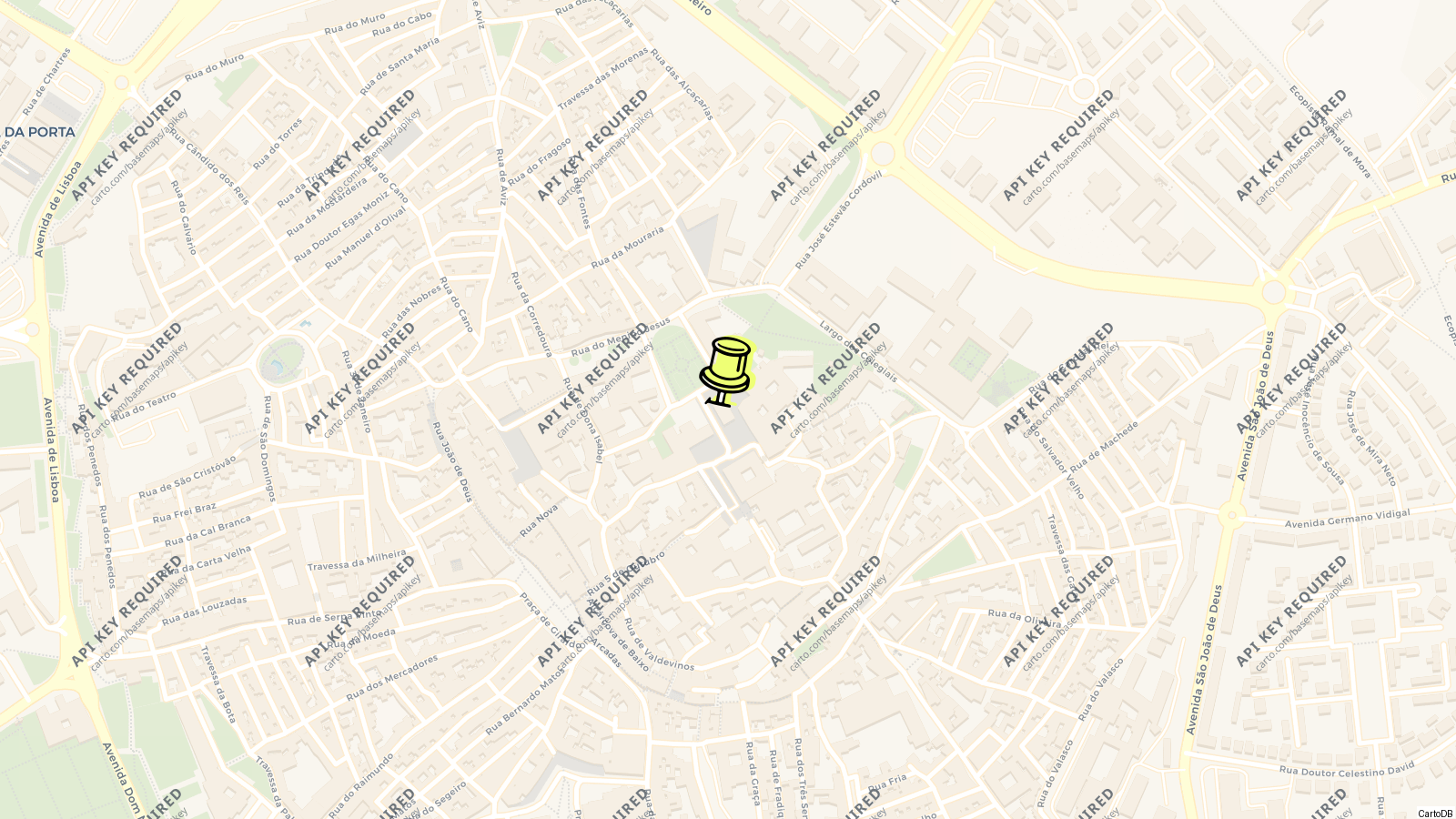
It stands in the open, free, at the top of the city between the cathedral, the Inquisition palace, the Cadaval palace and the Lóios convent, with the public garden’s terrace beside it for the view; go by day for the columns and at night when it is lit.
History
The temple was raised in the main square of the Roman town in honour of Augustus, remodelled in the 2nd or 3rd century when the forum was redesigned around it, and wrecked by the Germanic invaders of the 5th century. In the Middle Ages its stump became a strongpoint of the castle, Afonso V allowed stone to be quarried from it in 1467, and the base, columns and architraves were embedded in the walls of a tower that served as the town’s butchery from the 14th century to 1836, which is what kept them whole. Oral tradition and the humanist André de Resende credited it to the Lusitanian general Sertorius; Father Manuel Fialho gave it to Diana in the 17th century.
James Murphy drew the first reconstruction in 1789; in 1840 the library director Cunha Rivara cleared the Inquisition’s buildings from its north side and ran the first large archaeological dig in Portugal, finding the tanks of an early aqueduct; and in 1871 the Italian Giuseppe Cinatti stripped the medieval walls and merlons and restored the ruin in the Romantic manner that is seen today. Theodor Hauschild’s excavations of 1989 to 1994 found traces of the reflecting pool and portico that surrounded it.
Visiting
What stands is the whole podium, 25 m by 15 m and 3.5 m high in granite blocks, with the stumps of its double staircase on the south side facing the cathedral; the six columns of the north front with their architrave and frieze, four on the east and three on the west, fluted shafts of seven drums each between 1.2 and 6.2 m, on white marble bases and under marble capitals whose abacuses carry marigolds, sunflowers and roses. The portico was hexastyle, six columns across, and the whole thing was probably close to the Maison Carrée at Nîmes.
Walk round it, then into the Jardim Diana beside it, the terrace over the plain with a kiosk café, and on to the Lóios convent church next door with its blue tiles, now the pousada’s neighbour.
Tips
- The best photograph is from the garden terrace at the end of the day, with the columns against the sky and the Alentejo behind.
- Do not look for an entrance or a ticket; there is neither, and the temple is fenced only by a low kerb.
- Évora’s Roman baths are under the town hall on the Praça de Sertório, open in office hours, and are the other Roman visit.
- The square is quiet at breakfast and full of horse carriages by eleven.
Nearby
- Cathedral of Évora: across the square.
- Évora Museum: 50 m.
- Lóios church and the Cadaval palace: beside the temple.
- Capela dos Ossos: ten minutes downhill.
Know this destination? Help us improve
Your local experience is valuable to other travelers.