Luiz I Bridge
Two-deck iron bridge of 1886 between Porto and Gaia

Overview
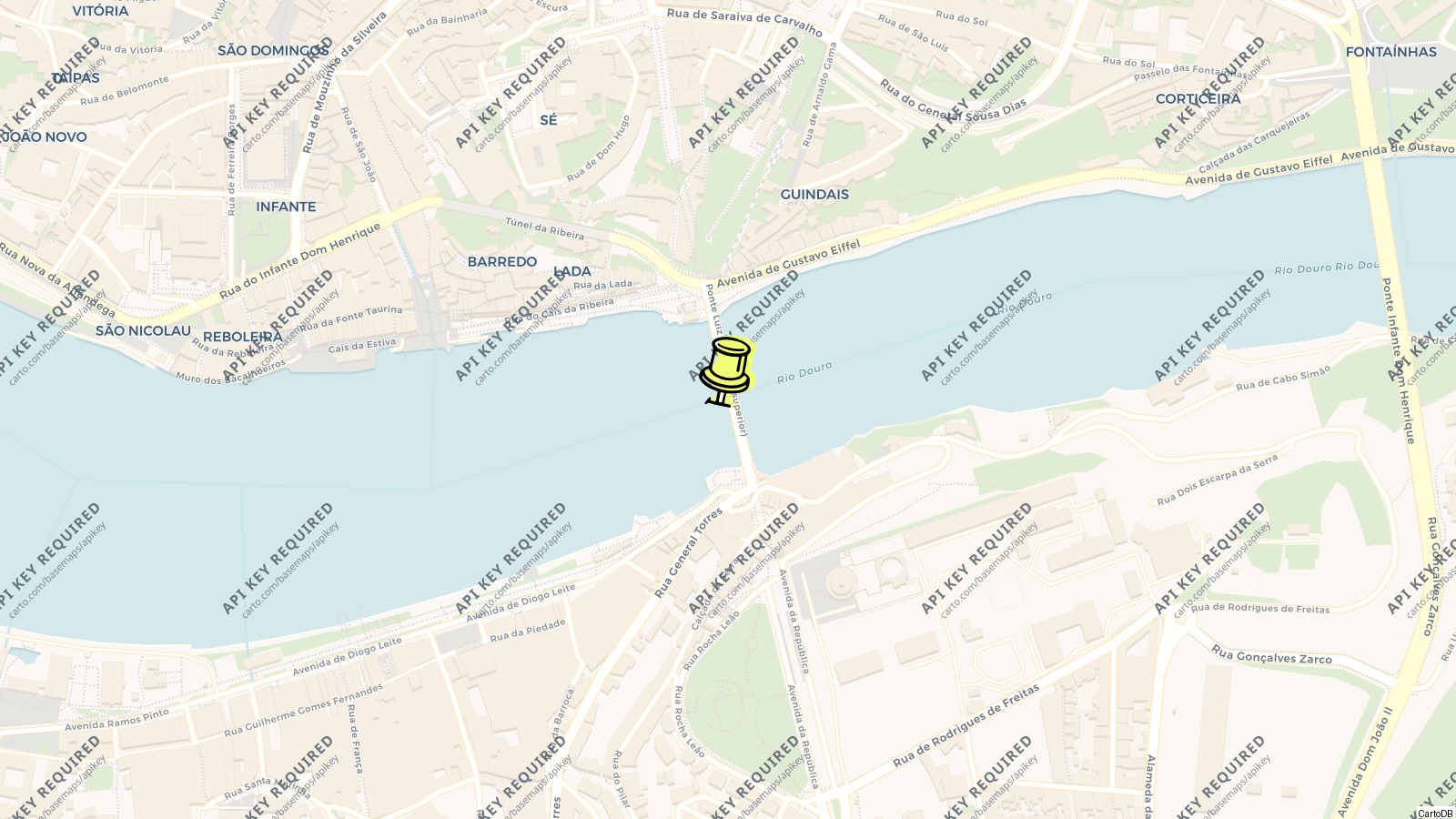
The Luís I bridge is the double-deck iron arch that joins Porto to Vila Nova de Gaia across the Douro, opened in 1886 with a span of 172 m that was then the longest of its kind in the world, and it is the piece of the city that appears in every photograph. Its designer, Théophile Seyrig, had been Gustave Eiffel’s partner and had built the Maria Pia railway bridge a kilometre upstream nine years earlier, which is why the two are so often confused.
It is a walk as much as a monument: the upper deck carries pedestrians and metro line D between the cathedral hill and the Serra do Pilar, high above the river, and the lower deck links the Ribeira quay with the port lodges of Gaia. The bridge is listed with the historic centre and the monastery opposite as the UNESCO World Heritage site of 1996.
History
Gustave Eiffel proposed a high single-deck bridge in 1879 and was turned down: the growing city needed two levels. A competition in November 1880 drew a dozen entries, Eiffel’s among them, and in January 1881 the Belgian Société de Willebroek’s design, by Seyrig, won on carrying capacity; the contract was signed on 21 November 1881 for 402 contos. It was built beside the towers of the old suspension bridge, the Ponte Pênsil, which was then dismantled.
Load tests began on 26 May 1886, the arch and upper deck were finished on 30 October and inaugurated the next day with a toll of 4 réis a person, and the lower deck opened the following year. Trams crossed the upper deck from 1908 to 1959, trolleybuses used both decks until 1993, and the toll ended on 1 January 1944. Listed in 1982, the upper deck was closed to cars in June 2003 for conversion to the metro, which opened on 18 September 2005; the lower deck closed for repairs in October 2021 and reopened in April 2023 restricted to public transport, taxis, bicycles and pedestrians.
Visiting
Both decks have pavements and both are free. The upper deck is reached from the Porto side by the Avenida Vímara Peres below the cathedral, or from the São Bento metro; it runs 172.5 m across the arch with cast-iron railings and lamps, the metro trams passing at walking pace, and the whole gorge of the Douro below, the cathedral and the Fernandine walls on one side and the Serra do Pilar monastery on the other. On the Gaia end are the Jardim do Morro, the classic viewpoint back over Porto, and the upper station of the Gaia cable car down to the lodges.
The lower deck starts at the Praça da Ribeira and the Guindais funicular’s lower station and lands on the Avenida Diogo Leite on the Gaia quay, where the lodges begin; buses, taxis and bikes use the roadway and walkers the sides. Look for the marble plaques reading PONTE LUIZ I at the foot of the arch and the royal arms on the upstream face.
Tips
- Cross high, return low: upper deck from the cathedral for the view, cable car or the Jardim do Morro path down to the lodges, lower deck back to the Ribeira.
- The upper deck is exposed and windy, and the metro trams pass close; keep children on the outer rail.
- Sunset from the Jardim do Morro, with the bridge lit and the Ribeira below, is the best free half hour in Porto.
- The Maria Pia bridge upstream is not this one; if the arch you see has a railway line and no decks, you are looking at the older bridge.
Nearby
- Ribeira: at the Porto end of the lower deck.
- Sé do Porto: five minutes from the Porto end of the upper deck.
- Serra do Pilar monastery and Jardim do Morro: at the Gaia end of the upper deck.
- Port lodges of Gaia, from Cálem on the quay to Taylor’s and Cockburn’s up the hill: at the Gaia end of the lower deck.
Know this destination? Help us improve
Your local experience is valuable to other travelers.