Ribeira
The riverside square and its arcades under the Luiz I bridge

Overview
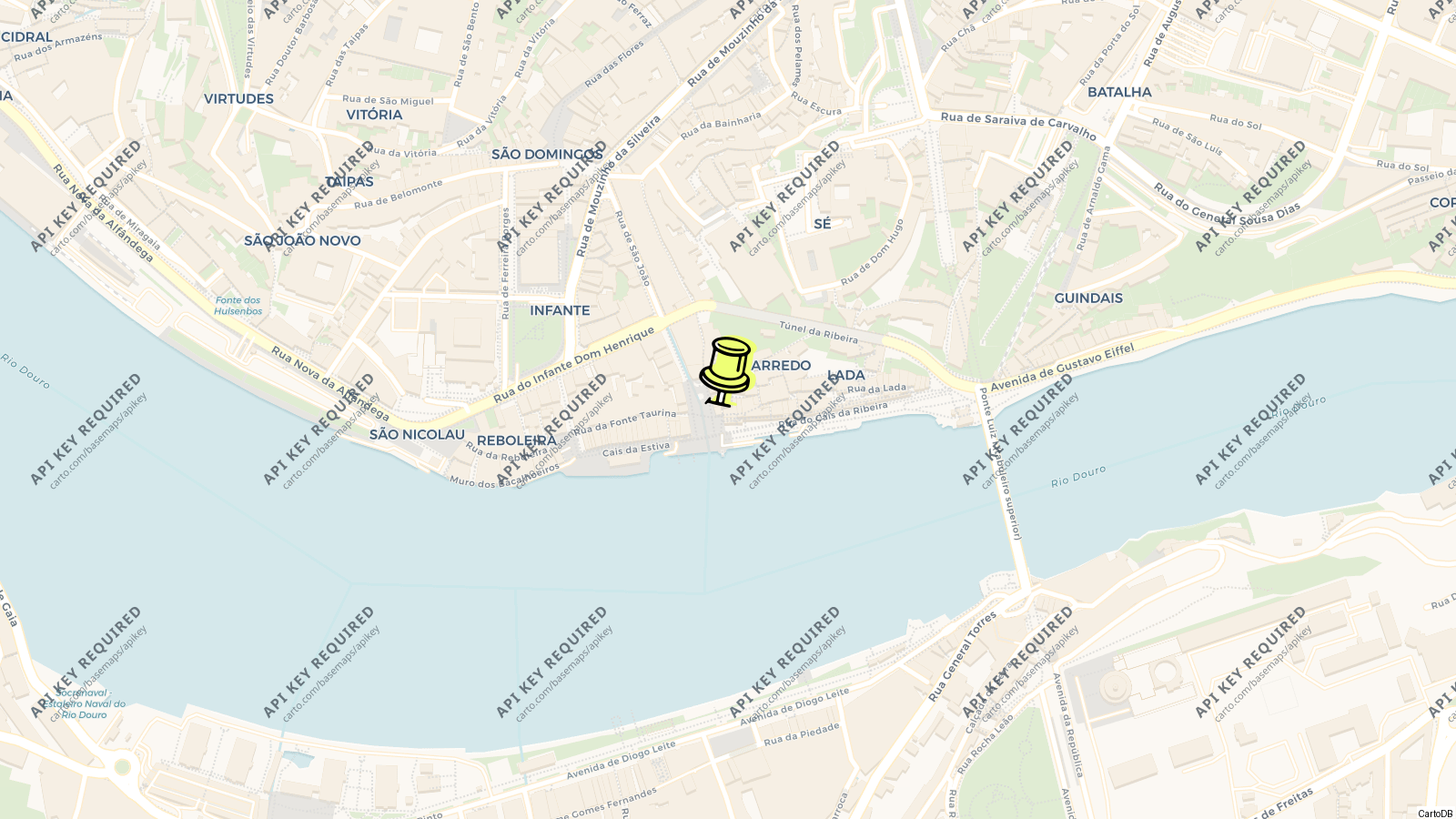
The Ribeira is Porto’s riverfront, the quay and the square at the foot of the old town where the city traded from the Middle Ages, and the place every visitor ends up: tall painted houses with arcades, restaurant terraces on the water, the boats for the river cruises, and the Luís I bridge framing the port lodges across the Douro. The Praça da Ribeira at its centre has been listed as a Property of Public Interest since 1971 and lies inside the World Heritage zone.
It is the obvious place to start a walk through the old centre, and by day it is tour boats and touts; the better version is the back lanes behind the quay, where the family restaurants share tables, and the quay itself at night, when the bars run until 03:00 and then the area empties out.
History
The Ribeira district along the river was the commercial and manufacturing heart of Porto from the Middle Ages, and the square was where fish, bread and meat were sold. A fire in 1491 destroyed the houses around it, and they were rebuilt with arcades at ground level and the square was paved in stone.
In the mid-18th century the governor João de Almada e Melo opened the Rua de São João to connect the quay with the upper town and had the square rebuilt, a project of 1776 to 1782 credited to John Whitehead, the English consul, who enclosed it on three sides with arcaded buildings; the fourth side was the medieval Fernandine wall, torn down in 1821 to open the square to the river.
Visiting
The Praça da Ribeira is the anchor: on its north side the three-storey monumental fountain of the 1780s carrying the arms of Portugal, with a modern St John the Baptist by João Cutileiro in its niche, and in the square the Cubo da Ribeira, José Rodrigues’s cube sculpture on the remains of a 17th-century fountain. From it the Cais da Ribeira runs east under the houses to the bridge, with the cruise operators’ booths and the departure point for the 50-minute six-bridges cruises, from about €15 and every half hour or so from 10:00 to 18:30.
Behind the quay the lanes climb towards the cathedral: the Rua da Reboleira with its small restaurants and river views, the Largo da Lada with the Ribeira lift up the cliff, and the stairs cut into the rock that Wikivoyage calls a laborious but rewarding walking tour. At the eastern end the lower deck of the bridge crosses to Gaia and the Guindais funicular climbs to Batalha for €4.
Tips
- Eat on the Rua da Reboleira or in the lanes, not on the Cais da Estiva terraces that the tour groups fill; the family places with shared tables are cheaper and better.
- The view of the Ribeira is from the other bank: cross the lower deck to the Gaia quay for the photograph.
- Bars here close at 03:00 or 04:00 and the area then goes dead and can feel insecure; leave with the crowd.
- On the night of 23 June, São João, the Ribeira is where the fireworks over the river are watched, and where the whole city stands.
Nearby
- Luís I bridge: at the eastern end of the quay, three minutes.
- Palácio da Bolsa and São Francisco: three minutes uphill to the west.
- Sé do Porto: ten minutes up the stairs, or the funicular and a short walk.
- Port lodges of Gaia: across the bridge, ten minutes.
Know this destination? Help us improve
Your local experience is valuable to other travelers.