Cartes
Stone archways, orange-tiled roofs, and afternoons that always end with a walk along the Besaya river in a village of just 2,000 people
Visit details
Overview
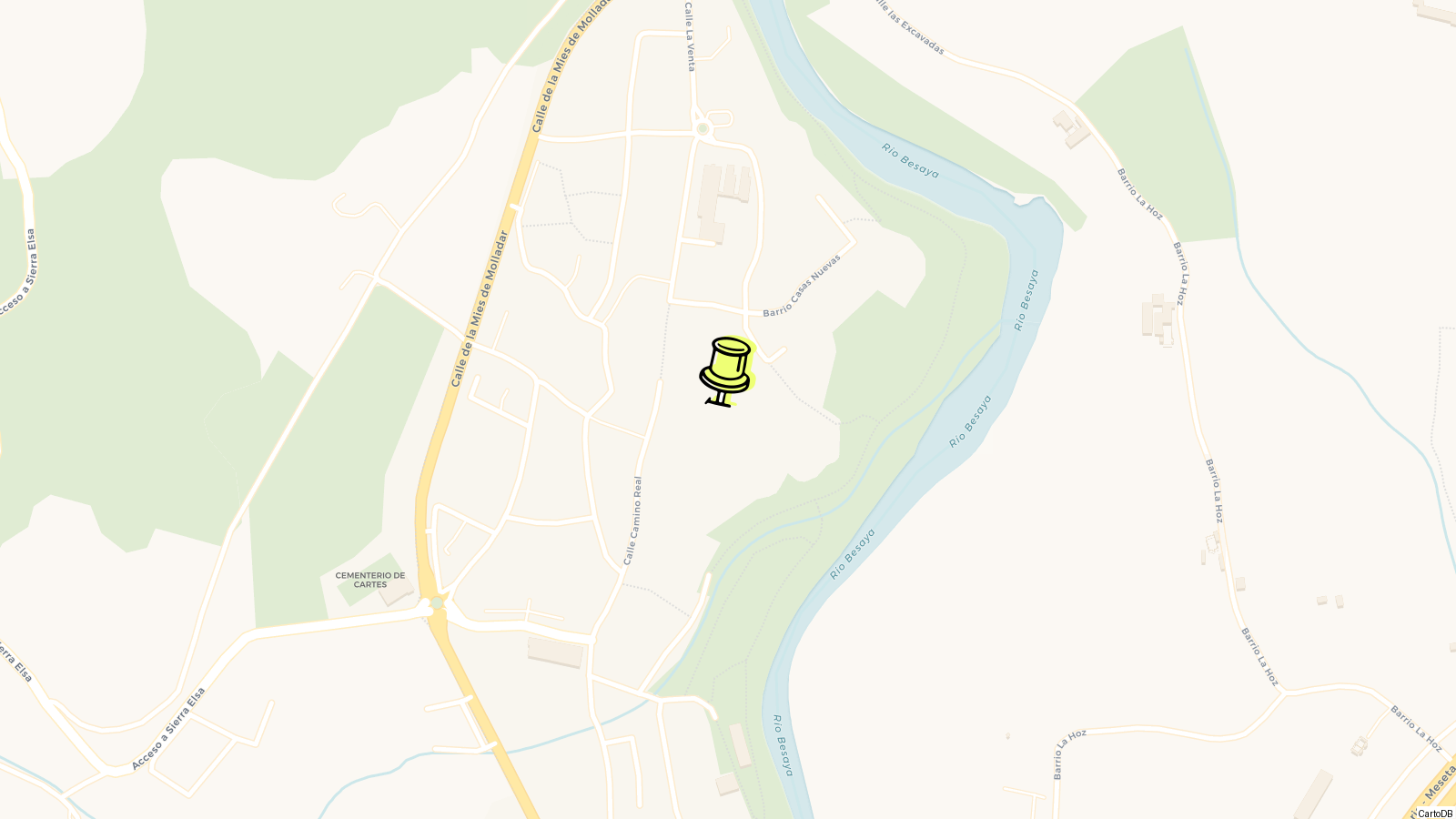
Cartes sits just over 30 km from Santander, right where the Besaya river valley starts to flatten out. Officially, the whole municipality has about 5,863 people as of 2025, but if you’re talking about the “Cartes” village proper, it’s closer to 2,250, tiny enough that you can cross the historic part on foot in five minutes, though you’ll want to slow down on the Camino Real to spot the stone coats of arms poking out above old doorways.
The core of Cartes is protected as a “Conjunto Histórico” (since 1985), and it’s not just an empty label, the best-preserved stretch is the main street, once part of the royal road to Castilla, lined for about 200 meters with arcaded townhouses and stone mansions, the Torreón (medieval keep) built right into the street at number 159. Most traffic is kept out; locals park outside the core. Riocorvo, just to the south, has its own “Conjunto Histórico” status and feels like a time capsule itself.
The vibe here is different from what you get even just up the road in Torrelavega. Cartes may be close enough to bigger towns for kids to take the bus to school, but life still runs on Cantabrian small-town routines: bread before 11am, older men playing cards in the square after lunch, and basically everyone greeting you if you stroll the main drag at dusk.
The rest of the municipality is a patchwork of tiny hamlets: La Barquera had only ten residents last check, and Mercadal is mostly cherry trees and a lagoon in an old mining pit. Most of what interests visitors is clustered in Cartes and next-door Riocorvo, both easy to navigate on foot.
The full walk down the Camino Real in Cartes never takes as long as you think, unless you get sucked into details, sculpted faces under eaves, playful gargoyles, half-hidden family crests from when the street was the main artery into Santander from the Meseta. Even today, this stretch is the parade route for fiestas and, on weekends, draws plenty of locals from Torrelavega out for tapas.
If you care about architecture, look up: the more elaborate crestwork usually marks a 17th- or 18th-century “casona,” and if you keep your eyes open you’ll spot details like a double arch or an inscription in old Castilian. The Torreón is unrestored and you can’t go in, but it anchors the street visually. Most houses are still lived-in; you’ll sometimes see abuelas watering geraniums or teens sneaking a vape behind the arcade columns.
Outside this center, Cartes feels ordinary, a place that grew with industry and quietly adapted to the 21st century. There are no souvenir shops in the historic part and no rush. Weekdays, you’ll have much of the town to yourself.
History
The historic center of Cartes was declared a Bien de Interés Cultural as a Conjunto Histórico on March 29, 1985. This isn’t just paperwork, walk down Calle Camino Real and you’re following the same main street that merchants, churchmen, and families used for centuries. The Torreón de Cartes, a medieval fortified ‘casona’ right in the middle of the road, is not for decoration: traffic literally steps aside for this 14th-century stone block. It’s the kind of thing that makes you check twice that you’re not trespassing on someone’s well-guarded home.
In 1789, Hilario Alonso de Jorganes oversaw the reform of the Camino Real here. Before cars, carts and mules were the thing, and this road was the artery between the Cantabrian coast and Castile. If you see elegant stone houses with balconies overhanging the street, know those are from when the flow of trade brought in wood, wine, and money, especially in the 17th and 18th centuries, when many of the larger ‘casas blasonadas’ (manor houses) you see now took shape.
Cartes and the Camino Real
The Camino Real in Cartes wasn’t built for tourists, it was the essential post road between the plateau and the sea. In the late 18th century, with the port of Santander growing, this route became more important for merchants and royal messengers. The work overseen by Hilario Alonso de Jorganes modernized the route, straightening dangerous curves and making the crossing at Cartes more accessible for loaded carts. Some original mileposts and bridges survive tucked among modern sidewalks.
Not Just Cartes: Riocorvo
Halfway south toward Torrelavega, you’ll find the village of Riocorvo, part of the municipality, and also awarded Conjunto Histórico protection in 1981. Don’t be fooled by the tiny main street: it’s loaded with noble mansions, and you’ll still spot worn stone crests above doorways, nodding to the old wealth of families who settled here in the era when taxes were lighter the further you were from Santander’s direct influence.
Water Mills
While you’re walking along the river, keep an eye out for what look like abandoned farm buildings with large arched openings at stream level. As of 2003, around eight historic watermills in Cartes made the General Inventory of Cultural Heritage of Cantabria, reminders that the village’s prosperity used to run on flour as much as wine and livestock. Some are in good condition; others are half-swallowed by undergrowth, but locals can point you to the best-preserved examples.
If you’re looking for romanesque architecture, the Iglesia de Santa María in Yermo (part of Cartes’ municipality) has been protected since July 4, 1930. Nobody talks about this place enough. If you get close to the cornice, you’ll spot some stone figures, yes, including some explicit ones, carved by masons with a sense of humor and few inhibitions.
Cartes isn’t a backdrop for novels by chance. Benito Pérez Galdós borrowed it as “Socartes” for his 1878 novel ‘Marianela’, meaning readers have been turning up hoping to recognize its streets for almost 150 years.
Visiting
Cartes is walkable, seriously, park near the Ayuntamiento (town hall) and you won’t need your car until you leave. Start along Calle Camino Real, because here the “main street” is literally the old Camino Real, the artery that put Cartes on the map in the first place.
Walking the Historic Core
Immediately, there’s the Camino Real lined with typically Cantabrian blasoned mansions. If you arrive in the morning, older neighbors are usually out sweeping doorsteps or tending potted geraniums. If you keep walking south you’ll hit the medieval Torreón de Cartes, a squat, thick-walled tower, half-defensive-blockhouse, half-noble house, which the main road passes right through. This isn’t a museum, but you can step inside its archway and see how the street slices through, framed by heavy stone.
The further you go, the fewer cars, and the more it feels you’ve stepped out of a brochure and into a normal small Cantabrian town, kids biking between the mansions, small bar terraces popping up in summer, the Besaya river murmuring just beyond the houses.
Full Loop: Cartes, Riocorvo, and Mills
If you’re up for a 2-hour walk, make a loop: start from the Torreón, continue south by foot towards Riocorvo (about 1.8km). Riocorvo is technically another Conjunto Histórico (protected historic zone), and it’s worth it for its own row of stone houses, all with iron balconies and coats of arms. The Camino Real connects the two directly.
From Riocorvo, follow local signs for the Vía Verde del Besaya: a greenway that cuts through countryside and woods, tracking the river and past old, semi-ruined watermills (Cartes has eight of these, officially catalogued, though most are now picturesque ruins). Loop back toward Cartes via the footbridge near Yermo.
Side-trip: Iglesia de Santa María (Yermo) and Sculpted Cornices
Don’t skip Yermo’s Santa María church if you’re fascinated by medieval oddities. This Romanesque church, about 3km up from the center, has erotic sculptures carved under the cornice, something that even many locals haven’t noticed. The church itself is almost always closed except for services, but you can walk around the outside and spot the carvings.
Getting to Yermo and Other Small Villages
There’s no regular bus to Yermo, you’ll be walking or driving. If you’re on foot, allow about 35–40 minutes uphill from central Cartes. The route is signposted, with the last section on a small village road. If you rented e-bikes in Torrelavega, this is the spot to use them. Otherwise, ask at the Cartes Tourism Office on Camino Real, 98 (+34 942 81 94 47) for walking maps.
La Barquera and Mercadal are more outlying. La Barquera is basically a couple of farmhouses and a sign; Mercadal has a surprising lagoon (an old mining pit filled by rain), cherry orchards, and can feel like you’ve hit a time warp, but you’ll need a car or bike.
Hiking: Vía Verde del Besaya & Monte Ibio
If the weather’s clear and you’re feeling energetic, the Vía Verde del Besaya trail makes a gentle, well-signed walk or bike ride from Cartes heading southwest. It’s easy terrain for all ages. You’ll pass locals walking dogs and the odd cyclist. The trail eventually heads toward the Saja-Besaya parks, but for something bolder, the path up Monte Ibio (799m), beginning from Riocorvo, is the classic local hiking challenge.
Local Bars, Food, and Where to Pause
On the main Camino Real, try a menú del día at any of the three bars open year-round. Dishes run €14–18, a strong bet is cocido montañés or whatever beef stew is on. Deserts are homemade flan or quesada. Around 1pm the terrace tables fill with locals before siesta slows everything to a crawl.
Tourism Office, Parking, and Practicalities
The main tourism office is at Camino Real 98, phone +34 942 81 94 47. Ask for trail maps or cultural event info (like the San Cipriano fiesta in September). Free public parking is just south of the Ayuntamiento, skip any vague “center” spots or you risk a ticket. Cartes is not built for tour buses; the biggest thing you need to worry about is dodging the odd delivery van on the Camino Real.
What Not to Expect
Don’t look for big museums or scheduled guided tours, Cartes is less “showpiece” than lived-in. Some houses are being restored, but the street life is low-key and the atmosphere is more everyday Cantabria than Instagram-friendly spot. If big crowds and souvenir shopping are what you’re after, stick to Santillana or Comillas.
Tips
- Go directly to the municipal tourism office (C/ Camino Real, 98, phone +34 942 81 94 47) for up-to-date info about opening hours, local guides, and printed maps. Sometimes the website is dated, but the staff know what’s open.
- Cartes runs on Cantabrian hours: most shops and bakeries close by 2pm and don’t reopen until after 5pm. Don’t expect to buy bread or pastries mid-afternoon.
- Parking can be tight along Calle Camino Real. Use the lot by the Town Hall (Ayuntamiento) or small public lots signed from the main road. Once in, leave your car, most things are within a 10-minute walk.
- Bring cash for small purchases. A few bars only accept cash or have a €10 minimum for card payments, especially outside weekends.
- The best time for photos (and fewest people) is before 11am or late afternoon on weekdays, when locals are at work and day trippers haven’t arrived.
- If hiking, pack a light rain jacket even in summer, weather can flip fast, especially along the Vía Verde or into Riocorvo.
- For local food, lunchtime menú del día deals run €13–18 at most bars. Order cocido montañés or beef stew if it’s offered. For just a snack, ask about regional cheeses; they’re reliable and affordable.
- If you hit a local festival (like San Cipriano), don’t plan to drive out the same night, streets fill and parking is impossible.
- Taxis are nearly nonexistent in Cartes itself. Either book in advance from Torrelavega, use your own car, or rely on regional buses, just check timetables ahead, as service is thin outside rush hours.
- Backpackers: there’s no hostel in Cartes so your options are small local guesthouses, booking ahead is smart in festival season.
- Mobile/data signal is strong in town, but along river or hill trails it can be patchy, download your maps before heading out.
Know this destination? Help us improve
Your local experience is valuable to other travelers.