Potes
Grab a corbatas pastry from a riverside café, then watch the Picos de Europa light up above Potes at sunset.

Visit details
Overview
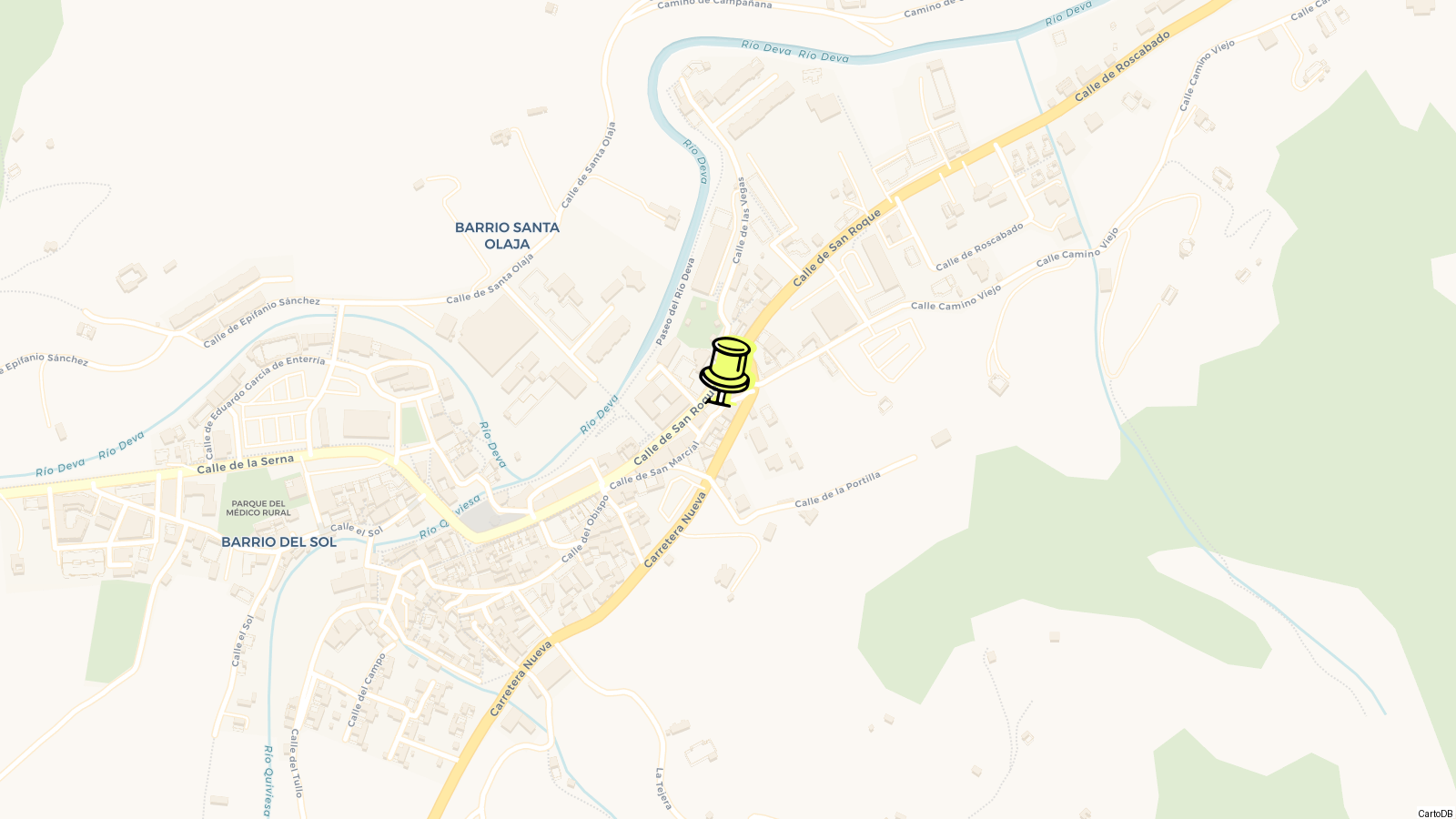
Potes sits at the crossroads of the rivers Deva and Quiviesa and has a population of 1,318 people as of January 2025. You’ll find it surrounded by the mountains of Liébana, about 100 km from Santander if you’re driving inland from the Cantabrian coast. The town covers just 7.64 km², so you can walk from one end to the other in under 20 minutes.
You’ll notice its 291m elevation straight away, the valley means you get strong sun even in winter and, compared to coastal Cantabria, the weather is mild enough that locals grow grapes, walnuts, and even poplars right in the valley floor. In the town itself, medieval towers rise above stone alleys and red-tiled roofs, with the Torre del Infantado dominating one side of the main square, it’s been the “official” face of Potes since the 15th century.
Don’t expect crowds, this place is popular on summer weekends and for the big fiestas, but on weekdays or out of season, it’ll feel like a mountain village again. The last official census still has the population hovering just above 1,300, even after a slight bump during the last few years.
Even though the place was officially founded in 847, most of what you see today is a patchwork of rebuilt old town (a fire during the Civil War did a number on it) and golden-stone houses from the late Middle Ages and 18th century. Potes has been the capital of the comarca of Liébana for over five centuries, locals still joke that “the true capital is here, not the coast.”
Outside July and August, it moves at a slow pace: siesta stretches until 5pm, elderly neighbors chat in the plaza, and restaurants serve cocido lebaniego (the local chickpea stew) for lunch instead of dinner. If you want Picos de Europa access without the basecamp crowds of larger towns, this is where you want to stay.
The old part of town is a for-real “Conjunto Histórico,” so there’s still a tangle of stone alleys around the Torre del Infantado, tiny bridges over the rivers, and homes with wooden balconies dating back across half a dozen generations. If you look up, you’re likely to spot bunches of grapes ripening on pergolas in September, or hams and sausages hanging just out of reach, there’s no tourism polish here, just how locals always prepped for winter.
If you catch one of the big festivals (like the Feast of Orujo in November or the Cruz in September), the entire town turns into a street party with dancing and traditional processions, half the fun is just watching how quickly Potes flips from sleepy to packed overnight.
The town is a launch point for hikes, canyon drives, and tiny villages dotting the four valleys that converge here. Don’t expect big city amenities, a couple of supermarkets, one bus stop, a few cafés, and bars where you’ll run into the same people every day and hear more “buenos días” than you’re used to.
The town still only officially speaks Spanish (no Basque, Asturian, or Galician to trip you up), and the tourist office is at Plaza de La Serna s/n, if you get lost or want more hiking info.
History
The oldest written reference to Potes is from the year 847, in a document that already mentions a church here. The spot isn’t random: two rivers (Deva and Quiviesa) meet right at the middle of town, and old trade and travel routes have always come through this valley.
Roman presence in Liébana is real, though don’t expect visible ruins. What they left behind is actually the name: the Romans called this place “Pontes,” clearly referencing the town’s bridges. Potes wasn’t much more than a village until the Middle Ages, but it already stood out by the 10th century as the administrative hub for the entire Liébana region.
Things got complicated in the 14th and 15th centuries, when noble families (the Manrique Castañeda and the Mendoza) fought for control. Locals will still talk about these feuds, some houses downtown show coats of arms from both sides. In 1444, the king, John II of Castile, settled things by picking the Marquis of Santillana as top dog and, with that, Potes officially became the capital of Liébana. That’s also when the Torre del Infantado, the big cube-shaped fortress dominating the town, went up. It’s the first stop for any local school trip.
The Torre del Infantado is more than a symbol: it was a power statement by the ruling family, part fortress, part administrative office. The Infants, or heirs, lived here when visiting the province. Even today, local festivals and council meetings revolve around the square at its base. You’ll spot a handful of other “towers” built from the 15th to 17th centuries around the town, like the Torre de Orejón de la Lama, with similar stories of rich families trying to outdo each other in stone.
18th-century Potes still rode on the back of those feudal families, but American gold (emigrants who struck it rich in the colonies) accelerated things. Several well-to-do houses date to this period. The most prominent families used their new money to redecorate stone houses, build chapels, and eventually support the 19th-century new parish church of San Vicente, which took over from the crumbling Gothic one. The Benedictine convent of San Raimundo, with its cloister still standing behind the Plaza del Capitán Palacios, was also built with New World donations.
In 1822, Potes finally got its own municipal government, after centuries of feudal rule. As head of the local judicial district, Potes handled disputes, taxes, and travel papers for the whole Liébana valley. For nearly everyone in the surrounding villages, “coming into town” still means Potes today.
Postwar Potes worked hard to rebuild its ruined center. By 1983, the rebuilt old town received official protection as a “Conjunto Histórico”, so any building you see with carved coats of arms or intricate stonework from the main square down to the river either pre-dates 1937, or is a tribute to what vanished that year.
Medieval rivalries in stone
Potes’s towers and houses are a physical map of feuds. The Torre de Orejón de la Lama, spanning three centuries in its construction, has family shields, Celis and Bedoya, over the door, with exhibition rooms inside. Across the narrow bridge of San Cayetano, you’ll spot the gothic stonework still (mostly) original, since the complex jumble here wasn’t fully destroyed by the 1937 fire. The chapel of San Cayetano, next to the bridge, houses an 18th-century altarpiece and wooden door it’s managed to keep for centuries.
If you trace Calle San Marcial, you’ll pass the old Casona de la Canal, the Torre de la Familia Osorio (locals call it “La Torre”), and the birthplace of violinist Jesús de Monasterio, all built when the town was flush with colonial remittance. The best example of “Americanos’” impact: the convent of San Raimundo’s cloister, now used for temporary exhibitions about the Picos de Europa and the Liébana valley.
Potes marks centuries of processions, border disputes, and unlikely prosperity in every festival and stone. The town’s history is less about climactic battles or kings, and more about resilience: permanently at the intersection of outside influence and internal stubbornness. Even today, you’ll spot restoration plaques and photos in the town hall showing what got lost in 1937, what came back, and what remains still being uncovered from the layers beneath.
Visiting
You enter Potes on foot, most cars get parked on the outskirts, and immediately hit a maze of stone alleys, steps, and bridges. The first stop for nearly everyone is the Torre del Infantado, a 15th-century cube of grey stone that marks the center. The ground floor often hosts temporary exhibitions. During festivals, the square fills up with stands and musicians.
Walk southwest along Calle Cántabra for less than five minutes and you’re at the Bridge of San Cayetano. The bridge itself is from the 1200s, still used by locals, and at one end is a small chapel, the Ermita de San Cayetano. Peek inside if it’s open; its 18th-century altarpiece is lit up during the August festivities.
Most of the old quarter is easy to cover on foot in 60-90 minutes, think cobbles, medieval houses, some tiny shops selling cheese, honey, and orujo brandy. The Torre de Orejón de la Lama, with coats of arms on its stonework, often hosts small art or photo shows. If you’re here on a weekday, it’s quiet; weekends, especially in summer, bring waves of domestic visitors and day-trippers from Santander.
If you want more than a stroll: The new parish church, San Vicente, is just up from the center and open most days. The altarpieces inside come from an old convent. The monument to Jesús de Monasterio, violinist and local native, is on the main square. For something less expected, check if the cloister of the Convent of San Raimundo is open, it often hosts displays on the Picos de Europa or regional history.
Suggested walk
Start at Plaza de la Serna (tourist office at Plaza de la Serna s/n, 39570; +34 942 730 787). Head towards Torre del Infantado for views from the nearby Mirador de la Torre. Take Calle del Sol down to the San Cayetano bridge, pausing for photos. Cross east towards the Torre de Orejón de la Lama, then loop north by San Vicente church to finish back near the main plaza. Total: under 2km, mostly level but with steps. If you’re fast, 45 minutes; if you browse the shops or linger, up to two hours.
If you’re car-free, almost everything is accessible from the Potes bus station, which runs from about 07:30 to 20:00. Local buses and taxis cluster near the plaza, don’t expect ridesharing apps. Many visitors show up for the November Orujo Festival or the September Exaltation of the Cross and find the streets packed, with tastings and temporary market stalls.
Tips
-
If you’re coming on a weekend or festival (especially for the Feast of Orujo in November or the Exaltation of the Cross in mid-September), book accommodation a month ahead. Places fill up, prices jump, and day-trippers crowd the center.
-
Most of Potes is pedestrianized. There’s one main parking area next to the bus station (it’s really just a large lot, not a structure), but it gets packed after 10:00 on weekends. If that’s full, try behind the Convento de San Raimundo or in the new lot on the road toward Vega.
-
The local bus station is open roughly 07:30–20:00, but don’t expect staff at all hours or frequent departures. Check times for your return trip as soon as you arrive, especially for connections back to Santander.
-
You won’t find ATMs on every corner. There are a couple in the main square and on the road to the pharmacy; if you’re headed into the mountains, take out cash first since most nearby villages are cash-only.
-
Grocery hours are much shorter than in big cities. Small shops close for siesta 14:00–17:00, and most places shutter by 21:00. If you’re self-catering or hiking, stock up early.
-
The main tourist office (Plaza de La Serna s/n, 39570 Potes; +34 942 730 787) is your best bet for printed trail maps or festival dates, they’re better than online sources for anything local.
-
In July and August, daytime temps can hit 28°C. Bring a sun hat and water if you’re walking between villages; shade disappears in the afternoon.
-
English is spotty outside the main restaurants, so basic Spanish gets you further, especially for ordering or asking directions. “Un cocido, por favor” always works.
Know this destination? Help us improve
Your local experience is valuable to other travelers.