Guggenheim Museum Bilbao
Frank Gehry’s titanium curves turned Bilbao’s old industrial port into an icon,1.3 million people cross the Nervión to see it every year

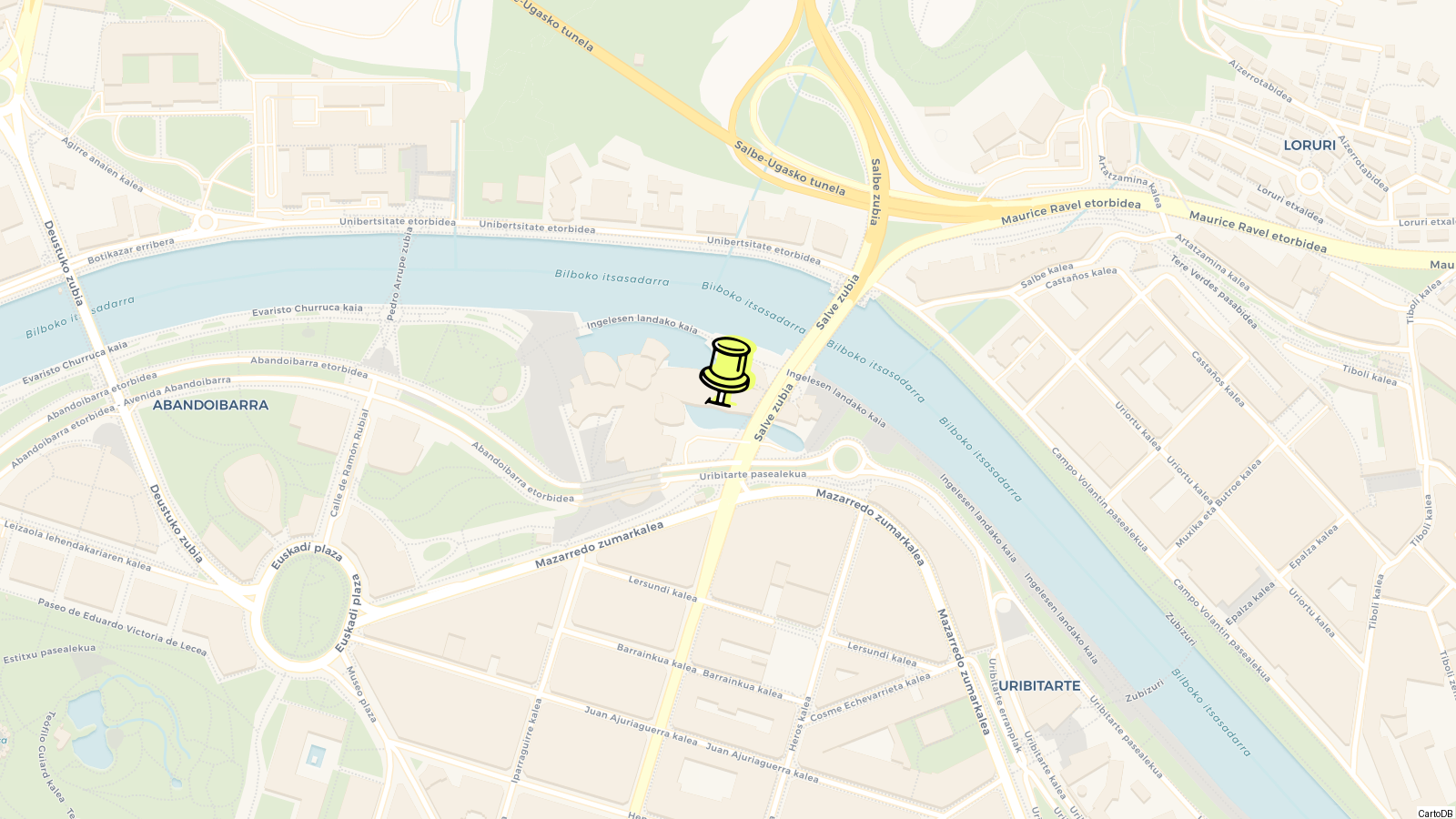
Visit details
Overview
The Guggenheim Museum Bilbao opened on 18 October 1997 at Lehendakari Leizaola kalea, 2, transforming a stretch of Bilbao’s old industrial port on the left bank of the Nervión River, about 16 meters below city center level. What was once a shipbuilding wasteland is now the city’s visual calling card: Frank Gehry’s titanium, limestone, and glass curves draw well over a million visitors each year (1,305,003 in 2025).
It’s not just an art museum. People come as much for the building as for the collections. From the river side or the nearby Puente de La Salve, you see scales of titanium plates,33,000 of them, catching the clouds, the whole thing sprawling across 24,000 m² with massive, irregular galleries inside. The main atrium almost feels like a public plaza, full of light and overlooked by sweeping walkways and dizzying balconies.
The museum is famous for the so-called “Bilbao effect”: Gehry’s spaceship landed here and helped pull the city out of post-industrial stagnation. Locals went from ignoring this battered corner of Bilbao to walking the riverwalk on Sundays, bringing out-of-towners to stare at the Puppy made of flowers, or at Louise Bourgeois’ Maman, a spider sculpture taller than a truck.
Inside, expect mostly modern and contemporary art, with an emphasis on huge site-specific works: Richard Serra’s The Matter of Time stretches to 130 meters, filling the biggest gallery, and it’s the collection’s anchor. Don’t expect much classical painting, the draw is installations, sculpture, video, and experimental pieces, rotating in and out from the Guggenheim’s international network and visiting exhibitions.
The location is no accident: you’re a ten-minute walk from the city’s downtown (Abando), with the Moyúa Metro stop just up the hill, and trams and buses stopping right outside.
Frank Gehry designed the Guggenheim Bilbao with software from Dassault Systèmes, which let his team digitize and model the museum’s convoluted forms before anyone cut titanium. The success of this “virtual build” approach set a new bar in architectural circles and has its own reputation among design nerds.
The building cost nearly $90 million, all bankrolled by the Basque government, with a $50 million acquisitions fund on top, essentially, a massive civic bet that visitors would stream in and spend. It worked: the effect on hotels, bars, and city pride was immediate, with nearly €500 million in economic activity generated within three years of opening.
For all the hype, local critique is real: some say the museum helped price out small businesses, or that its bold look overshadows the city’s own older architecture. But the lines to get in and the crowded café say otherwise, people keep coming as much for selfies with the building as for any art inside.
Collection
Richard Serra’s The Matter of Time runs the length of the Arcelor Gallery,130 meters of twisted steel that’s so massive you walk inside and around it, not just look at it. People spend 10 minutes or half an hour with this one work; it’s the true permanent centerpiece. Right outside, but “part” of the collection, Jeff Koons’ Puppy sits guarding the river entrance. The steel is indoors, the dog is all West Highland Terrier, covered in living flowers year round.
The Guggenheim Bilbao doesn’t drown you in old masters. Most galleries are dedicated to late 20th-century and 21st-century artists, with a hard slant toward big installations and video or light pieces, fewer traditional oil paintings. The main names in rotation: Louise Bourgeois’ spider Maman stalks you in the plaza next to the river; Daniel Buren’s Arcos rojos wraps around La Salve Bridge, visible from inside; Jenny Holzer’s LED word sculptures blink in the atrium. Inside, galleries shift between thematic and single-artist shows, some directly from the Guggenheim network, others made for Bilbao, so what’s on view changes every few months.
If you want classic modernists like Picasso or Kandinsky, check the website before banking on them, they rotate in and out from the Guggenheim’s global collection and aren’t always on display. When Bilbao scores a loan from New York or Venice, it’s a big deal and might mean a packed calendar and higher crowds. On the other hand, recent shows have highlighted Basque artists or pulled from new media and non-Western collections, so you could catch sound art or a full gallery of AI work.
Sculptures outside are free for anyone wandering by; the indoor galleries, the atrium, and temporary exhibits require a ticket. The main permanent investment: Serra’s The Matter of Time, if you visit only one thing, walk the “snail shell” paths through the steel.
Collection Breakdown
The museum’s collection is small compared to Madrid or Paris: about 130 works belonging to Bilbao itself, with dozens more on rotation from the Solomon R. Guggenheim Foundation. You’re here for the scale and spectacle rather than wall-to-wall masterpieces. There’s a focus on the “post-1960s” era: conceptual installations, gigantic video projections, and entire rooms designed by a single artist.
- Permanent masterpieces: besides Serra, Koons, Bourgeois, Buren, you might see works by Anselm Kiefer, Jenny Holzer, or Yves Klein (when not lent elsewhere).
- Major temporary exhibitions have featured David Hockney (2012), large retrospectives of Chinese photography, or global sound art.
- Basque and Spanish artists: the museum commissions new site-specific pieces every year, so there’s usually something local, with signage in Basque, Spanish, and English.
- The “Fish Gallery” (Arcelor Gallery) is always reserved for Serra, but the other two dozen rooms change layout and contents every season or two.
Private tours and explanations in English, Basque, and Spanish are available for €4 extra (on top of admission) if booked in advance; the difference is real as some works come with almost no wall text.
You won’t find dense rows of small paintings or historic decorative art. Instead, be ready for walk-through installations, projections, and “you are part of the piece” moments. Even if you’ve seen a couple of Basque museums, the hang and type of art here is nothing like the Museo de Bellas Artes up the hill. The Guggenheim is all about physical, immersive art made for big rooms and big reactions.
If you want a break from the art, some indoor terraces and the riverfront perimeter offer city views and the occasional pop-up sculpture you didn’t expect. If you’re with kids or need something less intense, the massive lobby and shop have their own rotating displays, and the museum café sometimes has art-adjacent events that anyone can join without a ticket.
The full list of what’s up now is at guggenheim-bilbao.eus. Always check what’s changing this week so you don’t show up the day after something big gets swapped out.
Visiting
The main entrance faces Lehendakari Leizaola Kalea, but you’ll spot the museum from halfway across Bilbao thanks to the titanium curves and the two giant sculptures out front, Jeff Koons’ Puppy (a living floral terrier) and Louise Bourgeois’ Maman (the spider). You can walk right up to both, as well as Daniel Buren’s red-and-white bridge Arcos rojos, without a ticket.
Tickets & Entry
Adults pay €15, youth and seniors (18–26/65+) pay €7.50, and anyone under 18 gets in free. You can get in free as well if you show up on Tuesday between 18:00 and 20:00, but expect a queue. Online booking (guggenheim-bilbao.eus) is quick and avoids any wait at the desk, but even same-day walk-ups rarely fill up except around national holidays.
The museum is open Tuesday to Sunday, 10:00–19:00. In summer (mid-June to mid-September) and during Easter week, they extend to 20:00 and sometimes open on Mondays too, always check the website for the current week’s schedule. Last entry is 30 minutes before closing, and galleries start shutting down 15 minutes before that.
What to See Inside
The atrium, nicknamed “the Flower,” is the heart of the building, grab a map (available in Spanish, Basque, and English), store your bag in free lockers, and orient yourself here. Head straight to the ground floor for the main permanent installation, then work your way up to the changing exhibitions on higher levels. Audio guides are available in Spanish, Basque, and English; get them at the info desk or download on your phone before arrival.
Aside from The Matter of Time, look for temporary shows (these span anything from major retrospectives to installations by guest artists), and check out the side galleries with more intimate or experimental work, some are small enough to visit in five minutes, others demand your full attention. Most visitors take 2–3 hours for a complete visit, but if you focus on the largest installations and major galleries, you can do a solid walk-through in 90 minutes.
The galleries are spacious, with huge windows in some and almost blackout in others. The top level is worth a detour for sweeping views over the river and city, it’s easy to miss if you just stick to the main floors.
Food, Drink & Rest
Café Bar Guggenheim is on the lower level, good for pintxos or coffee, casual, nothing fancy but not a tourist trap either. Nerua, the museum’s fine-dining spot, isn’t just for ticket holders, but you’ll want a reservation (it’s among the few museum restaurants in Spain that pull local foodies). The shop is right by the exit, and it’s well-stocked, art books, Basque design, playfully expensive souvenirs. Restrooms are on every floor, large, clean, and accessible.
Guided Tours
Guided architecture-and-art tours are available for about €4 extra, bookable online along with your ticket. These last about 50 minutes and only run in a few languages, so check before booking.
Accessibility
The Guggenheim is mostly accessible, with elevators and ramps throughout, but some exterior paths (especially along the riverside sculpture route and certain garden-level walks) have steep grades.
History
The Guggenheim Museum Bilbao opened on October 18, 1997 with King Juan Carlos I presiding, showing 250 works that night to a city that was still known for rust and cranes, not contemporary art. Locals crowded outside for an epic light show, catching the first glimpse of Frank Gehry’s titanium curves lighting up a section of the Nervión in what had been the city’s hardest-hit industrial zone. The world calls it “the Bilbao effect” now: a single museum sparking an almost unbelievable turnaround for the whole city, and then being imitated everywhere, but almost nobody pulls it off.
Getting the place built was unlikely. The Basque government pitched the idea in 1991 and ultimately agreed to cover $89 million (plus a separate $50 million artwork fund, $20 million up-front to the Guggenheim Foundation in New York, and €12 million a year to keep the museum running). Frank Gehry, who’d passed away in December 2025 at age 96, was picked as architect and fought to ensure every unpredictable curve got built the way he’d intended, even as it strained the builders and the software. Local company Ferrovial managed the construction, driving 665 foundation piles into the riverbed, and titanium cladding was rolled in Pittsburgh. It had to hold up to Bilbao weather, reflect the gray light, and stay within a budget that would make most architects cry.
Opening night nearly didn’t happen. Five days before, ETA gunmen killed a Basque police officer while trying to set up grenade launchers to attack the inauguration. Security around the first exhibition was intense, which didn’t stop 5,000 locals from staking out space just to watch the show projected onto the rippling new facade. Inside, the city’s future was changing overnight: money spent by museum visitors paid off the public investment in a few years, with a million-plus visitors turning up annually ever since.
The Unfinished Guggenheim, Urdaibai
The museum’s success had politicians chasing “another Bilbao effect” for 20 years. In 2008, the Biscay authorities proposed building two new satellite museums in the Urdaibai biosphere reserve, including a 6-kilometer river walkway linking the sites. By 2022, they’d earmarked €40 million and laid out detailed plans. Local residents and Greenpeace weren’t having it, they organized long protests against building in sensitive wetlands. The foundation finally killed the expansion in December 2025, citing “territorial, urban planning and environmental constraints.”
Behind the Façade: Money, Scandal, and Labor
Not everything was a fairytale. The museum had its share of scandal when, in 2008, a director admitted to embezzling from two firms managing the building and collection, a €4.2 million loss. The money went missing steadily from the late 1990s, discovered only in a forensic audit after suspicions about certain contracts.
In 2021–2022, the team of 18 cleaners (almost all women) went on strike for nine months. They won: higher pay, full-time contracts, and their story became a mini-saga in Bilbao’s own labor history.
The Building as Revolution
The 24,000 square meters of space are spread over 19 galleries, some classic rectangles, others wild and asymmetrical. It was the first time a huge urban project in Spain took a radical bet on “star-chitect” modernism. The term “Bilbao effect” comes up in urban studies classes everywhere now, but standing on the riverbank at dusk, it’s just a fact: this building changed what Bilbao is, and even how city officials around the world think about regeneration.
Tips
-
Book tickets ahead, especially in summer or on rainy weekends, lines at the ticket desk can be 30–40 minutes. Buy directly from https://tickets.guggenheim-[bilbao.eus](https://tickets.guggenheim-bilbao.eus) to avoid weird third-party markups. Ticket email scans fine at the security entrance.
-
Museum hours: Tuesday to Sunday, 10:00–19:00, but in summer (mid-June to mid-September) and during Easter week it runs till 20:00. Most Mondays closed (except in long holiday weeks, check the calendar). The admission desk closes 30 minutes before the museum. Some galleries start closing 15 minutes before final closing, so don’t cut it too close.
-
Cheapest tickets: €15 for adults, €7.50 for students (18–26) and seniors (65+), free for under-18s. Every Tuesday 18:00–20:00 is free for everyone (expect lines). For both Guggenheim and Museo de Bellas Artes, the Artean Pass is €18 and valid for both, saving about €7.
-
The famous outdoor sculptures, Jeff Koons’ Puppy, the giant spider (Maman), Daniel Buren’s red arches, are outside the ticketed area. Rain or shine, even if you skip the museum, you can see these any time.
-
The best time to visit is right at opening (10:00) or after 16:30, especially on weekdays, student groups and day trippers are thick midday. If you want the giant galleries mostly empty for photos or quiet, being early makes a difference.
-
Audio guides cost €3 and are available in Spanish, Basque, English, and French. Free museum Wi-Fi works throughout the building and is good enough for streaming or live translation apps.
-
If you want a guided tour (art + building), it’s about €4 extra, runs in Spanish and English a few times daily, book with your ticket online. For architecture-only nerds, the focus tours (usually 1pm and 5pm) are less crowded.
-
The museum is wheelchair-accessible but with some limitations, the riverside entrance has a slope, galleries have elevators, but some exterior paving is rough.
-
For food, the café is pricey, but the daily lunch menu in the bistro is decent value (€32–36 for three courses). Reserve if you want the full restaurant, especially on weekends.
Getting the Most Out of Your Visit
Tuesday evenings (free slot, 18:00–20:00) are packed, popular with locals and backpackers. Arrive before 17:30 or be ready for a winding queue. Free tickets must still be collected at the desk or scanned from your online reservation, so same queue.
If you plan to see both the Guggenheim and Museo de Bellas Artes (15-minute walk apart), get the Artean Pass at either museum’s ticket desk or online. Pass is valid for a month and not just for a single day’s use.
Check the website or at the lobby for temporary exhibits. Some blockbuster shows require time-slot tickets. For mainstays like Serra’s The Matter of Time, no booking needed.
The public tram runs right along the museum. The nearest metro is Moyúa, 7–9 minutes away on foot. Bus and taxi stops are directly in front. Parking is possible at the Plaza Euskadi garage, count on €15–20 for 5–6 hours.
If you’re an early bird, arrive by 09:45. Security sometimes lets people start queuing outside before doors open. You’ll get the lobby, atrium, and ground-floor galleries nearly empty for the first 30 minutes.