Redecilla del Camino
Pilgrims have started the Camino de Santiago here for centuries, passing the 12th-century Romanesque baptismal font in the village church.
Visit details
Overview
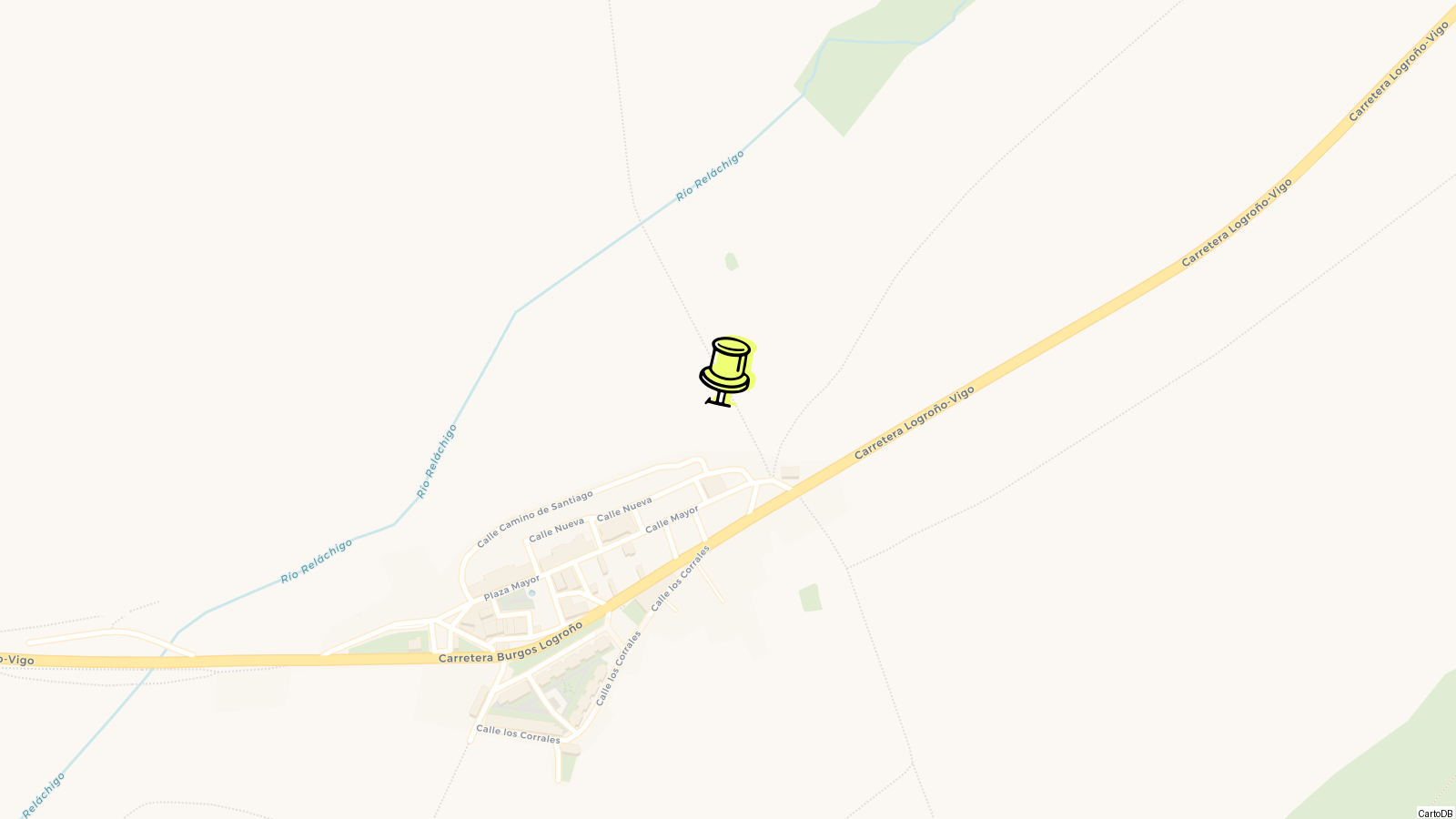
If you walk the Camino Francés from the east, Redecilla del Camino is your first town in Castilla y León, a tiny, linear village with one long Calle Mayor, framed by the memory of two gates that once marked the way for generations of pilgrims. Everyone here is either on the Camino or working in a life shaped by it.
With 148 people and just over 12 km² of land, this is a place where you’ll see boots drying on window ledges and locals who say hello as you pass. The center sits at 741 m elevation, enough for cool mornings even in July and a landscape green well into spring.
The population has hovered at this level for years, with little sign of dramatic change. It can feel smaller outside May–October, when most pilgrims walk through. Though Calle Mayor used to be bracketed by gates (Cimera and Bajera), only the routes and impressions remain, not the physical arches.
You’re not here for nightlife or shopping. The draw is the Camino itself, the break it offers on the route, and the Romanesque baptismal font inside Nuestra Señora de la Calle, carved stone, measuring over a metre across, its eight columns facing you as soon as you enter the church.
This font is the village’s pride: representing the Heavenly Jerusalem, decorated with four tiers of window-like cutouts separated by beaded imposts, and topped with triangular “roof”-like forms. Its diameter is 110 cm, total height 106 cm, and nobody rushes when explaining it to a curious visitor or pilgrim.
Most pilgrims fill water bottles and move on. But some pause to notice this is the border, after this, every village is deeper into Castilla y León, within reach of bigger towns but a world away from city pace.
History
Early references and the medieval Camino
The history of Redecilla del Camino surfaces in the written record around 968, making it one of the earlier settlements named directly along the Camino Francés route. Its location was never incidental; it aligned tightly with the main artery of the pilgrimage to Santiago de Compostela. By 1028, you find it recorded as “Reducilla de Francos” in the Cartulario de San Millán de la Cogolla, documenting it as a waystation where “francos” (foreigners, often pilgrims) were passing through. In 1196, it turns up again as “Rediziella de Francos” on a medieval donation document, testament to its continuous role serving travellers.
Those early written occurrences didn’t just mark its existence, they reveal Redecilla as a living part of the Camino network long before most European villages appear with such clarity. The “Francos” reference in both 11th- and 12th-century documentation pretty much nails its identity as a place built and kept alive by the movement of outsiders: foreign pilgrims, merchants, and those drawn to the “route to the end of the world.” For centuries, naming conventions signal that its main public purpose was to host this traffic, rather than serve as a standalone agricultural or nobleman’s domain. These donations and listings in ecclesiastic cartularies are the hard evidence for how deeply pilgrimage is wired into the town’s DNA.
The Codex Calixtinus and the hospital era
Turn to the 12th century and the Codex Calixtinus, effectively the world’s first travel guide, calls out Redecilla del Camino by name in its Diario del Peregrino. The book plots the route from Roncesvalles, highlighting Redecilla not just as a settlement on the path but a key rest point. This wasn’t a literary flourish. At that time, Redecilla supported a pilgrims’ hospital: the Hospital de San Lázaro, purpose-built to care for the sick and the wayworn right on the main thoroughfare.
The significance of a Lazarus hospital here was that lepers and chronic invalids could be cared for at the edge of society, as befitted medieval custom and public health. These pilgrim hospitals were unique social and architectural institutions, often the most solid and resourced buildings in tiny hamlets, and here they show the Camino’s human infrastructure. Redecilla’s hospital would have been one of only a handful strung across the region, staffed by religious orders and laypeople funded by donations from local lords, royals, and passing pilgrims. The continual mention in route guides and official charters from the era points to a sustained effort to formalise its role as a sanctuary, not just a village offering ad-hoc shelter.
Urban form and the Camino lineage
Redecilla’s street plan today, the long, narrow Calle Mayor, was no accident. That layout, typical of “street-villages” on the Camino Francés, was historically bookended by two gates: Cimera and Bajera. These controlled access at both ends, served as informal customs or toll points, and acted as unmistakable waymarks for walking pilgrims.
Neither gateway survives, but the settlement’s basic proportions barely changed. The gates represented not just border control but also a way to separate communal life from the constant flow of visitors. This strip pattern, housing, church, and hospital arrayed along the Calle Mayor, mirrors a formula repeated up and down the Camino Francés, and is a defining feature of the oldest towns that staked their fortunes on the road. When those gates were eventually dismantled, likely sometime after the 19th century, the town physically opened up, but much of the old border psychology and orientation to the road remain.
UNESCO recognition and the modern era
In 2015, Redecilla del Camino’s exact stretch and role as a stage on the Camino Francés earned it a formal place in the extended UNESCO listing “Routes of Santiago de Compostela: Camino Francés and Routes of Northern Spain” (component 1225). This listing cements its importance not just in medieval travel infrastructure, but also in the living tradition of pilgrimage.
The 2015 UNESCO nomination wasn’t just about ticking off old churches. It marked a collective recognition that villages like Redecilla, small, sometimes fading, but with the bones and patterns of a thousand-year continuity, are part of a global heritage. The Spanish government, acting with regional partners from Castile and León, sourced documentation as far back as Redecilla’s first mention in 968 and as recent as the layout of the town today, confirming its unchanged role as the “frontier” village for pilgrims entering Castile and León.
Redecilla del Camino’s built landscape and street alignments bear witness to a history that is both hyper-local and determined by the European circuit of pilgrimage. The records show: this isn’t a village that happened to be “on the way.” It’s a place that was the way.
Visiting
If you’re walking the Camino Francés, you’ll see Redecilla del Camino before you’ve caught your breath from the climb out of La Rioja. The place is compact. Nearly everything you want to see sits on a single stretch of Calle Mayor. No need to plan a full day, you can see it all in under an hour.
On arrival, orient yourself along Calle Mayor, the long axis of the village. The original entry and exit gates are gone, but you can picture their location by the shape of the street and the position of the church. Head straight to the church of Nuestra Señora de la Calle. Doors are open daily, 7:00–21:00, and there’s no ticket desk, nor anyone shooing you away.
The church is the main architectural reason to stop here, even if you’re only pausing for 20 minutes. The Romanesque baptismal font is its centrepiece, big enough to catch your attention at 110 cm in diameter and more than a metre tall. It sits on eight carved semi-columns, and the basin’s surface shows four stacked levels of window designs, each separated by beaded ridges. The arrangement is meant to represent the Heavenly Jerusalem, and the whole thing is so over-engineered for a village of this size that it stands out even on the long Camino route.
If you peek around the rest of the church, you’ll also spot the Gothic Virgen de la Calle and older stones reused in the walls. Don’t expect a guide to walk you through, but the light is good enough for photos in the morning.
Just outside, there’s a small tourist information hut from May through October. Staff are friendly but English is hit or miss, and you’ll usually have better luck in Spanish. The number listed is +34 947 588 004, but reception is spotty.
There’s no ticketing here, everything is free entry, both to the church and in the rest of the village. Wheelchair access is possible in the main part of the church, but this is a medieval street-village: expect uneven paving stones.
You can check details, contact numbers, and opening info on the municipal site: www.redecilladelcamino.es. For anything urgent, accommodation issue, minor medical concern, route advice, the local staff can usually point you to what’s open within a few kilometres.
After you’ve seen the church, just walk the length of Calle Mayor. The urban design is still recognisable from medieval times: a single straight line, once bookended by two gates (try to imagine these “Cimera” and “Bajera” gates as you exit, even if there’s no trace left). You’ll pass the current albergue and the site of the old Hospital de San Lázaro, now municipal accommodation for pilgrims.
There’s nowhere selling tickets, and no must-book attractions. If there’s a local event or improvisado exhibition in summer, it’ll be signposted in the café windows. Otherwise, it’s all about tracing the Camino footsteps, and refilling your water before the walk into Castile proper.
Tips
- Bring a windbreaker or rain layer even in summer. The weather is cooler and more humid than you’d expect this far inland, thanks to its altitude of 741 m and an almost Atlantic climate.
Redecilla del Camino doesn’t get baking Castilian heat, but cloud, wind, and sudden drizzle can catch you off guard in June or September. Nights are notably chilly until late spring, even after warm afternoons.
- Tourist information is available daily 7:00–21:00 from 1 May to 31 October at the info booth just off Calle Mayor. Outside those dates, try +34 947 588 004 or check redecilladelcamino.es for updates.
- Cash is still the norm for smaller purchases and the municipal albergue. No ATM in town, so stock up before arriving.
Shops and bars may accept cards, but don’t count on it for less than €10. The nearest full-service bank is in Belorado, a good two hours’ walk.
-
No tourist crowds, but don’t expect privacy either. Most walkers pass through in the morning to claim a spot at the next stop, if you want a quieter church visit, wait until mid-afternoon.
-
The church of Nuestra Señora de la Calle is free and open normal daylight hours, but check with the information booth for access to see its Romanesque baptismal font up close (the keyholder’s hours vary).
-
Phone signal is reliable, free Wi-Fi is rare. There’s coverage along Calle Mayor but don’t count on public Wi-Fi.
-
Dog walkers and cyclists: Calle Mayor’s length makes it easy to find a quiet spot outside the single café, but remember this is still a working village with residents coming and going.
-
No medical centre in town. For anything but minor blisters, you’ll need to continue west to Belorado.
Know this destination? Help us improve
Your local experience is valuable to other travelers.