Santo Domingo de la Calzada
A live rooster struts inside the cathedral here, recalling the legend of Santo Domingo saving a pilgrim from the gallows centuries ago
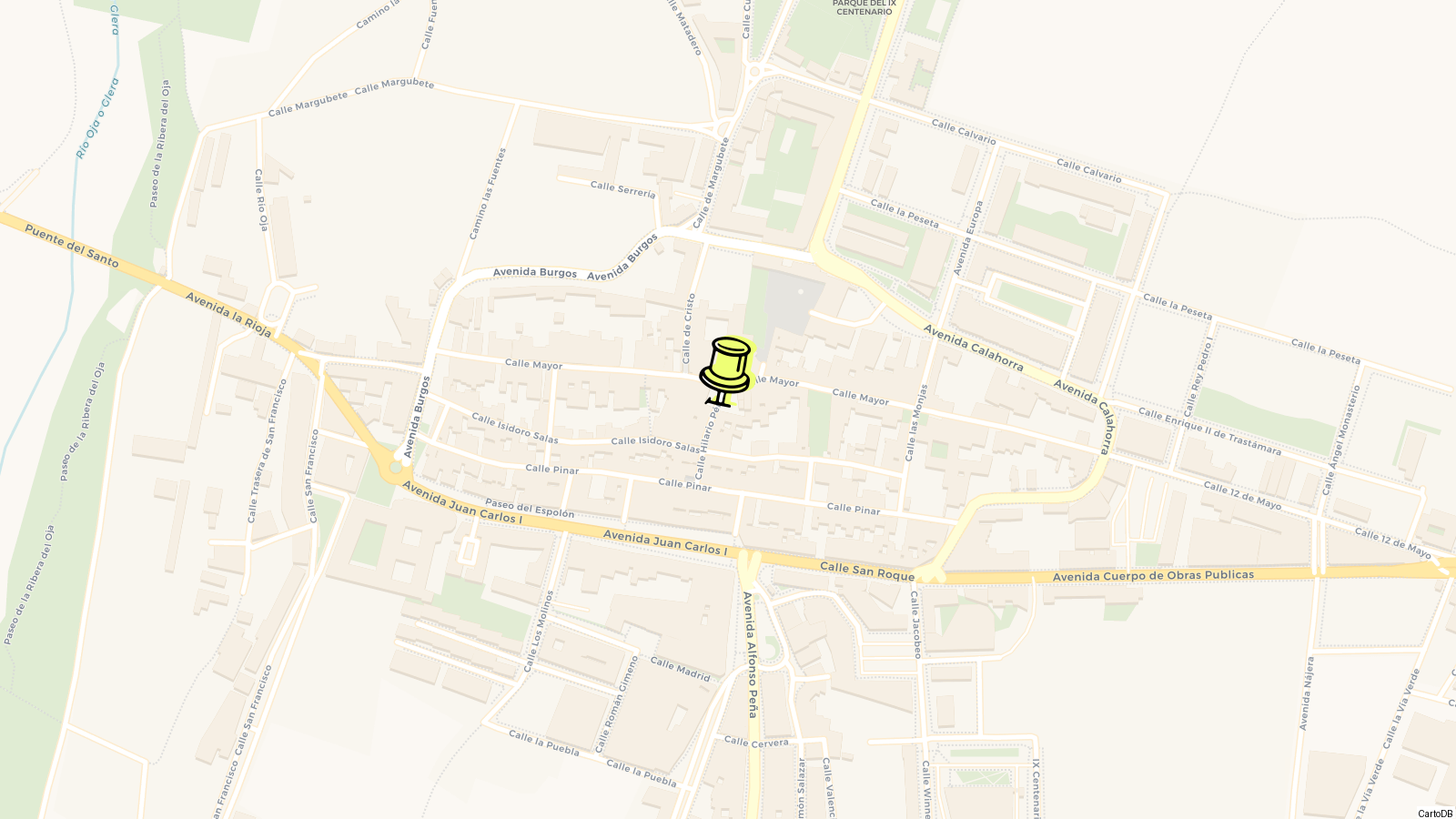
Visit details
Overview
Santo Domingo de la Calzada sits at 641 meters above sea level, about a half hour from Logroño, with 6,300 residents spread out over 40 km². The town gets its name from Domingo García, the medieval hermit who, legend says, built a wooden bridge and a stretch of the Camino de Santiago here back when this was mostly marshland. Today the Camino still cuts straight through town, and most summer mornings, you’ll see a line of dusty pilgrims passing shops on Calle Mayor, heading for the cathedral that dominates the center.
Even if you’re not walking to Santiago, the reason people come is the historic core. The town’s old quarter was declared a ‘Conjunto de Interés Histórico Artístico’ in 1973, so restoration has preserved the arcaded Plaza de España, slices of medieval wall, and a couple of tree-lined promenades like Paseo del Espolón and Paseo de la Carrera that locals actually use, especially on summer evenings.
The cathedral is the social and literal center, not just architecturally. You’ll find a rooster and a hen living in a coop inside, kept for the Miracle of the Rooster and Hen, a town legend that gets explained in full detail at every festival and on every school trip.
Winters bring cool temperatures, with January highs averaging 8°C and a decent chance of snow (roughly 11 days a year), while summers hit the mid-20s and stay dry. The rhythm of town life tracks the Camino: May and September are busiest, winters are quiet, and early summer means festivals centered on local saints and lentil stew with pig’s ear.
The tourist office sits at Plaza de España 4, phone +34 941 34 12 38, and they’re actually useful for up-to-date festival dates and rural taxi numbers. Most shops still close for siesta, and even a decade ago, half the town would be in the café by 8:30 am or 8 pm. It doesn’t matter if you’re passing through or staying at the Parador, life here still moves at the speed of conversation, not the speed of a timetable.
The Camino de Santiago isn’t just a backdrop: the whole town economy is tied to the pilgrim stream. You see it in the menus, hearty cocidos, thick lentil soups, crusty bread, and in the mix of South Koreans and Brazilians at the local bakery every morning. The Camino’s busiest months (usually May and mid-September) bring out the festival banners, street parties around Plaza del Santo, and processions with more pageantry than you’d expect from a small city.
Snow isn’t guaranteed, but when it does fall (usually between January and April), it sticks for a day or two and then fades, enough for kids to try a sled in the park, but never enough to trap visitors. Summers can get hot, especially in late July, but the evenings almost always cool down and locals know which promenade catches the breeze first.
If you want a break from Old Town, the Jardín Botánico de La Rioja is 12 km away on the N-120. It’s an actual botanical garden (not just a park), and not many tourists find their way out there.
History
In 1141, Santo Domingo de la Calzada received its royal charter, meaning from that point it was officially on the map, no longer just a settlement for pilgrims but its own town. The Camino de Santiago ran straight through here, and traffic on that medieval highway is why the town exists at all.
The real origin story goes back a century earlier, to Domingo García, a local hermit who took pity on the endless stream of pilgrims crossing this rough patch of La Rioja. Then and now, this part of the Camino de Santiago is flat and easy to lose your sense of direction, one muddy river, lots of emptiness, little else. Domingo García started by building a simple wooden bridge and a stretch of causeway (the calzada) to help pilgrims wade less and stay dry. He spent decades adding more: a hostel, a hospital, a church. By the time he died in 1109, his name stuck to the town and people kept coming.
The practical side of this “hermit with a shovel” story is that almost everything important here traces back to his original projects, and the money and attention the Camino brought in. Instead of shrinking or disappearing like most little towns, Santo Domingo de la Calzada kept building: stone walls in the 14th century, bigger bridges, more shelters for the growing tide of pilgrims. When it became a town under royal jurisdiction in 1250, it had its own market and a special status linked to protecting travelers.
The medieval street grid is still visible, especially around the cathedral and what remains of the defensive walls. Urban sprawl never did much damage here, most of the growth since the 1800s just filled out empty spaces inside the original boundary.
The cathedral that dominates the town today was started in 1158, less than 50 years after Domingo García died and just after he was canonized. The official reason: to house his body and encourage even more pilgrims to stop. Over time, the church swallowed up earlier buildings, pushing out hospitals and shelters, and its bell tower became a local landmark.
The historic center still looks and feels medieval for a reason: in 1973, the core was officially declared a “Conjunto de Interés Histórico Artístico,” protecting it from insensitive development. So you’ll see narrow lanes, ancient arcades, and pilgrimage symbols everywhere.
If you’re curious about more recent history, the Camino is still reshaping the town, now with newer hostels, bars, the Interpretation Centre of the Camino de Santiago (opened 2008), and events connected with pilgrims. That center, inside the old Pilgrims’ Hospital, sees over 22,000 visitors per year, a huge number for a town of just 6,300 people.
The wall and its remains
You’ll find remnants of the medieval defensive wall around the town center, especially near the cathedral and along Paseo del Espolón. Much of it was torn down in the 19th century as the town expanded, but you can still follow its line and spot a few towers.
The town’s festival calendar
Santo Domingo has always celebrated its history with big events, the Fiesta del Santo every May, for instance, resurrects medieval traditions and commemorates Domingo García’s life with processions and pilgrim-focused mass. The town also keeps up old gastronomic rituals connected to the Camino, like simple lentil stews during romerías.
Visiting
The main entrance to major sites is along Plaza del Santo. The first thing most people do is head for the Cathedral of Santo Domingo de la Calzada, no surprise, since it’s physically and culturally the center of town. Opening hours are generous: Monday to Friday and Sunday from 09:00 to 20:00, Saturdays 09:00 to 19:00. If you plan to visit in the late afternoon, double-check: times occasionally shift during festivals and local holidays.
Standard admission for the Cathedral and Cloister is €9, or €7 if you’re carrying a pilgrim credential. There’s also a “Pulsera Peregrino” combo ticket for €7 (€5 for pilgrims), which covers more sites within town. Buy tickets at the entrance, queues are short except during major Camino de Santiago waves, especially in May.
Inside the cathedral, don’t skip the live rooster and hen in their coop, yes, inside the church. This isn’t a local quirk, it’s a reference to the “Miracle of the Rooster and the Hen.” You’ll see murals and carved roosters everywhere in town, but only here will you see the real animals in a 14th-century Gothic enclosure.
The nave and main altar are Romanesque, with an elaborate Renaissance baldachin overhead. Along the right aisle is the silver tomb of Domingo himself, and usually a couple of tired pilgrims taking a breather on the pews. The cloisters are quieter. Don’t rush: this is where the best stonework is hidden, including capitals showing local legends (see if you can spot the rooster).
Museo Catedralicio
The museum, inside the cloisters, is included in your ticket. It’s not huge but worth 20 minutes: look for the 14th-century Gothic processional Rooster, relics from the old pilgrims’ hospital, and medieval manuscripts relating to the Camino.
The Tower
The separate campanile (bell tower) is across the small square from the main façade. It’s usually open, for an extra €2–3. The climb is tight but not especially long, and the views up top are solid, especially at sunset, when the surrounding Rioja vineyards light up.
If cathedrals aren’t your thing, follow the signposted Paseos: Paseo del Espolón and Paseo de la Carrera are straight, tree-lined promenades built for summer strolls. You get views of the town walls, old mills, and (if you’re patient) local grandparents walking off lunch in the shade.
For Camino buffs, the Interpretation Centre of the Camino de Santiago is tucked nearby and has attracted over 22,000 visitors since 2008. It’s open on weekends and afternoons; count on an hour to see everything (loads of maps and antiques, mostly in Spanish).
The old hospital, now a Parador hotel, is across from the cathedral. Even if you’re not a guest, you can walk through the courtyard or stop for a coffee at the bar. The stone arches and massive fireplace in the lobby have survived centuries of rowdy pilgrims and fires.
If you somehow need a green escape, the Jardín Botánico de La Rioja sits 12 km away on the N-120, in the direction of Logroño. Local buses don’t go there, grab a cab for the 10-minute ride (expect €15-18 each way), or try to hitch a ride with other visitors if you’re feeling social.
The tourism office is at Plaza de España 4. Call +34 941 34 12 38 if you need hours, they depend on the season but are generally 10:00–14:00 and 16:00–19:00 May to early November (shorter and closed Mondays in winter). The staff hand out Camino maps and, if you ask, good tips on weekend events.
Self-guided town loop
If you want to see the essentials without a guide, start at Plaza del Santo, visit the cathedral and cloisters (1–1.5h), cross the street to duck into the Parador lobby (10 minutes), loop through the Espolón promenade (30–40 minutes), then finish at a café on the main square for coffee and people-watching. If you have time, check opening hours and add the Camino Interpretation Centre.
Fiesta notes
If you arrive around 5 August or 18 September, the local Ermita de Nuestra Señora de La Plaza hosts open-air processions. During Pentecost, there’s a pilgrimage to the Ermita de la Virgen de las Abejas. People eat a lentil stew with pig’s ear. It’s only served on this day.
Tips
-
The official tourism website is http://www.santodomingoturismo.es, and the tourist office is at Plaza de España 4, phone +34 941 34 12 38. Summer hours (May–early November) are daily from 10:00–14:00 and 16:00–19:00. The rest of the year, it’s open Tuesday–Sunday mornings, only Saturday afternoons, and closed Mondays.
-
Buy tickets for the cathedral at the main entrance. Regular adult entry for Cathedral + Cloister is €9, or €7 if you have a Pilgrim Credential. The ‘Pulsera Peregrino’ combo wristband is €7 (€5 with credential) and includes extra sites. Bring cash; not all desks accept cards.
-
The Cathedral opens 09:00–20:00 Mon–Fri and Sun, but only till 19:00 Sat. Last entry is about 30–40 min before closing. Hours can shift for holidays or events.
-
If you want quiet photos (or fewer tour groups), go right at opening or after 18:00. Midday fills up with Camino walkers and Spanish school groups.
-
If you’re serious about Camino de Santiago credenciales, ask the tourist office for current pilgrim discounts. Don’t just flash your credential at cathedral ticket staff; some combos require pre-purchase.
-
Live chickens are kept in a coop inside the cathedral, yes, actually living birds in a wire enclosure by the choir. And they can be loud.
-
If you want to walk the historic tree-lined avenues (Paseo del Espolón, Paseo de la Carrera, Paseo de los Molinos), late afternoon is best for shade and people-watching. Summer evenings sometimes have street performances.
-
Parking inside the old center is a headache. There are free surface lots just outside the walls, next to Paseo del Espolón. Ignore the occasional “just five minutes” exception locals make, you will get ticketed in timed spots.
-
Dress for quick weather changes. This isn’t the coast, after a morning thunderstorm you can be chilly and damp in July. If visiting December–March, snow is possible but not common (maybe 10 days a year).
-
Local banks close early afternoons, even on Fridays. Bring any needed cash in advance for small shops or rural trips. There’s an ATM on Plaza de España.
-
The botanic garden (Jardín Botánico de La Rioja) is 12 km away along the N-120, worth a brief stop if you’re driving this stretch toward Burgos or Logroño.
Pilgrims & Fiesta Season
Staying during the May “Fiestas del Santo”? Pre-book everything, hotels, dinners, even breakfast if you’re fussy. The whole town fills up, hotels may triple in price, and regular opening times go out the window. These fiestas revolve around processions, theatrical miracle reenactments, and public street meals in the square. A word of warning: if you’re a light sleeper, some events run late and drums echo around the stone streets.
Local Quirks
Shops often close 14:00–17:00 for siesta, even in busy season. If you need a supermarket (for example, Carrefour Express), remember it’ll likely reopen just after 5pm. For cafés, bar service can briefly shut down after lunch. No one here rushes, so double the time you’d estimate for any errand.