Vizcaya Bridge
Locals hop the Puente Colgante’s gondola to cross the Nervión estuary, just as they have since 1893,cars still ride suspended above the water.

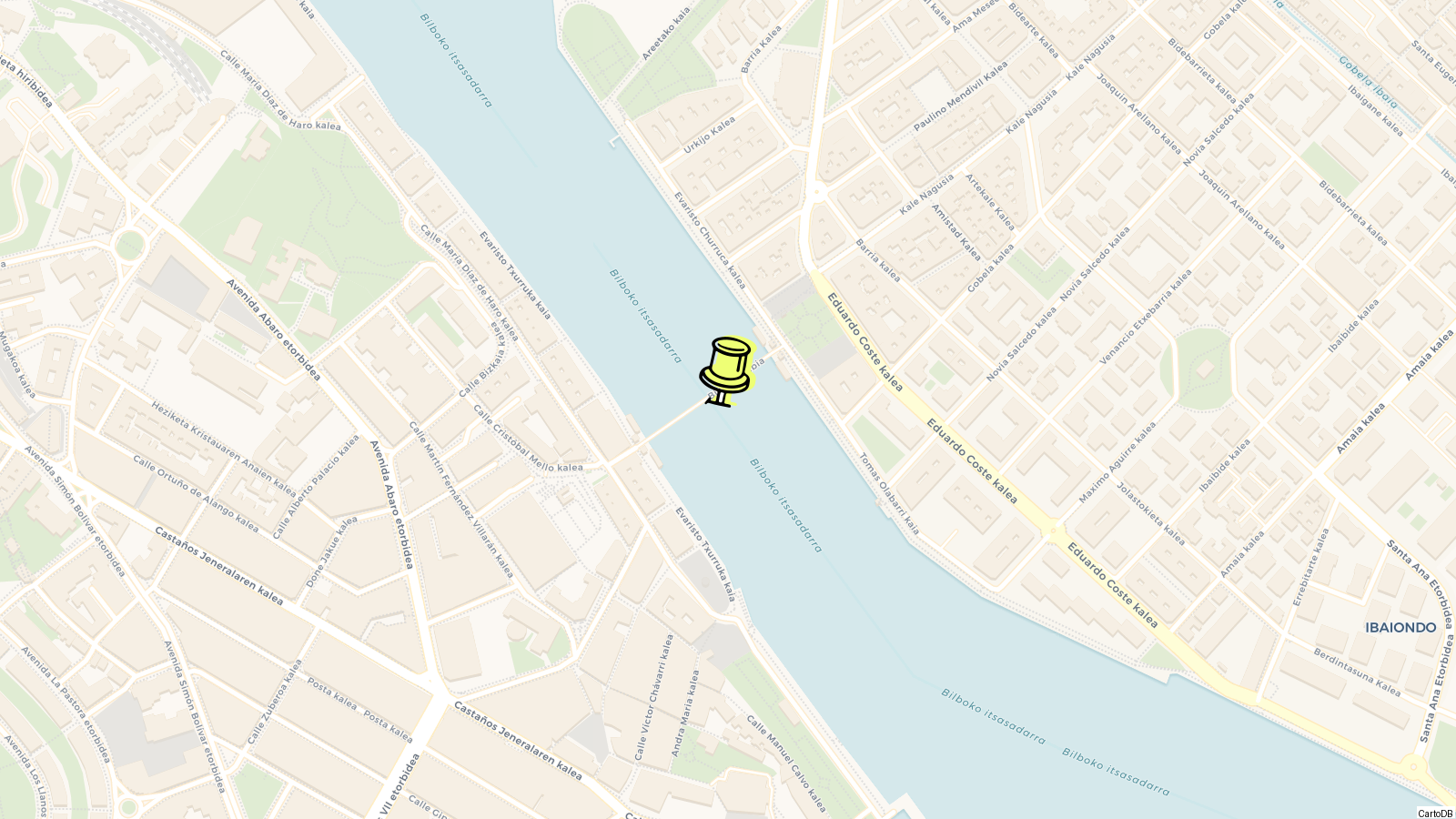
Visit details
Overview
The Vizcaya Bridge spans 160 meters across the Nervión estuary, connecting the towns of Portugalete and Las Arenas (Getxo) outside Bilbao since 1893. Locals usually just call it “Puente Colgante,” even though it’s not actually a suspension bridge, it’s a transporter bridge, a type most people have never seen in person.
What makes it different: instead of driving on the bridge, people and vehicles cross suspended in a gondola that glides between the iron towers, 45 meters above the water. The gondola fits six cars and several dozen people at a time, moving across in about 90 seconds, and it runs every eight minutes during the day, with nighttime crossings hourly. It still carries about four million passengers and 500,000 vehicles each year.
There’s no toll to walk in the area around the bridge. If you’re on foot and want proper views, you can use the visitor lifts to reach the upper walkway,50 meters high, open to pedestrians for a separate ticket, and not for the acrophobic. From the top you get a panorama of the port of Bilbao and the Abra bay, plus a windy stroll literally above shipping traffic. If you just want to cross on the gondola, pedestrian fares start at €0.40 (using the Barik card system), with cars paying up to €7 depending on size.
This is the only site in Spain recognized as UNESCO World Heritage for industrial engineering. The French engineer Ferdinand Arnodin worked with architect Alberto de Palacio (an Eiffel disciple), and their solution, using iron towers and twisted steel cables, became a template for similar bridges in Europe and overseas, but most haven’t survived.
Engineering That Outpaced Its Era
When Palacio and Arnodin finished the bridge in 1893, local ship traffic was constant, and drawbridges or stone arches wouldn’t do. Their answer: fix the crossing high above the water, but carry people and wagons in a moving gondola. This kept the port open for ships and made for a much cheaper structure than a full road bridge. The solution worked so well that more than 20 transporter bridges were built worldwide, yet today, only about eight are still in use.
Bridge Stats
- Height: 45 meters
- Length (main span): 160 meters
- Crossing time: about 90 seconds by gondola
- Used by: 4 million passengers and 500,000 vehicles per year
- UNESCO area: 1.08 hectares, with a buffer zone of 103.88 hectares for preservation
History
The Vizcaya Bridge started operating in 1893, when you could already cross the Nervión estuary in about 90 seconds without blocking ships heading to Bilbao’s port. The project was pushed through by Santos López de Letona, but most locals remember two names: Alberto de Palacio y Elissague, the architect (and a student of Eiffel), and Ferdinand Arnodin, the French engineer who solved the challenge of spanning the estuary without a huge land-eating ramp or blocking boats.
De Palacio wanted something modern. Instead of a clunky drawbridge or a tall, classic viaduct, they built a structure with 45-meter towers and a crossbeam of iron where the gondola “shuttles” back and forth, suspended by twisted steel cables, real high-tech for 1890s Spain. Bilbao’s iron mines basically provided the raw material: people still point out that much of the bridge’s iron came straight out of Bizkaia’s hills, back when the river was full of merchant ships and the air was permanently tinged with coal smoke.
In July 1937, the Spanish Civil War arrived on the river. Republican forces blew up the braces on the Getxo side to block advancing troops, the deck crashed into the estuary. If you walk through Portugalete’s old quarter, you’ll still hear people say that Palacio watched from his house as his bridge fell, months before his own death. The bridge was out of service for four years. It reopened in 1941 and, except for occasional maintenance, it’s operated nearly non-stop ever since.
Building a Pioneer
They weren’t aware of the word “industrial heritage” in 1893, but the Vizcaya Bridge sits right at the birth of modern Basque ironworking and the new shipping-and-mining boom. Palacio and Arnodin’s design merged thick nineteenth-century ironwork with the new (and then untested) technology of flexible, twisted steel cables, their own take on what Eiffel had done in France with steel construction.
Back then, quick, easy river crossings were a pressing local problem. Before the bridge, people used rowboats and, later, steam ferries for what’s just a few hundred meters, but when fog rolled in or the river was in spate, you could wait hours. The new design cost less than a full suspension bridge, but did the job safely in all conditions.
The UNESCO Decision
The bridge finally got its global recognition in July 2006: UNESCO added it to the World Heritage list as an “Industrial Heritage” monument, which is a category most Spanish sites don’t fall under. If a local calls it “el Puente Colgante” (“the Hanging Bridge”), they mean this one, not a suspension bridge, but kind of an ancestor of cable-propelled urban transport around the world.
Postwar Restorations and Color Change
Restorations in the late 1990s replaced metalwork that had rusted or been makeshift-patched in the postwar decades. In 2010, the whole structure was repainted in a color called Vena Rojo Hematites Somorrostro, chosen not just for tradition but because it reflects less sun and keeps the steel from overheating and cracking during brutal summer heatwaves.
The Export Model
Around two dozen transporter bridges were built around the world in the generations after Palacio’s, but only eight or so survive. The Vizcaya Bridge’s gondola system inspired copies in places like Newport (Wales), Rouen, and Buenos Aires, but this is the one still operating with the original system, still part of the daily commute for thousands.
Visiting
The main reason to go is the crossing itself. The Vizcaya Bridge runs a gondola every 8 minutes during the day and hourly overnight, linking Portugalete and Las Arenas (Getxo). Just walk up, no need to book, and hop on. As a pedestrian, you pay €0.40 per ride using cash, contactless, or the Barik transport card. Cyclists and drivers take the same platform (six cars max per crossing; single crossings €1.60 for bikes, €1.70–€7 for vehicles). The ride takes less than two minutes and runs from the first morning commuters through late evening, rarely pausing except for maintenance.
If you want to walk across the top deck, head for the elevator in either tower (Portugalete or Las Arenas side). The glass lift runs most of the day, exact hours shift with the season. Buy a ticket (€6–€10) at the base or online at puente-colgante.com. Go up 50 meters to the boardwalk. The views stretch over the port, Abra bay, and out to the mouth of the Nervión. Transparent floor panels are not for anyone with a fear of heights, but you can always keep to the metal walkway. Photos are allowed, selfie sticks tolerated. The visit on top takes about 20–30 minutes if you’re stopping for pictures, potentially longer in high season when crowds shuffle the pace.
Everything is dog-friendly (since 2017), there are no stairs on the main access routes, and the gondola is wheelchair accessible. You don’t need a reservation unless you’re part of a big group or want a guided tour (standard 45 minutes, €45 for a group, options for children). Look for the little gift shop next to the Portugalete ticket office if you want a shirt or a keychain with the Puente Colgante on it.
How to get there
From central Bilbao, take Metro Line 1 towards Plentzia. Get off at Portugalete or Areeta (Las Arenas), both stations are less than 5 minutes’ walk to the bridge, following the well-marked brown signs to “Puente Colgante.” If you’re on the Renfe Cercanías C1 or C2, Portugalete station is similarly close. Public buses also serve both approaches. On weekends and summer evenings, expect more foot traffic and school groups. The bridge is always visible by its distinctive iron towers.
Full route for a visit
- Arrive at either Portugalete or Las Arenas end, admire the bridge from the promenade.
- Take the gondola across, don’t skip this, even if you’re walking back.
- (Optional) Buy a ticket for the panoramic elevator up to the upper walkway.
- Walk the length of the bridge above the river, pause at the midpoint for photos.
- Descend at the opposite end. If you want, repeat the gondola crossing, it’s cheap.
- Snack or coffee? There are plenty of bars and bakeries on both banks within 2 minutes’ walk.
Good to know
You can bring bikes and dogs on both the gondola and the walkway. There’s always staff present, but security is minimal, this isn’t an area known for petty theft, but as always, keep your stuff close in crowds.
Tips
-
Buy a Barik card if you are using Bilbao’s public transport, this cuts down the price for the Vizcaya Bridge gondola crossing to around €0.40 per trip as a pedestrian. You can top up and use it on buses, the Metro, and the bridge.
-
Save the fancy walk for a clear day, if you want to cross the upper platform, only do it when the weather’s decent, otherwise all you’ll see is cloud and blown hair. Access is via lifts in both Portugalete and Getxo for €6-10, and you pay at the small ticket office on either side.
-
Early mornings and late evenings are less crowded, especially out of July and August. Afternoon can mean queues, particularly for the lift or upper walkway.
-
The bridge runs 24 hours, but the gondola is less frequent, only hourly late at night. Cross-time is 8 minutes during the day.
-
You don’t need to book, just show up. The gondola has space for six cars and plenty of pedestrians per trip. No reservation is possible or needed.
-
Dogs are allowed (since 2017), both on the gondola and the upper platform, as long as they’re leashed. The site is also accessible for wheelchairs and strollers.
-
Avoid Mondays outside summer, many riverside bars and cafes on both banks are closed, so you’ll be stuck with vending machines.
-
For best photos, shoot from the Portugalete side at sunset when the light hits the ironwork, or from below on Calle Muelle Churruca for the full frame.
-
If you’re planning to walk from central Bilbao, just take the Metro instead; the walk is nearly two hours, while Metro line 2 (to Portugalete or Areeta stations) gets you there in about 25 minutes. The bridge is a five-minute walk from either stop.
-
Want a guided tour? They’re offered daily (usually at 12:00 and 17:00 in Spanish and sometimes English), last 45 minutes, and run €45 per group. Book at the official Puente Colgante site.
Where to grab food nearby
On the Portugalete side, the bar at Plaza del Solar does cheap pintxos and cañas; on the Areeta side (Getxo), Bar Charly is a classic for tortilla. Both are within sight of the bridge and open from 10:00 except Mondays.
Should you bring kids?
It’s actually fun for children, both the gondola ride and the lift. The only spot to watch them closely is the upper walkway, which is fenced but open to the wind at 45 meters above the estuary.