Albanyà
Albanyà has Spain’s clearest night sky,bring binoculars for meteor showers at the International Dark Sky Park.

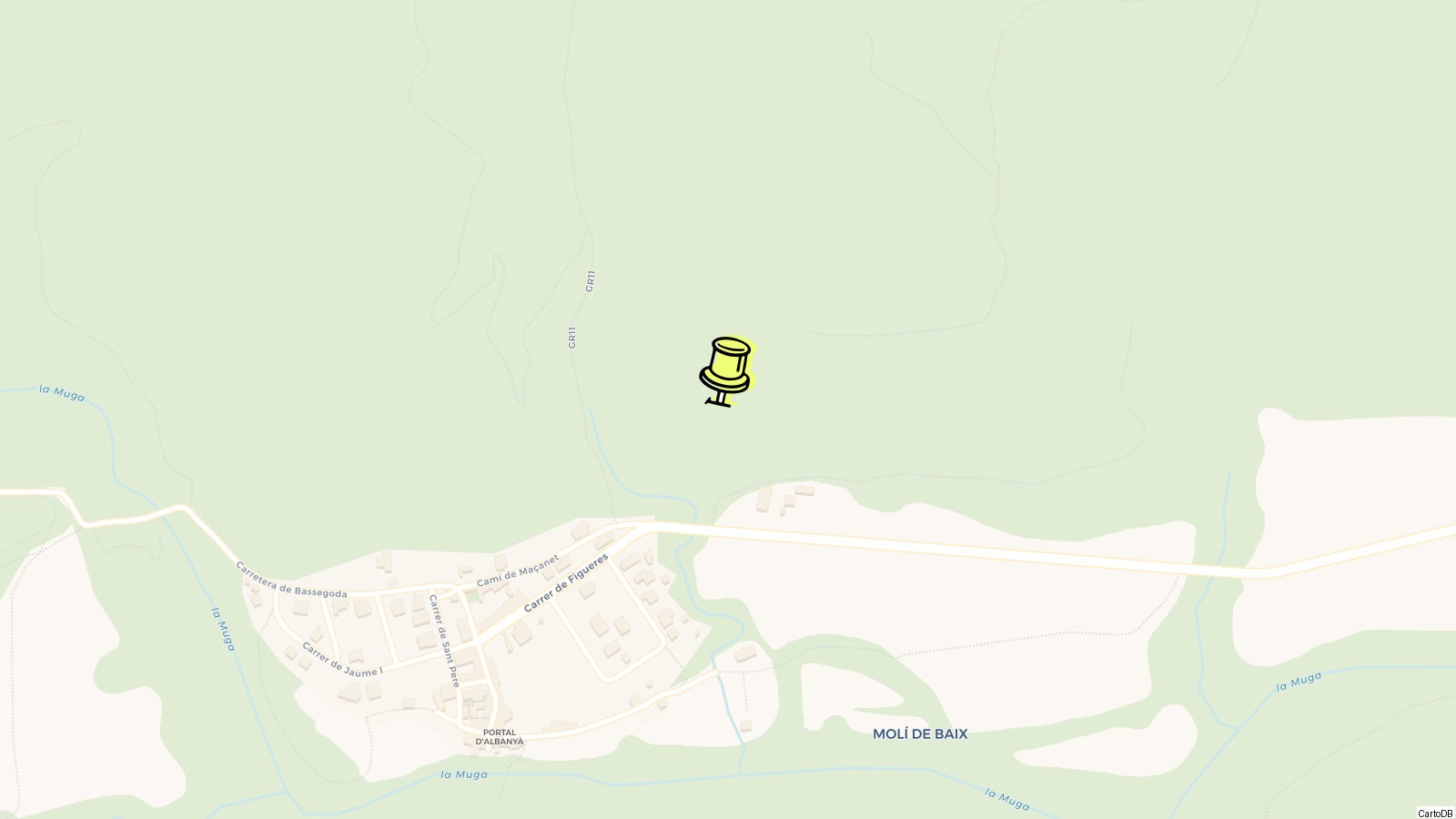
Overview
At 94.4 km² for just 158 residents, Albanyà is the opposite of crowded, about 1.6 people per square kilometer. The main village sits at 239 meters, tucked into the foothills on the edge of Alt Empordà near the French border. It’s Catalonia’s definition of remote, but you can actually pick up French or Spanish cell signals in places if you wander far enough uphill.
The village center barely registers as a cluster: a few houses, the town hall, the church, maybe a bar if you’re lucky. The municipality, though, covers hamlets like Lliurona (where you’ll find the 11th-century Sant Andreu church, still standing and protected by law since 1983), scattered farmhouses, pine forest, and pasture. This is not “rural Spain” in the cookie-cutter sense; it’s mountain Catalonia, shaped by forest clearings, tracks instead of roads, and a landscape that’s more wild than managed.
Foreigners make up 13% of the population, split between EU citizens, some African, and a handful from the Americas, about as multicultural as any place can get where the total headcount fits in a single bus. The primary languages are Catalan and Spanish. People here know each other’s dogs by name.
Albanyà is one of the few places in Spain recognized as an International Dark Sky Park. On summer nights, you can step outside and see the Milky Way with your naked eyes, no need to hike out of town. But if you want to do it properly, go to the Observatori Astronòmic Albanyà for a ticketed stargazing session or solar experience, bookable online, just don’t expect urban comforts at the edge of the woods.
This isn’t a day-trip village. If you come, it’s because you want Spanish and French border mountains on your doorstep, empty hiking trails, and air that smells like pine or campfire depending on the season.
Who Actually Lives Here
Break down the 2025 numbers and you get 80 men and 78 women, mostly Spanish, with 12 EU nationals, 5 from Africa, and 6 from the Americas. Many are older, some run family farms that have been in place for generations, and newcomers mostly come for the silence, not the scene.
Getting Your Bearings
The coordinates are 42.307° N, 2.723° E. Look on a map: you’re north of Figueres, west of the Costa Brava, east of the Garrotxa volcano zone. The main access is by car, no train, no bus, no “last mile” service unless you hitch a lift.
History
You can still spot 11th-century stonework in the Sant Andreu church at Lliurona, a hamlet belonging to Albanyà. That’s the oldest visible mark of human activity here, but people were living in these valleys long before written records, cattle trails and river fords between Bassegoda and the Muga hint at a much older pattern.
During the Middle Ages, Albanyà was all about small scattered settlements and remote farms, with every cluster hanging on to its own little chapel (Ermita de Sant Julià de Ribelles, Sant Bartomeu de Pincaró, and Sant Miquel de Bassegoda all date back to at least the Romanesque period). The main village grew up around the church of Sant Pere, which sits right above the Muga river at a spot once used for crossing, still the focal point today.
Medieval power struggles
The area traded hands between feudal lords and larger counties over and over, usually as part of the broader Alt Empordà region’s shifting politics. Albanyà’s lands often belonged to the Monastery of Sant Pere de Rodes or to local viscounts, depending on the year and which power was rising or falling out of favor in Girona.
Castles and defense towers once dotted the hills, but you’ll find only the most subtle traces left, little more than piles of dressed stone swallowed by forest, and some place names. This region never developed major centers; its isolation kept things simple and population low.
Population never boomed here. The 19th and early 20th centuries actually saw the villages get smaller, as people moved down to Figueres or even crossed over to France looking for work, especially after the phylloxera plague took out most of the vineyards in Empordà. Albanyà picked up a bit of a reputation for being “where the paved road ends”, which, honestly, is still partly true.
Electricity, running water, and paved roads arrived very late compared to the coast or big towns. Locals will remember the arrival of telephone lines and the first easy car access to villages like Lliurona and Bassegoda in living memory.
The border with France, just a few kilometers away, made for some illicit commerce in the postwar years, smuggling goods, and sometimes people, especially during and after the Spanish Civil War. There are stories of bread and pencils carried over by foot, and exiles or resistance fighters running these forest trails. You’ll still find old overgrown paths leading north that no outsider could follow without help.
Civil War and after
During the Civil War and the early Franco years, a few Albanyà families hosted refugees or helped them slip across to the French side. The old school in the main village shuttered and reopened several times depending on postwar politics and funding. There are quietly marked graves and memorial crosses deeper in the woods, not tourist sites, just reminders for the families who still know what happened.
Albanyà’s population is still sparse,158 people in 2025, down from over 300 residents a century ago. There are a handful of foreign families now, drawn by the landscape, low cost, or the dark night skies. Since 2017, the village is home to the Observatori Astronòmic Albanyà, and the whole municipality is recognized as an International Dark Sky Park: that means practically zero light pollution, and night skies you just won’t see in Barcelona or even Figueres.
The dry stone bunkers in the pine woods and the old bridges on the Muga tell more stories than any signpost here. Walk any stretch of older path and you’ll see that people have always been moving through Albanyà, just never in great crowds, and always with one eye on the next mountain over.
Visiting
You’ll probably drive the steep curves into Albanyà, wind past the one bare-bones bar, and realize in 30 seconds that this isn’t a “village sightseeing” stop. Instead, what you actually do here is move: walk, hike, stargaze. The first thing most people see is the tiny main square, Plaça Major, just off the main road; there’s a village shop with odd hours and a basic bar sometimes open for coffee.
Trekking the GR-11 and Local Trails
Albanyà is a waypoint, not a destination, for most people on the GR-11 Pyrenean trail. There are two main GR-11 stages passing through: west to Lliurona and Sant Antoni d’Aguja (16 km, mostly climbing), and east toward La Vajol (25 km, a longer but easier descent). Both are signposted; look for the red-and-white stripes. You do not need to book or pay for access. The area has 19 km of marked routes, which can be hot and exposed in summer, bring extra water, especially July-September.
GR-11: Deep Route Details
- Albanyà to Lliurona (Stage 39): 16 km, allow 5.5–7 hours. You’ll gain about 900 meters. The first 6 km are sharp uphill, so start early in summer. There’s a water fountain at Sant Andreu de Lliurona (usually running) but little else. Stock up on food in Albanyà’s shop before you go.
- Albanyà to La Vajol (Stage 40): 25 km, 7–9 hours. You’re leaving the Pyrenean edge for gentler wooded hills. No reliable drinking water along the way except possible streams (filter!). In heavy rain, trails can turn into sticky red mud, so check the forecast.
Stargazing: Observatori Astronòmic Albanyà
You’re in one of the official International Dark Sky Parks. The Observatori Astronòmic Albanyà runs guided stargazing sessions several nights a week (check dates and book in advance, sessions do sell out). Prices are €25–€35 per adult, depending on session type. Most are in Catalan and Spanish, but they occasionally do English on demand. The observatory is at Camí de Bassegoda s/n, next to a large campground. Parking is simple; the slope uphill can be slick after rain.
What actually happens at the observatory?
- Sessions run 1.5–2 hours and include telescope viewing, a short presentation, and constellation spotting. The astronomer is Pere Guerra, who knows the sky and will happily take requests if you have a target star or planet. Dress warm, even in July the air chills fast after dark.
- “Solar experiences” run in the afternoon and let you look directly at sunspots with specialized equipment.
Swimming and the Muga River
A lot of locals show up here just for the river. Walk from the village toward the stone footbridge and you’ll hit clear, waist-deep pools under poplars. No facilities, bring your own towel and shade. It gets crowded by local standards on weekends (that means 10–30 people), but there’s room to spread out upstream.
Romanesque Church at Lliurona
The 11th-century Sant Andreu church in Lliurona is stone, squat, usually locked, and sits about 10 km up a single-track road from Albanyà. There’s no entry fee, and the setting is what counts. Unless you’re a serious architecture nerd, it’s enough to walk the outside and picnic by the old cemetery wall.
Wilderness: Going Beyond the Village
Walkers sometimes spend a whole day tracing the road up to Sant Bartomeu de Pincaró, a ruined hermitage above the valley. There are no signs or services. Bring lunch, maps or GPS, and expect spotty cell service.
Alternative: Loop Hike
If you want a short circuit, do the “PR” (yellow-white-marked) loop down the river and back through old chestnut groves. You’ll get shade and nobody else, even on weekends. The route isn’t on Google Maps, ask in the shop or use offline hiking apps like Wikiloc, searching “Albanyà PR”.
Opening Hours and Facilities
The Observatori’s administrative contact is 972 54 20 20; actual entry is only possible during scheduled sessions. The library on Plaça Major opens Tuesdays and Thursdays, 18:00–19:00, run by local volunteers. There is no tourist office, and no public Wi-Fi. Most practical updates are posted at albanya.cat.
Tips
-
Bring cash. The only bar in the main village rarely takes cards. No ATM in Albanyà; the nearest is in Sant Llorenç de la Muga, a 20-minute drive.
-
If you want bread or groceries, bring them with you. There isn’t a bakery or supermarket in the village. Closest full-service shops are in Sant Llorenç or Figueres.
-
Restaurants are basically nonexistent, except for simple food at the bar (when open) and, in season, sometimes at the campsite’s café.
-
For the Observatori Astronòmic Albanyà, tickets for stargazing must be booked in advance online. English-language sessions are occasional. Dress for mountain nights even in summer; temperatures drop fast after sunset. Arrive early to park, night events can fill the lot.
-
Summer weekends see a spike in visitors (mostly locals), and car parking along the single road fills up fast, especially around river access points. If swimming is on your list, arrive by 10am or come on a weekday.
-
Hiking trails, including the GR-11, are not all well-marked as soon as you leave the main road. Download GPS tracks in advance, and bring plenty of water: the sun bites and fountains are rare.
-
In cooler months, don’t expect shop hours or even the bar to follow posted schedules, staff double up with other jobs and only open when business is likely.
-
The river may look tempting but dries to a trickle after long dry spells (which are common, with 229 dry days per year). Best swimming is in late spring or after heavy rain.
-
WiFi is reliable only at the camping. If you need to work remotely, book a bungalow or day-pass at the campsite.
-
The local library is only open Tuesdays and Thursdays for one hour (18:00–19:00), and nobody will mind if you visit for WiFi or a quiet seat. Mention Margarida or Joan Rosa at the door to get buzzed in.
Know this destination? Help us improve
Your local experience is valuable to other travelers.