Basilica and Expiatory Church of the Holy Family
Tickets start at €26 and you’ll join 13,000 people a day marveling at spires covered in stone fruit and lizards above Barcelona’s Eixample district

Visit details
Overview
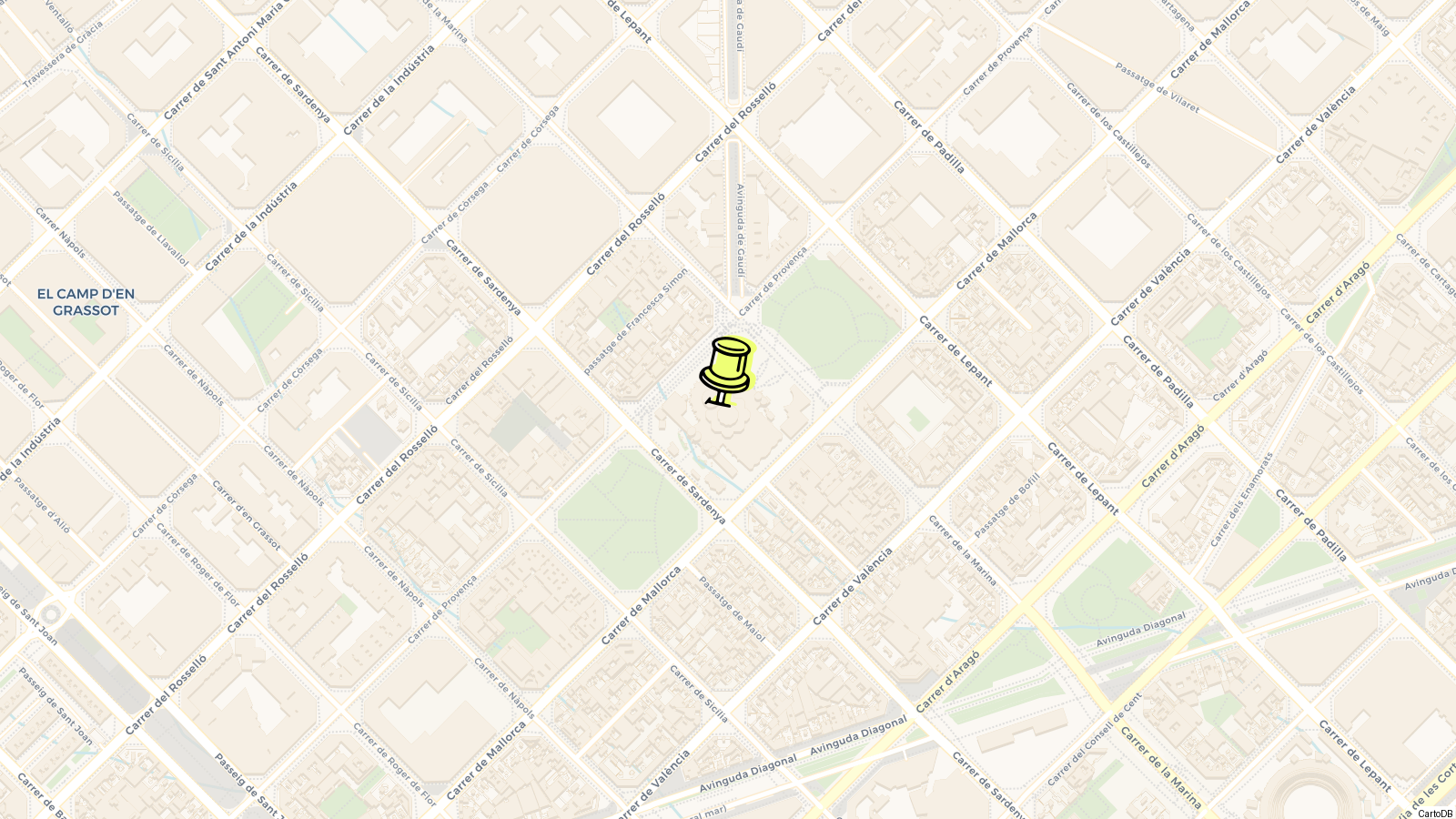
Tickets for the Sagrada Família start at €26 for adults in 2025, and you’ll stand in line with an average of 13,000 people a day, this church isn’t just popular, it’s a magnet for everyone from school groups to architecture nerds. Gaudí’s basilica is impossible to miss thanks to those wild towers and cranes above the Eixample grid at Carrer de Mallorca, 401. It’s been under construction since 1882 and, as of 2026, now stands at 172.5 meters high, yes, the tallest church in the world. The scale is ridiculous: 18 spires (not all done yet), vaults up to 60 meters overhead, and facades so full of mythic creatures, Latin text, and local nature references that even lifelong residents spot new things every visit.
Antoni Gaudí spent over forty years innovating here, blending Gothic ideas with curves, stained glass, animal figures, and geometry inspired by trees and bones. He is actually buried here, in the crypt. Construction is funded by ticket sales and private donations, not the Church or public money, so your entrance fee directly pays for the latest stonework or sculpture.
There’s nothing else like walking into the nave around 9:00 or 10:00, just as sunlight floods through the stained glass and makes the whole place look neon. Everything inside is deliberate, columns branching like trees, colored light falling in bands by season, acoustics designed so pipe organs and choirs sound eerily loud.
All-day opening (09:00–20:00) lets you see the place at different angles; evening feels calmer if you want to linger. The building isn’t finished: you’ll still see scaffolding, ongoing work on the Glory façade, and work crews, which just feels like part of the experience by now. That said, it’s fully functional as a basilica: regular masses, sometimes in six different languages, plus a daily stream of school groups and wedding parties on the steps.
The Spires and Facades Up Close
The three principal facades each have their own mood: the Nativity side is a riot of animals and plants, snails, turtles, wheat sheaves, with impossibly detailed sculptures, most designed by Gaudí himself. The Passion side (with haunting skeletal figures) looks stark and almost brutalist, finished decades later by Josep Maria Subirachs. The unfinished Glory facade to the south has the grandest entrance planned, complete with a monumental staircase and iconography that’s still being debated in city hall.
You can, for a higher ticket price, take an elevator up into one of the towers (Nativity or Passion). Expect narrow spiral stairs for the descent, and serious vertigo if you look down from a window. Access is weather-dependent.
Local Feel and Controversy
Locals have mixed feelings. No one living in the Eixample misses the constant construction, and there’s a high-stakes battle over plans to demolish buildings on Carrer de Mallorca for Gaudí’s originally planned stairway. But it’s so woven into the city routine, kids’ school trips, Saturday weddings in the crypt, Sunday international mass at 9:00 (no ticket, but seats fill), that it’s almost a default backdrop to life here.
The basilica’s construction was interrupted by the Spanish Civil War and more recently stalled again during the pandemic. The stone now comes from Lancashire, England, after the original Montjuïc quarries were depleted. Gaudí himself quipped, “My client is not in a hurry”, which honestly could be Barcelona’s motto.
History
On March 19, 1882, Francisco de Paula del Villar started building the Sagrada Família as a pretty standard neo-Gothic church for a Catalan bookseller and religious organiser, Josep Maria Bocabella. Villar made it as far as the crypt before quitting one year in. Antoni Gaudí, who’d just finished school, took over in 1883. He looked at Villar’s plans and decided to throw almost everything out.
Gaudí thought on a different scale. He wanted this to be a “cathedral for the poor,” but where every piece, even the columns and windows, was telling a story. Within a few years he was experimenting with wild parabolic arches and knotty columns that split like tree branches, so the building became all curves and weird angles. The only straight lines you’ll see are accidental. Gaudí was obsessed with “geometry from nature,” but he was also practical: He started with the Nativity Façade facing east, figuring people would be more generous with donations if the most approachable side was finished before the severe Passion side.
From the start, money was slow. Nobody except ticket buyers and private donors ever funded construction. Gaudí lived on-site for his last 16 years, he died in 1926 after being hit by a tram, right outside, his signature hat unrecognizable in the hospital. At that point, you’d only see the apse, one tower, and the start of the Nativity Façade.
Gaudí was buried in the crypt, steps from the door. When he died, only about a quarter of his grand plan existed. Instead of detailed blueprints, he left behind rough models and scribbled sketches, meant to guide future generations as technology improved. In 1936, anarchists set fire to the crypt and bust open Gaudí’s studio, burning much of what he left behind. Since then, builders have reconstructed Gaudí’s intention as best as possible from half-melted models and black-and-white photos.
After the war, construction paused, then crept along for decades. The Passion Façade was built only in the 1950s–1970s, using Gaudí’s sketches and later, sculpture by Josep Maria Subirachs, his harsh, almost cubist style still sparks debate among locals.
In the 1980s, computers, and CNC stone-carving machines, let a new generation speed things up, finally making possible the tricky geometries Gaudí dreamed up. Donations spiked in the 21st century as tourism exploded, and by 2010 Sagrada Família was already Barcelona’s most-visited building.
COVID-19 was the first thing (after the Civil War) to halt work, but in late 2020, the team was back, pushing for 2026, supposedly Gaudí’s centenary, for the main towers. By February 2026, the final piece of the central tower was installed, crowning the building at 172.5 meters. Work on decorative details and especially the controversial main stairway will drag out until 2034.
During the Spanish Civil War in 1936, the crypt was set on fire and Gaudí’s models were smashed by anarchists. Plenty of pieces were salvaged and, over the decades, sculptors and architects rebuilt Gaudí’s original forms using a mix of what survived, published photos, and, more recently, digital scans.
Key milestones are marked all over the site: the school for workers’ children (from 1909, now moved and housing an exhibit), the main nave covered in 2010, and more spires going up nearly every year since 2018.
Sagrada Família was only officially consecrated as a basilica in 2010 by Pope Benedict XVI, at a huge outdoor mass with 6,500 people inside and 50,000 more outside. Since then, it has functioned as both a working church and a construction site. Most visitors don’t notice, but you can still spot active scaffolding and, depending on the year, workmen hanging off the facades adding new sculptures or panes of colored glass.
Even with the main structure “finished” as of early 2026, controversy keeps swirling: plans for the monumental staircase to Carrer de Mallorca mean hundreds of apartments and shops could be expropriated if the city and church don’t strike a deal. For now, the main glory façade is still under wraps and cranes remain a permanent fixture.
Through all of this, masses are held weekly, usually Sundays at 9am, accessible on a first-come, first-served basis. The crypt is open to visitors and locals still come by to see progress or pray, this is not a relic, it’s an ongoing experiment. The money you spend at the door or in the shop is still being poured into stone, glass, and the salaries of people building what Gaudí left half-finished.
Visiting
The entrance is on Carrer de Mallorca, number 401. Arrive early: by 10am, the line is already snaking around the block, even if you bought your €26 ticket online (which you should, same-day slots are usually sold out by noon). The basilica opens daily at 09:00 and closes at 20:00.
Right after security, you’ll step into the nave. Don’t rush. The columns here split and branch like trees, and the ceiling vaults up to 45 meters. The stained-glass windows aren’t just for color, they turn sunlight into a green-gold glow in the morning and fiery orange by late afternoon. Audio guides come via a phone app, included in your ticket, with free Wi-Fi near the entrance for downloading. Pause on the central aisle: from here, you can look up and see the main altar, with the organ pipes visible behind it, there are 1,492 pipes, and when a service is on, you’ll feel it in your chest.
Head right towards the Nativity Façade. Gaudí insisted it be built first: it’s covered in animal carvings, snails and lizards, and even a pelican. You’re allowed on the exterior platform here. The details are close enough to touch, but guards will hush you if you spend long on the stairs.
Tower access costs extra and must be reserved for a timed slot. If you splurge (it’s worth it), a lift takes you up the Nativity or Passion towers, don’t bother deciding which, both have city views, but the Nativity gets the sun in the morning. The lift only goes up. You have to walk down a tight spiral staircase, over 300 steps. Not for anyone with vertigo or mobility issues.
Back inside, past the nave’s forest of columns, turn towards the Passion Façade, which faces west. It’s stark: angular figures, sharp edges, and that weird “magic square” puzzle where every row and column adds up to 33. People spend 10 minutes just photographing the sculptures, especially Christ on the cross, lit up by the setting sun.
Don’t skip the crypt and small Gaudí museum in the basement. The crypt hosts regular masses (check the website), and the museum is packed with old photos, tools, and broken bits of the original models that survived the Civil War. Gaudí is buried here, in a small, candle-lit chapel.
Near the exit through the Passion Façade, the souvenir shop is pricey, but you can see workers fitting stone or glass for ongoing construction through a glass partition. The funds you spend here go straight back into the building, ticket sales cover about 97% of the basilica’s annual €134 million budget. There’s a bathroom on this exit route: use it, since the next public toilet is several blocks away.
How to see the basilica with minimal waiting
- Book your ticket online at sagradafamilia.org, choosing the first slot of the day (09:00). Timed tickets mean a shorter security line but not zero. You must be there within your 15-minute window.
- Download the audio guide app in advance. Wi-Fi is free right at the entrance, but spotty inside, so having it ready is easier.
- Wear comfortable shoes. Even a basic visit is over an hour on your feet, and tower access adds tight stairs.
- Photography tips: The nave glows golden until about 11am, after which it starts to glare. Sunset (after 18:30) is best for the Passion Façade.
- Mass attendance: Sunday international mass is at 09:00, free, but you must queue up around 08:00 to have any chance at a seat.
What not to bother with
- Don’t expect to see all 18 planned towers. Fourteen are up as of 2026 and scaffolding still covers the Glory Façade, completion is now promised for 2034.
- The onsite café is overpriced and not great. If you need a break, head two blocks south to Carrer de València for bakeries with less tourist markup.
Crowds here are intense year-round, averaging 13,000 daily visitors, families and school groups pile in from 11:00, and it’s shoulder-to-shoulder in the nave from spring through fall. Wheelchair access is good throughout the main level but not down spiral tower stairs.
If you want to see the current state of construction, look for the completed Jesus Christ spire. As of February 2026, it hits 172.5 meters, now the tallest church tower in the world, topped by an elaborate cross. The views from below are almost as good as from the towers, and free with your admission.
Tips
-
Book online and pick an early morning slot or the last entry of the evening, it’s the only real way to avoid the mid-morning tour bus crush, even if you already hold a ticket.
-
Give yourself at least 90 minutes,2 hours is better if you plan to listen to the full audioguide app (included in your ticket), inspect both Nativity and Passion facades outside, and actually look up instead of shuffling with the crowd. Want to climb a tower? That requires a time slot, and they check.
-
Bags are scanned airport-style before entry, and lockers don’t exist on-site. You’ll have to carry any backpack or suitcase the whole way, avoid bringing more than you need for the hour or two inside.
-
Wear decent shoes and don’t forget a water bottle (sealed bottles only). There’s nowhere to sit inside except for the benches along the nave, and Barcelona sun + stone = hot. Dress code is enforced: no bare shoulders, no tank tops, no short shorts, and nothing “explicitly festival” (their words, not mine).
-
The basic ticket includes an audioguide you access on your own phone. Bring headphones: the church’s acoustics turn group audioguide chatter into a migraine.
-
If you want a photo with minimal crowds, hit the Plaça de Gaudí park before 8:30 a.m. in summer or after 7:30 p.m. in winter. The best view is across the pond on the northeast corner, but locals know it’s not lit at night.
-
The towers are an extra charge and aren’t accessible for wheelchairs or anyone who can’t handle spiral stairs. The lift goes up, but you walk down, around 300 steps in a tight stone tunnel, no exit in between.
-
Free Wi-Fi is spotty near the entrance and in the shop, but nonexistent inside the nave and towers. Download apps or tickets before you arrive.
-
Mass is open to the public at 9 a.m. on Sundays and feast days, free entry until filled. Dress for church, not the beach.
-
There are no cafés or vending machines inside the gates. If you need coffee or a snack, head to Carrer de Provença afterwards, avoid the overpriced places across the street.
If traveling with kids or mobility issues
Strollers are allowed, but navigating peak times is not fun, it’s wall-to-wall people. The main floor and facades are accessible for wheelchairs; the towers are completely off-limits for mobility issues or kids under 6. Most families end up skipping the towers anyway because the spiral stair descent can spook children.
Buying same-day tickets
If you don’t plan ahead and all slots are sold out online, try the official ticket counter on Carrer de Sardenya, but expect up to an hour in line for next-available slots, usually well after lunchtime. Resellers hang out nearby but charge a markup and aren’t official.
Security checks and what’s prohibited
Apart from large bags, tripods, drones, selfie sticks, and eating/drinking inside are all forbidden. They’re picky. Expect a bag scan and sometimes pat-down during peak summer or after major city events.
Know this destination? Help us improve
Your local experience is valuable to other travelers.