Camp Nou
The Barça Immersive Tour costs €28 and gets you a 360° digital stadium walk plus a peek at Camp Nou’s construction from C. d'Arístides Maillol.

Overview
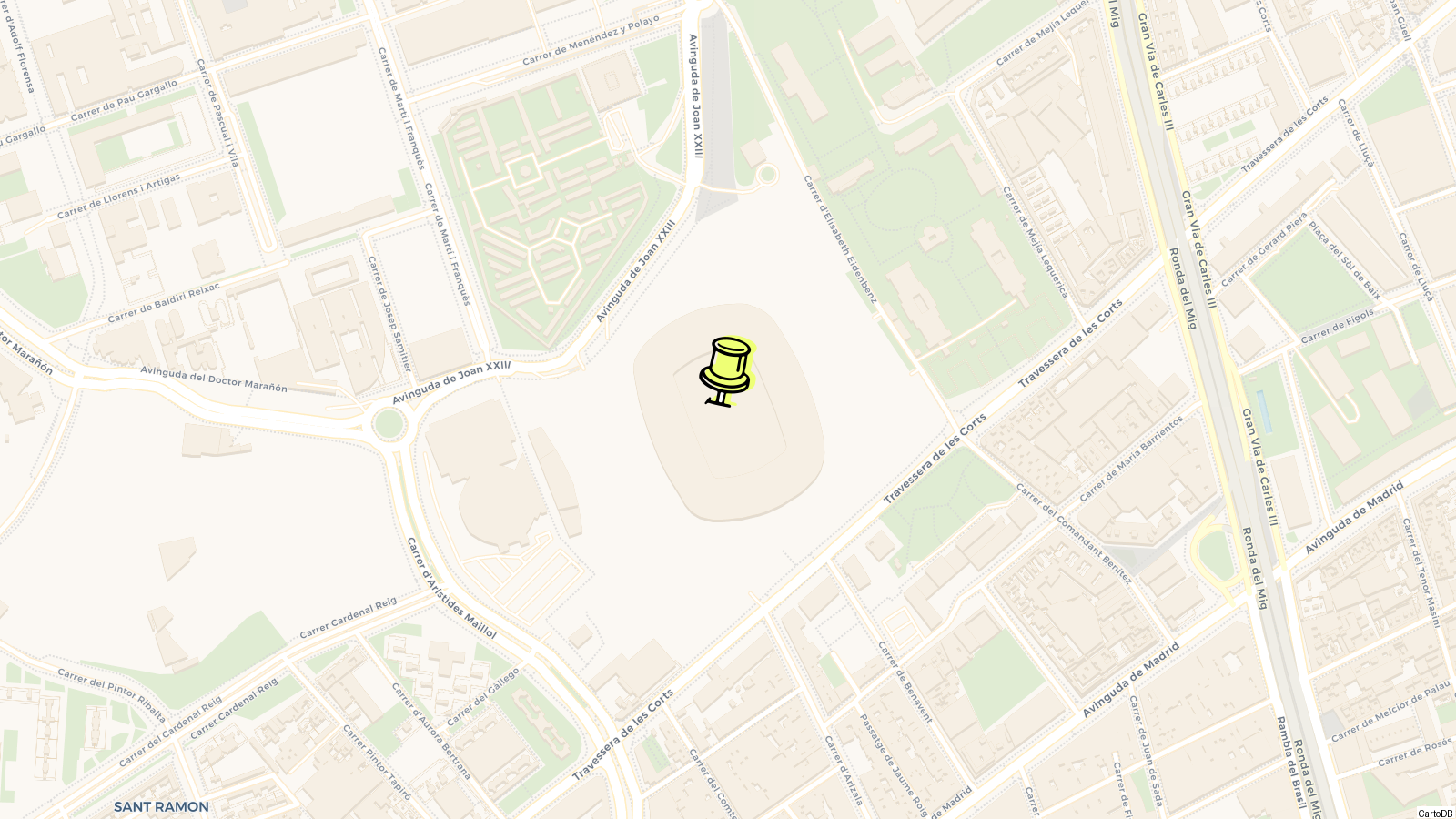
Admission to Camp Nou’s Barça Immersive Tour costs €28 for adults and covers the club museum, a 360° digital experience, an audio guide, and a viewing point over the ongoing stadium construction. You’ll find the entrance at C. d’Arístides Maillol, 12, southwest of the city center and about 10 minutes’ walk from the Palau Reial or Les Corts stops on metro line L3, or Collblanc on L5.
Right now, Camp Nou is a stadium in transition. Big renovation works are transforming the place, but the tour and museum are open. The stadium will eventually seat about 105,000 when works finish in 2026, keeping it the top spot for capacity in Spain and all of Europe. In the meantime, you won’t see the full stands packed; expect scaffolding, cranes, and a lot of construction in your photos.
FC Barcelona has played here since 1957. Over time, Camp Nou has hosted everything from the 1982 World Cup opening match and the 1992 Olympic football final to concerts with Springsteen and U2. The club’s motto, “Més que un club,” is plastered across the stands and everywhere in the museum.
The museum, which most visitors come for these days, gets more than a million guests a year, only the Museu Picasso in Barcelona draws more people locally. Even if you’re only half into football, you’ll see trophies, old shirts (including a whole section on Messi), and a panoramic look at Barça’s impact on Catalan culture. The renovation has replaced the usual pitch-side tour with interactive screens and construction-viewing spots.
A standard metro or bus ticket costs €2.40 each way and is by far the easiest way to get here. Don’t even consider driving, access is heavily restricted, and parking is a headache during works. The museum is open daily from 09:30 to 19:30, but hours can change on matchdays and with the pace of construction.
Camp Nou doesn’t only mean football, but let’s not kid ourselves, if you know anything about Barcelona, every kid in the city has dreamt of playing here at least once.
History
The first stone for Camp Nou wasn’t laid until March 28, 1954, but the whole saga starts a few years earlier when FC Barcelona realized its old ground, Les Corts, was too small for the crowds lining up to see László Kubala, the superstar signing of 1950. The city council and the club swapped plots to settle on the present site in Les Corts, right at the edge of what was then developed Barcelona. Francesc Mitjans and Josep Soteras came up with the design: continuous stands wrapping the pitch, inspired by De Kuip in Rotterdam. FC Barcelona borrowed heavily, overran the budget fourfold, and slogged through politics for permits and requalification, until Franco’s regime finally green-lit the project.
Nobody in 1957 had seen anything like this. On September 24, just in time for the city’s La Mercè festival, Camp Nou opened with a crowd pushing 90,000. The next three decades were marked by expanding capacity (all the way up to 121,401 for the 1982 World Cup), new VIP lounges, and ever-greater European nights, from the inaugural European Cup Winners’ Cup final in 1972 to two Champions League finals, the most famous being the 1999 Manchester United–Bayern Munich comeback. Stadium upgrades included the installation of electronic scoreboards in 1975 and a major overhaul for the 1982 World Cup: extra tiers, boxes, a press zone and, for once, no expense spared. That year, Camp Nou hosted the opening game (95,000 spectators saw Belgium upset Argentina) and more matches than any other ground in Spain.
If you’ve ever wondered about the pitch itself, it was partly lowered in 1994,2.5 meters down, to improve sightlines, at the same time that standing terraces were eliminated in favor of seats (a requirement of post–Heysel UEFA standards). The club museum followed in 1984 and now pulls over 1.2 million visitors a year.
Debt, Politics, and Dictators
The financial drama behind the construction would fit right in at any modern FC Barcelona board meeting. Mortgages and loans kept piling up because les Corts couldn’t be sold as quickly as planned; the land’s conversion from sporting to buildable use needed rubber-stamping all the way up to Franco himself. Club president Miró-Sans had to talk directly to the authorities in Madrid just to keep cash flowing. Some say the boom of the late 50s and Kubala-mania saved the club, even as it gave them a hangover of debt for the next decade.
Olympic, Rugby, and Religion
Besides football, Camp Nou keeps picking up odd events: Mass from Pope John Paul II in 1982 drew over 121,000. The stadium hosted the football final at the 1992 Barcelona Olympics (gold for Spain). Even a rugby record was set here in 2016, when 99,124 fans watched the French Top 14 final; the Stade de France was busy with Euro games, so the rugby crowd came here for once.
In 2000, club members finally voted to make the popular nickname official; “Camp Nou” replaced the original “Estadi del Barcelona.” Jump to 2022: Spotify paid $310 million for naming rights, so the official name is now “Spotify Camp Nou.” The latest chapter is the massive renovation (begun in 2023 and running through at least 2026), with capacity planned for around 105,000 plus high-tech upgrades. During construction, the team played at Montjuïc’s Estadi Olímpic Lluís Companys and even dipped into Johan Cruyff Stadium while concrete and new seating were underway.
The bigger narrative: Camp Nou mirrors both Barcelona and Barça’s changing fortunes. Expansion when the city grew, doubts and delays during recessions, and marketing deals as global football turned corporate. Camp Nou’s real core, though, is local: “Més que un club” spelled out in the stands, thousands of club “penyes” (fan associations) gathering before games, and enough political overhead that boardroom battles get as much coverage as cup finals. You walk in today and see both construction cranes and banners from old European nights.
Stadium as Urban Landmark
When built, Camp Nou was on the city’s edge; today, it’s surrounded by shops, offices, and housing blocks. The 2020s renovation isn’t just about another corporate VIP box. The stadium “urbanizes” further with more public spaces, street-level plazas, and neighborhood connections, no longer the walled sports island it was in the 1950s. The architects and city officials say this is as much about Barcelona’s identity as it is about football or concerts. In the future, even non-football fans might feel comfortable strolling past the pitch on a Tuesday morning.
Visiting
Camp Nou is at C. d’Arístides Maillol, 12, in the Les Corts district, and right now your visit revolves around the “Barça Immersive Tour”, this is what you’re getting while the stadium rebuild finishes (planned for 2026, works ongoing through at least part of 2027). Tickets cost €28 for adults, €21 for kids 6–13 or seniors 65+, and under-5s are free. Book online at FC Barcelona’s official ticket page to save €1.4 and skip the ticket window line.
You enter through gate 9, coming from the metro at Palau Reial (L3, green line, 6 minutes’ walk) or Collblanc (L5, blue line, 10 minutes’ walk). There’s plenty of FC Barcelona signage along Travessera de les Corts; you won’t get lost unless there’s a match crowd. No parking is available for normal visits, don’t try to drive. With a regular TMB ticket (€2.40) you’re covered for metro or bus.
Once scanned in, everything centers on the museum and its new digital wing. No access to the pitch itself during construction, but you’ll see the massive trophy cases, the Messi Area (lots of Golden Boots and Ballon d’Ors), shirts and memorabilia, a 360° immersive “Camp Nou Live” digital space with surround projections, and a panoramic viewing platform overlooking the evolving stadium bowl, you see the cranes, the new roof structure, and the changing upper decks.
Audio guides are included, and displays are in Catalan, Spanish, and English. Allow 75–90 minutes if you actually read the panels, less if you keep moving.
There’s a store at the end that’s practically an attraction by itself, jerseys with official name printing cost about €115 (no discounts in-store, and there’s always a queue at the Messi shirt counter). You exit back out near the same entrance.
If you want more than the regular tour
- Guided “Spotify Camp Nou Experience” with pitch access: €64 and up, only on certain days and slots, includes a guide leading a small group right up to the edge of the field and through VIP zones. Book well ahead, they go fast in high season.
- Barça Sky Tour (Helicopter tour): Departs from outside the stadium, starting at €199, a 6-8 minute loop over Les Corts, includes a stadium flyover, photos, and a voucher for the standard immersive tour. Only hardcore fans or serious “I want the Instagram shot” types tend to shell out for this.
Opening times and busy periods
Regular opening is 09:30–19:30, but on Barça game days, the museum (and thus the immersive tour) closes at 15:00. If you see any Champions League or big La Liga home games on the calendar, count on crowds and short hours, check the official site before picking your slot.
Construction viewpoint and renovation context
The “construction viewpoint” is a big selling point right now: you’ll literally see the contractors at work, with interpretive boards showing what the new stadium will look like in 2027, plus before/after diagrams and historic footage from record-attendance games (120,000+ crammed in for Barça–IFK Göteborg in 1986).
Tips
-
Book tickets online at fcbarcelona.com to save €1.40 per person and skip the line. The site is solid, and you’ll get e-tickets instantly.
-
Stadium tour access is still limited during renovations (currently projected finished by 2027), so you won’t be seeing the pitch up close or the players’ tunnel. What you get is the Barça Immersive Tour, museum, VR room, and construction viewpoints.
-
Avoid driving. No public parking for standard visitors while work lasts, and they restrict car access more on match days. Public transport is easier, faster, and doesn’t come with stress.
-
The closest metro stops are Palau Reial (L3), Les Corts (L3), Collblanc (L5/L9), and Badal (L5), all within a 6–10 minute walk. Single ride is €2.40. The new Avinguda de Xile/Camp Nou L9 station will eventually open, but for now use the metro and walk, parking and taxis in the area clog up fast.
-
On match days, museum hours are reduced (closes around 15:00), with some sections roped off for security or prep. Double-check before you book, same-day tickets can end up cut short.
-
Bring earphones if you want to use the audio guide on your own phone (WiFi is spotty and the ones handed out aren’t always working).
-
Children 5 and under get in free. Kids 6–13 and seniors over 65 pay around €21 for the immersive tour.
-
Time the museum visit for early morning or after 17:00 to avoid the main crush of school groups and larger tour buses.
-
Official FC Barcelona store on-site sells shirts in all sizes, but for cheaper kits and scarves check smaller sports shops on Travessera de les Corts, one block north.
-
For questions or ticket issues, the club’s English-speaking hotline is +34 93 496 36 00, Mon–Fri 09:00–18:00 (till 16:00 in summer), closed weekends.
Taxi, bus, and airport tips
Taxis from Plaça Catalunya or the Gothic Quarter run €12–16 each way and take 15–20 minutes, traffic on match days is brutal, so the metro still wins. From El Prat airport, you can reach Camp Nou in about 40 minutes for €2.40 by taking L9 Sud metro to Collblanc, then walk. Don’t count on taxis around the stadium after events, they get stuck in a jam for ages.
Several TMB bus lines serve the area, but most tourists stick with the metro for simplicity. If you have a T-casual or Hola Barcelona travel card, you can use it on both.
- Rare but helpful: there is free accessible parking for people with disabilities if you pre-arrange it (not for general visitors), but regular access is blocked off.
Know this destination? Help us improve
Your local experience is valuable to other travelers.