Park Güell
It costs €18 to step onto the lizard-tiled staircase and see where Gaudí’s curving benches overlook all of Barcelona.

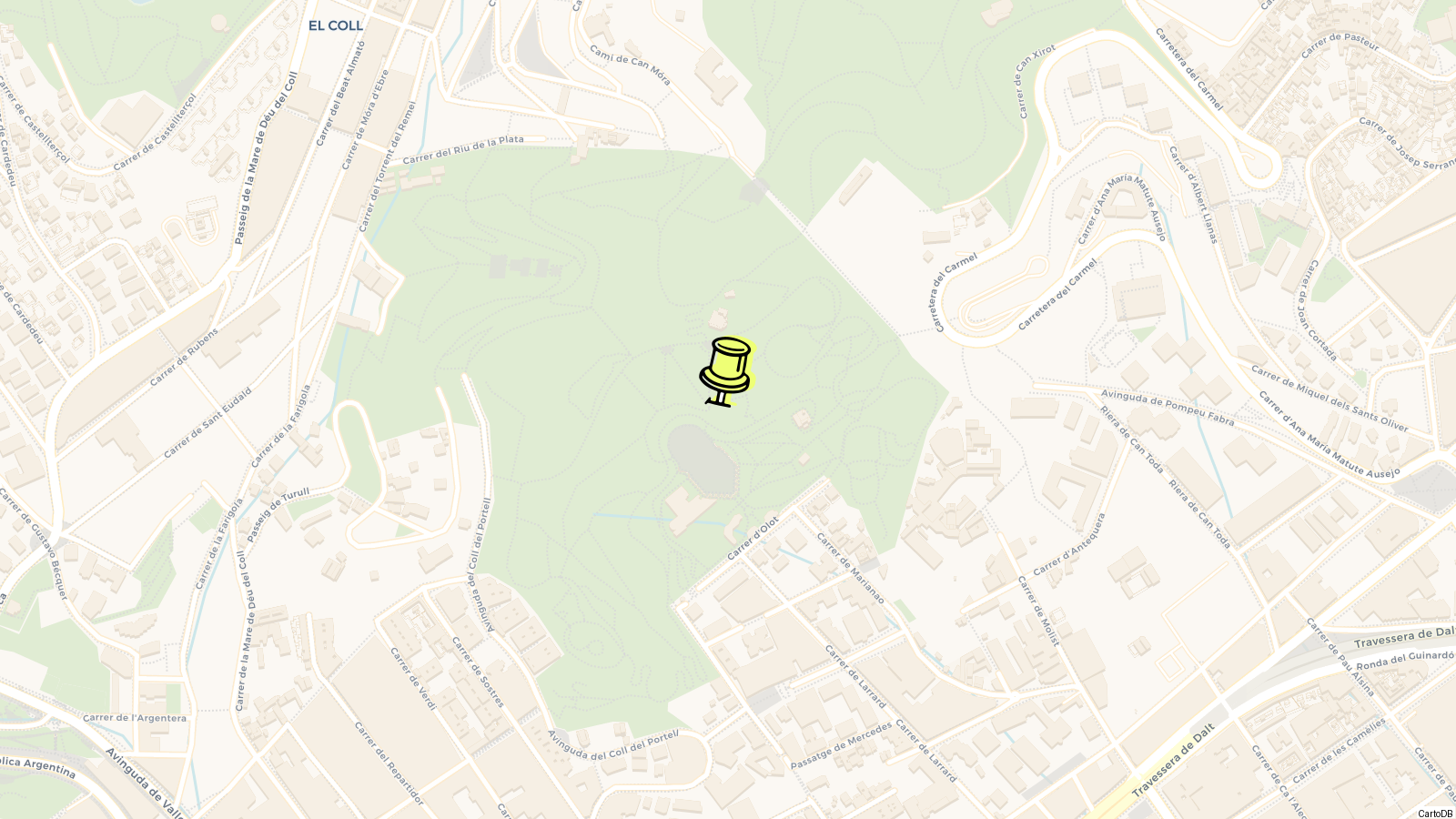
Essential info
Visit details
Overview
A ticket to Park Güell’s monumental zone costs €18 in 2025, and if you haven’t booked ahead, the odds are you won’t get in at your preferred time. This isn’t a regular city park, you’re paying for access to about 12 hectares of mosaic-clad ramps, terraces, tunnels, and quirky pavilions dreamt up by Antoni Gaudí for Eusebi Güell at the dawn of the 20th century. The park climbs a hillside in Gràcia, about 150 meters above sea level, which means your reward, after a bit of a hike from the metro or bus, is a knockout panoramic view over most of Barcelona.
Around 4.4 million people visited Park Güell last year, which makes it the second most visited monument in the city after the Sagrada Família (located across the city, but visible from the park’s main terrace on a clear day). Forget the idea of a quiet stroll, visitor caps help keep the pathways from getting totally jammed, but you’ll still be sharing space with big tour groups and families chasing the famous “dragon” (el drac) mosaic lizard at the staircase. Gaudí’s weird, organic shapes are everywhere: colonnades that lean like stone tree trunks, gingerbread gatehouses topped with broken-ceramic trencadís tiles, the serpentine bench wrapping around the esplanade. It’s all deliberate, from the hidden bird nests in the viaduct walls to the water channels running under your feet on the main staircase.
You’ll see people clutching timed entry receipts at the gate: slots sell out fast in spring, autumn, and early December, especially weekends. The park is open daily, with seasonal hours (roughly 8:00 or 8:30 to about 18:15 in deepest winter, 21:30 on peak summer days). For locals with a “Passi Verd”, there’s separate early morning and evening access outside standard ticketed hours. Wheelchair access is limited: the site wasn’t built for ramps and there’s a lot of uneven pavement.
The park’s official entrance is at Carrer d’Olot, where you can’t miss the two gatehouses, one formerly had a phone booth, the other now houses a MUHBA city history exhibit. Most visitors head straight up the main staircase to snap a photo with “the dragon” before continuing into the porticoed Hypostyle Room (86 columns), and then out to the massive terrace lined with Gaudí’s long, undulating mosaic bench. From here, on a clear day, you can pick out the Sagrada Família, Montjuïc, and the sea. If you want to see where Gaudí actually lived, the Gaudí House Museum (separate ticket; in the building called La Torre Rosa) is towards the north side, a quieter corner if the crowds get too much.
Not everyone knows the original Park Güell plan was a complete real-estate flop. Güell and Gaudí wanted to sell 60 luxury house plots here, but only two were ever built (neither one by Gaudí), and after a decade of failure, the park was turned over to the city. The structures and paths stayed, and over time, the city made it one of Barcelona’s most iconic public spaces, eventually adding ticket barriers to keep the site from being trampled to bits.
Visiting
The monumental zone, the bit everyone comes to see, needs a timed ticket. That’s the guarded section with the mosaic dragon (El Drac) and Gaudí’s ultra-curvy bench on the main terrace. Browse the official Park Güell site/en/planning-your-visit/buy-tickets) and you’ll see available slots; avoid just walking up in high season, as day-of tickets sell out and lines form outside the gates. Standard adult entry is €18 as of 2025.
Walk through the gatehouse pavilions, built for the porter’s house and administration, with rooftops that look like spun-sugar and colored ceramic shards. The left building houses a Park Güell exhibition; the other is ticketed for general administration. Up the staircase, you’ll meet El Drac, the park’s trencadís-tiled lizard-fountain, surrounded by people wrangling for a selfie.
Continue up the steps to the Hypostyle Hall, a forest of nearly 90 Doric columns. Look up at the domed ceilings: each one’s tiled with a different symbol, some cosmic, some nature-inspired. Musicians often play here, taking advantage of the acoustics. The hall was supposed to be an open market for residents, never happened.
Up top is the iconic serpentine bench, wrapped around the main terrace. Locals bring snacks and hang out here for views across Barcelona all the way to the sea. If you want decent photos with fewer crowds, go early in the morning or late evening.
Behind the terrace, pathways twist uphill through pine trees and stone viaducts. These were once intended for horse and carriage; now they’re selfie spots and shady corners. Keep climbing and you’ll reach the highest point, Turó de les Tres Creus, three rough stone crosses atop a knoll. You can actually see Sagrada Família, Torre Glòries, and out to the Mediterranean from here.
Off to the side is the Gaudí House Museum. Gaudí lived here from 1906 to 1925; inside you get a look at his furniture designs and oddities. Admission is separate from the park and costs a few euros; check their site for up-to-date hours.
The “nature zone” outside the monumental area is unticketed but feels secondary. Most paths snake through scrubby gardens and pine stands. Still, if you want a loop route, enter at the main gate, work through the monumental core, then exit north via Carrer d’Olot.
Main Route Through Park Güell
1. Ticket and Entry: Main entrance is at Carrer d’Olot, 13. The closest metro stops are Vallcarca or Lesseps (L3); from both, it’s a steep walk up signed streets, aim for Plaça de la Salut for the gentlest approach.
2. Monumental Steps: After the two gingerbread-pavilion buildings, the steps to the Hypostyle Hall and El Drac fountain are always busy. Move fast for a solo photo with the dragon.
3. Hypostyle Hall: Explore the space under the terrace, columns, ceiling mosaics, and, if you’re lucky, someone busking.
4. Main Terrace: Go up the stairs and claim a spot on the serpentine bench, designed for comfort and with little nooks to create conversation spaces.
5. Viaducts and Pathways: Gaudí’s stone bridges, now filled with Instagrammers. Look for the paths with barrel-vaulted arches (the Pòrtic de la Bugadera is the most iconic).
6. Gaudí House Museum: Short detour south from the main axis.
7. Hilltop Crosses: The trail to Turó de les Tres Creus gets you a full panorama of Barcelona, but it’s a rough natural path. Go in the cooler part of the day.
8. Exiting: Either retrace your steps or leave by the less-used “Porta de Baixada de la Gloria.” Buses (lines 24, 92, V19) leave from the eastern and northern gates.
The municipal museum (MUHBA Park Güell) in the porter’s lodge occasionally has small exhibits about Gaudí and the failed housing project. Not critical if you’re short on time.
If you want food or coffee, bring your own. There’s no café or decent option inside; the few stands near the main gate are forgettable and overpriced.
Wheelchair access is partial: the monumental core is full of steps, but some paths were retrofitted with ramps. Check the official accessibility info if mobility is a concern.
Weekend afternoons, street performers gather around the terrace. Locals avoid these hours for a reason. For a calm visit, aim for a weekday before 10:30am or after 6pm. Last entry shifts seasonally (around 18:15 to 21:30 depending on month).
History
Construction at Park Güell started in 1900 and didn’t wrap until 1914, but the story actually begins a year earlier, in 1899, when the textile magnate Eusebi Güell bought up a swath of rocky hillside above Barcelona called Muntanya Pelada. Güell convinced Antoni Gaudí, already famous in the city, to design a private garden suburb based on ideas from England’s “garden city” movement. This is why it’s “Park Güell” and not “Parque” or “Parc”: the branding was aimed at the city’s well-to-do.
Out of the planned sixty high-end houses, only two were ever built. One was meant to be a show home, but nobody wanted it. Gaudí himself eventually moved in, living there from 1906 until 1925 in what’s now the Gaudí House Museum. Güell took over the original Larrard House (already standing when he bought the estate), using it as his own residence for the last years of his life. The rest of the development never got off the ground, Barcelona’s elite liked the idea of countryside views and clean air, but the steep location and lack of transport links killed demand. By 1914, the project was dead and construction stopped, which is why the park has all these grand stairs, fountains, and promenades, but barely any residential villas.
When Güell died in 1918, his heirs sold the unfinished site to the city. In 1926, after a bit of cleaning up, Park Güell opened to everyone as a municipal garden.
The original idea was ambitious: a closed, upmarket estate with communal spaces that fused architecture, nature, and civic ideals. Gaudí didn’t just build walkways and benches. He embedded Catalan political and Catholic symbolism everywhere, the entrance staircase, for example, mixes Catalan motifs and sly religious references, while the cross-topped hill was supposed to mark out the cardinal directions and act as a kind of secular calvary. Güell and Gaudí treated the common areas as a massive experiment in Modernisme, full of trencadís mosaic, columns inspired by tree trunks, and structures shaped to divert rainwater or control the microclimate.
The city kept most of Gaudí’s design intact. The fanciful gatehouses at the entrance (Porter’s Lodge) still stand, one of which now houses a small exhibition on the park’s history. Inside, the undulating bench on the main terrace, the serpentine “banc” covered in fragments of broken tiles, was a practical innovation to shed water and seat crowds, not just an Instagram backdrop.
Park Güell’s fate shifted again in 1984, when UNESCO tapped it for World Heritage status as part of their “Works of Antoni Gaudí” collection. Today, locals debate the ticket system and limits on hourly visitors, but the basic dilemma remains: Park Güell was never built for mass crowds, and it’s a miracle it survived unfinished for everyone to walk through.
Getting there
Metro
Line L3 (Green) is your best bet but don’t expect the train to drop you at the gate. The two nearest stations, Vallcarca and Lesseps, are both about a 15-minute uphill walk away, with Vallcarca being slightly closer to the rear entrance and Lesseps better for the main entrance on Carrer d’Olot. Prepare for steep streets, the walk will get your heart rate up, especially from Vallcarca, where you’ll find a series of outdoor escalators up Baixada de la Glòria (actually handy if you have luggage or strollers). Metro single journey: €2.55, or use a T-casual (10 trips, €12.15).
Step-by-step from each metro station
From Lesseps: Exit toward Plaça de Lesseps, walk up Carrer de Gran de Gràcia, then right onto Travessera de Dalt, and left up Carrer de Larrard until you see the main gates (about 1.3 km, all paved, last bit is uphill).
From Vallcarca: Leave via the Carrer de l’Av de Vallcarca exit, then walk up Carrer de l’Escorial and Baixada de la Glòria; use the public outdoor escalators, then cross Carrer de Marianao and follow signs up to the rear entrance (around 1 km, most strenuous but less crowded).
Bus
Four regular city buses serve Park Güell: H6, D40, 24, and V19.
- The 24 runs direct from Plaça de Catalunya and drops you at Carretera del Carmel-Park Güell, basically at the park’s rear exit, minimal uphill walking needed.
- The V19 is similar, connects from Plaça Urquinaona, and stops right by the entrance.
- H6 and D40 approach from the north, but both require some extra walking (and more hills).
Same €2.55 as metro, or use T-casual.
Bus schedules are reliable during daylight hours, with the 24 and V19 running every 8-12 minutes on weekdays. Avoid peak commuter times or you’ll be standing mashed among locals and tourists.
Tourist Bus
The Barcelona Bus Turístic stops right at the park. Both Blue and East (Green) routes include Park Güell as a stop. This is more expensive (€33 for a day ticket), but you get hop-on-hop-off privileges, good if you have limited time or want to save your legs.
Driving and Parking
Skip it. No private parking at Park Güell. The closest paid lot is BSM Travessera de Dalt (Travessera de Dalt, 22-24), but spaces fill fast and the area is all residential streets with tight restrictions.
Summary Table
| Transport option | Closest stop | Walk to gate | Notes |
|---|---|---|---|
| Metro L3 | Lesseps/Vallcarca | 15 min (uphill) | Outdoor escalators from Vallcarca |
| Bus 24/V19 | Carretera del Carmel/Park Güell | 2–5 min (mild incline) | Most convenient for minimal walking |
| Bus Turístic | Park Güell stop | 2 min (flat) | Only with €33 ticket |
| Taxi/Rideshare | Main gate | None | €10–15 from center, depends on traffic |
Apps and Navigation
Install the TMB App (Android, iOS) for up-to-date public transport info and live timetables.
Google Maps is accurate for walking and transit to Park Güell entrances, but double-check the walking route if you want to avoid the steepest climbs.
Bike and Scooter
Electric bikes and rental scooters are common in Barcelona, but the climb to Park Güell is brutal unless you’re on pedal-assist. Bike racks are outside the main entrance, but there’s zero bike parking inside.
Tips
-
Book your ticket online as early as possible. Entry slots for the monumental area (the part with the famous bench and El Drac) usually sell out days ahead, especially April–October and on weekends. Don’t expect to buy a same-day ticket at the gate.
-
Plan your arrival based on your entry time. They’ll only let you in up to 30 minutes after your booked slot, and there’s no re-entry once you leave the monumental area. The rest of the park (the not-ticketed part) is still open to everyone, but the “good stuff” is inside.
-
Getting here involves a hike. Both Metro stops (Lesseps and Vallcarca, both line L3) require at least 15 minutes of uphill walking, longer if you enter at the main gate. Wear proper shoes and factor in the extra time, especially in the summer heat.
-
Mornings (8:30–10:30) and late afternoons about 2 hours before closing are quietest. The light is best for photos earlier in the morning or at golden hour. Midday is packed with tour groups. In July and August, the sun is merciless at midday, there’s not much shade.
-
The main monumental zone is NOT fully accessible. There are serious stairs at every entrance. Surface is uneven, the terrace has steps, and even with the supposed “accessible route,” much of the ticketed area is tough for anyone with limited mobility or strollers. The best you can do is enter via the Carretera del Carmel gate (bus 24), which is relatively flat.
Accessibility Details
The only entrance with step-free access is at Carretera del Carmel, 23, near the bus stop for line 24 and the tourist buses. Even here, the wide paths in the non-ticketed park are manageable, but the monumental area (Hypostyle Room, Dragon Staircase, terrace) has many stairs and rough ground. Wheelchair users can request a map at the entrance showing which areas are possible but will miss key parts of the Gaudí features.
-
Bring water, inside the paid zone, there are zero vending machines, no shade, and only one overpriced café that’s usually crammed. There are a few drinking fountains in the free park area.
-
Toilets are located just inside the monumental area, to your left past the main gate near the Austria Gardens, and another at the Carretera del Carmel entrance.
-
Picnics are allowed outside the ticketed monumental zone (the non-paying part), so bring supplies if you want to hang out for a while. Eating and drinking are not officially permitted in the monumental area, and there are staff to enforce it during peak times.
-
Pickpockets target distracted tourists taking photos at the dragon or the main terrace. Don’t set your bag down, even for a selfie.
-
If you’re already planning to visit the Sagrada Família as well, check combo ticket options. Occasionally, these bundle Park Güell and Gaudí House Museum, but read the fine print: Gaudí House (inside the park, but separately ticketed) is a small museum with no real Gaudí interiors.
More Time in the Free Area
The free-access areas (around 2/3 of the park, outside the monumental zone fences) are peaceful and full of pine trees, with city views and paths built over old carriage routes. If you walk uphill past the terrace, you’ll reach Turó de les Tres Creus, the highest point, with a direct line of sight to the Sagrada Família and the sea. This part is open dawn to dusk and is never ticketed.
-
The park is open 365 days a year. Hours shift by season: expect 8:30–18:15 in winter, 8:00–21:30 high summer. Check the official schedule before you book.
-
Residents with a ‘Passi Verd’ get in free via separate slots. If you’re visiting friends in Barcelona, ask if they can show you the free morning or evening access.
-
All explanations and signs are in Catalan, Spanish, and English. Audio guides and guided tours are available for an extra charge but honestly unnecessary unless you’re a real Gaudí nerd.
-
Souvenir sellers cluster just outside the main gate, don’t expect much authenticity.
-
Watch where you sit. Uniformed staff will ask you to move if you choose a forbidden perch (the mosaic bench is fair game, but not all ledges).
Know this destination? Help us improve
Your local experience is valuable to other travelers.