Jaraíz de la Vera
Home of Spain’s paprika, Jaraíz de la Vera hosts the annual Pimentón Festival where the air smells like smoked peppers every August.

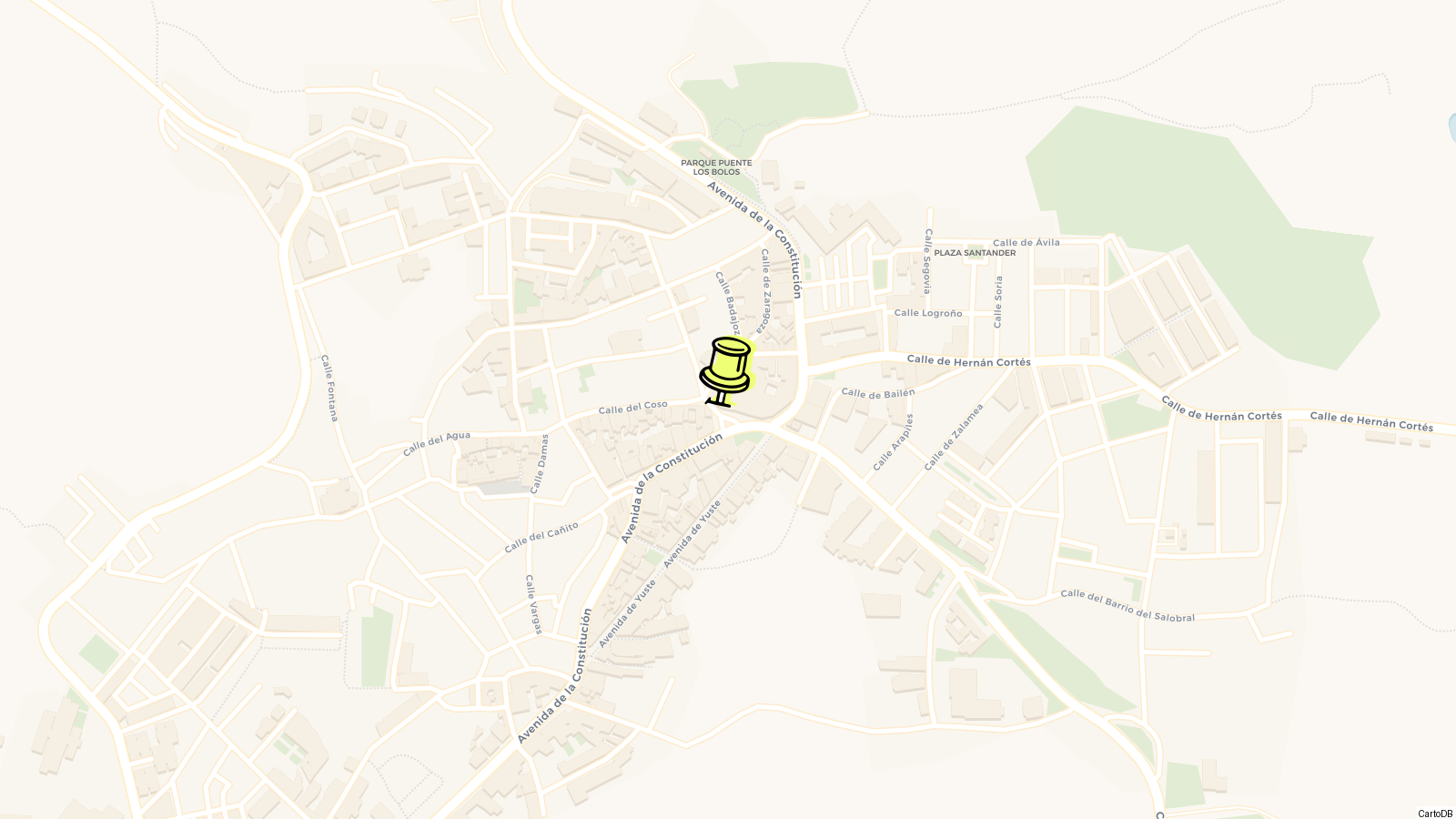
Visit details
Overview
Jaraíz de la Vera sits at 561 meters above sea level, covering just over 62 km², with a population of 6,720 as of 2024. This is the practical center of the La Vera region for anything bureaucratic, shopping, or local services, you come here to get things done, not just to wander around. It’s roughly two hours by car from both Cáceres and Salamanca, and just over three from Madrid. If you want buses, the ALSA line connects Jaraíz with Plasencia and points east, though car is still the main way most locals (and summer visitors from Madrid) get around.
Jaraíz is not some sleepier Extremaduran village, unemployment here hovers around 12%, one of the lowest rates in the whole region. Typical for the area, you’ll hear Spanish, and you’ll see a demographic mix: about 1 out of 4 people is over 65, but there are still enough young families for more than one butcher, bakery, or bar to stay open year-round.
The economic engine of Jaraíz is pimentón de la Vera, the smoked paprika with protected designation of origin status and its own council based here. If you’ve ever cooked with Spanish paprika, chances are it came from one of the local smoky, slightly sweet varieties grown and ground here. There’s even a Museo de Identidad del Pimentón directly on Plaza Mayor in an old episcopal building, where you learn just how seriously they take their pepper powder (closed Mondays).
Winters are mild (average 7 °C), summers warm but not extreme (24–25 °C), and you get enough rain (over 500 mm/year) that the surrounding countryside is green most of the year. Outside the town are oaks, chestnut groves, and the rockroses and shrubland that means spring smells different here than a few kilometers away on the plain.
The town has two main historic churches, Santa María de Altagracia and San Miguel, and a Plaza Mayor lined with arcades that actually stays busy after 8 pm, especially during August when emigrants and visitors double the population. If you visit in carnival season or the August fiestas, expect parades or folk events most days, with the Entierro de la Sardina in the main square on Ash Wednesday if you catch the right week.
Jaraíz is no museum: you’ll see working locals loading pallets of pimentón, plenty of bars with affordable menú del día (10–15 euros), and supermarkets that stock both local embutidos and the paprika you’ll want to bring home. This is where the La Vera region goes to buy shoes, handle paperwork, or grab a late-night drink, and if you stay the night, expect to hear the storks clacking from dawn.
History
In 1685, Jaraíz de la Vera finally shook off the control of Plasencia when it officially became a villa de realengo, meaning it dealt directly with the Spanish crown rather than a distant lord or bishop. Before that, the story is less straightforward: most locals say the town existed at least since the early Middle Ages, but if you look for proof, not many written records survive from before the 1400s. You hear a theory that the name “Jaraíz” comes from the Arabic word harā’ith (“cultivated fields”), but nobody has found a document to actually confirm it, so treat that as local legend, not hard fact.
For the first centuries, everything here revolved around the land. The town grew up on the old main road through La Vera, a crossroads for shepherds heading up and down the Tiétar valley and farmers with chestnuts, tobacco, olives, and later, pimentón. By the late 1400s, they’d built the Church of Santa María de Altagracia, a building big enough for a small city (34 by 17 meters, with three naves and four aisles), which still stands at the heart of the old quarter. That era also left fragments of the old walls (recinto amurallado), now protected as a historical monument by Extremadura.
When you walk around today, a lot of the oldest streets bend in strange angles, classic ‘no-planning’ medieval layout. The houses lean over upper floors and keep deep ground-level storage called “jaraíces” where people used to squash grapes or olives. These cellars are probably where the town got its name, not from the Arabic at all.
Independence from Plasencia
Jaraíz paid for its independencia a lo grande: the whole town pooled together to pay royal fees and secure the royal decree. Independence didn’t mean luxury. The 18th and 19th centuries came with crop failures, bandit trouble on the old caminos, and periodic outbreaks of illness.
Pimentón, Not Railroads
Jaraíz’ biggest turning point came in the late 19th and 20th centuries when pimentón (smoked paprika) took over as the star crop. That’s still true, Jaraíz hosts the Consejo Regulador de Pimentón de la Vera, and you can smell the sweet-smoky aroma walking near any warehouse from October to December. The railway boom completely skipped the region; tracks were dreamed of but never laid. Even now, no train station serves Jaraíz (nearest is at Navalmoral de la Mata, about 36 km).
War and Reconstruction
Like the rest of Extremadura, the Civil War left scars, but the main story after 1940 is depopulation, lots of people left for Madrid. By the 1960s, top experts showed up to dig deeper: the Instituto Histórico Hoffmeyer (Museo de Armas), led by Ada Bruhn Hoffmeyer and her husband, settled here and collected arms, books, and academic oddities until 1991. It’s not typical for a rural town to host a research hub, but that’s Jaraíz.
Despite the ups and downs, Jaraíz built a solid reputation as the “World Capital of Pimentón.” Old families still control the spice trade, and every August the Feria del Pimentón attracts producers, traders, and tourists. After Spain joined the EU, official DOP status locked in the town’s identity as paprika HQ.
Local townsfolk are proud, sometimes stubborn, and sometimes divided about what comes next: keep the focus on paprika and farming, or diversify with more tourism and modern business. But walk down Calle Mérida at noon and old men still remember the days when they’d see oxen carts groaning with oak and chestnut, not SUVs with Madrid plates.
Legends, Curiosities, and Remnants
Bits of 15th-century wall stick out behind some private houses, ask an abuela and she’ll point to stones she claims have always been there. The Church of San Miguel, according to some, sits atop what was once a defensive tower.
In Carnival week, this history gets turned inside out: wild parades Saturday and Monday, then a boozy Entierro de la Sardina (burial of the sardine) on Ash Wednesday with sweets, sardines, and free “ponche” in Plaza Mayor. No textbook can explain Jaraíz’s sense of community better than a crowd of costumed neighbors roasting fish together.
Visiting
Jaraíz de la Vera’s old town runs up the low ridge behind Plaza Mayor. Starting there, you’ll find the tourist office inside the Casa de la Cultura at Calle Mérida 17. In winter it opens Tuesday to Saturday from 10:00–14:00 and 16:00–18:30, Sundays 10:00–14:30. Summer hours shift earlier: Tuesday to Saturday 9:30–14:00 and 17:00–19:00, Sundays 9:30–14:30. Grab a free map, they’re actually useful here.
The main anchor is Plaza Mayor, ringed with cafés and arcades. You’ll see the Museo de Identidad del Pimentón here, inside what used to be the bishop’s palace. Entry is free, and it closes only on Mondays. Worth 20–30 minutes: the exhibits explain how pimentón is smoked and sorted, and every staffer’s got their own opinion about which producer is overrated. Across the square, the town hall (ayuntamiento) has photo panels covering the paprika harvest.
The Church of Santa María de Altagracia, a hulking block of masonry about two minutes uphill from the plaza, is nearly always unlocked. It’s big,34 by 17 meters, with three naves, and holds a mix of 16th-century stone vaults and later retablos. The Iglesia de San Miguel is a little further up; if it’s open, you can check the old tower and sometimes catch local choirs rehearsing.
The old defensive wall still stands in short stretches, mainly on steep lanes west of the center.
A couple of blocks north, the Hoffmeyer Arms Museum fills a modernist house with curio cabinets of antique swords, pistols, musket balls, and oddities like 19th-century Spanish patent paperwork about gun locks. It’s not always open (ask at the tourist office); when it is, the Hoffmeyer archive (books, magazines, hundreds of photos) is in the back.
South of town, the walk to the Arroyo de la Calera is straightforward: take Calle de la Calera until pavement runs out, then a gravel track drops you into a lush gully with oaks, arbutus, and, if you’re lucky, dozing foxes or kestrels overhead. In August, you’ll spot groups picking chestnuts along the path.
Full walking circuit: old town and southern trails
Start at Plaza Mayor. Visit the Pimentón Museum (30 min). Head uphill along Calle de la Iglesia (note the 15th-century carving above San Miguel’s portal). At the fork, angle right through Callejón del Sol, following the walls. Continue along Calle Nueva, look for the century-old wooden balconies, and hook south along Calle Calera to the arroyo. If it hasn’t rained in a while, scramble along the streambed, otherwise, cross at the stone footbridge and climb the opposite slope for open views toward the Vera plain.
For the walled enclosure, stick to the streets west of Plaza Mayor: Callejón de la Muralla and Calle Rebollo. The stonework is tracked with moss and street art, and you’ll stumble on locals feeding outdoor cats or stacking firewood.
Arms Museum visits are unpredictable. If it’s open, you’ll need 45 minutes just to look at everything, display text is in Spanish, but the collection is visually self-explanatory. Sometimes the caretaker lets you flip through the catalogues and Hoffmeyer’s own photographs.
Tips
-
Shops close from about 2pm to 5pm for siesta. Stock up or plan around this unless you want to eat lunch at a bar, which is the only thing open mid-afternoon. Supermarkets here (like Dia or Coviran) aren’t 24h operations, expect them to close by 9pm, and on Sundays they don’t open at all.
-
Best months to visit are May, June, September, and early October. July and August are much hotter, with smaller streams and gargantas down to a trickle, but that’s also when towns schedule the bulk of summer fiestas and pool openings.
-
Bring decent walking shoes. Jaraíz is hilly, and the old town’s cobbled alleys have almost no shade by midday.
-
There’s no train station in Jaraíz, so buses are the way in and out. The main bus stops are on Calle de la Fuente and Avenida de la Constitución. If you’re heading to Cáceres, Madrid, or Plasencia, ALSA and Car Cor make this fast: expect 6–8 buses a day depending on the route and time of year.
-
If you book a rural house (“casa rural”) in the area, ask about air conditioning before August arrives; many have only a fan.
-
Bring cash, lots of bars and small bakeries don’t take cards, or only accept Spanish cards. There are two ATMs on Plaza Mayor, but they can run dry around local festivals.
-
Jaraíz is known for its pimentón (smoked paprika). Don’t buy the big tins at souvenir stores, supermarkets stock the exact same stuff for half the price, often from the same factory.
-
The outdoor pools (“piscinas naturales”) open mid-June to early September, with a €2 entry fee (2024), and close for lunch siesta. Bring sandals; the rocks can scorch by late afternoon.
-
If you plan day hikes, bring a refillable bottle and fill up at one of the town fountains. Tap water is drinkable.
-
Parking can be tricky near Plaza Mayor after 11am. If full, try around Mercado de Abastos (Calle Blasco Ibáñez) or behind the health center; both are free if you can snag a space.
-
Festival weekends (especially around August 15 and during Carnival) see prices surge and lodging fill up. Book at least two months early for anything decent.
Details on Buses
ALSA buses take about 45–60 minutes to Plasencia (€3–€4), 2.5–3 hours to Madrid’s Estación Sur (€17–€23), and just under 2 hours to Cáceres (€10–€15). Buy tickets online at alsa.es or at the kiosk in Jaraíz; drivers rarely have change for large bills. The busiest times are Sunday evenings and Friday afternoons, so reserve ahead if you want a seat.
Museum Closures
Museo del Pimentón closes Mondays. Hours vary by season, check the listing posted outside or call the tourist office (+34 927 170 587) before a walk across town.
Know this destination? Help us improve
Your local experience is valuable to other travelers.