Trujillo
Climb 565 stone steps before lunch to the castle where conquistadors once watched the plains of Extremadura spread out below.

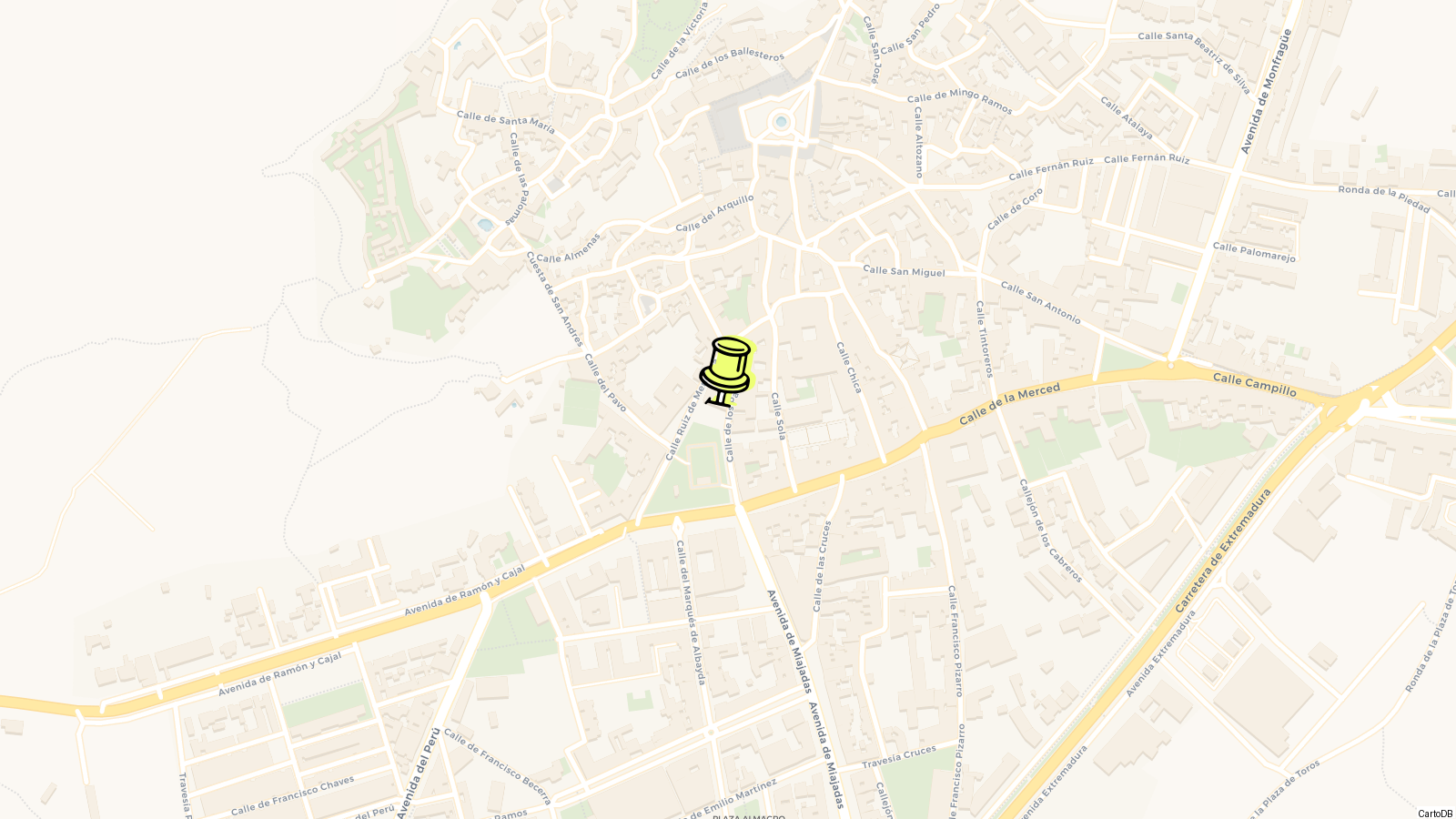
Overview
You’re at 564 meters above sea level here and you’ll feel it, especially when you walk up to the Castillo above town. Trujillo sits just under halfway between Madrid and the Portuguese border, planted on a granite hill in Extremadura, and officially has about 9,300 inhabitants as of 2026. The old center is tight, cobbled, and full of storks nesting on towers. Everything sprawls outward over a territory bigger than you think: more than 650 km², with a mostly flat modern town surrounding the medieval core.
Locals speak with that Extremaduran lilt, and you’ll hear them filling the arcades of Plaza Mayor during Chíviri, one of the year’s main fiestas, or lining up for the cheese fair every May Day,100,000 visitors just for the cheese. Francisco Pizarro’s bronze statue stands right in the main square, surrounded by renaissance palaces built from the fortunes conquistadors hauled back or sent home from the Americas.
Summers are long, dry, and regularly hit 36 ºC in the shade. You’ll want to avoid the high afternoon unless you’re used to it. Winters can be chilly but barely ever drop below freezing, and the town slows way down after New Year until the spring festivals begin. For practical purposes, Trujillo runs on the same time zone as Madrid, but life here is a little more measured, you’ll notice the two-hour lunch breaks and early closures even more than elsewhere.
Many visitors pass through just for the castle’s views or to tick off another “Game of Thrones” filming location, but the real activity happens in the bars around Plaza Mayor, over local sheep’s cheese and Extremaduran vino tinto. Buses roll in from Cáceres along the A-58 (the fast route, finished in 2009), and the town is just far enough from major cities to feel slightly forgotten, but that’s exactly why you’re here.
Why Trujillo Stays on the Map
Trujillo’s spot at 39.46° N and 5.88° W doesn’t mean much until you realize it once controlled vital routes from central Spain to Portugal. Muséums are small and eccentric: a cheese and wine museum rings every bell if you’re in for local eats, and the House of Pizarro gives a blink-and-you-miss-it look at the town’s most infamous son. On a drizzly February morning, you might have the place nearly to yourself, storks clattering overhead and old men shuffling between their favorite cafés.
History
Francisco Pizarro, who led the conquest of Peru, was born here around 1475. Walk past his statue in Plaza Mayor and you’ll hear proud locals pointing out that not just Pizarro but his brothers and several other conquistadors came from Trujillo. This little Extremaduran outpost has always played way above its weight in the history books.
By the time the Romans arrived, this place was already settled and known as Turgalium. It wasn’t much more than a market town attached to Emerita Augusta (now Mérida), but if you’re standing by the foundations around the castle, you’re on layers of history stretching back 2,000 years.
When the Moors took over in 711, Trujillo turned into Turjaala, a fortified stronghold on the frontier, and that explains the layout today: defensive walls, steep streets, with the castle at the highest point, always the ultimate fallback. The town bounced between Christian and Muslim control throughout the next five hundred years. The final “Christian reconquest” came on January 25, 1233, led by Fernán Ruiz Altamirano, with support from the local military orders. If you hear the story of the Virgen de la Victoria, don’t roll your eyes; local tradition says the Virgin appeared at the Arco del Triunfo when the Christian troops started losing heart, tipping the battle.
From Taifa to Crown
Under Muslim rule, Trujillo was key to the region: it controlled trade and acted as a jumping-off point for raids deeper into Christian territory. In the chaos after the breakup of the Caliphate of Córdoba, the town changed hands repeatedly. You can actually see some of the original Arab fortifications inside the later castle walls, most obviously in the horseshoe-shaped archways.
After the Christian conquest in 1233, Trujillo joined a short list of cities in Extremadura (alongside Plasencia, Cáceres, and Coria) that were ruled directly by the Crown, rather than handed off to feudal lords or knightly orders.
In 1256, Alfonso X gave Trujillo its “fuero”, a kind of legal charter that spelled out its rights, tax breaks, and obligations to the Crown. That document mattered: it let Trujillo act independently, hold markets, and basically grow without too much interference.
At the end of the 15th century there were two neighborhoods no longer visible but still present in the street names: the morería (the quarter for Mudejar Muslims) and the judería (the Jewish community, with its own synagogue and cemetery). Arched doorways on side streets give away the old boundaries, and some of the stones in newer religious buildings are marked with Hebrew script, “recycled” when the Jews were expelled in 1492.
Local politics were always sharp-elbowed. Three powerful families, the Altamiranos, Bejaranos, and Añasco, brokered most of the big decisions, from land ownership to religious posts. It’s no accident the most opulent palaces around Plaza Mayor carry their names.
Trujillo officially became a city in 1430, thanks to John II of Castile, one of those technicalities that translated into more prestige, extra privileges, and trade perks. Throughout the late Middle Ages, Trujillo’s population exploded, with prosperity riding on the market rights and the opening of trade routes.
After 1492: The Rise of the Conquistadors
If you’ve ever wondered why so many conquistadors came from a place like Trujillo, one local theory is that the younger sons of these oligarchic families had no land or titles to inherit. The Americas offered a shortcut to fortune and glory. After Pizarro conquered Peru, money flooded back into town. Suddenly the old medieval walls couldn’t contain the ambition: townsfolk knocked down stretches, built new plazas, and raised the Renaissance palaces that are now the pride of Trujillo.
Much of the grandest architecture in town, think the Palacio de la Conquista with its carved stonework and family crests, comes from this 16th-century boom. Even today, if you peer up at the Palacio de los Orellana-Pizarro, there are reliefs and heraldic symbols ripped straight from the Andes: llamas, Inca shields, strange South American motifs.
After 1595, Trujillo became a refuge for Moriscos forced out of Granada. In 1610, about 130 Morisco families, around 590 people, were then expelled again from Trujillo itself, victims of the wave running through all of Castile. Some of their descendants likely stayed under the radar, fading into the wider population.
The Peninsular War left Trujillo gutted: its granaries and homes stripped by French troops between June and September 1811. Ask any local historian, and they’ll tell you this period marked a turning point, starting a long economic decline and a slow slide from regional importance.
In the 19th century Trujillo turned administrative. In 1834, it became the seat of its own judicial district. By 1842, census takers counted 6,026 residents, still a significant hub for the area, but no longer rewriting the story of Spain.
Trujillo’s history seeps out in daily life. The cheese fair every May takes over Plaza Mayor, echoing the medieval market privileges the city fought to keep 500 years ago. Even the annual Chíviri festival (Easter Sunday, plaza packed, everyone in traditional dress) keeps alive patterns older than most of the Spanish state.
Game of Thrones and Modern Trujillo
If you watched Game of Thrones or House of the Dragon, those castle walls might look familiar. Trujillo doubled as Casterly Rock and King’s Landing backgrounds. Film crews walk the same ramparts conquistadors once paced, and half the town turned out as extras when HBO came to call.
Today, Trujillo’s “bien de interés cultural” protection locks in much of the old city from modern development, so that same swirl of Renaissance, medieval, and Moorish stones isn’t going anywhere.
Visiting
Trujillo’s main sights are all walkable, but the hike to the Castillo is uphill and those medieval cobblestones are no joke. Start in Plaza Mayor, everything radiates out from here. The statue in the middle is Francisco Pizarro, and you’re ringed by arcaded palaces (some now hotels or bars). In the morning you’ll see delivery vans and a handful of early risers. By midday, expect more locals and a few tour groups.
Plaza Mayor and Immediate Sights
Plaza Mayor is the beating heart of things. On a normal day, you can grab a terrace coffee for €2–3, or cheese and jamón tapas for €4–5 at one of the bar-restaurants under the porticoes. If you’re in town on the first of May, Plaza Mayor transforms for the National Cheese Fair, think stalls with torta del casar, manchego, and queso de cabra from all over Spain, crowds at 10x the usual, and a lot of wine being poured.
Head to Iglesia de San Martín, right on the square. Its Renaissance interior is usually open to visitors, entry is about €2, but check the door for the current schedule. Above the main entrance you’ll see the coats of arms of the noble families who built much of this town.
On the far side of the square, look for Casa Museo de Pizarro on Calle de San Francisco, the supposed birthplace of the conquistador. Entry is about €2–3 and gives you a compact, artifact-filled narrative on his trip to Peru.
Up to the Castle (Castillo)
Give yourself up to 15 minutes to walk from Plaza Mayor to the Castillo. It’s a steep climb through narrow, sometimes slippery cobbled streets. You’ll pass Iglesia de Santa María la Mayor on your left, a stop inside means another €2, but the view from its bell tower over the Extremadura plains feels worth it on a clear day.
The Castillo sits at the highest point. Admission is €2 for adults, €1.50 if you’re with a group of 10+, free for children under 13 (as of March 2026). From October to April, hours run 10:00–14:00 and 16:00–19:00; May to September, the afternoon shift is 17:00–20:00.
Expect mostly empty ramparts, impressive stonework, and panoramic views, bring a hat in summer, shade is minimal. The walk back down provides some of the best side angles for photos of Plaza Mayor.
Sights Beyond the Castle
If you want to extend your wandering, loop past the Palacio de Orellana-Pizarro (now the city hall) and the restored Palacio de la Conquista, both clustered near Plaza Mayor. Neither is open as a museum, but the elaborate Plateresque facades are worth a slow walk-by. The Convent of Santa Clara further out once housed the town’s Jewish synagogue after the expulsion of 1492.
The Museo del Queso y del Vino, tucked just off Plaza Mayor, is a low-key way to taste your way through regional cheeses for a few euros. It’s open most afternoons but closes for siesta.
Festivals
Visiting at festival time is a totally different experience. On Easter Sunday, the Chíviri turns Plaza Mayor into a mass picnic and folk dance, locals wear traditional outfits, and by noon the square looks and smells like one big open-air bar. The Virgen de la Victoria fest in late August or early September brings processions and street events. Outside of these dates, you’ll have much of the center to yourself.
Game of Thrones & TV Sightseeing
Fans of Game of Thrones and House of the Dragon can spot familiar battlements: key castle shots doubled as Casterly Rock and King’s Landing in the series. Guided tours sometimes reference specific filming angles, but you can recreate the “castle balcony” look from nearly any rampart.
Everything in the old town is navigable on foot, but plan to take breaks, there’s little shade between major sights, and in summer the stone bakes by noon. If you’re here for the cheese fair or Chíviri, book rooms well ahead; every spare bed in Trujillo fills and prices triple.
Tips
-
Bring cash for small purchases. Some bars and shops, especially just off Plaza Mayor, won’t take cards or have a €10 minimum.
-
Whatever you do, don’t try to visit during the National Cheese Fair (May 1) without booking lodging months in advance, every hostal and casa rural fills up, and prices easily double. The Chíviri festival on Easter Sunday has the same problem.
-
The walk from Plaza Mayor up to the Castillo is only about 700 meters, but the cobbled slope is brutal in midday heat. Go early or late, and wear shoes with real tread. Don’t do it in flip-flops unless you enjoy suffering.
-
For the castle, opening hours aren’t a formality, they really close the doors on time. From October to the end of March, it’s 10:00–14:00 and 16:00–19:00. From April to September, afternoons shift to 17:00–20:00. Last tickets sold at least 30 minutes before closing, sometimes earlier on quiet days.
-
If you’re taking the bus from Cáceres, confirm times for both directions. There are usually 6–8 departures a day, but they cluster in the morning and late afternoon. Miss the last bus and you’re stuck with a €60 taxi ride.
-
Don’t expect a supermarket in the historic center. There’s a Día a block off the plaza, but opening hours are old-school: closed on Sunday afternoons.
-
The castle ticket (€2 adults, €1.50 for groups, free under 13) is separate from any other museum, you won’t find combo passes, so plan accordingly if watching your budget.
-
Taxis are easy to find on the plaza, but Uber or apps don’t function here, call ahead for late-night rides, especially during fiestas.
- Trujillo is walkable, but bring a hat and sunscreen from May to September. Temperatures regularly hit the high 30s °C (over 95 °F), and there’s little shade around the castle.
Want day trips?
Buses to Cáceres are reliable, but for anywhere else (Mérida, Plasencia) you’ll need to transfer, plan with ALSA. Renting a car at the larger cities is usually easier and will save you hours for exploring Extremadura.
Parking tip
Parking near Plaza Mayor is nearly impossible on weekends or festival dates. Use the public lot at Avenida de la Coronación (five-minute walk uphill), which stays underused except during fair days. Street parking is free but don’t count on a spot after 10am.
Know this destination? Help us improve
Your local experience is valuable to other travelers.