Batalha Monastery
Flamboyant Gothic monastery vowed after Aljubarrota, never finished

Visit details
Overview
The Monastery of Batalha, officially Santa Maria da Vitória, is the Dominican convent that João I vowed to the Virgin for his victory over Castile at Aljubarrota in 1385, and it is the greatest Gothic building in Portugal, flamboyant and Manueline, begun in 1386 and never finished. It was the burial church of the Aviz dynasty and was listed by UNESCO in 1983.
It took over a century, seven kings and fifteen architects, and the parts that draw the visitor are the Founder’s Chapel with the joint tomb of João I and Philippa of Lancaster and their sons including Henry the Navigator, the Royal Cloister with its Manueline tracery, and the Unfinished Chapels, an octagon open to the sky with a portal of carved stone that stops in mid-air.
History
Afonso Domingues drew the plan and built from 1386 to 1402 in Rayonnant Gothic with an English accent, the facade recalling York and the nave Canterbury; Huguet, probably Catalan, took over from 1402 to 1438, brought the Flamboyant style, raised the nave to 32.46 m, built the facade, the chapter house dome, the Founder’s Chapel and the base of the Unfinished Chapels, and died before finishing them. Fernão de Évora added the cloister of Afonso V between 1448 and 1477; Mateus Fernandes, master of the Manueline, worked from 1480 to 1515 on the portal of the Unfinished Chapels and, with Diogo Boitac, the tracery of the Royal Cloister; João de Castilho added a Renaissance tribune in 1532, and then João III diverted everything to the Jerónimos in Lisbon and work stopped.
The earthquake of 1755 did some damage; Masséna’s troops sacked and burned the complex in 1810 and 1811 and threw away the bones of João II; the Dominicans were expelled in 1834 and the buildings left to ruin. Fernando II began the restoration in 1840, which ran into the 20th century; the monastery became a National Monument in 1907 and a museum in 1980.
Visiting
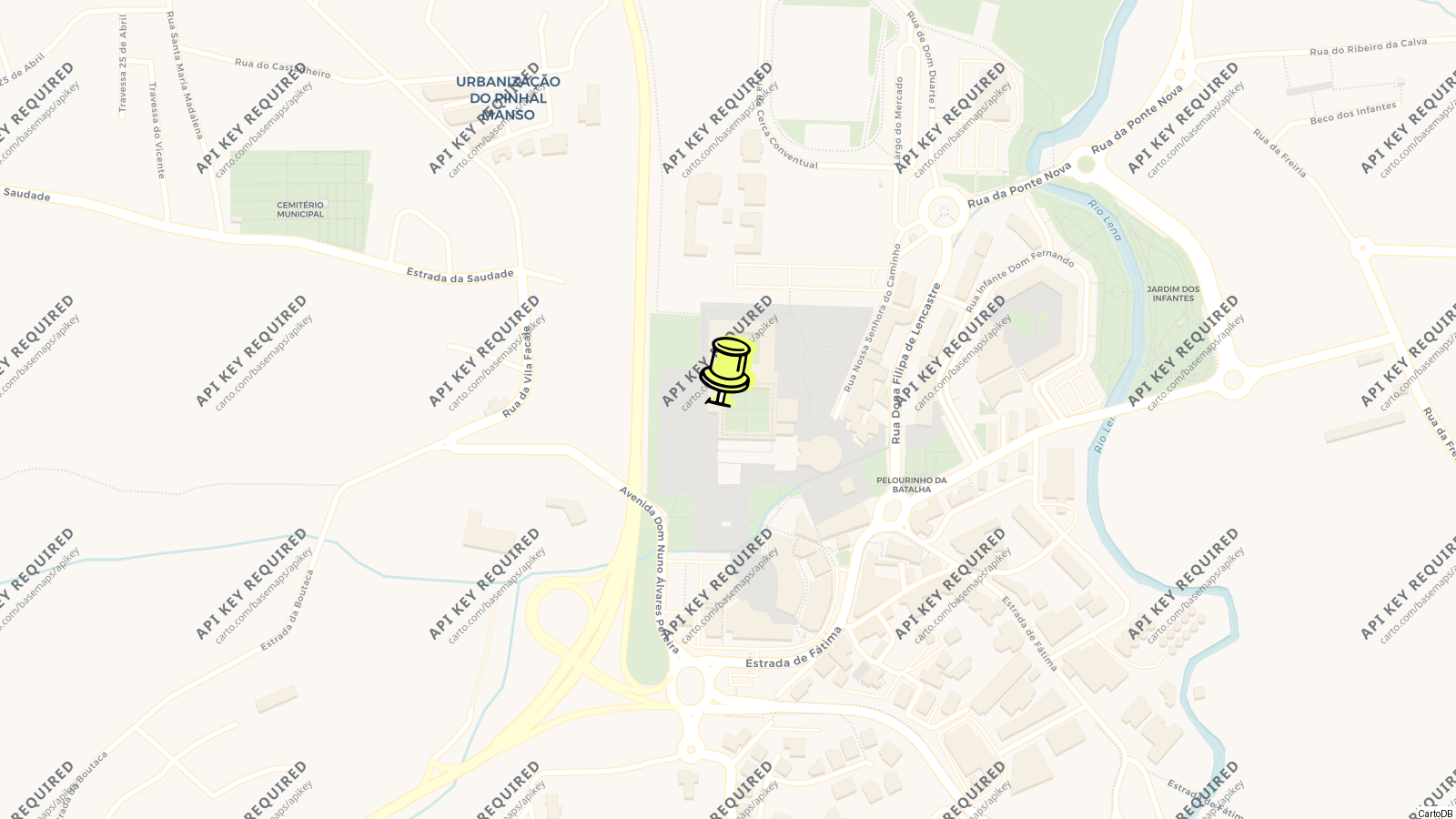
The monastery stands apart from the town, its west front facing a square with an equestrian statue of Nuno Álvares Pereira, the general of Aljubarrota. The portal carries 78 statues in six rows of archivolts, kings, angels, prophets and saints under canopies, with the Apostles on the splays and Christ enthroned with the four Evangelists in the tympanum.
Inside, the nave is vast, bare and narrow, 22 m wide to 32.4 m high, lit by ten clerestory windows and the tall traceried windows of the choir, which holds Portugal’s first stained glass, from the 1430s, and Manueline windows of the 1520s and 1530s showing the Visitation, the Epiphany, the Flight into Egypt and the Resurrection. The architect Mateus Fernandes lies under a slab near the door. The Founder’s Chapel, square with a central octagon, built by Huguet between 1426 and 1434 as the first royal pantheon, has João I and Philippa side by side in full regalia with clasped hands under a star vault, and along the south wall their younger sons: Fernando the Holy Prince, who died a prisoner in Fez; João; Henry the Navigator under his own canopy; and Pedro, the regent killed at Alfarrobeira. The Royal Cloister, the chapter house with its daring square vault and the Tomb of the Unknown Soldier, and the Afonso V cloister follow; the visit ends outside at the Unfinished Chapels, the octagon that Huguet began and Mateus Fernandes gave its carved portal, roofless to this day.
Tips
- The church is free; the cloisters, chapter house and Unfinished Chapels are the ticket, and they are the reason to come.
- The Unfinished Chapels are entered from outside the church, on the east; do not leave without them.
- Midday sun through the choir glass lights the nave; the Founder’s Chapel is best under its own windows in the afternoon.
- The town of Batalha is a coach stop; eat in Alcobaça or Leiria instead.
Nearby
- Alcobaça Monastery: 20 km south.
- Fátima: 20 km east.
- Leiria and its castle: 12 km north.
- Nazaré: 30 km west.
Know this destination? Help us improve
Your local experience is valuable to other travelers.