National Museum of China
China's state history museum on the east side of Tiananmen Square, free but reservation-only, home of the 832 kg Houmuwu Ding

Visit details
Overview
The National Museum of China is the state history museum on the east side of Tiananmen Square, a 1959 building rebuilt between 2007 and 2011 into what the museum calls the largest single-building museum in the world, with 48 galleries and nearly 200,000 square metres of floor space. You come for the Ancient China exhibition in the basement, a dynasty-by-dynasty run through bronzes, jades, ceramics and tomb finds, and for its centrepiece, the Houmuwu Ding, the heaviest bronze to survive from anywhere in the ancient world at 832.84 kg.
The collection runs to more than 1.4 million items: 815,000 ancient pieces, 340,000 modern ones and over 240,000 rare books. That ancient-and-modern split explains the floor plan. The museum is a 2003 merger of two institutions that had shared this building since it opened, the Museum of the Chinese Revolution in the north wing and the National Museum of Chinese History in the south wing. The three permanent exhibitions still carry that inheritance: Ancient China covers prehistory to the Qing, while The Road of Rejuvenation and its sequel, The Road of Rejuvenation: New Era, give the Communist Party’s account of everything since the First Opium War.
Admission is free but reservation-only, and the place is busy: 2018 brought a record 8.61 million visitors. A full day gets you through the two main exhibitions and not much else. Most people give it half a day, do the basement properly, and pick one thing upstairs.
History
Two museums in one building, 1912 to 2003
The older half of the institution dates to 1912, when the new Republic set up a Preparatory Office for a National Museum of History. The younger half began as the Office of the National Museum of the Revolution in 1950, a year after the People’s Republic was founded. Both got a permanent home in 1959, when the present building went up on the east side of Tiananmen Square as one of the Ten Great Buildings marking the tenth anniversary of the PRC.
The Ten Great Buildings were a programme of ten public works in Beijing, most of them finished in about ten months to meet the 1 October 1959 deadline, in a style that mixed international modernism, Stalinist socialist realism and motifs from traditional Chinese architecture. The museum’s share was a colonnaded block 313 metres long, 149 metres wide and 40 metres high, on 6.5 hectares facing the Great Hall of the People across the square.
The full list: the Great Hall of the People, this museum, the Cultural Palace of Nationalities, Beijing railway station, the Workers’ Stadium, the National Agriculture Exhibition Hall, the Diaoyutai State Guesthouse, the Minzu Hotel, the Overseas Chinese Hotel and the Chinese People’s Revolutionary Military Museum. The Great Hall opposite was put up in ten months by 7,785 workers and is the bigger of the pair, 356 metres long with 171,801 square metres of floor space; the National People’s Congress still meets there every March. Both buildings belonged to the same 1958 plan for the square, which is why they read as a matched pair from the middle of it.
For 44 years the Museum of the Chinese Revolution occupied the north wing and the National Museum of Chinese History the south wing, separate institutions under one roof, until the state merged them as the National Museum of China in 2003.
The gmp rebuild, 2004 to 2011
The merged museum needed a bigger building. A 2004 international competition went to the Hamburg practice gmp (von Gerkan, Marg and Partners), and construction ran from 2007 to 2011. The central structure and east wing of the 1959 building were demolished; the remaining parts of the old building now wrap the new one on three sides, and a 260-metre forum runs along the original axis between the two main entrances. The new work borrows the tiered roof forms of the Forbidden City and the old building’s colonnades and redraws them in a plainer, modern language.
The museum reopened on 17 March 2011 with 28 new exhibition halls. The finished building covers 70,000 square metres of ground, stands 42.5 metres high with five storeys above ground and two below, and has 48 galleries in total.
The exhibitions since 2011
Ancient China, arranged over eight dynastic periods from prehistory to the Ming and Qing, took the basement galleries, and The Road of Rejuvenation took the modern story from the First Opium War onwards. The Houmuwu Ding anchors the ancient half: unearthed in 1939 at Wuguan village near Anyang in Henan, the last Shang capital, it stands 133 cm high and dates to the 12th century BC. The modern half acquired a political afterlife in November 2012, when the newly appointed Xi Jinping made a high-profile tour of The Road of Rejuvenation and used it to launch the “Chinese Dream” slogan, the great rejuvenation of the Chinese nation. A third permanent exhibition, The Road of Rejuvenation: New Era, has been added since.
Visiting
Reservation and entry
Admission is free, but every visitor needs a real-name reservation, made up to seven days ahead on the museum’s website after registering with a valid ID, which for foreigners means the passport. There are three entry windows: 09:00 to 11:00, 11:00 to 13:30 and 13:30 to 16:00, with the last one extended to 16:30 from June to October.
Hours are 09:00 to 17:00 with last admission at 16:00. From 1 June to 31 October the museum stays open to 17:30 with last admission at 16:30. It is closed on Mondays, except when the Monday is a national public holiday.
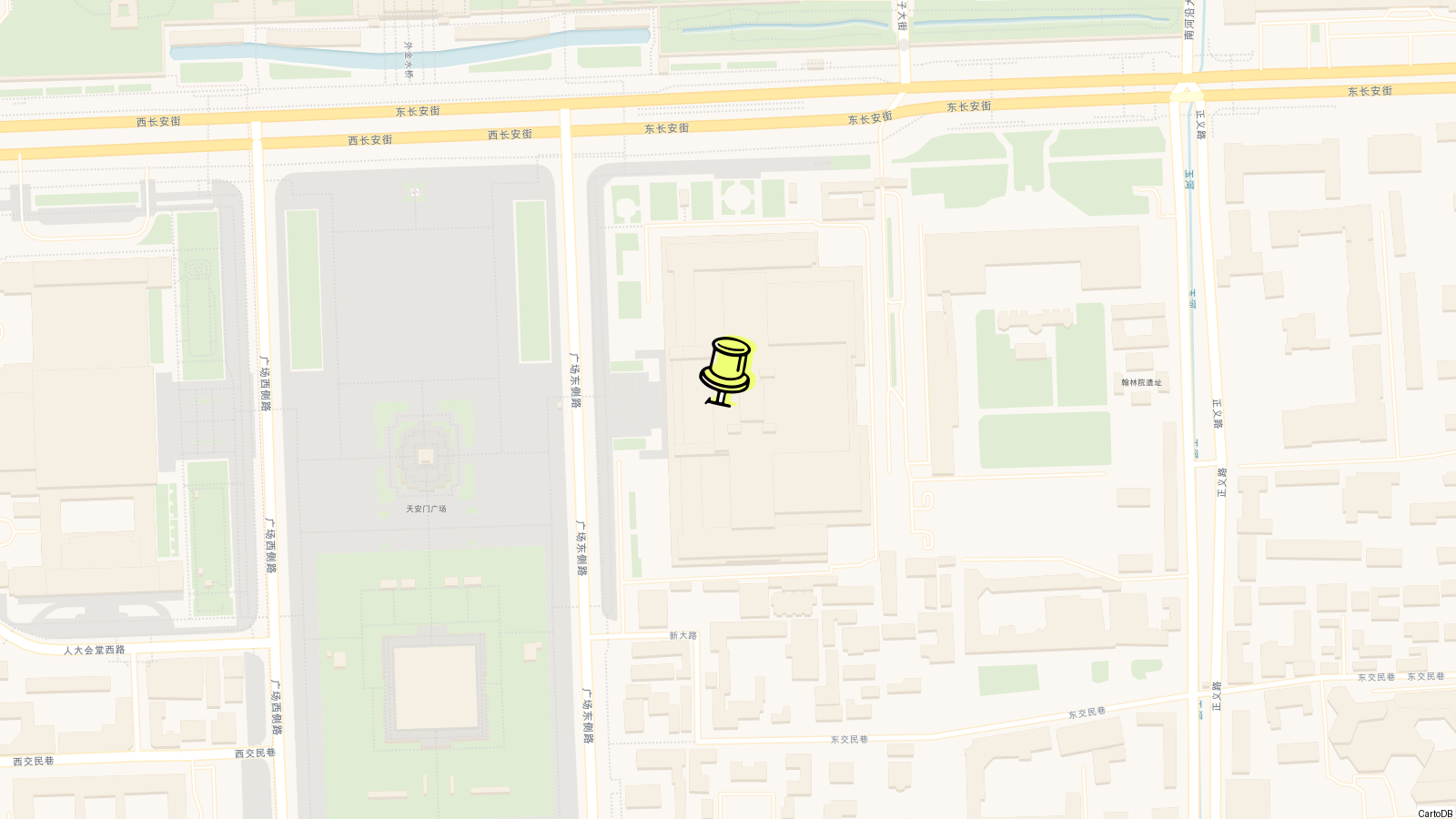
Bring the original passport you booked with and the confirmation message, and go to the North Gate visitor entrance during your time slot. The address is 16 East Chang’an Street, and the nearest metro is Tian’anmen East on Line 1, exits C or D; the station sits right beside the north entrance, so the museum is one of the few sights on the square you can reach without first crossing it. Buses 1, 2, 52, 82 and 120 also stop outside.
Ancient China
The Ancient China exhibition fills galleries N20 to N25, S15 to S18 and S20 on the basement level, and runs in dynastic order through eight periods from prehistoric times to the Ming and Qing. The museum frames it as a review of China’s political, economic and cultural development and of “building a multiethnic country”, which tells you the captions have a line to push. The objects speak for themselves. Find the Shang bronzes and the Houmuwu Ding first, then the Han dynasty jade burial suits sewn with gold thread and the Tang tri-colour (sancai) ceramics. Give it two to three hours; it is the reason to come.
The Road of Rejuvenation
The second permanent exhibition starts with the First Opium War and tells the modern story as the Communist Party tells it: national decline under foreign pressure, then recovery, then rejuvenation. It is a state narrative, and reading it as one is part of the visit. The Road of Rejuvenation: New Era carries the same story into the present. Audio guides and guided tours are available if you want the museum’s own commentary.
The rest of the building
Beyond the three permanent shows, thematic and temporary exhibitions rotate through the remaining galleries; the current list is on the English website. Check it before you go, because a good loan show can be worth the second half of your day.
Tips
-
Set an alarm for 17:00. Reservations are released daily at 17:00 Beijing time, up to seven days ahead, so the slots for a given date appear at 17:00 a week earlier. Holiday weeks go fast.
-
Cancel by 15:00 if you can’t make it. That is the deadline on the day of your visit.
-
Original passport, not a copy. Entry is checked against the ID used for the booking, together with the confirmation message.
-
Tian’anmen East, not Tian’anmen West. Both stations are on Line 1 at the north end of the square, but West is on the far side from the museum.
-
Pack light. Hand luggage goes into the cloakroom after the security check, and pets and prohibited items stay outside.
-
Basement first. Ancient China is the strongest part of the museum and fills up as the morning goes on. Take the earliest slot, go straight down, and come up for whatever you have time for.
-
Photos yes, flash no. You can photograph exhibitions of the museum’s own collection, but not with flash, a selfie stick or a tripod.
-
Keep the Forbidden City for another day. It is also closed on Mondays, also booked seven days ahead against your passport, and capped at 40,000 visitors a day. Two reservation-only sights with separate passport checks make for a long day.
Nearby
Everything within a 15-minute walk sits on or around Tiananmen Square, so one square reservation covers the lot.
Tiananmen Square is directly outside, 765 by 282 metres, with the 38-metre Monument to the People’s Heroes in the middle. The flag is raised at sunrise and lowered at sunset at the flagpole at the north end, so the time shifts through the year.
Mausoleum of Mao Zedong stands at the south end of the square, on the site of the old Gate of China, built between November 1976 and May 1977. Free with a passport, open Tuesday to Sunday 08:00 to 12:00 (it sometimes closes without notice), and no bags, cameras or water bottles inside; there is a bag check across the road.
The Forbidden City lies north of the square: 400 metres through Tiananmen Gate and Duanmen to the Meridian Gate, the only visitor entrance. Tickets are ¥60 from April to October and ¥40 from November to March.
Great Hall of the People faces the museum from the west side of the square and has admitted visitors since July 1979, when the legislature is not sitting.
Qianmen (Zhengyangmen), the 1419 gate at the south end of the square, opens 09:00 to 16:00 for ¥10.
Wangfujing, the pedestrianised main shopping street of Beijing, has its own Line 1 station and shops that mostly run 09:00 to 22:00.
Know this destination? Help us improve
Your local experience is valuable to other travelers.