Ming tombs
Burial valley of thirteen Ming emperors north of Beijing, with the Yongle Emperor's Changling and the excavated Dingling underground palace

Essential info
Visit details
Overview
The Ming Tombs are the burial ground of thirteen Ming emperors, laid out from 1409 in a valley at the foot of Tianshou Mountain, 42 km north-northwest of central Beijing. The Yongle Emperor, the man who built the Forbidden City and moved the capital here from Nanjing, chose the site by feng shui after the palace was finished in 1420, and nearly every emperor who followed him for the next two centuries was buried in the same valley.
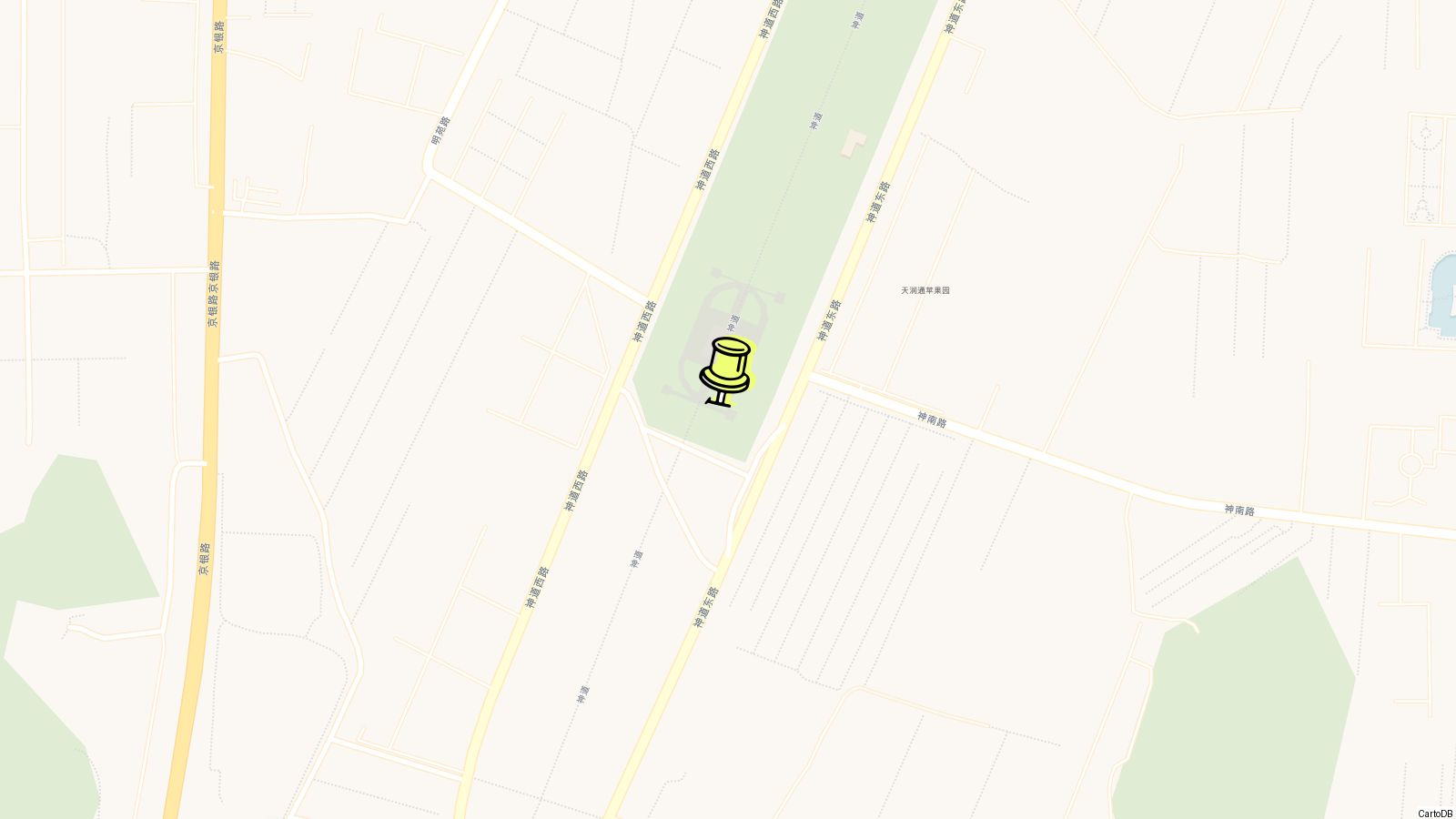
You come for three things. The Sacred Way (Shendao, also signed as the Spirit Way or Shenlu) is a 7 km ceremonial road into the valley, lined with 18 pairs of larger-than-life stone animals and officials, each cut from a single block. Changling is Yongle’s own tomb, the first and largest, and the one whose Ming timber halls survive best. Dingling, the tomb of the Wanli Emperor, is the only Ming imperial tomb ever excavated, and the only one where you walk down into the burial chambers 27 metres below ground.
Of the thirteen tombs, only Changling, Dingling, Zhaoling and the Sacred Way are open to the public; the rest sit behind walls on the valley floor. The whole necropolis covers about 40 square kilometres, so this is a day of short walks broken by drives, not a single site you stroll through. Since 2003 the tombs have been part of the UNESCO World Heritage listing for the Imperial Tombs of the Ming and Qing Dynasties, alongside the Qing tombs in Hebei and the first Ming emperor’s tomb in Nanjing.
History
Thirteen tombs, one valley, 235 years. The necropolis grew one burial at a time, and the parts you can visit today were built at both ends of that span.
Yongle chooses the valley (1409 to 1424)
In May 1409 the Yongle Emperor renamed Huangtu Mountain as Tianshou Mountain (“Heavenly Longevity”) and fixed the site of his own tomb at its foot, after a survey team led by his Minister of Rites and the geomancer Liao Junqing had also looked at Tanzhe Temple, Fragrant Hills and sites in Huairou. The valley suited the rules: hills on three sides to block the ill winds from the north, an arc-shaped basin, and a stream running across the front.
Work on Changling ran from 1409 to 1415. The underground palace was finished first, in 1413, and the coffin of Empress Xu (who had died in Nanjing in 1407) was brought north and interred; the great sacrificial hall followed in 1416. Yongle himself died on 12 August 1424 at Yumuchuan, on the way home from his fifth Mongolian campaign, and was buried at Changling with sixteen of his consorts, who followed him in death by the practice of forced burial.
Why thirteen and not sixteen
The Ming had sixteen emperors. The founder, Hongwu, lies at Xiaoling in Nanjing. His grandson the Jianwen Emperor vanished when Yongle overthrew him in 1402 and has no known tomb. The Jingtai Emperor, who held the throne while his brother was a Mongol prisoner, was denied an imperial burial after that brother returned, and lies west of Beijing instead.
Later tombs (1573 to 1644)
Zhaoling was begun for the parents of the Jiajing Emperor, but in the end it was the Wanli Emperor who used it, to bury his father the Longqing Emperor after his death in 1572; it was completed in 1573. Wanli then built his own Dingling between 1584 and 1590, a complex of 180,000 square metres with a five-hall underground palace 27 metres down.
The dynasty ended in the valley as it had begun. In 1644 the rebel army of Li Zicheng ransacked and burned many of the tombs on its way to Beijing; the Chongzhen Emperor hanged himself on 25 April as the city fell. He was put in the tomb of his consort Tian, which Li Zicheng, briefly emperor of his own Shun dynasty, declared an imperial mausoleum and named Siling, far smaller than the rest.
The Qing conquerors kept the site rather than levelling it. In 1725 the Yongzheng Emperor made a Ming descendant, Zhu Zhilian, a hereditary marquis with a state salary and one duty: to perform the rituals at the Ming tombs. The title passed through twelve generations until the end of the Qing. The Qianlong Emperor repaired the stele pavilion at Changling and had his own poem of mourning for the Ming carved on the back of Yongle’s stele.
The Dingling excavation and its aftermath (1956 to 1976)
In the mid-1950s the historian Wu Han, then deputy mayor of Beijing, and the scholar Guo Moruo campaigned to open Changling. Premier Zhou Enlai approved; archaeologists objected that the biggest and oldest tomb was too important to risk, so Dingling was dug instead as a rehearsal. The excavation began in 1956 and ended in 1957. It found the 1,195 square metre tomb intact: the skeletons of Wanli and his two empresses, and more than 3,000 objects in silk, textile, wood and porcelain.
Nobody knew how to conserve any of it. After failed experiments the silks were piled in a leaking storeroom and rotted; documentation was rushed. A museum opened in 1959. Then in 1966 Red Guards stormed it, dragged the bones of the emperor and empresses to the front of the tomb, denounced them, burned them and smashed the coffins. Wu Han was among the first targets of the Cultural Revolution and died in prison in 1969. The excavation report was only written after 1976.
The consequence is national policy. No imperial tomb has been opened since, even where an entrance has been found by accident, and Dingling is the standard argument against excavating the Qin First Emperor’s mound outside Xi’an. Changling stays sealed, and it has no record of ever being robbed.
Visiting
Peak season hours are 08:30 to 17:30, off season 08:30 to 16:30. Each open area sells its own ticket: Dingling 60 CNY, Changling 45, Zhaoling 30 and the Sacred Way 20 in peak season, all cheaper off season, with half-price tickets on top of that. No reservation is needed; buy at the gate. Over-60s, children under six or under 1.2 metres tall, and disabled visitors go free with ID.
The Sacred Way
Do this first, walking north, the way a funeral procession came. The road begins at a five-bay white stone memorial archway of 1540, one of the largest stone archways in China, then passes through the Great Red Gate, three arched openings under yellow glazed tiles, flanked by steles ordering officials to dismount. Next is the square Stele Pavilion, with a 50-ton stone tortoise (bixi) carrying Yongle’s 8.1 metre memorial stele and a marble huabiao column at each corner.
Two cloud-carved pillars mark the start of the statue avenue. The order is fixed: lions, xiezhi (a horned beast that judged the guilty), camels, elephants, qilin and horses, two pairs of each with the front pair kneeling and the rear pair standing, then generals, civil officials and meritorious officials, 36 figures in all. The avenue ends at the three-arched Dragon and Phoenix Gate.
Changling
Changling faces nine degrees west of due south and is laid out as three walled courtyards with a mound at the back. The building to see is the Ling’en Hall (Hall of Eminent Favour) in the second courtyard, finished in 1416 and still the original Ming structure: nine bays wide and five deep, double-eaved, on a triple marble terrace, with every column and beam of solid golden nanmu timber. Two Ming bronze burners for silk offerings stand in front. Behind it a stone gateway and five stone offerings lead to the Soul Tower (Minglou), which holds Wanli’s re-cut stele naming Yongle, and to the tree-covered burial mound. The tomb underneath has never been opened.
Dingling
The above-ground halls at Dingling matter less; the point is the Underground Palace, five stone halls 27 metres down, reached by stairs. What you see inside is mostly replica: the originals were burned in 1966 or decayed in storage, and the site museum, founded in 1959, shows copies alongside what survived.
Zhaoling
Zhaoling was restored in 1980, the only tomb in the valley to get a full renovation, and opened in 1990. It covers 34,000 square metres on the standard axis: stele pavilion, Ling’en Gate, Ling’en Hall, Minglou, then the circular Precious Castle wall around the mound. It is also the only Ming tomb where the sacred kitchen and storeroom by the entrance survive. Quiet, and worth it if you have the time.
Tips
- Don’t get off the subway at Ming Tombs station. Despite the name it is 4 km from the scenic area with no direct bus link because of the roads. Ride the Changping Line to Changping station instead and take a bus from there, or skip the metro entirely.
- Bus 872 from Deshengmen is the direct option. It leaves from the bus station by Deshengmen in central Beijing and drops you near the Sacred Way.
- Budget for a car between the sites. The tombs are spread across the valley and walking between them is not realistic; a hired car or taxi for the day is the sensible way to link Sacred Way, Changling and Dingling.
- Start early in off season. Gates close at 16:30 outside peak season, and with three separate ticketed areas plus transfers the afternoon goes fast.
- Bring ID if you’re over 60. Entry is free with a valid identity document; the same applies to disabled visitors.
- Pick Changling for architecture, Dingling for the descent. Changling’s hall is original Ming timber; Dingling’s chambers are real but almost everything displayed in them is a copy. Knowing that in advance stops the underground palace feeling like a let-down.
- Pair with Juyongguan rather than Badaling if time is short. Juyongguan is in the same district and is the closest section of the Great Wall to central Beijing; Badaling is 80 km out in Yanqing.
Nearby
Juyongguan is a Ming fortress at a pass in the 18 km Guangou valley, just over 50 km from central Beijing and in the same Changping District as the tombs. The wall here runs in a full circle around the pass, and in the middle stands the Cloud Platform, a 9.5 metre white marble gate of 1342 that once carried three pagodas.
Badaling is the northern end of the same valley, about 80 km from central Beijing in Yanqing District: wall of 1504, the first section restored and opened to tourists, in 1957. Bus 877 runs from Deshengmen, and high-speed trains from Beijing North reach an underground station at the wall.
Ming Tombs Reservoir, named after the tombs beside it, was dug in 1958 in four months by a workforce of hundreds of thousands, an early Mao-era mass project that Henri Cartier-Bresson photographed in colour. The 627 metre dam now backs the lower lake of a pumped-storage power station, and the lake hosted the triathlon at the 2008 Olympics.
Yinshan Pagoda Forest (Silver Mountain), in Yanshou town in the north of Changping, is a group of 18 brick and stone monks’ tombs from the Jin dynasty onwards, the five biggest arranged in a plum-blossom pattern on the site of a temple destroyed in 1941. The city’s ticketing page lists it at 20 CNY in peak season, but it has closed for long restoration spells before, so check before driving out.
Know this destination? Help us improve
Your local experience is valuable to other travelers.