Summer Palace
Cixi's rebuilt Qing garden in northwest Beijing: Kunming Lake, Longevity Hill and the 728 metre painted Long Corridor

Essential info
Visit details
Overview
The Summer Palace is the Qing dynasty’s imperial garden in Haidian District, northwest Beijing, and the clearest surviving statement of what a Chinese emperor meant by a garden: a dug lake, a piled-up hill and a few hundred pavilions arranged to look like a painting. Three quarters of its 2.9 square kilometres is water. UNESCO listed it in 1998 as ‘a masterpiece of Chinese landscape garden design’.
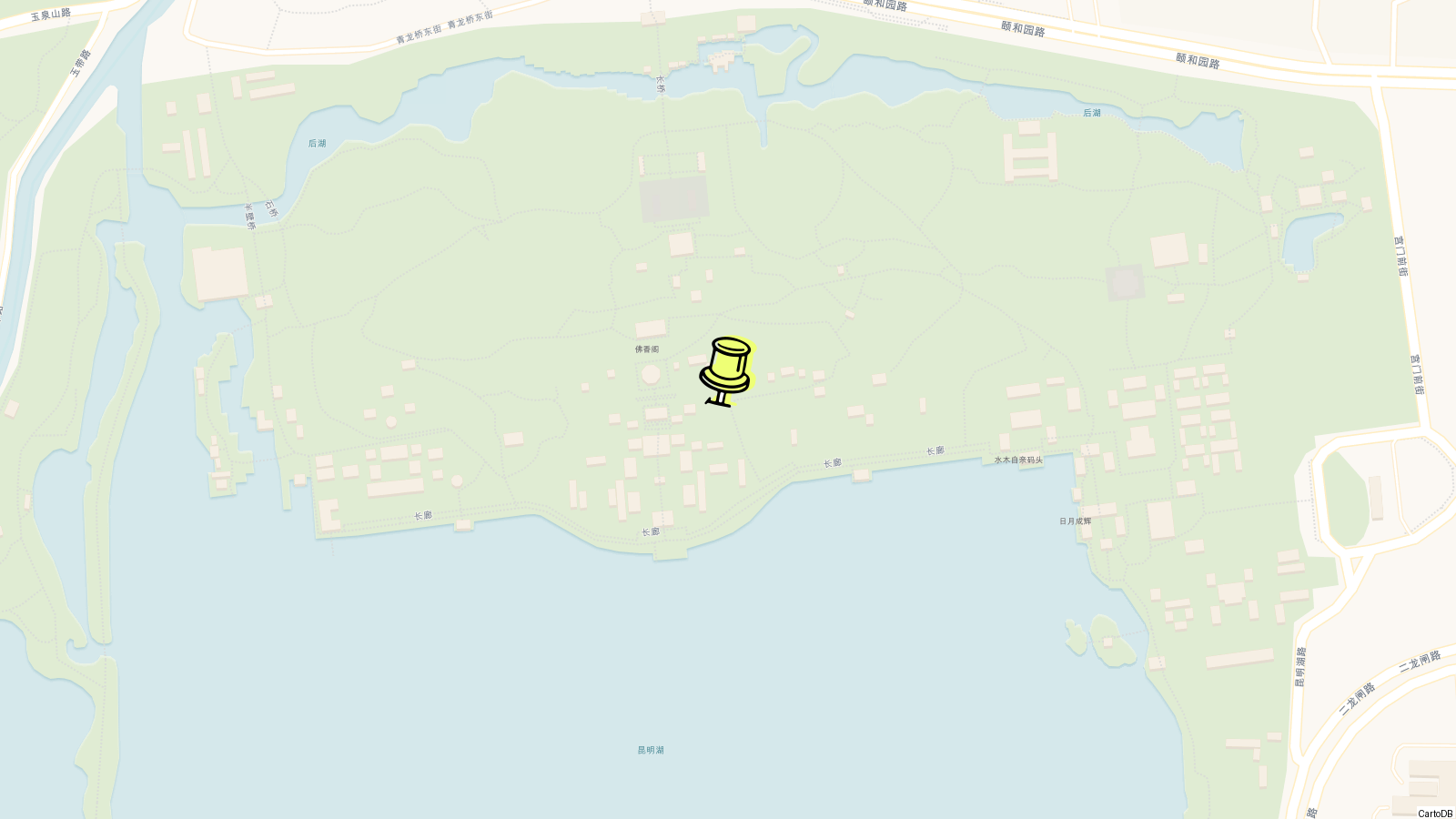
The layout is simple once you have seen it from the water. Kunming Lake fills the south of the park, Longevity Hill rises about 60 metres on the north shore, and the two are the same earth: the lake was excavated by hand and the spoil went into the hill. The buildings you walk through are mostly the version rebuilt for the Empress Dowager Cixi after British and French troops burned the original in 1860; she renamed the garden Yiheyuan in 1888. The Forbidden City was for governing. This was where the court came to get away from it.
Three things earn the trip. The Long Corridor, a 728 metre covered walkway along the north shore with more than 14,000 paintings on its beams and ceilings. The Tower of Buddhist Incense, 41 metres of pagoda on a 20 metre stone platform halfway up the hill, which is the view from every angle of the lake. And the Marble Boat, Cixi’s 36 metre stone pavilion at the western end of the shore, which does not float and was never meant to.
Around 10 million people come each year, which puts the park among the five most visited places in China, so expect company on the corridor and the hill steps. The lake and the west side absorb crowds better. Give it half a day at the very least, a full one if you want to walk the whole shoreline.
History
The garden has been built twice and wrecked twice. What you see is the second version, with a Qianlong-era skeleton underneath.
Before the Qing
The site was water before it was a palace. In 1271 the Yuan engineer Guo Shoujing routed spring water into what was then called Western Lake, the reservoir that became Kunming Lake, and a Jin ruler, Wanyan Liang, had already built palaces at Fragrant Hills and Jade Spring Hill nearby in 1153. The Ming added religion: in 1494 the Hongzhi Emperor built the Yuanjing Temple here for his wet nurse, Lady Luo, and the Zhengde and Wanli emperors kept the area as an imperial garden through the 16th century. Of these layers, the water is what survives.
Qianlong’s Garden of Clear Ripples, 1749 to 1764
The present garden begins with the Qianlong Emperor, who commissioned it around 1749 for his mother’s 60th birthday. Fifteen years and more than 4.8 million silver taels later it was finished and named Qingyiyuan, the Garden of Clear Ripples. The lake was enlarged to its present 2.2 square kilometres and the excavated soil built Longevity Hill. Qianlong liked the south of China and had pieces of it copied here: Suzhou Street, a shopping canal built in 1762 on the model of Shantang Street in Suzhou, is the most literal example. The Bronze Ox by the lake, cast in 1755, and the stone base of the Marble Boat, laid the same year, are among the few things from his garden you can still put a hand on.
Burned by the British and French, 1860
In October 1860, at the end of the Second Opium War, British and French forces occupied northwest Beijing and burned the imperial gardens, Qingyiyuan and the neighbouring Old Summer Palace together. Lord Elgin, the British High Commissioner, ordered the fire on 18 October in retaliation for death sentences passed on 19 members of an Anglo-French delegation; it took 3,500 British troops and the burning lasted three days. The wooden superstructures went. The stone bases, the lake and the hill stayed. Suzhou Street was among the losses and was not rebuilt until 1988.
Cixi’s Yiheyuan, 1884 to 1895
The Empress Dowager Cixi had the garden rebuilt between 1884 and 1895 and renamed it Yiheyuan, the Garden of Nurtured Harmony, in 1888. How she paid for it is the argument that has followed the place ever since. The accusation is that 22 million silver taels were diverted from the navy, which then lost its war with Japan in 1895; other estimates put the whole rebuild at six million taels at most, and some historians find no naval money in it at all. Whatever the sum, the Marble Boat, rebuilt in 1893 with a two-storey wooden superstructure painted to look like marble and a pair of imitation paddle wheels, became the shorthand for it.
Cixi used the rebuilt garden as a working palace, not a retreat. She received guests, held ceremonies and celebrated her birthdays in the Hall of Dispelling Clouds on the hillside, converted in 1892 from the older Great Temple of Gratitude and Longevity, and she lived by the lake in the Hall of Joyful Longevity. The Hall of Jade Billows beside it, the emperors’ own living quarters, is where she at one point confined the Guangxu Emperor, her nephew and the nominal ruler. The Marble Boat’s design may carry a warning she chose to ignore: the Tang minister Wei Zheng’s line that the water which floats a boat can also capsize it, meaning the people can sink a ruler as easily as carry one.
From 1900 to the World Heritage list
The Boxer Rebellion brought foreign troops back in 1900 and the palace was damaged again; repairs were complete two years later. After the last emperor abdicated in 1912 the garden stayed in the imperial family’s hands and began selling admission tickets in 1914; Beijing’s municipal government took it over as a public park in 1924. The Central Party School occupied it briefly after 1949, a state restoration programme started in 1953, and the Sea of Wisdom on the summit lost some of its Buddha figures during the Cultural Revolution. UNESCO inscribed the palace in December 1998.
Visiting
Hours and tickets
Peak season runs 1 April to 31 October: the gates open 06:00 to 19:00 and the park closes at 20:00, while the separately charged attractions inside admit from 08:00 to 17:30 and shut at 18:00. Off season, 1 November to 31 March, the gates open 06:30 to 18:00 and the park closes at 19:00; the inner attractions run 08:30 to 16:30, Tuesday to Sunday only, closing at 17:00, and stay shut on Mondays outside major festivals and holidays.
The park ticket is 30 CNY in peak season and 20 CNY off season, with discount tickets at 15 and 10. The through ticket, 60 CNY peak and 50 off season, adds the inner gardens and halls, and you want it: the courtyards and the climb to the Tower of Buddhist Incense are the point. Tickets can be booked one to seven days ahead on the park’s official WeChat account, with your passport as ID, or bought at the ticket offices and service windows at the gates.
Gates and the route
The East Palace Gate is the main entrance. The nearest subway stop is Beigongmen on Line 4, which comes up beside the North Gate; Summer Palace West Gate station on the Xijiao line serves the west side. The order below runs from the East Palace Gate; from Beigongmen you do it backwards, over the hill first.
The eastern courtyards
The first courtyard inside the East Palace Gate is the Hall of Benevolence and Longevity, where court sessions were held; under Qianlong it was the Hall of Good Governance. Its rockery imitates the Lion Grove Garden in Suzhou and includes stalactites salvaged from the Old Summer Palace, and the Year-Prolonging Well sits just north of it. Beyond are the living quarters: the Hall of Jade Billows for the emperors, the Hall of Joyful Longevity for Cixi, and to the north the Garden of Virtue and Harmony with its three-storey Great Opera Hall. Wenchang Hall, usually called the Wenchang Gallery, shows artefacts from the palace collection, and the Zhichun Pavilion on the east bank south of the Hall of Jade Billows gives you the first full view of the lake.
The Long Corridor
From the halls the Long Corridor runs 728 metres west along the foot of the hill. Crossbeams divide it into 273 bays and four double-eaved pavilions, one per season, break the line: Liu Jia, Ji Lan, Qiu Shui and Qing Yao from east to west. The paintings cover classical literature, folk tales, historical figures, buildings, landscapes, plants and animals; the sets to look for are the Twenty-four Filial Exemplars and scenes from the Four Great Classical Novels. The Cloud-Dispelling Gate marks the corridor’s midpoint and the foot of the hill’s central axis.
Longevity Hill
The axis climbs from the gate through the Hall of Dispelling Clouds to the Tower of Buddhist Incense: three storeys carried on eight ironwood pillars, 41 metres tall, on a 20 metre stone platform. Qianlong intended a nine-storey pagoda and work stopped after the eighth. On the peak above it the Sea of Wisdom is built from coloured glass and holds more than 1,000 Buddhist figures. The hill is only about 60 metres high, so the climb is short, steep and worth it for the lake laid out below.
The Marble Boat, the West Dam and the bridge
The corridor ends near the Marble Boat on the northwestern shore: 36 metres long, mirrors on each deck, false paddle wheels on the flanks. From there the West Dam runs south across the water and divides the lake in two, with six bridges along it: Lake Dividing, Jade Belt, Binfeng, Mirror, White Silk and Willow. This is the quiet half of the park. At the far side the Seventeen-Arch Bridge, 150 metres long and 8 metres wide, borrowing from the Precious Belt Bridge in Suzhou and Beijing’s Lugou Bridge, leads to the Dragon King Temple on its island. Ferries cross the lake from the docks; Wikivoyage rates the ride, and it saves you walking the shoreline back to the eastern gate.
Tips
-
Start at Beigongmen and go over the hill first. Line 4 drops you at the North Gate; Suzhou Street is on this back side of the hill, so you pass it on the way in, climb while your legs are fresh, and come down the central axis onto the Long Corridor with the lake in front of you.
-
Use the two-hour gap. The gates open at 06:00 in summer but the paid halls not until 08:00 (06:30 and 08:30 in winter), so an early arrival buys you the corridor and the lakeshore before the coaches, and the courtyards when they open.
-
Avoid winter Mondays. From November to March the inner attractions close on Mondays, which turns your through ticket into a park ticket. Go Tuesday to Sunday.
-
Skate on the lake in January. In 2026 the Kunming Lake ice rink ran from 17 January to 4 February, 08:30 to 17:00 with last entry at 16:30, about 160,000 square metres of ice entered from the Yulantang, Bronze Ox, Paiyun Hall and West Dyke docks. Single and double sleds and ice bicycles are hired via QR screens at the docks or the rink’s WeChat mini-program; the dates track the ice, so check before you go.
-
Save the late light for the west. The Marble Boat sits on the northwestern shore, so in the last hours of the day the sun is behind it and the best photographs come from the east bank looking across the water.
-
Don’t pair it with the Forbidden City. The Summer Palace is a half-day minimum on the other side of the city from the Forbidden City, and two imperial complexes in one day blur into each other. Put the Temple of Heaven on a different day too.
Nearby
The Summer Palace is in Haidian District, and the other Qing gardens and the hills to the west are all reachable on the same two rail lines.
Old Summer Palace (Yuanmingyuan) is the neighbouring imperial garden that burned in the same October 1860 fire, kept as a ruin ever since as a reminder of foreign humiliation. The most visible remains are the Western Mansions (Xiyang Lou), the 18th-century European-style palaces and fountains designed by the Jesuits Giuseppe Castiglione and Michel Benoist, which made up under 5 per cent of a 3.5 square kilometre complex. Entry is 25 CNY, hours 07:00 to 19:30 with last admission at 17:30, and Yuanmingyuan Park station on Line 4 is at the gate.
The Xijiao line from Summer Palace West Gate runs six stops out to the hills, calling at Chapeng, Wan’an, China National Botanical Garden and Fragrant Hills, with a Line 10 interchange at Bagou in the other direction. The botanical garden charges 10 CNY and does seasonal shows of tulips, peach and plum blossom and peonies.
Fragrant Hills Park at the end of the line is a 160 hectare former Qing garden climbing to the 575 metre Incense Burner Peak, with a cable car up and the Temple of Azure Clouds just outside its north gate; entry is 10 CNY. Beijing goes in autumn for the red smoke-tree leaves, and the cable car queues show it.
Peking University and Tsinghua University, the country’s top two, are both in Haidian, but public visits are limited to reserved weekend and summer-holiday slots tied to your ID, so this is a plan-ahead rather than a drop-in. For the rest of imperial Beijing, head back into town on another day.
Know this destination? Help us improve
Your local experience is valuable to other travelers.