Aqueduct of Segovia
167 granite arches soar 28 meters over Plaza del Azoguejo, carrying mountain water from the Sierra de Guadarrama right through Segovia’s city center

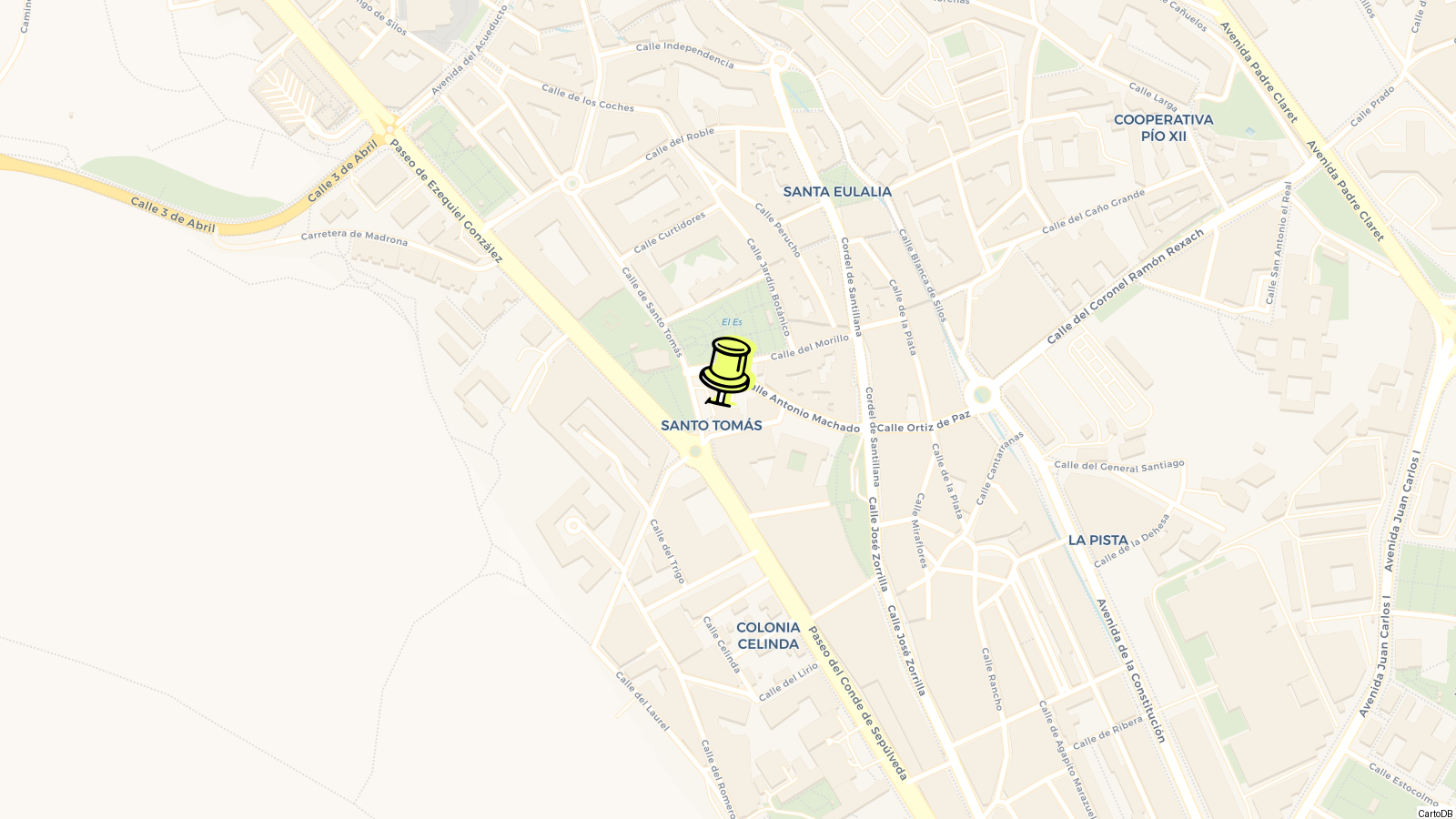
Visit details
Overview
The Aqueduct of Segovia runs right through the city center, carrying 167 granite arches up to 28 meters high above Plaza del Azoguejo and stretching for about 16 kilometers from the Sierra de Guadarrama springs to Segovia. Built around 98 AD during Trajan’s reign, it’s an open-air Roman engineering relic you can walk under any time, no tickets, closed doors, or gates get in your way, day or night. It’s one of the few places in Spain where you’re brushing up against 2,000 years of infrastructure that’s still part of the city’s daily life.
This isn’t a pile of old stones roped off in a park. Buses rumble past, school kids kick footballs in Azoguejo’s shadow, and the best selfie spot is contested by locals and daytrippers from Madrid (the high-speed train gets you here in 27 minutes). At one time, this thing brought drinking water to Segovia’s fountains and houses, straight from the Río Frío springs, at least 16 km away, until 1973. If you want numbers, the visible arcade everyone photographs is about 800 meters, and the tallest arches in Azoguejo hit that famous 28-meter mark.
The big trick here? No mortar: just precision-cut blocks of local granite locked together, with some foundations buried nearly six meters below street level. For context: the Old Town and Aqueduct together are a UNESCO World Heritage Site, and you’ll spot the arches on the city coat of arms, the flag, even old coins. If you have more than half an hour, walk the length of the arcade from Plaza del Azoguejo up to Plaza Díaz Sanz for the classic double-decker arch view. You’ll be navigating Segovia like an aquarius, not a tourist.
The main open-air section makes a sharp turn at Plaza Díaz Sanz, then heads for Azoguejo, where you get that double tier of arches. Originally, bronze inscriptions were set into the highest arches, bragging about the builder and date, long gone, but you can still see the stone niches. One of these now holds a statue of the Virgin; the other used to have Hercules (yes, the demigod, not a random Roman). Local legend has chased that tale for centuries, but the city swapped Hercules for Saint Stephen’s statue in the Middle Ages, and now only the Virgin remains.
To really nerd out on Roman water engineering, you can check out the Interpretation Centre in Segovia’s Royal Mint complex (Museo Real Casa de Moneda), open Wednesday to Sunday, 10:00–18:00 in winter, 10:00–19:00 in summer, for €3. The center gives you the inside story on the aqueduct’s design, plus models of the city’s ancient water system. Admission is free on Wednesdays, and the ticket usually gets you an audioguide.
History
The aqueduct you see in Segovia was finished around 98–112 AD, right in the reign of emperor Trajan (or maybe early Hadrian, depending on which archaeologist you ask). Its job? Bring water to the city from the Fuente Fría, a spring in the Sierra de Guadarrama, stringing out for about 16 kilometers before arriving at Segovia’s walls. The project used nothing but granite blocks, no mortar, no metal, just good engineering and gravity. Even with all this, the aqueduct kept running until 1973.
It’s not all ancient untouched stonework. The Moors damaged 36 arches in 1072, and King Ferdinand and Queen Isabella had that section rebuilt in the 15th century. If you look closely, you can spot which arches are from the original Roman days and which are later repairs, the match isn’t perfect, but the restoration is remarkably sensitive to the Roman style.
At Plaza del Azoguejo, you’re at the highest point: 28 meters up, 167 arches marching across the square. Above, there are two shallow niches. One used to have Hercules (supposed founder, but more mythology than history), the other Saint Stephen. Now there’s just an image of the Virgin, nobody’s really sure precisely when that switch happened, but it’s been that way since at least the 16th century.
Who actually built it?
For centuries, nobody was sure which emperor started the project. There’s no legible dedication stone, just holes where lost bronze letters once attached big plaques. In the late 20th century, a Hungarian scholar, Géza Alföldy, examined those holes and matched their pattern to possible Roman imperial names. His best guess is Domitian (reigned 81–96), but more recent finds, like a stray coin in the foundations, point to construction possibly finishing after 112, well into Trajan’s or maybe even early Hadrian’s time. Romans in Segovia cared more about the water flowing than about leaving a clean date.
Later repairs and long service
Aside from the 15th-century work, the aqueduct’s survived relatively untouched, no “modernizations” until water stopped running through it in 1973, when Segovia finally switched to pipes. Pollution and car traffic in the 20th century caused some damage, and in 2006 the World Monuments Fund listed it for urgent protection. Joint funding from the city, the Castilla y León regional government, and donors (including American Express, for real) means it’s still in use as a traffic-free monument and city symbol.
There’s a reason you see the aqueduct everywhere in Segovia: it’s stamped on the city’s coat of arms, its flag, and even served centuries back as a mint-mark for coins produced at the Royal Mint. The building that houses the aqueduct’s Interpretation Centre, the Real Casa de Moneda, also owes its existence to water power, though from the Río Eresma, not the aqueduct itself.
Roman Segovia was part of the conventus iuridici based at Clunia, and you still find bits of Roman wall and other remnants around town, but the aqueduct is by far the piece that outlasted them all. The reason it lasted: it was vital. It wasn’t built to impress, but to keep Segovia’s baths, fountains, and homes running for almost 1,900 years.
The last big repairs were in the 19th century. Since then, ongoing maintenance and protections as a Bien de Interés Cultural and a civil engineering monument keep it standing, car-free, and floodlit at night (the LED upgrade is recent). If you see scaffolding, it’s usually for cleaning stonework and checking for leaks, no dramatic changes, just the dull work that keeps a 2,000-year-old structure feeling timeless.
UNESCO listing
The aqueduct and Segovia’s old town landed on the UNESCO World Heritage list in 1985. That international attention hasn’t changed much about access: there’s no formal entry, fences, or closing hour for the arches outside (open-air and always free), but there’s more monitoring now, and occasional extra fencing for festivals or works. The Interpretation Centre inside the Royal Mint, which dives deeper into the Roman water system, has a small fee (free on Wednesdays).
Visiting
The aqueduct is open-air and completely free, so you can wander underneath those granite arches in Plaza Azoguejo at any hour, yes, even at 2 am with a cone of helado. Walk directly beneath the tallest section (about 28 meters above you) for the classic view, then follow the arches as they turn suddenly at Plaza Díaz Sanz. The original Roman path is still visible along the pavement, tracing the water’s ancient course through Segovia’s old town. If you’re up for a little climb, head up the stairways on either side of Azoguejo for a close-up look at the upper tier and panoramic shots across the city.
Most visitors spend 30–40 minutes at the arches themselves, but if you want to actually learn something, go to the Interpretation Centre inside the Royal Mint (Casa de Moneda), about 10 minutes’ walk downhill from the central arches. As of 2025, it’s €3 for adults, free on Wednesdays, and open Wednesday to Sunday (10:00–18:00 in winter, 10:00–19:00 in summer). Tickets usually include an audioguide. Plan for at least 1h30 if you want to do both the arches and the Centre without rushing.
Cafés, ice cream shops, and a few souvenir vendors cluster around Azoguejo, so you won’t have trouble finding a terrace with a direct aqueduct view. The best photos are early morning (empty street, golden light) or evenings when the arches are floodlit. Don’t forget to walk to the side facing the stairs, most people don’t bother, and you’ll actually see more context for how the aqueduct snakes through the city.
Walking routes for classic viewpoints
- Start at Plaza Azoguejo for the head-on photo.
- Climb the stone staircase to the right (if you’re facing the arches); this takes you to a series of terraces above the city with sweeping views back over the arches and rooftops.
- At the top, cross the street for a panoramic shot with Segovia’s cathedral dome in the distance.
- Wander along Calle Almira for quieter arches and far fewer tourists.
About the Interpretation Centre
The Interpretation Centre isn’t a must for everyone, but if you’re into Roman engineering, it lays out models, maps, and historical photos of the aqueduct’s construction and later restoration. The centre sits inside the blocky Royal Mint (Casa de Moneda), which itself was powered by water, just not from the aqueduct. Exhibits are kid-friendly, with a working miniature aqueduct setup.
Look up and you’ll spot two empty stone niches: one now houses an image of the Virgin, but back in the day, they held statues of Hercules (alleged city founder) and Saint Stephen. Check out the city crest on nearby street signs, yep, those arches are on it.
If you’re curious where the water actually came from, walk uphill out of town toward the marked route (sometimes signed “Ruta del Acueducto”) for a few hundred meters. Some sections of channel, and traces of the underground conduit, show up in random parks and pavements.
The aqueduct is at its emptiest before 10 am and after 9 pm. Daytrippers from Madrid usually mob the plaza between 11 and 5, especially on weekends. No tickets, no reservations, just show up, wear shoes with grip, since wet granite and old cobbles are slick.
Bathrooms, parking, and logistics
- Public toilets sit at the east end of Plaza Azoguejo, next to the tourist office.
- The city’s main parking garages (Acueducto and Padre Claret) are five minutes’ walk from the arches.
- Segovia’s local bus stop (lines 1 and 2 from the train station) drops you on Avenida del Acueducto, right at the plaza.
After dark
Floodlights switch on year-round after sunset, bathing the arches in a soft glow. Evening is when locals emerge for paseo and cañas. If you want night photos without moving cars, be patient, traffic still flows regularly right under the arches.
Tips
-
If you just want to see the arches up close, don’t bother with tickets, walking around and under the aqueduct is always free, 24/7. You can roll through at midnight or at sunrise; plenty of locals do.
-
For info about the engineering, check out the Interpretation Centre at the Royal Mint complex (Real Casa de Moneda). Admission is €3 for adults and includes an audioguide. Wednesdays are free. Winter hours (October–March): Wed–Sun 10:00–18:00. Summer (April–September): Wed–Sun 10:00–19:00. Closed Mondays and Tuesdays.
-
The classic photo: stand at Plaza del Azoguejo facing up along the arches. Early mornings (before 10:00) or late afternoons avoid the heaviest crowds and tour bus drop-offs.
-
For a wider shot, take the stairs near the tourist office (opposite Mesón de Cándido) up to the old city ramparts. From there you get the full sweep of arches with the mountains in the background.
-
Wear comfortable shoes. The plaza and surrounding streets are cobblestoned, and you’ll probably end up climbing a few flights of stairs for the best angles.
-
Accessibility is decent at street level, but the bumpy stones near the arch bases are brutal for prams and wheelchairs. Stick to the flatter, paved stretches if mobility is an issue.
-
During summer weekends and on Spanish public holidays, Segovia fills with day-trippers by noon. Arrive before 10:00 or after 18:30 if you want elbow room at the aqueduct.
-
The “good” public toilets are on Calle San Francisco (about 50 meters from Azoguejo). Cafés around the plaza will let you use theirs if you order at the bar.
-
Shops and bakeries right by the arches double prices for single-use water and snacks. Cross over one block (Calle Juan Bravo or Avenida del Acueducto) for supermarket prices.
Food with a view
Bars and restaurants line the plaza, but most are oriented toward tourists. If you want a coffee or a cerveza with a view, grab a table on the facing side of Café Bar Limón or the upper floor of Mesón Don Jimeno, not the cheapest, but the arches are front and center.
Festivals and closures
Every December 4, the local artillery academy hangs a flag over the aqueduct for Saint Barbara’s day. Access under the arches may be blocked for a few hours, nothing major, just plan around late morning if you’re visiting then.
Know this destination? Help us improve
Your local experience is valuable to other travelers.