Berlanga de Duero
A 16th-century stone fortress crowns Berlanga de Duero’s skyline, watching over just 902 locals and wild steppe at nearly 1,000 meters above sea level

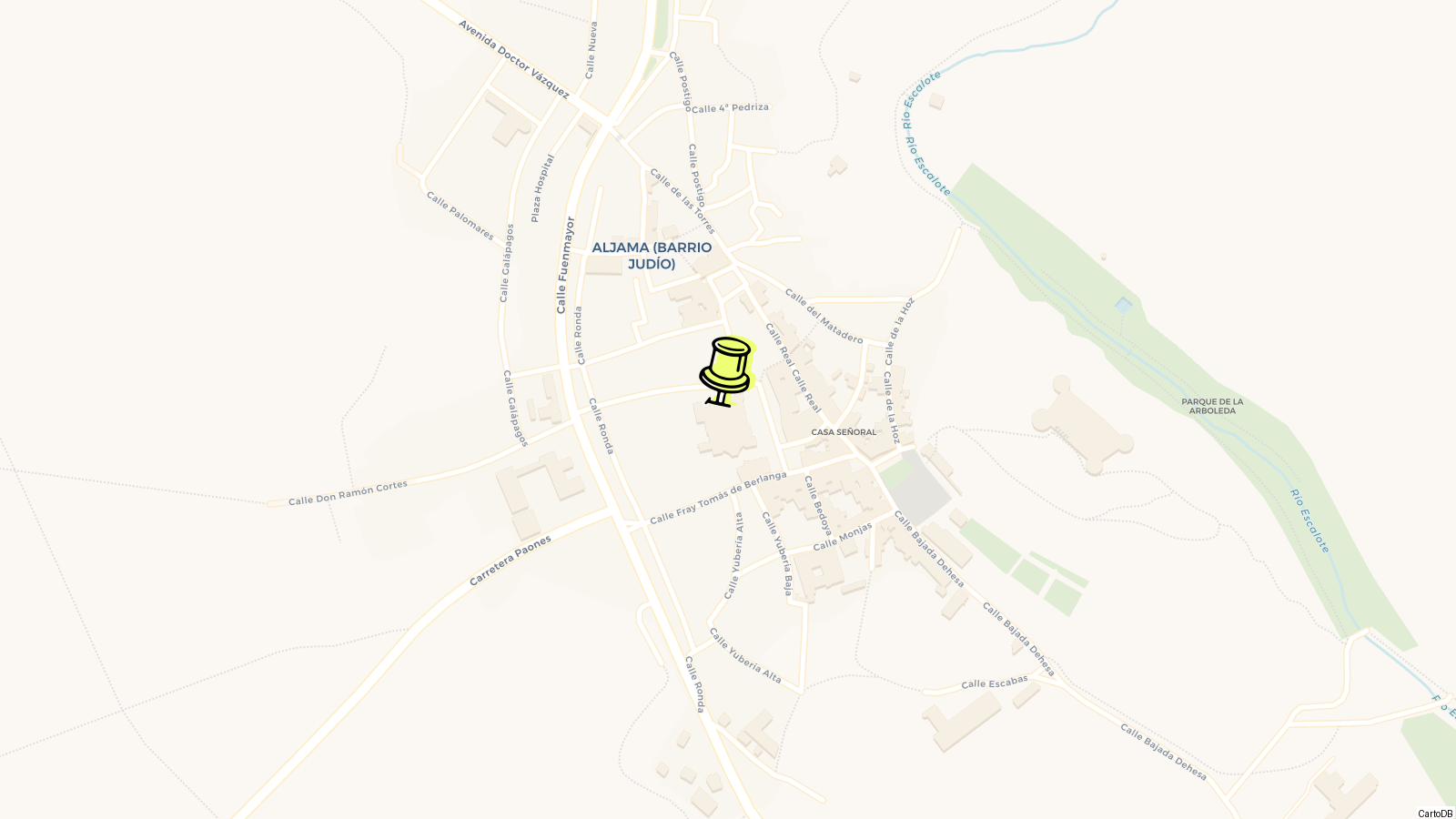
Visit details
Overview
The population in Berlanga de Duero hasn’t cracked 1,000 in years,902 people as of the last official count, yet the municipality sprawls across 220 km² of Soria’s southern steppe at 936 meters above sea level. It sits about 40 km southeast of Soria and 25 km from Burgo de Osma, surrounded by dry farmland and that big-sky Castilian light.
Everything here moves on village time. There’s a true main square, handful of bars (don’t expect dinner early), and during the week you might cross paths with more storks than people. Temperature swings matter: summers hover around 21 °C average, with July spikes over 29 °C, and winters are cold, highs barely reach 7-11 °C, with regular overnight freezes. May, June, September, and October tend to be that sweet spot, t-shirt weather, not sweltering, with the cereal fields turning either lush or golden.
The reason Berlanga makes the map: its center, declared a ‘Conjunto histórico’ since 1981, is a textbook slice of old Castile, with a fortress-cum-castle on the ridge, a Renaissance collegiate church that guards a Galápagos caiman, and a handful of historic monuments that would be crowded with tourists if this were Segovia, not the Soria backlands. A visit usually fits comfortably into a half day, longer if you want to decompress or do some proper walking.
Despite its tiny size, the municipality contains two separate Natura 2000 protected zones: Altos de Barahona and the Riberas del Río Duero y Afluentes. Both total around 4% of the land, mostly rolling scrub and rivers, decent for birdwatching or a quiet hike.
The main landmarks trace back to the 16th and 17th centuries, but you’ll spot older Moorish and defensive structures in the castle (a mix of stone and mudbrick walls). The Plaza del Mercado is still the heart of local life. Population has dropped sharply since the old railway stopped passenger traffic in 1985, a line that once connected Berlanga to bigger cities like Valladolid and Ariza, so expect silence, not crowds.
History
The castle at Berlanga de Duero has been staring down over the river since the 15th century, but it’s built on top of an earlier fortress that once defined the Christian/Islamic frontier. Before that, you had a Celtiberian settlement here, then the Romans left their marks a couple of kilometers away. Everyone built, knocked down, or remodeled something on this crag over the centuries.
The heyday kicked off in the 1500s, when the Tovar family hit it big and Berlanga became their power base. That’s when the massive stone shell you see today took shape, and when they started building the Collegiate Church of Santa María del Mercado, between 1526 and 1530, in Renaissance style. You’ll spot that grand church as soon as you reach the Plaza del Mercado. If you step inside (especially on a Monday, because it’s free unless it’s a holiday), the tomb under the altar belongs to Fray Tomás de Berlanga, who in 1535 sailed out and stumbled on the Galápagos Islands. There’s even a preserved caiman in there, supposedly hauled all the way back from Ecuador.
By the 17th century, Berlanga’s luck started to turn. Wars, plagues, a few key families dying out, by the 1800s it was a well-worn provincial center. But the train finally showed up in 1895, courtesy of the Valladolid–Ariza railway. The station sits beside the long-defunct line at the north end of town, a little forgotten since passenger trains stopped in 1985.
The Railroad That Never Paid Off
The Valladolid–Ariza line was supposed to put Berlanga on the map. The first steam locomotives rolled in more than a decade after the capital’s big boom, but the town saw only modest growth. Local stories from older residents remember the “trenillo” (little train), the coal smoke, and the day the last passenger train left. The rails are still there, rusted, overgrown, but every year locals gather for a walk along the old track, now a kind of unofficial Vía Verde.
The historic heart of Berlanga is tightly bound. In 1981, the town center was officially recognized as a conjunto histórico-artístico. Most of the houses you see around the plaza and up the winding streets behind the castle are 17th and 18th-century, stone walls, wooden balconies, coat of arms over the doors.
You’ll hear plenty about medieval sieges and rival families, but daily life for centuries was tied more to agriculture and local trade. Berlanga was never a royal city; it was a defensive post, then a base for landowners, then just another Soria market town after the wars and migrations of the 19th century. Franco-era buildings and a couple of rural blocks tell the story of depopulation and quiet resilience.
Berlanga’s Shifting Borders
Through most of its history, Berlanga de Duero was a frontier: first between Christian León and Muslim al-Andalus, then between opposing noble houses with shifting Castilla borders. The landscape reflects that. The fortress walls are thick, with gun ports meant for cannon rather than archers, evidence of early adaptation to gunpowder warfare in rural Soria.
Renaissance Rubble: The Unfinished Cloister
The Tovars had planned a grand cloister for the collegiate church but never finished it. Walk south from the church and you’ll see ruins, arches rising out of weeds and piles of carved stone. Locals say the stones kept getting stolen for use in stables and garden walls in the 1800s.
The overall result is a town that wears its layers openly: medieval walls up on the hill, a Renaissance church with an explorer’s grave, 19th-century railway detritus, and plenty of storks nesting on bell towers. It’s hard to forget you’re in a place sized for ox carts, not cars, unless you pass the bus of schoolchildren on a field trip clogging the square.
Visiting
The tourist office in Berlanga de Duero is at Plaza del Mercado s/n, right in the middle of the old town. That’s where you buy tickets for the big sites. The main stops: the castle, the Colegiata de Santa María del Mercado, the Palacio de los Marqueses, and a quick walk on the outer ramparts. None of this is strenuous, it all fits inside a compact village and you can do the core loop in two hours.
The Castle (Castillo de Berlanga)
You see the castle as soon as you enter town; it’s on the ridge overlooking everything. Admission is €2.50 except Tuesdays, when it’s free unless it’s a holiday or puente. Get your ticket at the tourist office, or go there first if you want to make sure it’s open (phone: +34 975 343 433). In summer it’s open 10:30–14:00 and 16:00–19:30, in winter 10:30–14:00 and 15:30–17:30, always closed Monday and Tuesday, but summer weekends get busy.
You’ll enter past a simple exhibit about sieges, then you’re free to clamber along the wall walk for views across the plateau. Allow about an hour to soak it in.
You can’t get lost inside, the original palace is a ruin, but you can spot the double wall system, the big gunpowder cistern from the 16th century, and the slope where attackers used to hurl whatever projectiles they had. It’s mostly self-guided, though on weekend mornings the staff sometimes offer mini-tours (check at the ticket desk). You’ll probably have it mostly to yourself, except for the odd family or local couple. The top rampart is the best sunset spot in town, looking back to the spire of the Colegiata. Make sure your phone is charged, there’s nowhere to buy anything up here, and the wind whips even in July.
The Colegiata (Colegiata de Santa María del Mercado)
This monster church is right on Plaza Mayor a couple minutes’ walk from the castle. Entry is €2.50, and on Mondays it’s free (unless it’s a public holiday/long weekend); if you want to see both combo ticket is €4 (or €7 with QR audio guide during high season). The big draw inside is the tomb of Fray Tomás de Berlanga, the friar who discovered the Galápagos Islands, and the mummified caiman he brought back in the 1500s plainly displayed. The floor is battered stone, the chapels feel fortress-thick, and summer sunlight shows the patched restoration spots on the vaults.
April and summer hours are longer (typically 10:00–14:00 and 16:00–19:30) but in winter you might find it closed midday. There’s rarely a wait unless a wedding is underway. You can take photos freely, but don’t use flash.
Palacio de los Marqueses
This Renaissance palace sits diagonally across from the Colegiata. The façade is photogenic but most days you’ll only see the outside, inside visits are by appointment or sporadic during town events. Worth five minutes to study the stonework if you’re already in the square.
Ramparts and River Walk
Near the castle, you’ll spot the town’s outer walls and can walk a rough path parallel to the Río Escalote for ten minutes. There are interpretive signs about the town’s fortified past and, if you look carefully, you might see the stork nests that dominate the skyline in late spring.
Nature: Natura 2000 Sites
If you brought boots, two protected areas within the municipality, Altos de Barahona and Riberas del Río Duero y afluentes, are mapped as part of the Natura 2000 network. These aren’t marked trails you just stumble on: ask at the tourist office for a current map or recommendations for a quick birdwatching loop.
Altos de Barahona is mostly limestone hills northeast of the village, with wildflowers and small raptors overhead. Riberas del Río Duero y afluentes is more about willows, kingfishers, and a peaceful stretch of river with fewer people than the main sights. Pack water; there are zero services once you leave the village limits.
Practical Stuff
Buy tickets for everything at the tourist office (Plaza del Mercado s/n, +34 975 343 433, turismo@berlangadeduero.es). Most things are closed midday for lunch. Mondays: free entry at the Colegiata (except holidays). Tuesdays: castle is free (except holidays). If you’re coming for a fiesta weekend or a puente, double-check both hours and prices, they sometimes change.
Tips
-
If you’re coming for the castle or the colegiata, check the free days: the castle is free on Tuesdays, the colegiata is free on Mondays, but neither applies on holidays or long weekends.
-
Tickets for main sites (castle, collegiate church) are best bought at the Oficina de Turismo, Plaza del Mercado s/n. The staff have QR codes for combo tickets, which cost €7. Call ahead at +34 975 343 433 if you want tour timings or opening questions answered.
-
Hours change by season, and siesta is enforced: in summer, the castle is open 10:30–14:00 and 16:00–19:30; in winter, afternoons start again at 15:30 but wrap up by 17:30. Both are closed Mondays and Tuesdays in winter.
-
Plan on at least 60 minutes to walk the castle. There’s a mild uphill and little shade, so a hat, water, and sunscreen help, especially May through September.
-
May, June, September, and October bring the best weather, pleasant but not baking. From November to March, mornings can dip close to freezing and sites open shorter hours.
-
Weekends see groups from Soria and Burgo de Osma, so for more peace, aim for midweek.
-
Most restaurants open for lunch only around 14:00–16:00 and shut again until dinner (which rarely starts before 21:00). If you want to eat outside these slots, bring snacks.
If you’re pinched for time, skip the Nature 2000 routes on foot (unless birds and wildflowers are your thing); concentrate on the castle and the church. The hiking trails are signposted, but the terrain is stark, dry, and can be brutally hot midday in summer. There’s little tree cover in the wider area, so sunscreen and water are non-negotiable on walks.
If you have a car, it’s a quick hop (20–40 minutes) to Burgo de Osma or even up to Soria for more varied dining and bigger supermarkets, Berlanga’s own shops are small and not always open in the afternoons.
- ATMs and petrol are limited. Fill up and get cash in Burgo de Osma before you head in. Mobile signal is decent, but data can crawl depending on your network. Wi-Fi is only reliable at main accommodation.
Know this destination? Help us improve
Your local experience is valuable to other travelers.