Belorado
Yellow Camino arrows cut through Belorado’s Plaza Mayor, where hikers rest in the arcaded square with backpacks slung under ancient portals
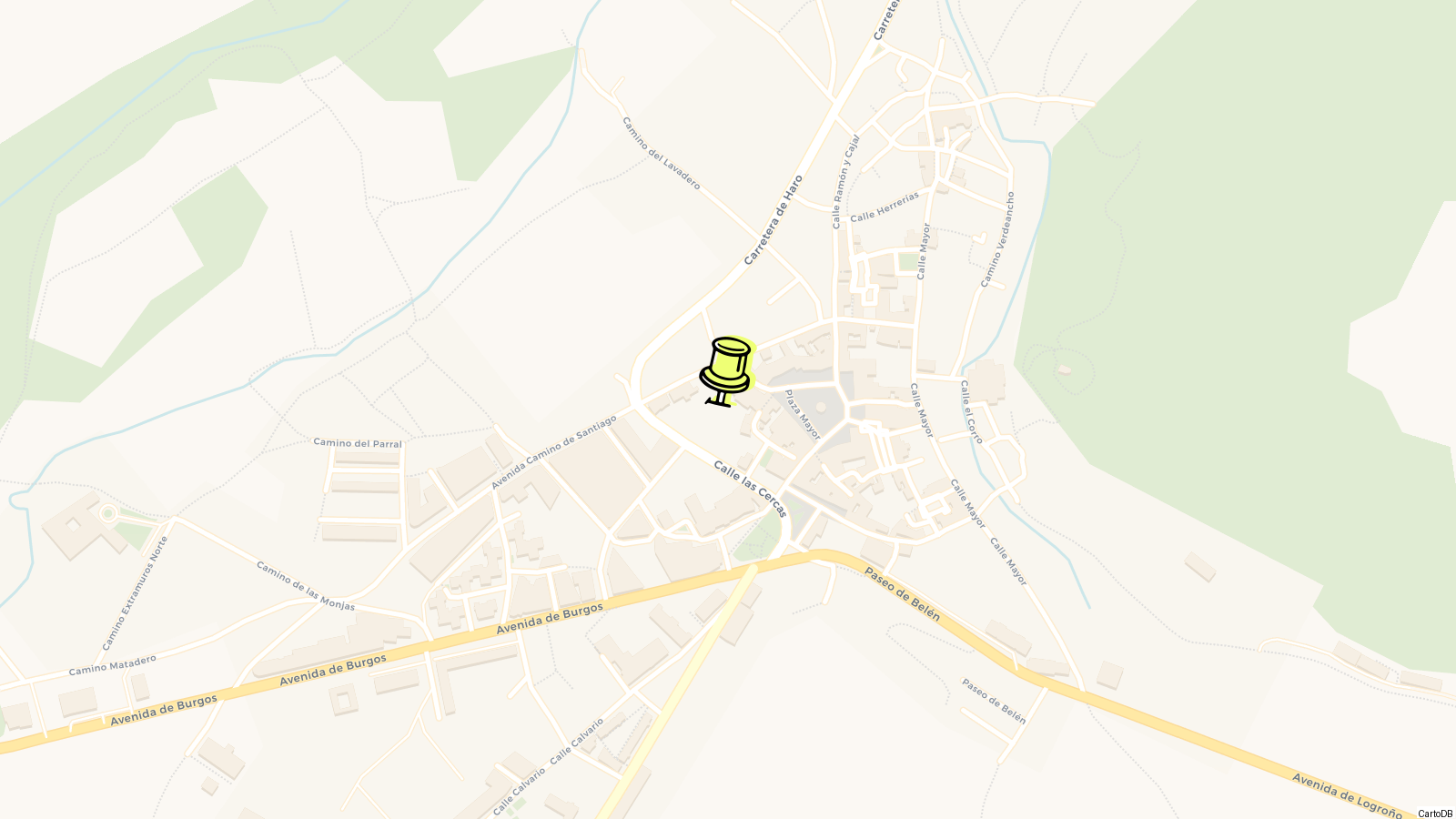
Visit details
Overview
You’re in Belorado when you see the yellow arrows passing right through the main square, this town of 1,836 people is firmly on the Camino de Santiago, and you’ll notice it immediately, with hikers wandering the arcades of Plaza Mayor and backpacks under every portal. The N-120 highway slices the north side of town, connecting Logroño and Burgos, but it’s the Camino that makes this place feel busier than its size would suggest.
Surrounded by rolling grain fields and red earth at 772 meters above sea level, Belorado sits in a part of Burgos province that feels more La Rioja than Castilla. The climate is oceanic, which just means you’ll get more rain and green here than on the sunburnt plateau to the south.
Don’t expect a medieval fortress on every corner. The town’s roots go deep: founded by the Autrigones (a Celtic tribe), worked over by Romans, and fought over in the Middle Ages when it marked the front lines between Castile and Navarre. There’s a faint castle ruin above town, but most of daily life and events happen on the Plaza Mayor, flanked by cafés, and Saturday morning brings the weekly market right into the porticoes.
Belorado is famous for its annual fair, first authorized by Alfonso I the Battler in 1116, locals will remind you there are written records to back it up, plus the Fiestas de Gracias the first weekend of September, and a steady diet of pilgrimage traffic. If you’re here in August, you might run into the Cebolla Rock Festival, which means louder nights than usual. For a town this size, there are more bars and albergues than you’d expect, it’s calibrated for walkers, not tourists in cars.
Rent a room in one of the family-run hostales, or grab a menú del peregrino for €12–15, usually including the local specialty: caparrón stew made with beans, lamb black pudding, and whatever’s in season from the old kitchen gardens behind town.
Locals take civic pride in the open, café-ringed Plaza Mayor, every small town has a main square, but Belorado’s does double duty for festivals, market, and the Bucolic International WWII trenches and Radio Communication Museum just west of the center, inside a restored underground silo. This isn’t a city for “must-sees”, life passes through, and the best thing to do is blend in with pilgrims at the bar or watch the dance of Gracias if you’re lucky enough to catch it in September.
History
When you walk through Belorado today, you’re standing on ground that’s seen more border skirmishes than a Game of Thrones episode. The place started out long before Spain was even a concept: first Celtic (the Autrigones tribe were around here), then Roman, but it’s the medieval period that really shaped it. The late tenth and early eleventh centuries turned Belorado into a hotly contested border town. Castile and Navarre had real beef, and for decades this place switched sides enough times it must have given the locals whiplash.
Things settled down a bit after Alfonso I “the Battler” shows up in 1116 and gives Belorado the power to hold an annual fair. This wasn’t just a market, this was Spain’s first official, documented fair. The tradition still lingers, even if it’s more about churros and bouncy castles than wool and salted cod now.
The medieval free-for-all
Medieval Belorado had city walls, a castle on the cliff above (now mostly gone), and enough churches to keep rival bishops busy. Its location put it squarely on the Camino de Santiago, which meant money and trouble in equal measure. In between pilgrim surges, Belorado faced repeated attacks, burned a few times, and was repeatedly rebuilt with whatever stone and morale were left. By the thirteenth century, the Camino de Santiago became a reliable source of trade and jobs, the town’s layout and arcaded main square (Plaza Mayor) still scream “pilgrim stopover” today.
Belorado’s church count is impressive for a town its size. The Iglesia de San Pedro is medieval, though battered by time and wars. Santa María grew up alongside the rise in pilgrimage traffic, its retablo is pure Jacobean propaganda, showcasing St. James in all his military swagger. The Convento de San Francisco, founded 1250, even hosted St. Bernardino of Siena on his own Camino run centuries later.
In the 20th century, a military silo popped up just outside town. Instead of vanishing with the Cold War, the site became the Museo de Radiocomunicación, now best known for its reconstructed First World War trench complex. If you’ve ever wanted to crawl through a muddy re-creation of Verdun, Belorado is the only small Spanish town that’ll help you check that off your list.
Why the Camino matters
The Camino de Santiago isn’t just spiritual tourism. For medieval Belorado, it paid the bills. Inns, forges, bakeries, and tanners lined the old route, many modern-day hostels still trace their origins to this period. Thanks to royal privileges, Belorado provided shelter, food, and sometimes medical care to thousands of pilgrims each year. Maps from the 1400s still mark Belorado as a “safe house” zone, meaning robbery was (mostly) off-limits for both the town’s residents and any highwaymen lurking around.
Even now, the geography hasn’t changed much: the Rio Tirón still acts up and floods the lower streets every couple years; the hilltop castle ruins are still a windy five-minute climb up from Plaza Mayor. The arcades on the main square, which look like perfect shelter for pilgrims and market shoppers, were likely built right after Alfonso I’s fair decree to keep trade moving even in the rain.
You’ll notice the town doesn’t sprawl, most of the expansion stops where farmland begins. Population peaked and declined over the twentieth century as industry drifted to bigger nearby cities, but the Camino still brings life back each year. If you visit during the San Vitores festival in August or the thanks-giving Gracias fiestas the first weekend of September, you’ll see centuries-old dance, parades, and crowds cramming the Plaza Mayor just like during Alfonso’s first fair.
Visiting
Start at Plaza Mayor, number 1, that’s where the tourist office lives, right under the arcades. In summer (1 May–30 September), it’s open Tuesday to Sunday from 10:30 to 15:00 and 16:00 to 19:00; in winter (1 October–30 April), daily from 09:30 to 15:00 and 16:00 to 18:00. Grab a free map here; if you’re lucky, you’ll catch them between the siesta split.
Walk out and you’re instantly in the arcaded Plaza Mayor, yes, the benches and arcades you saw full of pilgrims. Ignore the cars cutting through: stop and look at the different columns, which each betray a different century. If you want coffee or a proper menú del día, bars here will serve you both, fixed price, usually €13-15.
Take the street up to Iglesia de Santa María. Don’t miss the retablo in the Jacobean chapel, and stick your head up by the altar, it’s much grander than you’d think from the outside. Loop back toward the medieval Iglesia de San Pedro, which still feels more like a checkpoint for weary camino walkers than a proper parish church.
Most unusual local museum: the Museo de la Radio Comunicación, open inside the restored silo on the edge of town. Skip if you have zero interest in military history; otherwise, get a ticket to walk through what’s billed as the largest reconstructed WWI trench in Europe (as of 2013). The site is covered with objects and old kit donated by locals.
The museum is oddly immersive: much of the bunker-like interior is left rough, and the recreated trench outside (complete with “no man’s land” and sound effects) is built to life size. There’s plenty of signage in Spanish, so bring Google Translate if your military lingo is rusty. Groups can book ahead for guided visits; individual visitors can just turn up, but mornings are better for avoiding school groups.
Walk up the hill behind Santa María for castle ruins dating from Belorado’s medieval defenses. There’s not a lot left, mostly rough stone and one clinging fragment of wall, but you get a view over the whole valley, and you can still feel how this used to guard the old border.
Once you climb up past the last houses, follow the dirt track looping behind the church. Ten minutes of rather uneven ascent and you’re there; look for the low ruins and information sign. The view shows you how strategic the hilltop is, easy to see why this was the border between old Castile and Navarre. Sunsets up here are genuinely worth the walk.
If you have more time, loop out to the Convento de San Francisco (founded 1250) on the far side of town. The building has had plenty of lives, religious house, military hospital, even a shelter for refugees. The part most people come for is the cloister, which remains stark and atmospheric.
If you’re in town in early August, check if Cebolla Rock is on, that’s Belorado’s locally famous music festival.
For food, you’ll see caparrón (local bean stew with lamb blood sausage), plus everything built on onions, garlic, and local peppers. Best bet is to try it as part of a menú del día; vegetarian options are thin on the ground, especially in the traditional spots.
Menú del día at local bars generally includes wine and bread, and the caparrón is classic cold-weather fare: rich, oily, and served with a chunk of homemade morcilla de cordero. If you see local produce advertised, it’ll almost always be from surrounding village gardens.
Tips
-
If you’re arriving by bus, remember Belorado has two stops: one for traffic heading toward Burgos and another toward Logroño. Double-check with the driver or on the ALSA app so you don’t end up on the wrong side of town.
-
Taxis are thin on the ground, there are only four in the whole town. If you’ll need one early in the morning or late at night, book ahead. Don’t count on flagging one down spontaneously.
-
Most shops still close for siesta, typically between 2pm and 5pm. Plan to buy groceries, snacks, or supplies in the morning or after 5pm.
-
The Museo de Radiocomunicación (Radio Communication Museum) is worth a visit, but check the opening times ahead, the schedule isn’t consistent, and it sometimes closes for private events.
-
If you want to try the local bean stew, “caparrón”, go to a restaurant at lunch (not dinner), it often shows up as the starter on the menú del día in the cooler months. Ask for “caparrones con morcilla de cordero”.
-
For walkers on the Camino de Santiago: the next major stop after Belorado is San Juan de Ortega. It’s a long, exposed stage with limited shade and no easy grocery stops, so stock up on water and snacks before leaving town.
-
The Fiesta de Gracias (first weekend in September) gets loud, crowded, and fun, book accommodation far in advance that week, and don’t expect much sleep if your room faces Plaza Mayor.
-
For emergencies: civil protection number is +34 947 580 046, the local health centre is +34 947 580 660, and the emergencies number is +34 947 580 558.
Practical Spanish phrases for this town
Locals appreciate a little Spanish. “¿Dónde está la farmacia?” = “Where’s the pharmacy?”; “Menú del día, por favor” = “Set lunch menu, please.” The town’s accent is clear, so you’ll likely be understood if you keep it simple.
How to book accommodation
Most pilgrims show up and look for a bed, but during festival season or bad weather, beds fill up by 15:00. Use booking apps or call ahead for peace of mind, many hostels and the main pensiones take phone reservations, especially for private rooms.
Supermarket quirks
The supermarket on Calle Mayor stocks basics, but selection shrinks on Sunday afternoons and after fiestas. For specialist food or a pharmacy, go in the morning.
Know this destination? Help us improve
Your local experience is valuable to other travelers.