Ávila Cathedral
Ávila Cathedral’s apse doubles as a city wall turret, making it the only cathedral in Spain that’s literally part of its own medieval fortifications

Overview
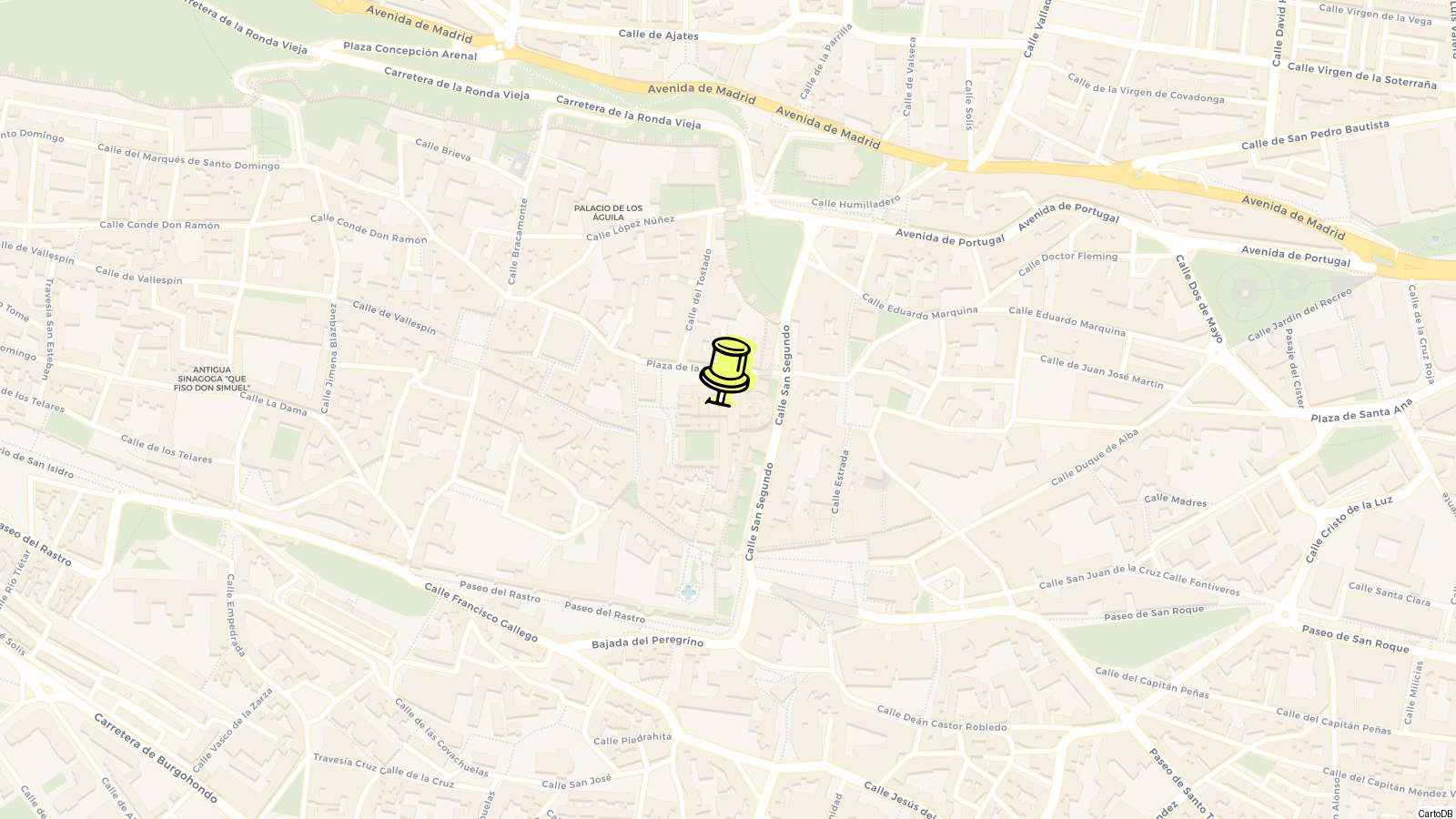
Ávila Cathedral sits 1,132 meters above sea level at 40.6558° N, –4.6972° W, right up against the city’s medieval walls, literally: the cathedral’s apse is built into one of the main turrets. It’s a working Catholic cathedral from the late 12th century, with the earliest phase by Giral Fruchel dating to 1170. You’ll spot its fortress look from a distance, but up close you notice the nave rises nearly 28 meters and the base walls feel like a continuation of Ávila’s famous fortifications.
From the outside, it’s easy to miss the mix of French Gothic and local military architecture. Step inside (general admission: €10 as of 2026) and you’ll see triple naves, pointed arches, and battlement-thick stone that reminds you how close religion and defense were for 12th-century Castile. Don’t expect a sleek cathedral; this one’s thick and rugged, and the glass is designed as much for shelter as for light.
Most people rush to the main altar, but the real highlights are details tucked everywhere: the alabaster baptismal font by Vasco de la Zarza (1514–1516), and the choir’s walnut stalls carved by Cornielles de Holanda, which are almost too intricate for such a hulking building. Tucked in the sacristy, the cathedral museum’s most famous pieces include an El Greco portrait and a six-tier monstrance (1571) by Juan de Arphe.
The setting makes it weirder: Ávila Cathedral isn’t just “in” the old city, it’s so welded to the ramparts you can circle half of it from the walls. At 1,100+ meters elevation, it’s also one of Spain’s loftiest cathedrals, and in colder months, the wind off the plateau really sneaks through the stone. If you wander out the front, Plaza de la Catedral is the social heart of the city during holidays and late afternoons, with the palace of Valderrábanos just across the square.
History
Work on Ávila Cathedral started around 1170, right after the city was retaken, and dragged on for centuries, piece by piece. Construction started with Giral Fruchel, who brought in architectural ideas from France, so Ávila Cathedral ended up with pointed arches and ribbed vaults before those became common in Castile. The first stone was laid for a proper Romanesque church, but almost immediately the project pivoted towards the emerging Gothic style.
The original Romanesque structure, thought to have occupied this ground after the city’s earlier destruction, was replaced as money and ambition built up. By the 13th century the ground floor of the towers, lateral aisles, and the beginnings of true Gothic vaults took shape. Most of the heavy construction, the apse, headers, thick walls that double as battlements, ran into the 14th and 15th centuries. The cathedral’s apse literally forms part of the city wall, so this was not just a church but a defensive structure at heart.
By the late 15th century, the long-delayed clock was finally installed on the north side by Juan Guas. Ávila was ambitious, but money was always short, so the second tower never got finished. The construction was a patchwork, every new bishop, every financial downturn, each wave of war or plague, left its fingerprints on the plans.
From the 16th to 17th centuries, fresh tastes brought in classicist and baroque elements. Chapels like the Velada Chapel and the Saint Secundus chapel stand out as later modifications. Inside, you start to see more elaborate altarpieces and carved details from artists like Vasco de la Zarza and Lucas Giraldo. Even in minor details, the walnut choir stalls or the late gothic carving on the retablo, you see how construction never truly “finished” but just slowed down.
How the walls and cathedral fuse
The eastern end of the cathedral wasn’t an afterthought, it is one of the most fortified parts of the city wall, and at street level, the cathedral’s ambulatory is built straight against the rampart. This kind of “cathedral-fortress” design is unusual outside Castile, and it means you’ll spot cross-shaped arrow slits among the buttresses and heavy granite. The apse is a signature sight as you walk the wall walk, especially late afternoon with the sun hitting the stone red.
The struggle for money
Records from the 13th to 15th centuries are mostly lists of debts, grants, and endless donations for small chapels and repairs. Ávila was never Burgos or León, royal handouts were rare, so families and religious orders would sponsor a chapel or pay off a local craftsman one piece at a time. That’s why the “official” façade kept changing and no two side chapels match each other exactly.
The western portal switch
In 1475, the main entrance shifted from west to north, a strange move driven by local politics and the need to connect directly to the growing urban square. Juan Guas handled the job, moving the portal stone by stone.
During the 20th century, conservation efforts finally caught up. The Spanish government declared the cathedral a Historic-Artistic Monument on 31 October 1914. After over 800 years, the unfinished stonework and mismatched chapels are still visible, but those centuries of constant patching and delayed projects are exactly what gives Ávila Cathedral its stubborn, lopsided character.
Since 2017 the city and maintenance teams have run environmental sensors, over 200 of them, around the cathedral and the wall, tracking humidity and temperature to keep the stone from crumbling. Maintenance here is a daily battle; ground frost in winter, relentless sun in summer, and tourists year-round mean restoration never stops.
Important burials continued literally into the 21st century, when former Prime Minister Adolfo Suárez and his wife were laid to rest inside in 2014. The story of this cathedral is ongoing, still the backdrop for local processions, arguments over maintenance grants, and the occasional fight over whose name gets carved on the next slab of stone.
Visiting
Entry is at 8, Plaza de la Catedral, right by one of the main city gates. Tickets are €10 for adults, €9 for seniors (65+), €7 for ages 12–17 and students under 25, free for kids under 12. The ticket includes access to both the cathedral and its museum. Hours: Monday–Saturday 10:00–18:00, Sunday 12:30–18:00; last ticket sold at 17:30. No siesta closure, but Sunday mornings are reserved for mass. You can buy tickets on-site or online at https://catedralavila.es/.
When you step inside, the first thing you’ll notice is that chilly stone and the scale,28 meters overhead, ribbed vaults, and pointed arches everywhere. Head for the central nave to get the main perspective, then move to the left aisle for a close-up look at the retrochoir. This carved marble and walnut wall splits the nave and choir, covered in detailed scenes from the childhood of Jesus. Check out Baltasar, the Black king, he stands out in one of the reliefs.
The retrochoir, designed by Lucas Giraldo and Juan Rodríguez, is a crash course in early 16th-century carving. There’s naturalism and a dramatic sense of storytelling, rare for that era. If you like sculpted detail, linger here, the plateresque style means every panel is dense with tiny figures, animals, and symbolic plants.
Behind the retrochoir are the walnut choir stalls, carved by Cornielles de Holanda in the early 1500s. They’re full of misericords (those little ledges the monks lean on) and the back rows are still used when there’s a big service.
The most famous single piece is the alabaster baptismal font, crafted by Vasco de la Zarza around 1514. It’s tucked away but worth circling back to, it looks like a giant, creamy seashell with small Renaissance figures swirling around the bowl.
Side chapels ring the ambulatory; don’t rush past the big tomb of Alonso de Madrigal (“El Tostado”) with its finely carved front panel. Some side altars are almost hidden behind iron railings, squeeze in if you can.
The cathedral museum (enter via the sacristy) has smaller crowds. Here you’ll find El Greco’s portrait of Garci Báñez de Múxica and, even more impressive, the hulking silver-gilt monstrance made by Juan de Arphe in 1571. This isn’t just for show, it’s still used for processions during big feast days.
The cloister (included in your ticket) is compact and often quiet, a good place to escape for a minute if the pews up front are crowded.
Give yourself at least an hour. The entire structure is built into the medieval wall, look for the thick, fortress-like east end as you exit. Even in summer, the interior stays cool, so bring a layer if you linger. Photography is allowed, just no tripods or flash.
For questions or group bookings, call +34 920 211 641 (Spanish and a little English spoken at the desk).
Tips
-
Visit first thing after opening (10:00 Monday–Saturday, 12:30 Sunday) to have the place nearly to yourself. Group tours crowd in mid-morning. Last ticket is sold about 30 minutes before closing.
-
Temperatures inside can be chilly, even in summer. Bring a sweater, especially from October through April. Stone walls and high elevation (1,132 m) mean it’s rarely warm inside.
-
The ticket desk takes cash and cards. Students under 25 and kids under 12 get a discount or free entry, bring ID.
-
Audio guides (with solid English and Spanish explanations) are available at entry for a few euros. If you care about architectural details or the art collection, it’s worth it; otherwise, the main signs cover the basics.
-
The side chapel section and museum are easy to miss; look for the door on the south side after the main nave. The monstrance by Juan de Arphe and the El Greco portrait are there.
-
Photos are allowed without flash, but staff are strict about noise and big bags. There’s no locker or bag storage on site, so pack light.
-
There are no bathrooms inside; use the public ones just off Plaza de la Catedral (usually open 9:00–20:00) before entering.
-
Don’t bother buying tickets from third-party sites, use the official site for the best price and real-time availability.
-
The bell tower is not open to visitors, but you can walk around to see the city walls from outside at no extra charge.
Accessibility & Logistics
There are two steps at the main entrance and uneven floors inside; not ideal for wheelchairs or strollers. If you need step-free access, call ahead (+34 920 211 641) to check what’s possible, the staff can sometimes open a side entrance but it’s inconsistent.
What NOT to do
Don’t expect a “spiritual” experience at mass times, the public areas close to tourists during services, and security may clear the nave. Check liturgical schedules on the website if you’re planning a specific day.
Other indoor options nearby
If the weather turns on you, head to Palacio de Polentinos or Museo de Ávila, both three minutes’ walk. Neither match the scale of the cathedral, but they’re dry, heated, and have bathrooms.
Know this destination? Help us improve
Your local experience is valuable to other travelers.