Castrillo del Val
Monks still ring the bells at San Pedro de Cardeña monastery, where El Cid’s horse Babieca is said to be buried just 11 km from Burgos.
Visit details
Overview
The population here barely cracks 500, but Castrillo del Val sits just 11 km southeast of Burgos, close enough for a quick bus ride, miles away in pace. Most people find their way here because of the the Monasterio de San Pedro de Cardeña, a lived-in, working monastery that’s been a landmark since at least 952 AD, when Doña Eusacia donated her estate to the monks, yes, that’s a literal medieval land transfer on paper.
Day to day, it’s a small Castilian village where everyone knows each other’s business. Most locals still work the land or at small businesses along the main road. The Monte de Castrillo covers about 500 hectares: a forest of holm oak and scrub that’s home to wild boar, deer, badgers, and the occasional mushroom hunter in autumn. Walkers, cyclists, and the army all share the trails, which cut through shaded groves a few minutes from town center.
The village gets a brief spike in visitors during Christmas, when local families hike to the Cueva del Portal de Belén to leave food, chocolate, and bubbles next to a nativity scene set up deep in the caves, 2 km up the Valdecuevas valley. The rest of the year is quieter, except for an occasional flow of Camino de Santiago pilgrims following the official UNESCO French Way route through the area.
The monastery’s impact
Everything here orbits around the Monasterio de San Pedro de Cardeña. The monastery has housed monks, soldiers, cattle thieves, French troops, and stacks of Cid legends (Rodrigo Díaz de Vivar’s name comes up in every bar chat for a reason). At times it’s been an economic hub, at others a silent ruin, but it still shapes local rhythms: processions, masses, storage for village archives, and the odd bottle of monastery-produced liqueur. When the monks ring bells, the whole valley can hear.
Here, winter can drop below freezing, with a dusting of snow maybe once or twice per season. Summer afternoons hit the high 20s °C, but nights cool down fast, dress in layers, even in July. You’ll see tractors, not taxis, and if you want a shop open at siesta, good luck. Official town business is at castrillodelval.es, or you can call +34 947 421 806 if something’s an emergency.
History
The first trace of Castrillo del Val in any record goes back to 952 AD, when a woman named Doña Eusacia gave her local estate to the nearby Cardeña monastery. The place has always orbited around religious landholdings: just twenty years later, Count Garci Fernández handed over the hamlet of Santa Eugenia to the same monastery, though the barrio of San Juan only switched from royal to local control in 1810.
Outside the paperwork, people settled here much earlier, archaeologists found a bifacial hand axe in the area, made by humans over 300,000 years ago. There are even caves south of the current village with remnants of prehistoric life. The most known is Cueva del Carrascal, with four separate entrances and a record of animal and human activity if you have the patience to look for evidence in layers of old dirt.
Through the Middle Ages, nearly every hill and neighborhood you see had a different legal status: Cardeña held the rights to Santa Eugenia from 972, while San Juan remained outside monastery control until the 19th century’s big push to privatize church lands. Many stories about the area revolve around these jurisdiction changes, so today’s tidy municipal boundaries are actually the product of centuries of argument between townsfolk, monks, and various kings.
The church of Santa Eugenia, seen from the main road, has layers to it. Major repairs were done in 1972 (walls, flooring, and the removal of its side altars). The clock on the tower is only from 1989, central heating came two years before the millennium, and the old retablos were painstakingly restored in 2005. The church bells don’t need a human to ring them anymore, a machine does it, added in 2009.
Cardeña’s Reach and the Camino
A lot of people hear “Castrillo del Val” and immediately think of the Monasterio de San Pedro de Cardeña, this huge structure just outside the village. The monastery has its own, separate saga: it’s seen kings, invasions, and more than one major expropriation. Its presence is why the tiny neighborhoods and scattered farms around Castrillo del Val came together as something resembling a municipality. Even today, if you walk local trails, you see their old walls and agricultural patterns stretching towards Cardeña.
Meanwhile, Castrillo del Val sits on the French Way of the Camino de Santiago (the UNESCO-recognized route). That’s meant you’ve always gotten wandering pilgrims here, even back when the concept of “tourism” didn’t exist. This became a place to rest and trade, and, historically at least, not all travelers were voluntary. Wars, raids, and forced displacements left their mark too.
The Modern “City Hall” Era
Big change came in the 19th century with the “desamortización”, when church lands got nationalized, and a modern town hall started actually managing local affairs. Before then, “local government” mostly meant dealing with whatever the monastery wanted. The first municipal coat of arms is way more recent; it wasn’t designed until the year 2000, by Fray Valentín de la Cruz, and references those old power-struggles in its color scheme and tower symbols.
There’s no grand castle or fairytale fort, but the big story here is about shifting lines on a map and how those lines shaped who farmed, prayed, governed, and argued in this patch of land. Each neighborhood and even some of the woods has its own “origin story” based on which set of rulers, royal, monastic, or secular, claimed it at any given time. For a place this small, the answer to “who owned what, and when” is surprisingly complicated.
Visiting
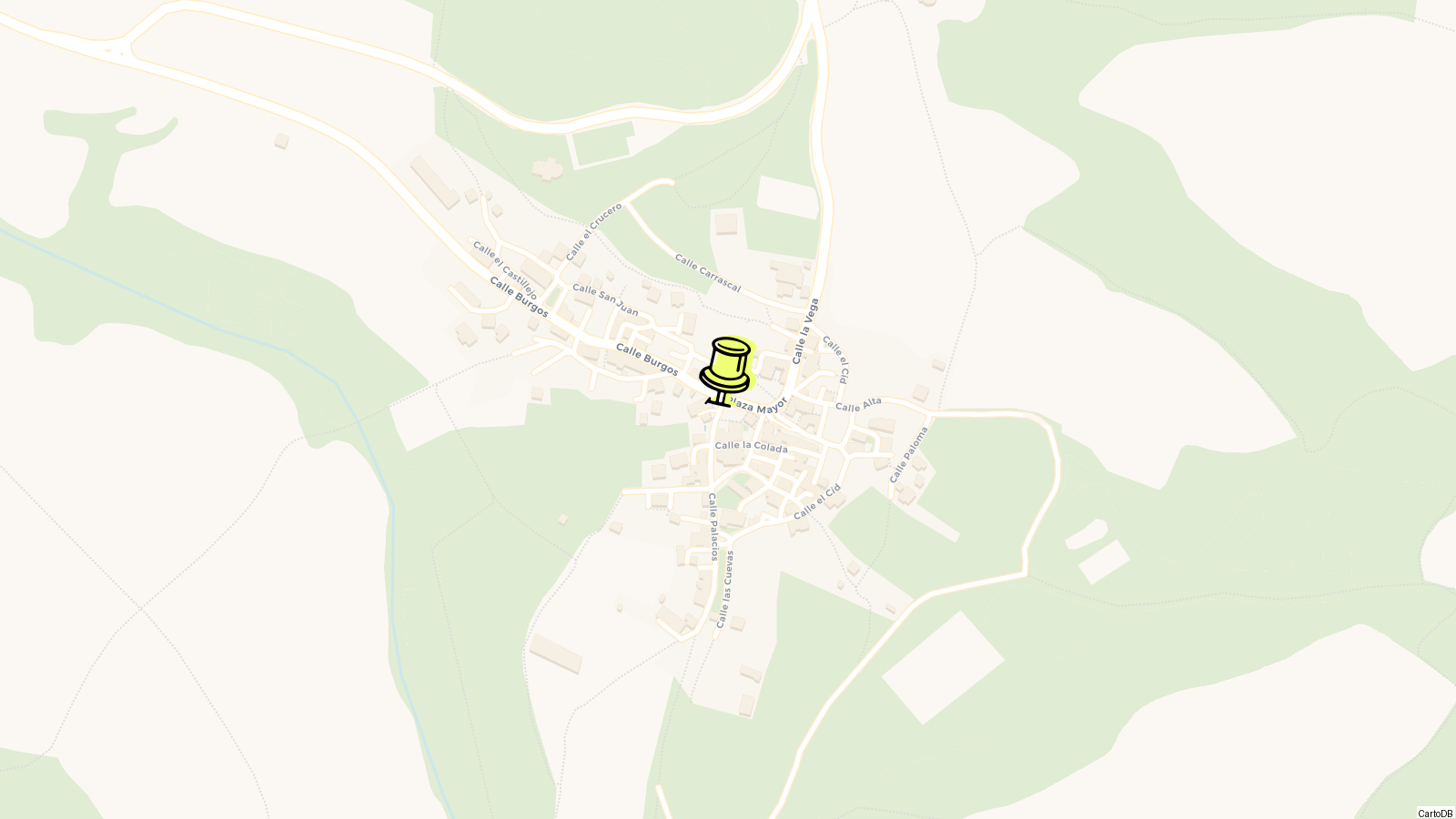
Walk past the small main square and you’re basically in the countryside, the village backs straight onto the Monte de Castrillo, a 500-hectare patchwork of holm oak and scrub where you’ll spot wild boar tracks if you pay attention. The walking and cycling trails head right out of the village; don’t be surprised if you share the path with the occasional army patrol, as these tracks are shared between locals, joggers, soldiers, and hikers.
If you keep southeast along the old farm lanes, after about 2 km you’ll reach the Valdecuevas caves. The Cueva del Carrascal has four visible entrances and, if you poke around (with good shoes, there’s bramble), you might see traces of sediment from ancient digs. It’s all unguarded and unsigned, but in the central valley you’ll find bits of old pottery, animal bones, and if you know what to look for, even a cortical flake or prehistoric tooth.
Exploring the Valdecuevas Caves
Locals know the northernmost entrance as the place where Christmas nativity scenes are set up every year. Kids go in with headlamps, leave chocolate, and sometimes adults turn up with cava. The caves themselves aren’t developed for tourism, this is tres-casero, bring your own torch, watch your head. The open areas are easy enough for families, but don’t attempt any narrow side passages unless you’re used to scrambling and don’t mind bats. Archaeologists have found Acheulean-era hand axes and even a carnivore molar. All this is unmarked in situ, so if you want real context, plan ahead and check the Burgos museum’s website for recent digs.
Walk north toward the river and you’ll end up at the church of Santa Eugenia. Open hours are irregular, but if you catch it when someone’s around tidying, they’ll almost always let you in. The interior is plain except for a newly restored retablo and a modern bell-ringing mechanism that went in in 2009, replacing the old manual one.
Most people come here to visit the Monasterio de San Pedro de Cardeña. The entrance is on the east edge of the village, signed at the main roundabout. You walk down a poplar-lined road and the monastery appears almost suddenly at the curve. There’s no regular ticket window, but if you want to see the cloister and the museum, ring the bell at the office (there may be a friar to let you in). There’s rarely a crowd, but visits may pause for mass. The museum itself is an odd mix, tattered old books, carved stones, some battered armor, and a few keys to the old farmhouses the monks ran. No tickets, just a donation box.
Walking the Camino Route
Castrillo del Val stands directly on the French Way of the Camino de Santiago, UNESCO inventory number 982. The scallop shell signs run through the village. If you’re planning to walk a section, the route from Burgos passes through open wheat fields, then briefly through the Monte before reaching the village proper, and on to the ruins of the old monasteries farther east. There’s no albergue here; the nearest are in Burgos itself or scattered through the outer villages.
On the eastern side of the municipality, about 3.5 km out, you can look in on the ruins of the Monasterio de San Cristóbal de Ibeas. The site is right off the local road, unstaffed, and unfenced, most days you’ll have the place to yourself, except for the occasional dog walker. Bring picnic supplies; there’s no café or any other facilities out this way.
In the heart of town, don’t miss the murals on the council building and various utility boxes, the local school commissions new ones every couple of years. These are easy to overlook but give a sense of who actually lives here: not many, and most on a first-name basis.
The bibliobus line 12 (Belorado–Redecilla del Camino) sometimes stops here, doubling as a mobile library and village newsstand. If you’re here on a school day and see the bus parked by the plaza, you’re free to have a look, everyone does.
Tips
-
Bring a jacket, even in July. Summer highs hit the mid-20s (that’s 75–80°F), but nights can drop below 10 °C, and the wind carries a chill year-round.
-
Expect most places, including the only local bar and shop, to close from 3 pm to 5:30 pm for siesta. Stock up beforehand, especially Sundays when things barely open if at all.
-
For the Monasterio de San Pedro de Cardeña, you won’t find reliable online booking. Call ahead (+34 947 290 033) or just show up, but go in the morning for best odds. Sometimes monks give informal tours after morning prayer.
-
Entry to churches and ruins is almost always free. The Museo del Monasterio de San Pedro de Cardeña doesn’t list an admission fee, but bring a few euros anyway for donations.
-
No ATMs in town. Bring cash for snacks and the one café. The nearest cashpoint is in Burgos, 11 km away.
-
The Cueva del Portal de Belén nativity is only active in December. Locals hike there with flasks of chocolate, but outside Christmas the caves are just a quiet stop, bring a headlamp.
-
If you want to hike or bike, the Monte de Castrillo trails are easy to follow and start straight from the village. Expect some military jeeps, there’s a training base nearby, but nobody will mind you sharing the track.
-
There’s no public transport to or within Castrillo del Val itself apart from the bibliobús (bookmobile) that shows up every few weeks. For a day trip, you’ll need your own wheels or a taxi from Burgos. Taxis cost €15–20 each way.
-
Official info is sometimes out of date. Skip TripAdvisor, if you want to confirm anything before your visit, email castrillodelval@diputaciondeburgos.net or check the town website.
-
No hotels in town. Your options are a rural casa, or stay in Burgos and drive in. Camping isn’t technically allowed in the pine woods, but you’ll see the odd van parked overnight. If you do camp, no fires, summer wildfire risk is real.
Know this destination? Help us improve
Your local experience is valuable to other travelers.