Salamanca New Cathedral
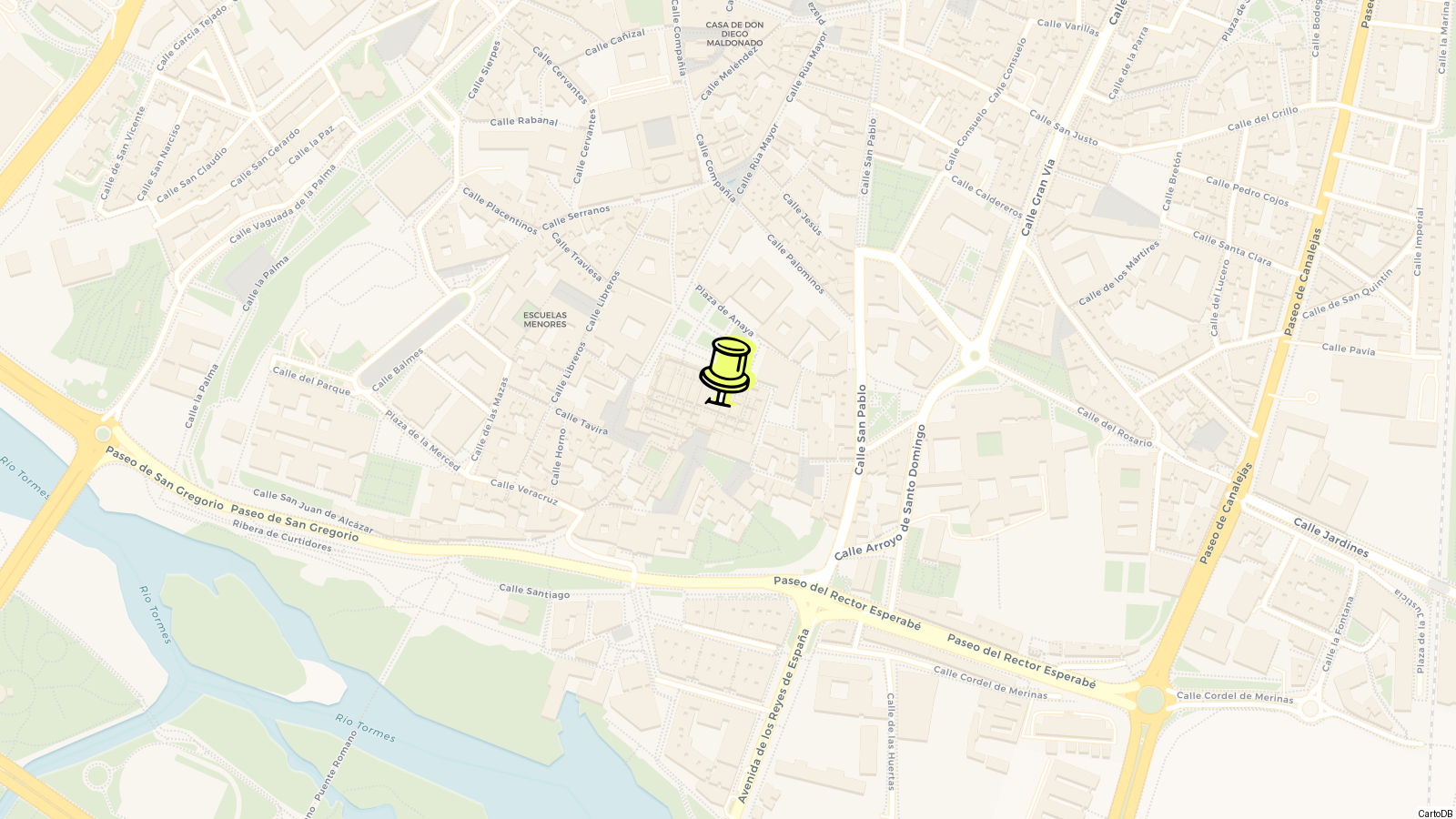
Your €10 ticket unlocks both New and Old Cathedrals plus the Bishop’s Palace, all in a single stroll from Plaza de Anaya

Visit details
Overview
You walk into the New Cathedral of Salamanca after paying €10 at the main entrance on Plaza de Anaya, and yes, that ticket also gets you into the Old Cathedral and Bishop’s Palace because they’re all connected. Construction started in 1513 and took over two centuries, so the building is a mashup of late Gothic, Plateresque, and Baroque. It’s part of the UNESCO World Heritage ensemble that anchors Salamanca’s city center.
You don’t get a single, standalone church, the New Cathedral is fused to the Old one. They’re separated inside by the Altarpiece of San Lorenzo, and the structures quite literally lean on each other. The bell tower, topped out at 92 meters, stands out on the Salamanca skyline. After the 1755 Lisbon earthquake, the dome had to be rebuilt, and you can still see cracks from the quake along with the extra stone reinforcement on the tower. “Mariquelo,” a local tradition on October 31, remembers the earthquake when a costumed folclorista climbs the tower to play a chirimía at the top.
Inside, you’ll see a double row of chapels running round the edges, the Golden Chapel with more than 100 gilded statues (look for Adam, Eve, and a skeleton with a toad underfoot), and two fully restored organs: a Renaissance one and a Baroque one, the latter brought back to life in 1992 thanks to a Japanese master and the Japanese monarchy.
If you look closely at the north façade (by the Anaya Palace), don’t be surprised to spot an astronaut carved above the Puerta de Ramos, that’s a 1992 addition from restoration works, part of a tradition of slipping something modern into every major restoration here.
The Two Cathedrals in One
Salamanca kept the Old Cathedral standing so parishioners could continue using it while the New was built, a rare case in Spain. The new structure ended up literally enveloping part of the old one, with some sections of wall shared. Originally, there were plans to demolish the old Romanesque church. Instead, what you see now is a single, huge complex with two linked cathedrals, the only time this happened on this scale in Spain.
Practical Details
The New Cathedral is open Monday to Saturday from 10:00 to 20:00, Sunday 10:00 to 18:00; last entry is 45 minutes before closing. Free entry is possible on Tuesdays from 18:00 to 20:00 starting late April. The official website (catedralsalamanca.org) has automatic Google Translate buttons if you’re struggling with Spanish.
The Ieronimus Tower Route
Pay €4 extra if you want to climb the towers and walk roof-level above the naves. Nighttime guided visits for the towers are €10 (worth it for the views over the illuminated old town), and they run separate from daytime entry, book through ieronimus.es.
What You Actually See
Plan at least 90 minutes inside, or closer to two hours if you’re detail-obsessed. If you want to see the towers too, add an extra hour for the climb and photo stops.
History
The first stone of Salamanca’s New Cathedral went down in 1512, but they didn’t finish until 1733, so what you see is a dense stack of late Gothic, Plateresque, and Baroque styles piled on top of each other. The whole thing was designed to impress a city that was suddenly packed with university students and clergy in the 1500s, and the old cathedral just couldn’t keep up. So instead of tearing down the old one, they squeezed the new cathedral next door, letting one wall of the New lean on the Old, you can actually see where they butt up together.
The project was a relay of master builders. The Hontañón family (Juan Gil and later Rodrigo Gil de Hontañón) led the early Gothic phase. Later, you get Plateresque details (fussy stonework loaded with almost too much ornament) on the western and southern facades as they hired people like Juan de Álava. Construction crawled for more than two centuries, so parts of the design changed, and the 17th century was basically a lost decade where work nearly stopped. During the last push in the 1700s, the city opted for a Baroque dome and taller bell tower, which now stands about 92 meters, that bell tower leans because of what happened next.
When the Lisbon earthquake rocked the Iberian Peninsula in 1755, the cathedral didn’t escape. The dome cracked, stained glass shattered, and the bell tower came close to collapse, it’s still visibly tilted. Architects wanted to demolish the damaged tower, but instead, Jerónimo García de Quiñones and Manuel de los Ríos wrapped it in eight tensioned iron chains and re-faced it in stone, which saved it. The new Neoclassical dome you see atop the crossing was designed by Juan de Sagarvinaga after the quake.
Behind the “Mariquelo” tradition
Since 1755, Salamanca has marked October 31st with the “Mariquelo.” Each year that day, a local climbs the cathedral’s bell tower by foot, ladder, and finally out onto the precarious balcony, playing a small pipe and drum to thank God the earthquake’s damage stopped short of full collapse. It’s openly dramatic, and you’ll catch TV crews and locals watching. The cracks in the walls and the slightly off-kilter bells are not just history, the building really is held up by those changes.
In the early 1800s, French troops occupying the city tore down a block of houses to the north, turning it into what’s now Plaza de Anaya. That’s the wide square you stand in today, and why the architectural “backside” with its less decorated north facade is what most people see in their photos.
The Golden Chapel (Capilla de Todos los Santos), hidden inside, was ordered by Francisco Sánchez de Palenzuela in 1515 and shows off about 110 statue-packed alcoves, saints, prophets, even a ghoulish “Death with a toad” figure at the bottom (the toad stands for lust, a detail Salamanca students have plenty of jokes about). Juan de Álava gets credit for the architecture here.
How the two cathedrals connect
In almost any other city, they would have bulldozed the medieval cathedral, built the new one on top, and called it a day. Salamanca’s solution was to build the New Cathedral right up against the Old but not demolish it, so two centuries of masons actually worked around the old apse and walls, partly reinforcing them and partly encroaching. The south wall of the New rides the north wall of the Old, it’s why the interior connections are a little odd and why the Old Cathedral’s north aisle is skinny. The Altarpiece of San Lorenzo acts as the doorway between, so you pass through layers of history just crossing from one nave to the next.
The instruments inside have their own stories. The New Cathedral houses two antique pipe organs: a Renaissance Epistle Organ (16th century) and a Baroque Gospel Organ from 1744, both brought back to original sound in a 1992 restoration with help from the Japanese monarchy. The Japanese master M. Tsuji supervised the work.
Once finished, the New Cathedral was given national monument status by royal decree in 1887. Its protected status kicked in officially again in 1999, bundled with Salamanca’s UNESCO World Heritage listing.
One last, very modern touch: the infamous astronaut, carved into the Puerta de Ramos during a restoration in 1992, sits among centuries-old creatures and foliage. This is no conspiracy, Spanish cathedral restorers sometimes add a small modern motif, and here it’s just the most Instagrammed anachronism in the city.
Visiting
Buy your ticket at the entrance on Plaza de Anaya (€10 for adults; reduced €9 for seniors, under 30s, large families; free for kids under 6). Your ticket covers the New Cathedral, the Old Cathedral, and the Bishop’s Palace; they’re all interlinked, and you move freely between them. Guided tours are available, but most people just wander at their own pace. Hours: Monday–Saturday 10:00–20:00 (last entry 19:15), Sunday 10:00–18:00 (last entry 17:15). Closed on December 25 and January 1. On December 24 and 31, they close early at 14:00.
Head in via the north door from Plaza de Anaya and look up straight away, the main nave runs wide and tall with ribbed Gothic vaulting and splashes of polychrome in the main chapel. Check out the baroque dome rebuilt after the 1755 earthquake. The choir sits under the dome, surrounded by stalls carved in the 1700s. At the altar, there’s no grand altarpiece; you’ll find a crimson canopy and the Virgin of the Assumption instead.
Don’t miss the side chapels. The Golden Chapel (Capilla Dorada), built in 1515, is loaded with over a hundred golden statues crammed onto ledges, Old and New Testament figures, Adam and Eve, and a skeleton with a toad, the same lust symbol from the university’s façade. The Altarpiece of San Lorenzo links straight into the Old Cathedral, so you move from “new” to “old” without stepping outside.
At the north transept, spot the Christ of the Redeeming Agony. Behind is the tomb of Francisco de Bobadilla, who set the first stone in 1512. Watch for the pair of organs, one Renaissance from the 1500s, one baroque from 1744. Both were restored in 1992 with help from Japanese specialists.
On your way out (or in), study the Puerta de Ramos. Here’s where you find an astronaut, lynx, and a bull carved into the stone, not medieval, but added during a 1992 restoration based on the tradition of sneaking in contemporary images.
On Tuesdays after April 22, entry is free from 18:00 to 20:00, locals time this slot perfectly, but there’s no reservation and the queue fills up fast.
Climbing the Ieronimus Towers
The Ieronimus towers tour is a separate ticket (€4, bought on site or online at ieronimus.es), with night climbing options priced at €10. Access is from Plaza Juan XXIII. Inside, you’ll take a spiral staircase up through old storage rooms turned into mini-museums, full of scale models and old tools. The panoramic walkways circle the upper parts of both cathedrals. The bell tower is visibly slanted (thanks to the Lisbon quake), and the views stretch across the rooftops to the Plaza Mayor.
Give yourself an extra hour for the climb, especially if you want sunset photos; night visits are less crowded but sell out fast in summer.
If you blitz just the New Cathedral, you can be out in 45 minutes, but joining the Old Cathedral adds another hour. Add the towers and call it two and a half hours, including photo stops. There’s no enforced route, so feel free to backtrack or detour, especially if tour groups are clogging the aisles.
The Mariquelo Tradition
If you’re in Salamanca on October 31, stick around for the Mariquelo tradition. Local musician Angel Rufino de Haro climbs the cathedral tower in memory of the Lisbon earthquake, playing pipes and drums, with hundreds watching below. It’s loud, weird, and entirely local.
Tips
-
Go early (10:00-11:00) or late afternoon (after 17:00) if you want the cathedral nearly to yourself. From 12:00 to 14:30, group tours show up and push up queue times, especially on weekends in July and August, expect 30–45 minutes if you hit peak hours.
-
On Sundays, the cathedral closes at 18:00, not 20:00 like the rest of the week. The last ticket gets you in 45 minutes before closing, plan ahead or you’ll get hustled out by staff.
-
The €10 ticket covers both the New and Old Cathedrals plus the Bishop’s Palace. If you want to climb the Ieronimus towers for terrace views, that’s a separate €4 ticket (ask at the main desk or go to Plaza Juan XXIII for the entrance). Night tours of the towers are €10, bookable online.
-
Average visit to both cathedrals is 1.5–2 hours. Add at least another hour if you plan to do the Ieronimus towers climb, the stairs are narrow and there are lots of stops (bring water in summer, it gets stuffy).
-
No dress code is enforced, but this is an active church, avoid swimsuits or tank tops if you want to avoid looks.
-
Photography is allowed, but no flash or tripods. Most side chapels are open, but some may be roped off for restorations or services.
-
The astronaut carving is on the left frame of the Puerta de Ramos (north entrance facing Plaza de Anaya). It’s less than 20cm tall, look just above eye level or you’ll miss it.
If timing matters
The busiest days are Saturdays in May, June, and September, when both tourists and wedding parties overlap. If you just want photos (especially of the Main Chapel), come midweek and bring a camera with good low-light ability.
Accessibility
No step-free path connects the main nave to all side chapels because of old stone thresholds. Wheelchair users can manage the main nave and the Old Cathedral, but the towers and parts of the Bishop’s Palace are stair-only. There are no public toilets inside, the nearest ones are in bars around the Plaza de Anaya.
Tickets and info
No real need to buy tickets online unless you’re timing for a festival week or going with a group. The official website is mostly in Spanish; click the flag icon for Google Translate. Ticket desk takes card and cash.
Know this destination? Help us improve
Your local experience is valuable to other travelers.