Tordesillas
The Treaty of Tordesillas, which split the world between Spain and Portugal in 1494, was signed just steps from the old stone bridge over the Duero.

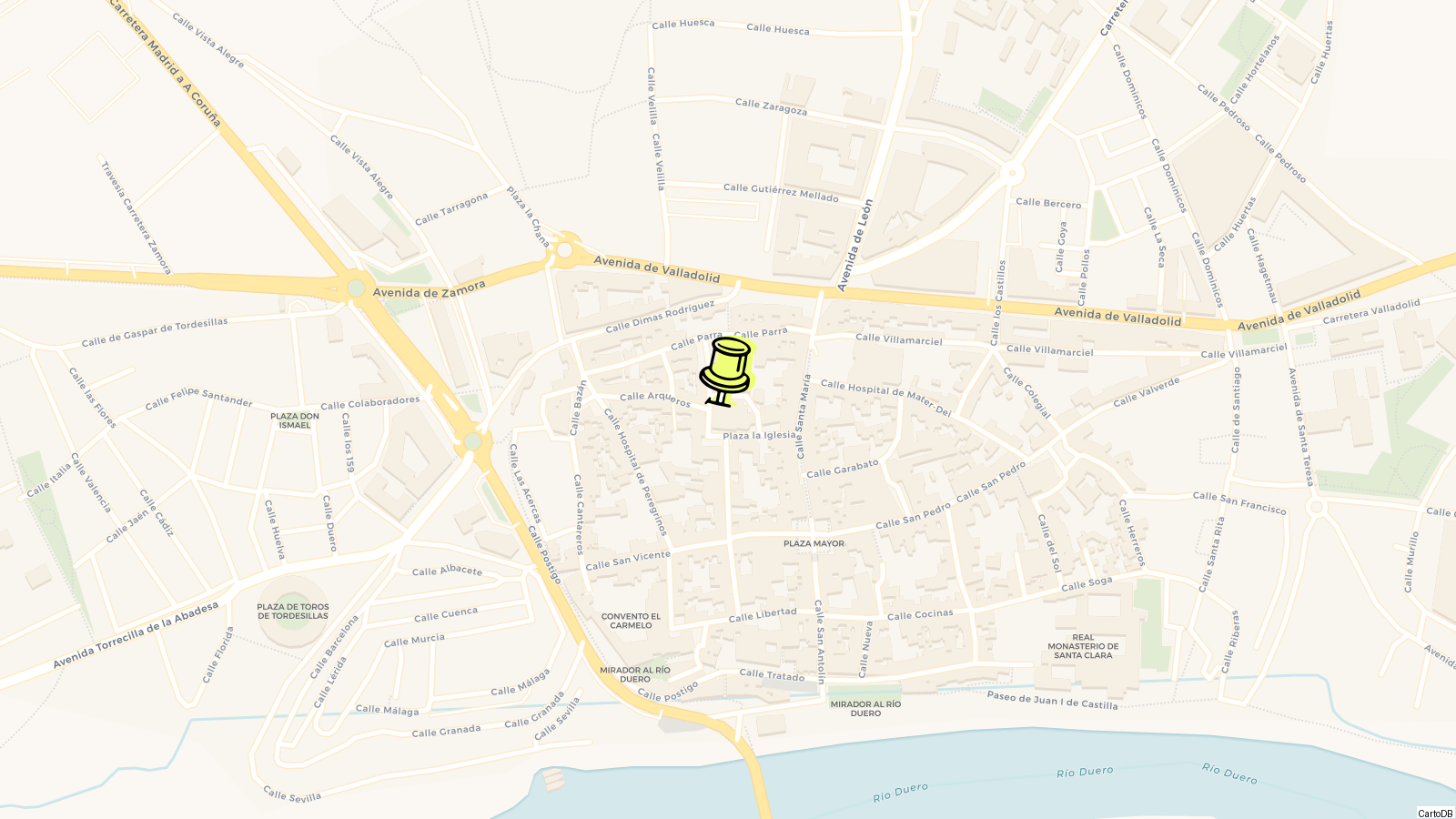
Overview
Tordesillas sits 25 km southwest of Valladolid and has about 8,000 residents as of 2024. The town covers 142 km² and is perched at 704 meters above sea level, with four-lane highways slicing through it in every direction, if you’re driving through central Spain, you’ll probably cross it whether you mean to or not.
Tordesillas is best known for the treaty signed here in 1494, which drew a line through the globe to divide newly “discoverable” lands between Spain and Portugal. Like it or not, this is where the world’s colonial boundaries got a lot messier. The age of the kings still echoes in town: the 14th-century Convent of Santa Clara was a one-time royal palace, and the old quarter is full of colonnaded arcades from the 1600s. Wheat fields surround the town, and the center of Tordesillas still runs on Castilian rhythm, late lunches, long sobremesa.
If you show up in early September, the streets crank up for the fiest as in honor of the Virgen de la Peña, complete with a lantern parade on Saturday night when dozens of peñas and marching bands compete to see who made the best giant handmade farol. Bull festivals here might make headlines, but the infamous Toro de la Vega, once a brutal tournament, was finally banned in 2016.
Climate is pure continental: freezing fog in winter (January mornings at 2 °C), hot sun and 29 °C afternoons as summer peaks, but rarely much rain. Hotels and restaurants are everywhere, from the Parador (classic, not cheap) to dozens of tabernas serving Castilian soup and roasted lechazo. And if you’re after a walk, look for the PR‑VA 36 Sendero del Alcornocal de Foncastín,9 kilometers of oak groves you’ll likely have to yourself.
The border that mattered
On June 7, 1494, the Treaty of Tordesillas was signed here by envoys from Castile and Portugal. The line they drew,370 leagues west of Cape Verde, gave Portugal Brazil and Africa, while Spain was to have the Americas (except Brazil). It’s the reason Brazilians speak Portuguese while the rest of Latin America stuck with Spanish. The actual negotiating rooms, the Casas del Tratado, are now used by the tourist office (Casas del Tratado, s/n).
How Tordesillas ended up a highway town
Tordesillas happens to sit at the crossroads of the A-6 (Madrid–Galicia), the A-62 (Burgos–Portugal), and the A-11 (Valladolid–Zamora). That’s why there are so many hotels: for truckers, tour buses, and pilgrims heading out to Santiago. If you’re road-tripping, this is where you stop for a menu del día or a diesel top-up before miles of empty Castilian landscape.
History
On June 7, 1494, Tordesillas hosted the signing of the Treaty of Tordesillas, the document that split newly “discovered” lands outside Europe between Spain and Portugal using a meridian line running down a globe the way only 15th-century rulers could. If you find yourself standing in front of the Casas del Tratado, that’s the actual site, open most days, though the story behind what went on inside gets a lot darker than the schoolbook version.
The Portuguese got Brazil and everything east, the Spanish took almost all the Americas, and nobody consulted a single local inhabitant. The treaty was negotiated at breakneck speed because both kingdoms were racing to plant flags and claim spices. The “meridian” agreed upon ran 370 leagues west of the Cape Verde Islands, even though nobody could measure longitude accurately back then. The ripple effects shaped maps for centuries. The Casas del Tratado still holds the echo of all those diplomatic double-crosses.
Tordesillas became strategic way before Columbus. It got its first legal charter (fuero) in 1262 from Alfonso X “the Wise,” which gave the town a say in its own affairs at a time when every patch of land was up for grabs. Royalty and nobles started to favor it, especially after Alfonso XI built a palace in 1325, if you walk through town, the Convento de Santa Clara is what’s left of that palace, transformed into a convent in the mid-1300s.
Santa Clara is a perfect snapshot of Tordesillas’ tangled loyalties. Originally a royal residence, it got handed over to daughters of María de Padilla, the king’s lover. Peter the Cruel, one of the most infamous Castilian kings, muddied the waters by holding his abandoned queen Blanche de Bourbon here. Mudéjar architects, some likely forcibly relocated, gave the building its best details: a tile-and-brick façade, a hidden bathhouse. If you tour the convent, ask about the little old clavichord, rumored to date from Joanna “the Mad.”
Support for the monarchy ran deep, but not forever. The town stuck with the royal camp during the 15th-century brawls between Henry IV and the nobles and during the showdown between Ferdinand and Isabella (“the Catholic Monarchs”) and their rival Joanna La Beltraneja in 1476. Yet just a few decades later, local allegiances whiplashed. When Charles V (Carlos I of Spain) tried ruling by decree from distant Brussels, much of Castile revolted. Tordesillas joined the Comuneros, the rebels, and became the symbolic seat of alternative power, because Charles’ own mother, Queen Joanna I, was locked up here in the Santa Clara convent since 1509.
For almost a year in 1520–21, the rebel leaders camped at her gate, trying to get her endorsement, she might not have had the mental capacity, but her signature still meant something. When the royalists regrouped and crushed the rebels at the Battle of Villalar, Tordesillas lost its influence as quickly as it had won it, with royal troops capturing the town on May 25, 1521.
Remnants of the town’s medieval wall are still visible, though only partial fragments, if you’re in the northwestern part of town, and the 14th-century stone bridge across the Duero stands on even older moorish foundations. The last real architectural traces of Tordesillas’ golden period are clustered near the Plaza Mayor, rebuilt in the arcaded style in the 1600s, and the churches of San Antolín and Santa María. The grandeur shrank after the failed rebellion; so did the population and the town’s pull in the region.
The Plaza Mayor, with its near-perfect square stats and shaded porticoes, was a physical manifestation of Castilian order, one square for business, politics, and even public punishment. Today’s plaza hosts festivals but you can still feel echoes of the old markets and melees. The Church-Museum of San Antolín, started in the 1400s, holds the alabaster tomb of Don Pedro de Alderete (1550), one of the last statements of wealth before the place entered its slow decline.
Centuries of royal drama left Tordesillas with a legacy that’s more about what happened inside its stone buildings than what you see on the street. It faded into a crossroads town, today the highways (A-6, A-62, A-11) echo that past, shuttling travelers between Madrid, Valladolid, and Salamanca. But if you want to stand where kings divided continents and both rebels and monarchs gambled for Spain’s future, you’re in the right place.
Visiting
Start at Plaza Mayor, the real center of Tordesillas and the spot that feels most alive on a Saturday. The square is perfectly symmetrical, surrounded by 17th-century arcades, and lined with cafés whose terraza tables fill up fast when the sun’s out. If there’s a market or local event, it’s almost always here. Walk under the porticoes, they’re low and uniform, and if you look up, you’ll spot original wooden beams.
From there, cross to the Church of Santa María. This one is worth a peek inside if it’s open, especially for its baroque sacristy. Don’t be surprised if you find it locked, you’ll have better luck in the evening before Mass, but honestly, someone from the town with keys probably lives within fifty meters.
The San Antolín Museum-Church, a massive 15th-century structure nearby, opens more reliably. Inside is a single, open nave, but the highlight is the Alderete Chapel’s tomb: white alabaster, detailed to the point of obsession, built around 1550. Admission is usually a couple of euros, and you won’t find crowds.
The real highlight is the Convento de Santa Clara, a five-minute walk from the square, up towards the old town walls. Check the hours: it sometimes closes for lunch and opens only for guided visits. The place looks plain from the outside, but the Mudéjar art inside, especially the baths and chapel, is the most impressive in town. You have to be on a tour to see the full interior, which runs about 5-6 euros and lasts roughly an hour.
How the Santa Clara Visit Works
Tours are in Spanish almost always, though they hand out paper guides in English, French, and German. You’ll move through the ancient baths (yes, like small hammams), the Mudéjar patio, the old royal hall, and the church. The best part is the tilework and wooden ceilings, just don’t expect to take photos inside. Group size is usually under 20, so it doesn’t feel rushed. Buy tickets at the entrance or, in peak summer, reserve online via the Junta de Castilla y León’s heritage site booking platform.
Head down to the river next, not for the view, but for the old stone bridge. It dates to 1340, sitting on Moorish foundations, and was paid for with gold taken at the Battle of Salado. The bridge itself is pedestrian-friendly, though traffic sometimes comes through. You can spot remains of the medieval walls just above the river path, but don’t expect a full circuit, only fragments still stand.
If you’re into specifics or want local info, the Tordesillas Tourist Office sits at the Casas del Tratado complex (s/n). The hours shift by season:
- October–May: Tuesday–Saturday 10:00–13:30, 16:00–18:30; Sunday/holiday 10:00–14:00. Closed Mondays.
- June–September: Tuesday–Saturday 10:00–13:30, 17:00–19:30; Sunday/holiday 10:00–14:00. Closed Mondays. Phone is +34 983 77 10 67, email turismo@tordesillas.net.
Casas del Tratado: What’s Inside
The Casas del Tratado is more than the tourist office. The building itself mixes Renaissance and medieval elements, and there’s usually an exhibition about the 1494 Treaty (text, facsimiles, maps). The small museum/interpretive center costs nothing and takes 15–20 minutes max. If you want to see the room where the treaty was signed, ask at the desk, they can usually let you in if it’s not booked for events.
Active types can do the PR-VA 36 sendero, the “Alcornocal de Foncastín” trail. It’s a 9.1 km circular hike through a patch of cork oaks. Start at the trailhead near Foncastín village; the route is marked and mostly flat. Plan for 2-3 hours walking, especially in summer heat.
Finally, if you want a bite: skip the riverside places and stick to restaurants near Plaza Mayor or Calle Santa María, more locals, fairer prices, and decent menus del día. Reservations only matter during big festivals.
Tips
-
Strict siesta hours still rule here. Almost everything, even along main streets, shuts down between 2 and 5 pm, shops, bakeries, many bars. Stock up or plan to relax in a café around the Plaza Mayor if you get caught out.
-
For any info, maps, or bookings, head to the Tourist Office inside the Casas del Tratado (open Tuesday–Saturday 10:00–13:30 and 16:00–18:30, Sundays 10:00–14:00, closed Mondays from October to May; summer afternoons reopen from 17:00–19:30). Phone: +34 983 77 10 67.
-
Don’t expect fast public transport on Sundays. Buses connecting Tordesillas with Valladolid and Salamanca cut frequency to almost nothing, especially in the afternoon.
-
For dinner, restaurants rarely serve before 9 pm. Locals roll in much later, especially on weekends. If you’re hungry at 8:30, try the bars on Plaza Mayor for raciones or pinchos until the kitchens open properly.
-
Early September is festival season, and hotels fill up for Virgen de la Peña and the Saturday lantern parade. Book well in advance for those dates. Noise and party spill deep into side streets, pack ear plugs if you’re a light sleeper.
-
If the Convento de Santa Clara is on your list, double-check opening times, they change seasonally and often close several hours mid-day.
-
For walks or runs, head for the Douro riverbank, there’s a quiet paved path west of the old bridge, away from traffic.
If you’re after a longer route, PR‑VA 36 (“Sendero del Alcornocal de Foncastín”) loops just over 9 km and sticks to flat, easy paths through cork oak woodland. It’s marked but less maintained than trails in national parks. In summer, leave early in the morning, shade is spotty and it gets hot fast.
-
In summer, expect it to be very dry, pack water, wear a hat, and bring strong sunscreen if you’re moving around midday. Local pharmacies do sell travel sizes at the counter.
-
Card payments mostly work, but some small bars and the outdoor market may want cash for totals under €5. Local ATMs are reliable but charge a flat fee if your card is foreign.
Know this destination? Help us improve
Your local experience is valuable to other travelers.