Cathedral of La Laguna
Your €7 ticket gets you an audio guide and rooftop views over Tenerife from the only neoclassical cathedral in the Canary Islands.

Visit details
Overview
You pay €7 to enter the Cathedral of La Laguna at Plaza de Nuestra Señora de los Remedios, a price that includes an audio guide in five languages, so don’t toss your ticket. This is the seat of the Diocese of San Cristóbal de La Laguna, covering not just Tenerife but La Palma, La Gomera, and El Hierro. Most people expect old, but what you get is the 1915 Neo-Gothic church built on top of a much older Mudéjar parish from 1515. You’ll know you’re in the “new” bit from the stone dome and crisp, almost northern-European stained glass, details that feel out of step for the Canaries but are totally intentional.
The cathedral isn’t just a shell for Mass. It doubles as a museum for religious art, marble, and some local big shots, in fact, Alonso Fernández de Lugo, the guy who conquered and founded the city, is buried inside. Its Neoclassical façade is modelled after the Cathedral of Pamplona. If you’ve spent time in colonial cities in the Americas, you’ll get déjà vu: La Laguna’s grid plan was the blueprint for Spanish colonial cities in the New World, and the cathedral holds down the main square exactly as it should.
The building sits at 559 m altitude, bring a sweater even when the coast is balmy. Inside, it’s less about gold and baroque excess, more about the huge dome, the airy light, and the odd mix of styles. You get everything from relics of José de Anchieta (missionary and future São Paulo founder, baptized here) to the tomb of Cristóbal Bencomo y Rodríguez, the priest who pushed to make this a cathedral in the first place.
The chapter house next door is home to Spain’s largest collection of Byzantine icons, around 160 pieces, none from the Canaries, most brought in from Russia, Romania, or Greece by merchants and donated over centuries. It’s tucked to the side, so unless you ask, you might miss it. During restoration after 2002, archaeologists dug up 16th-century bones just beneath the square, so the plaza you cross to get inside is literally layered with the city’s past. Also: the “emparedadas” legend, women who, back in the day, lived sealed off in rooms next to the altar as a form of religious devotion. It’s hard to unsee once you learn the story.
History
In 1515, the first big church on this site was a Mudéjar-style building just called the Iglesia de los Remedios, with a new tower added in 1618. By then, La Laguna wasn’t even the island capital for long, but it was important enough that the remains of the town’s founder and original Spanish conqueror, Alonso Fernández de Lugo, were buried inside, a status marker you can still spot if you know where to look.
The building bounced around on the church ranking ladder for centuries. Locals tried (and mostly failed) to get it recognized as a cathedral or at least a collegiate chapter, always outmaneuvered by the rival bishop in Las Palmas. It took until 1819 for Pope Pius VII to finally create the Diocese of San Cristóbal de La Laguna, which gave the church its cathedral status and the diocese control over all of Tenerife, La Palma, La Gomera and El Hierro. If you spot the marble tomb near the presbytery, that’s Cristóbal Bencomo y Rodríguez, the local priest who bent a royal ear and made the whole bishopric happen.
The present cathedral is surprisingly modern: what you see today was built between 1904 and 1915. They ripped down the crumbling Mudéjar structure (1809-1905 versions), salvaged some old altarpieces and side chapels, and went all in on Neo-Gothic (vaults, columns, arches) with a Neoclassical facade inspired by Pamplona’s cathedral. Any older doorway or vault you spot is either repurposed or carefully reconstructed; the only bit left from 16th-century La Laguna is underground.
During the huge restoration (2002–2014), workers found 16th-century human remains below the cathedral plaza, leftovers from the old parochial cemetery and Guanche necropolis that originally sat here. They also discovered just how unstable the dome and vaults were, so they demolished and rebuilt them using polypropylene fiber, making this the first cathedral anywhere with that material in its roofing. The cathedral was closed for over a decade and only reopened for worship in January 2014. Plenty of locals missed a generation of weddings and Easter traditions here.
The power struggles behind the bishopric
While building cathedrals in the Canaries always involved some politicking, the struggle between La Laguna and Las Palmas lasted centuries. La Laguna was frustrated that ecclesiastical power (and the trickle-down benefits) rested in Gran Canaria. Attempts at splitting the diocese started as early as the 1500s. In 1783, the Enlightenment crowd in La Laguna made a big push, but the powerful Cathedral Chapter in Las Palmas lobbied against any split. The final victory wasn’t until 1819, and only happened thanks to court connections in Madrid and a pitch to Pope Pius VII that was part religious, part political.
Two famous local figures got their first rites of passage here: José de Anchieta, born in La Laguna and later canonized for founding São Paulo in Brazil, was baptized at the old church in 1534, and so was Amaro Pargo, the corsair whose adventures fill local legend. If you’re a history fan, look for the baptismal chapel, these backstories are tied to the same font.
The Cathedral’s centrality in Tenerife’s story is also in the way it absorbed local traditions. In the 16th century, cases of “emparedadas”, women who voluntarily walled themselves up beside the altar as an act of religious devotion, took place here, something you won’t find recorded at any other church in the Canaries.
La Laguna’s old town, wrapped around the cathedral, became a UNESCO World Heritage Site in 1999 as a colonial-era planned city that still preserves its original grid. Within that tangle of 1,470 old buildings and 361 Mudéjar structures, the cathedral is the biggest showpiece and the literal high point, its copper-domed roof at 41.5 meters dominates the rest of the city.
When Franco’s Concordat reforms hit in 1851, the cathedral lost its bishopric for 24 years. In those decades, it became the only collegiate church ever in the Canaries. When the bishopric was restored in 1875, the city’s status came back, with all the church hierarchy, organ music, and social standing attached.
The cathedral was declared a National Historic-Artistic Monument in October 1983, though architecturally, most of what’s visible today is just over a century old. If you look closely, you’ll catch Neoclassical, Neo-Gothic, and Baroque elements, but the bones are early 20th-century. The pulpit, carved in white Carrara marble by Pasquale Bocciardo, and the Baroque altarpiece of the Virgen de los Remedios are the kind of details that survived multiple rebuilds.
What’s left from the oldest days
Not much from the 16th–17th-century structure is still standing, but the cathedral does preserve fragments, stonework, some chapels, a handful of altarpieces, even the reused baptismal font. But almost every visible vault, roof or stained-glass window is no older than 1915. The main historic treasures inside are the tombs (Fernández de Lugo, Bencomo y Rodríguez), relics of regional saints, and the extensive goldsmith work that’s part of the “cathedral treasure,” with colossal silver candlesticks and ornate liturgical gear.
During the dig that preceded the 2002-2014 restoration, both human remains and structural traces of the centuries-old parish church (and even the original Guanche necropolis) were discovered underneath the plaza. It’s a condensed slice of centuries of occupation, original indigenous burial ground, Spanish church, 20th-century cathedral, all layered in the same block.
Visiting
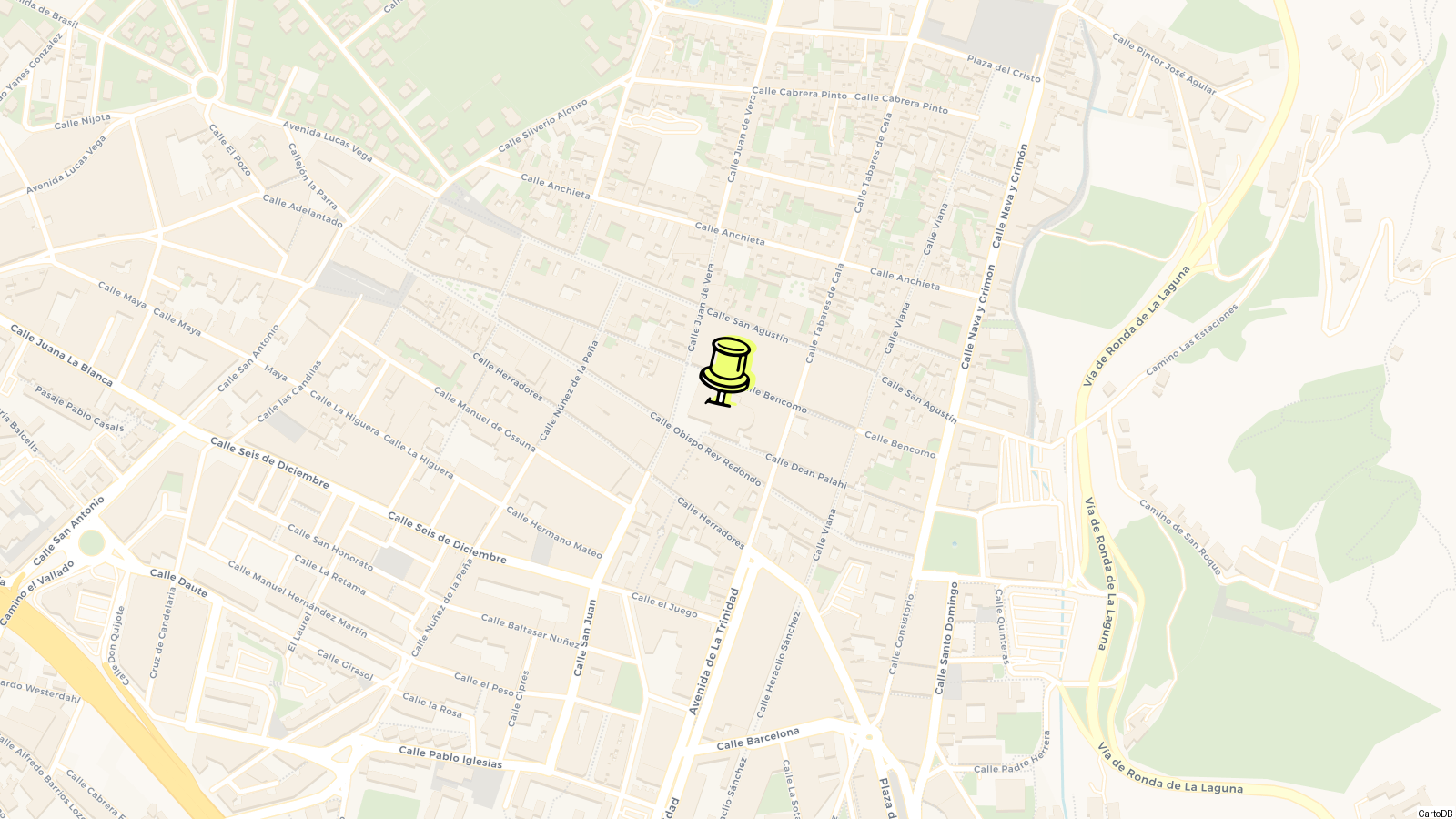
You enter through Plaza de Nuestra Señora de los Remedios, the main doors face the plaza, and if it’s busy, you’ll see the ticket office setup just inside. Regular visits run Monday–Friday 09:00–18:00, Saturday 09:30–12:30; nothing on Sundays. Flash your ticket, it comes with an audio guide, available in five languages, but you’ll need to swap an ID or a refundable deposit. They’ll hand you a map with marked chapels and the route.
Main Nave and Chapels
You move straight into a light-soaked Neo‑Gothic nave, noticeably modern for the Canaries. The path follows a circuit, with glass cases protecting local artwork and the marble pulpit visible on your left. The main altar’s centerpiece is the Baroque altarpiece dedicated to Our Lady of Remedies, yes, that’s real silver at the base, and the painting attributed to Hendrick Van Balen.
Along the right aisle, pause at the Chapel of Saint Teresa of Avila for the dark wood and gold Neo-Gothic altarpiece, and keep going to see the restored Immaculate Conception chapel. Look for the statue of Nuestra Señora de la Luz, mid-16th century, which isn’t common in mainland cathedrals.
You’ll see tombstones by the walls near the altar: among others, Alonso Fernández de Lugo, who conquered the island and founded the city, lies here. If you spot a group huddled around a QR code, they’re probably listening to the story of the bishop’s tomb; just wait for a gap and step up.
Baptismal Chapel and Relics
Don’t miss the Baptistery chapel: the font dates from 1969, but two of its most famous baptisms were back in 1534 (José de Anchieta, later a saint in Brazil) and 1678 (the corsair Amaro Pargo, who’s got local legend status). Some relics here claim pieces of saints’ bones and even a fragment of Saint Ferdinand’s cloak.
Artworks and Side Chapels
Several chapels are worth more than a glance: the Chapel of Christ tied to the Column houses Genoese and Sevillian sculpture, including a gilt altar by Pietro Galleano. The Chapel of Our Lady of Candelaria has statues representing the Canary Islands’ patron and the only two canonized Canarian saints, plus an 18th-century work by José Rodríguez de la Oliva.
Other details: windows with stained glass of local saints, Carrara marble carving on the pulpit, paintings by Cristóbal Hernández de Quintana and Juan de Miranda tucked away in side niches. No ropes, but some sections are gated if there’s a private ceremony, just double back later.
Tower Visit
If you paid the extra €10 (€9 seniors, €8 youth/unemployed, €3 for locals, under-13s, or those with >63% disability), you get access to the bell tower with a staff member leading groups roughly every hour. The climb is all stairs, not especially hard, and at the top you see the clock mechanism, and the best views over La Laguna’s historic city grid. The guide points out key buildings and, if the city’s clear (it often isn’t, the city’s 559 m up and gets mist), you might spot the runway of Tenerife North Airport.
Icon Museum
If you see side signs pointing to the chapter house, you can check Spain’s largest collection of Byzantine icons,160 pieces, many 300 years old, from Russia, Greece, and Italy. Not always open, but if it is, entrance is by request (and staff appreciate a heads-up in Spanish).
Accessibility and Restrictions
The main nave and most chapels are accessible for visitors with reduced mobility, but the tower climb is not. Flash photography is discouraged, but regular photos are fine in most sections; staff will wave at you if you bump into a forbidden spot, usually during Mass or restoration work. Bags can be brought inside, but expect a visual check at the door.
Tips
-
Mondays through Fridays are quietest. Saturdays (09:30–12:30 only) can get busy, especially with tour groups, show up right at opening if you want the place to yourself.
-
The regular ticket covers the main cathedral, treasury, and the icon museum. Tower access is separate,€10 for adults, €9 for seniors, €8 for youth/unemployed, and only €3 for locals, under-13s, and those with a disability card (over 63%). These are sold at the main desk.
-
Tower visits run about 40 minutes. If you’re shaky on steep, tight staircases, think twice, the climb is old-school, and they don’t allow huge bags or strollers.
-
The main plaza has almost no shade and gets hot by late morning. Bring a hat or duck into a café on Calle Obispo Rey Redondo if you’re waiting for your slot.
-
The best photo of the facade is from the center of Plaza de Nuestra Señora de los Remedios. Early morning gives you clean light, but never stand too long, doves use the ledges for target practice.
-
Audio guides are included with all tickets, grab the device at the entrance and bring your own wired headphones if you care about sound, theirs are not the greatest.
-
Bags must go through a quick security check. No eating, no big backpacks, and phones on silent, but they now allow non-flash photos, including in the side chapels.
-
If you’re into relics or weird stuff, ask the staff to point you to the relics of Saints José de Anchieta and Peter of Saint Joseph Betancur. Both locals became saints, and their relics are big deals for Canarians. The treasury also displays several bones and old vestments rarely shown elsewhere.
Short visits with kids
Kids under 13 qualify for reduced or free rates, but the interior is big and echo-prone, if you have little ones, avoid choir practice times (usually late afternoons) out of respect, and bring water, as there’s none sold inside. Strollers aren’t allowed up the tower.
Accessibility
The cathedral itself is fully wheelchair-accessible except for the tower, which is stairs-only. If you have mobility issues, ask for a route map at the desk, they’re used to guiding visitors with different needs.
Festival closures
If you visit the week before Easter or on September 8 (Fiesta de la Virgen de los Remedios), some areas may be off-limits for services or processions. Locals show up in force, and the town is more crowded all week.
Know this destination? Help us improve
Your local experience is valuable to other travelers.