Puerto de la Cruz
Black sand at Playa Jardín, guachinche wine bars on every corner, and you can cross the whole town in under half an hour on foot

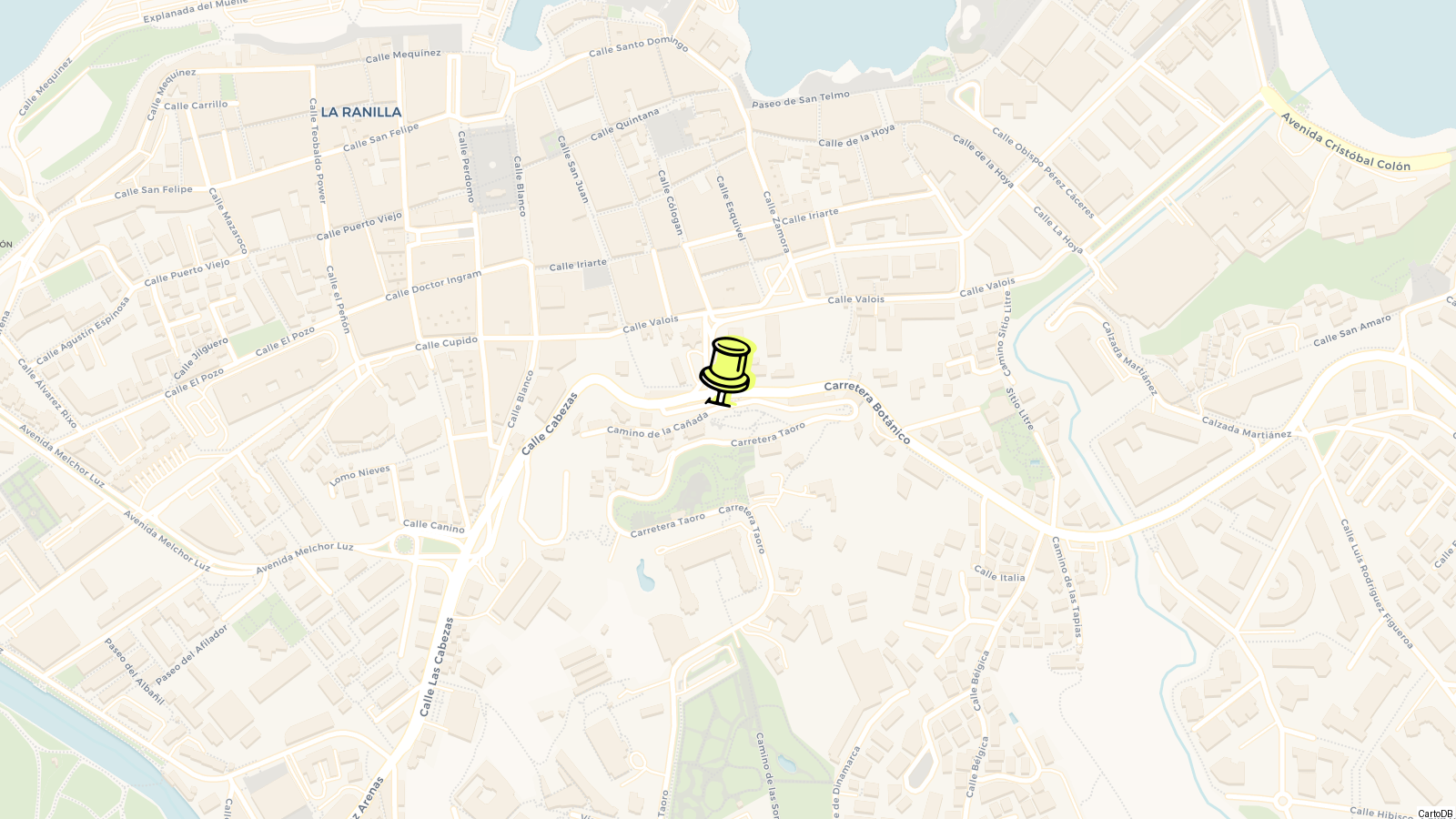
Visit details
Overview
Playa Jardín and Playa Martiánez are both less than a 10-minute walk from Plaza del Charco, and yes, the sand really is black, bring a towel unless you want it everywhere. Puerto de la Cruz is compact: just 8.73 km², the smallest municipality in Tenerife, so most things are walkable. About 30,500 people live here, and you’ll hear Spanish everywhere, but accents shift, and locals call themselves portuenses (or ranilleros in the old fishing quarter near Calle Mequinez).
Average temperature year-round: pretty much 20 °C. It’s why people in November swim in the sea and why in August, Canarians from the south come up to cool off. The weather is semi-arid but not desert-like, it can rain in winter, and clouds from the La Orotava valley can camp out for days, but it rarely feels muggy.
Tourism has been the main business since the 1950s, but the city started pulling in visitors in the 19th century, way before mass tourism was a thing. British and German families still book out the hotels over winter. Peak Spanish tourist season hits in August. The off-season (late spring and autumn) means better deals and more room to breathe.
Lago Martiánez, a saltwater pool complex designed by César Manrique, sits waterfront and is open nearly every day. Loro Parque, technically a zoo, but really more of an animal park/theme park hybrid, draws families year-round, and it’s a 25-minute walk or a €5 taxi from the main square. The Archaeological Museum holds over 2,600 Guanche artifacts, including a tiny, mysterious idol called the Guatimac.
The town center is officially a Historic-Artistic Site, which explains all the 17th and 18th-century Canarian balconies on streets like Calle Quintana and the Casa de la Aduana near the old port. Plaza del Charco is still the nerve center, grab a barraquito coffee, sit under the Indian laurels, and watch locals debate politics and football.
Puerto de la Cruz isn’t all package hotels. Guachinches (informal local eateries) serve vieja fish caught that morning. Order at least once with papas arrugadas, salty wrinkled potatoes, and a glass of local white.
The La Orotava valley behind town offers hiking: line 345 hops between Puerto and the pine forests at La Caldera. You can summit Pico del Teide in a (very long) day trip, but most people do a circuit: public bus line 348 gets you as far as El Portillo (Teide visitor center). For a sample of the greener north, walk uphill to the Botanical Garden (founded 1788), open daily and worth an hour for trees from five continents, tickets around €3.
If festivals are your thing, Carnival in February means full costume, sardine burials by the port, and dancing in Plaza del Charco. Every July 16, the Virgen del Carmen is hoisted out of the church to the pier, with the fishers’ boats honking and firecrackers echoing off the old town.
History
Puerto de la Cruz started as a port for La Orotava in 1502, at the time, this was just a tiny fishing and trading post on the north coast of Tenerife. It barely had a name of its own until the 17th century, running almost everything through the larger town up the hill. The first real public investment was in 1603 with a church and a plaza. Back then, this whole stretch of the coast was about sugar exports. As that market shifted and Atlantic trade picked up, the port boomed, and then it all changed overnight in 1706. The Trevejo volcano buried Garachico (which had been Tenerife’s biggest port), so shipping traffic flooded into Puerto de la Cruz. Traders, sailors, and wine barrels stacked the docks.
By 1651, people here were pushing to stop being a satellite of La Orotava, and they finally got limited autonomy. Not full independence, but enough to appoint their own district head. The place was called Puerto de La Orotava on every map for centuries. The town only got a separate municipal corporation in 1772, and finally, after years of wrangling with their uphill neighbors, got fully recognized as Puerto de la Cruz in 1808.
By the late 18th and 19th centuries, the scene here had shifted from barrels to botanists and sickly British travelers. Europeans were coming down with their notebooks, calling it a ‘climate cure.’ The British left their mark: the Botanical Garden (1788), which tried to acclimatize species heading for the Spanish colonies further south, and way later the Anglican Church tucked up in the Taoro Park. Even now, families like the Yeowards still have a place in town lore, a random fact you’ll hear if you have a drink at the old Marquesa hotel bar.
Tourism in Puerto de la Cruz didn’t arrive with cheap flights, but with a trickle of wealthy invalids. By the 1880s, it was all genteel hotels: Grand Hotel Taoro, Marquesa, and Monopol flipped from local mansions. The wave of tourism you see today arrived after the 1950s, by 1955, Puerto de la Cruz was already declared a National Tourist Interest Site by the government. The town’s DNA entwined with hospitality, and hotels started to multiply. The signature black-sand beaches, especially Martiánez and Jardín, drew plenty of vacationers, first from Germany and the UK, summer crowds from the Peninsula.
If you take a walk through the old quarter (especially between Plaza del Charco, the Customs House, and the Peña de Francia church), you’ll still see traditional Canarian wooden balconies and old merchant houses. The town center was protected as a Historic-Artistic Site in 2006, so restaurants and bars may have trendy menus but the buildings themselves haven’t changed much in decades.
Why the town looks the way it does
The eruption in Garachico forced so much extra money and traffic to pass through Puerto de la Cruz that traders, clergy, and small nobility invested their fortunes here. This winding up of urban development from the late 17th to the 19th centuries shaped the low, white-washed houses, cobbles, and the orientation of the port itself. The Customs House (Casa de la Aduana) and the Church of Nuestra Señora de la Peña de Francia became symbols, you can still see their original facades and interior beams. Recent renovations, after the 2006 Historic-Artistic Site decree, focused on restoring these rather than letting glossy real estate remove their character. You’ll spot tiny tiled plaques referencing grants or town improvement projects from the last 15 years, some still tied to EU funds.
The boom wasn’t always smooth. The council’s attempts to balance tourism with daily life are ongoing, and this battle gets more public each year with town hall meetings and new campaigns. You’ll see banners about sustainable tourism, especially if you’re around during any of the local festivals.
Festivals say a lot about how the town’s past bleeds into now. The “Embarcación de la Virgen del Carmen” every July started as pure fisherman’s gratitude for safe returns but now attracts thousands, with people in shorts jumping in the harbor after the statue processions. The “Burial of the Sardine” (Entierro de la Sardina) is the annual excuse for drag mourners and burning papier mâché, another bit of festival anarchy rooted in Catholic Lent. The Carnival here is big, but it’s not a Las Palmas spectacle; it’s chaos in the squares and packed bars.
The British, Germans, and mainland Spanish all left their fingerprint on the architecture and rhythm of the town, but it’s always been Portuense run. You’ll hear Spanish everywhere and occasional snatches of the word “ranillero,” a slang nickname locals use for themselves.
If you’re curious about the deep past, the Archaeological Museum is worth a stop (C/. Lomo, 9), especially for the Guanche artifacts and the ‘Guatimac’ idol found nearby.
The Greens and the “Tenerife Manifesto”
In May 1983, Puerto de la Cruz held the Ecological Film Festival of Nature. Here, a group of Spanish and Canary Island activists drafted the “Tenerife Manifesto,” which kickstarted the birth of the Spanish Greens. The environmental movement began finding political voice, and that’s why you’ll sometimes see references to the town in Spanish left-wing history, even outside the Canaries. Ecology as political activism in Spain arguably got its real launch here, not in Madrid or Barcelona.
Through every wave, Atlantic trade, British botanists, German travel agents, and environmental protestors, Puerto de la Cruz stayed obsessed with weather and the sea. Even today the same port that once shipped sugar and wine now hosts swimmers, surfers, and boat tours, all overlooked by the same volcanic peak that shaped half its luck.
Visiting
Start at the Plaza del Charco, the nerve center of Puerto de la Cruz. Almost every local bus drops you within a couple of blocks. The square is lined with cafés (Café Columbus is a classic for people-watching) and local shops, don’t bother with the souvenir stalls here, the better artisan crafts are a few streets deeper into La Ranilla.
From Plaza del Charco head south on Calle San Felipe, where you hit Calle Mequinez, this is the entrance to La Ranilla, once a fishing zone, now a maze of street art, small galleries, and unfussy Canarian restaurants. If you want an authentic “guachinche” experience (these informal canteen-style eateries are still buried in the backstreets, with chalkboard menus and local wine on tap), go to Casa Mika (Calle Mequinez 47). Ask for whatever vieja (parrotfish) was freshest that morning, and papas arrugadas with mojo.
Keep walking towards the seafront and you’ll hit the Castillo San Felipe, a squat 17th-century fort facing Playa Jardín. The inside isn’t worth much unless there’s a show, but locals gather outside for concerts and open-air movie nights, check the town events calendar if you’re around on a weekend.
For a swim, skip the crowded main section of Playa Jardín and walk further west towards Punta Brava, these black sands are quieter, and the break is safer for a dip unless yellow flags are up. If you’re not into sea swimming or the flag’s red, Lago Martiánez is next-level: a massive saltwater pool complex designed by César Manrique. It costs €5.50 per adult (2026), and locker rentals are €2 at the gate. Bring flip-flops, tiles get slippery, and the lava-rock pools can nip at your feet.
If you need a breather, the Botanic Garden sits uphill in the El Botánico quarter (walkable in 20 minutes, but parts are steep). For €3, you get wandering rights among plants nobody back home has seen outside a magazine.
Loro Parque gets all the marketing, but it is a legit day out if you have kids or a soft spot for well-run animal parks, a €42 adult ticket is painful, but the parrot breeding and rescue programs are actually world-recognized. Save yourself a bus headache and book the yellow train directly from outside Plaza Reyes Católicos; it’s free with your Loro Parque ticket.
Archaeological Museum
Tucked away at Calle Lomo 9, the Archaeological Museum of Puerto de la Cruz is easy to miss, but inside is a quirky collection of Guanche (indigenous Canary Island) pottery, amulets, and mummies, yes, real mummies. If obscure local religion and shrunken human heads are your thing, this is a 45-minute detour for €2. The “Guatimac” is the star artifact: a thumb-sized Guanche idol found in a nearby cave, sometimes considered the island’s “lucky charm.”
Historic Quarter
The city center is protected as a Historic‑Artistic Site. For real Canarian balconies, duck down Calle Quintana, Casa de la Aduana (Plaza de Europa 5) has wooden galleries overlooking the ocean. Most government buildings have panels with English and Spanish blurbs explaining their story, worth a peek if you’re a history nut.
If you’re feeling energetic, detour to Taoro Park: you’ll have to climb the steps by the Anglican church (Iglesia Anglicana de All Saints, handy if you’re into quirky graveyards, the oldest in the Canaries is just up the lane). The view over the coast and Puerto’s rooftops is your selfie jackpot. Heading back down, cool off with an ice cream from La Heladería Boutique near Plaza de Europa.
Looking for events? Summer brings the Fiesta del Agua (mid-July): Plaza del Charco and the waterfront fill with locals throwing buckets of water and cheering as the Virgen del Carmen parades into the sea. Come in winter, and you get Carnival, wilder costumes than in Santa Cruz, and the “Burial of the Sardine” parade is actually hilarious.
The tourist office inside Casa de la Aduana (Plaza de Europa, +34 922 386 000) has free maps and multi-language staff who’ll circle offbeat places on your phone.
Day Trip: Teide National Park
If Teide National Park is on your list (and it should be), the 348 bus leaves Puerto around 9:15 am and gets you to the cable car base in 90 minutes for €11.50. Pack snacks, the cafeteria at the base is overpriced and underwhelming. Bring a jacket: yes, even in August, it can be freezing above 2,000 meters.
Hiking and Trails
Puerto is a great base if you hike, the Sendero del Agua trail starts east of town and hooks into larger island paths, including GR-131 for the hardcore. Local trail maps are €5 from most mini mercados.
Tips
-
If you land at Tenerife North Airport, a taxi to Puerto de la Cruz costs €30–40; daytime flag starts at €3.15, then it’s €1.10/km. Public bus line 030 runs every 30 minutes, it’s much cheaper but with luggage, the taxi is way faster.
-
Most shops close for siesta, roughly 13:30–16:30, especially outside the main tourist strips. Don’t plan on errands in the early afternoon, and check restaurant hours, dinner service starts after 19:00.
-
For the black-sand beaches like Playa Jardín, always bring a towel and flip-flops; that sand gets hot and sticks everywhere. Showers at the main beaches help.
-
The official language is Spanish and locals are called Portuenses (rarely, ranilleros). English is widely understood in tourist areas, but in local spots or guachinches, some basic Spanish is useful if you want to try “vieja” or other local fish.
-
For Teide National Park trips, book parking or bus tickets in advance, spaces fill up, especially weekends. Avoid the “Route 0-4-0” unless you’re ready for 27 miles and serious elevation gain.
-
Loro Parque sells online tickets (no discount at the gate) and lockers are €5, which is handy if you bring a change for the splash zones. Arrive at opening (09:30) for the least crowds and best seats at the animal shows.
-
The local tourist information office is in Casa de la Aduana (right on the seafront, Plaza de Europa), phone +34 922 386 000. Staff are helpful and usually fluent in English and German.
-
Puerto de la Cruz is small and walkable, but if you’re hauling suitcases or tired, taxis are easy to hail, with official ranks at Plaza del Charco and the bus station.
- For day trips to Siam Park, skip the public TITSA bus: the park’s direct shuttle is €24 round-trip per adult, book the day before for a comfier ride.
Banking and Money
Most places accept cards, but smaller guachinches often prefer cash. There are plenty of ATMs around Plaza del Charco and Calle Quintana, but you’ll get dinged for withdrawal fees, varying by bank.
Medical
Closest 24h pharmacy is Farmacia San Telmo, just above the sea pools. For anything urgent, there’s a public health center (“Centro de Salud Puerto de la Cruz” on Calle Alemania) and several private clinics.
Events
Festival dates can shift by year: Carnival parades usually happen between February and March, but check the municipal site. The “Fiesta del Agua” and the procession for Virgen del Carmen are in July and completely drench the port area, dress accordingly.
Know this destination? Help us improve
Your local experience is valuable to other travelers.