San Cristóbal de La Laguna
Watch students spill out of 500-year-old plazas between cafés and mango-colored mansions along Calle Herradores in Tenerife’s only UNESCO city

Essential info
Visit details
Overview
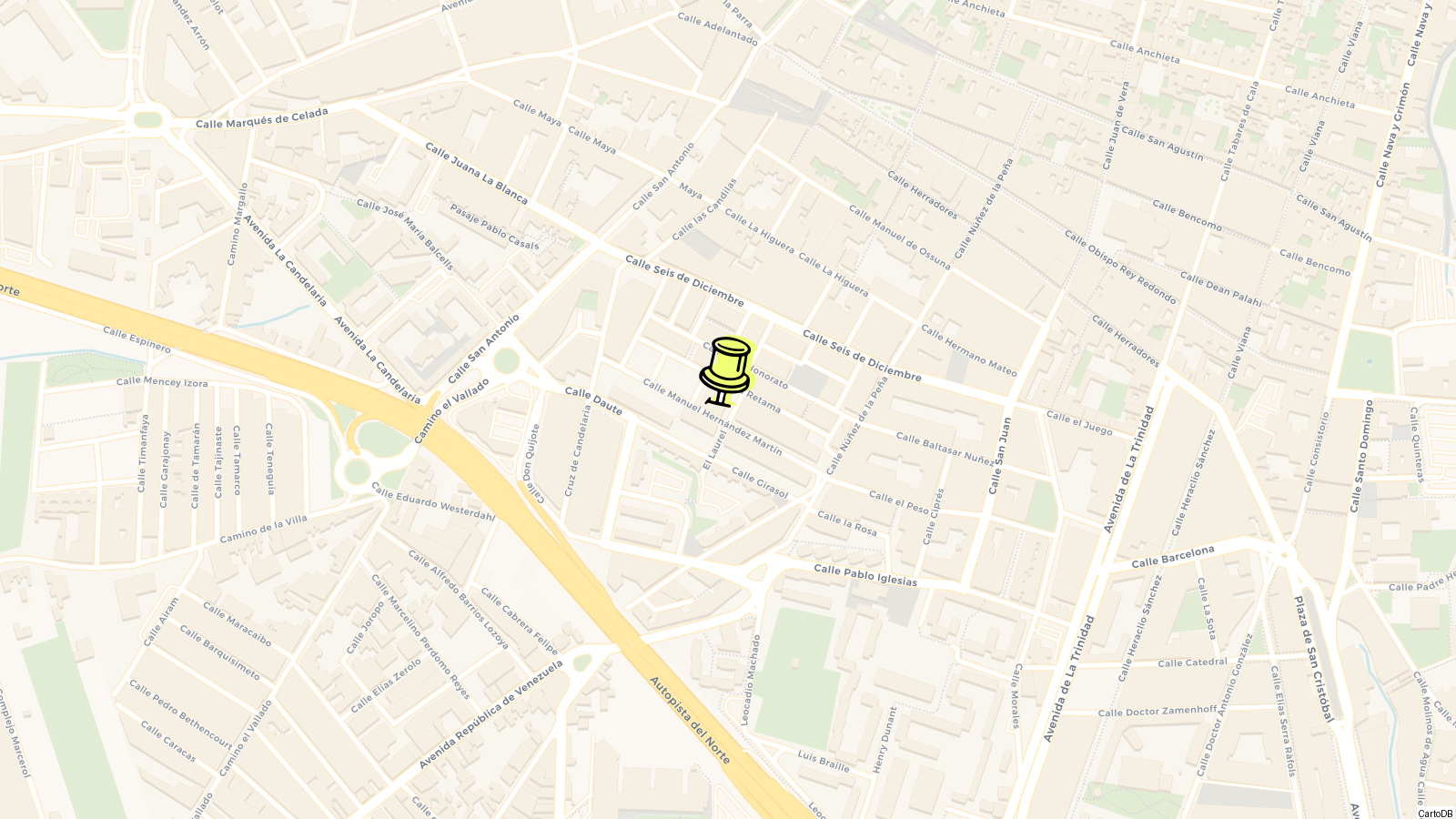
San Cristóbal de La Laguna sits at 543 meters above sea level and had 159,034 residents at the end of 2023, making it the second most populous city on Tenerife and third in the Canary Islands. Walk five minutes along Calle Herradores and you’ll see student crowds from the University of La Laguna (founded 1701), families in the cafés, and municipal bureaucrats hauling folders to the Ayuntamiento. There’s no wall or break between La Laguna and Santa Cruz: from the Calle Obispo Rey Redondo you’re one tram stop from the island capital. The two cities function like a single urban zone.
The old center, declared a UNESCO World Heritage site since 1999, is compact and mostly flat, so you can cross it on foot in 20 minutes. Unlike most colonial-era towns in Spain, La Laguna was laid out on a grid, its Lower Town was a test run for city planning in Latin America. Locals still refer to the “Zona Alta” and “Zona Baja,” a nod to its split design.
The climate here is a reality-check if you expect eternal sunshine: summers average a comfortable 25°C, January bottoms out around 13°C, and you’ll see drizzle or damp cloud on at least half your days from November to March. Bring a light jacket even in July.
Despite the student nightlife and constant events, there’s an older rhythm under the surface: early-morning shops around Plaza del Adelantado, regular religious processions, and the habit of shutting up for siesta (even big chains do this). Farmers from Anaga sell vegetables in the Mercado Municipal, while a tram rings past half-hourly. The seat of local government is in the barrio of La Laguna, known administratively as Zone 1.
Living with the weather
San Cristóbal de La Laguna gets three to five times as much rain as the south of Tenerife thanks to moist trade winds piling up on the north side of the island. You’ll notice locals carrying small umbrellas and newsagents staying busy selling them on damp days. The city gets about 2,410 sunshine hours a year, so don’t be surprised by sudden pockets of sun on a cloudy afternoon. Renting in the center often means an old Canarian house with thick walls designed to keep you warm in the fog.
Housing and who lives here
Around 7% of homes in La Laguna sat empty in mid-2024, over 5,100 out of a total stock of 74,091. That means short-term rentals pop up constantly, especially close to the university or near the pedestrian streets. Demand and prices both rise in September when students return.
History
The city started in 1496, right after the Spanish conquest, when Alonso Fernández de Lugo picked the spot next to a large natural lagoon for his new capital. The lagoon is long gone, drained way back, but the name stuck. The Guanches, who controlled this land before, called the valley Aguere and considered the lagoon sacred. Fernández de Lugo built here because water was plentiful and the spot was good for farming; you’ll still run into “Aguere” as a local nickname, especially during festivals.
During the early years, La Laguna wasn’t just Tenerife’s capital; it was the political and religious center for the entire Canary Islands. Most of the Spanish settlers, officials, and clergy lived here, and by 1510, Queen Joanna of Castile gave the city its coat of arms. Things boomed for over a century, but in 1582 plague hit and wiped out as many as 9,000 people. That’s a chunk of the population gone in months.
The street layout you walk today isn’t random, it’s the template for a whole lot of cities across Latin America. La Laguna is the test version of the Spanish colonial city: formal grid blocks in the Lower Town, less planned Upper Town, no defensive walls (unusual for its time), and big public squares like Plaza del Adelantado. UNESCO highlighted this in 1999, marking La Laguna’s historic center as a World Heritage Site since it set the model for new cities in the Americas.
If you’re looking to spot these urban planning details, start at Plaza del Adelantado (the administrative heart) and walk down Calle Obispo Rey Redondo (often called Calle La Carrera). Unlike places like Santa Cruz, there were never heavy fortifications or walls, La Laguna always aimed for an academic and religious feel. The original Lower Town’s grid was exported by Spanish planners to Havana, Cartagena de Indias, Lima, and even Mexico City. The city’s unfortified, rational plan was radical in its day because most European towns were built defensively or grew chaotically over centuries.
After the capital shifted to Santa Cruz in 1723, La Laguna lost its administrative power, and the elite followed. The new port was more practical for trade, and Santa Cruz kept growing. But La Laguna didn’t slump into irrelevance. In 1701, before the move, the city’s university opened, making it an educational and theological hub for the islands. The Catholic diocese also stayed, which is why you still find so many convents, churches, and student bars in La Laguna today.
There are layers upon layers in the old town. Walk past Iglesia de la Concepción or the Cathedral and you’d never know there are brick tunnels and sealed vaults underneath, built right after the conquest. Recent discoveries show the street level has risen over a meter in places, covering doorways and walled-off passages from the early colonial days.
These tunnels run beneath several major sites: Iglesia de la Concepción, the cathedral, and the former San Agustín convent. They date to the late 15th and early 16th centuries. Some are now completely sealed under new construction, but you can sometimes glimpse them through glass panels or if you join a specialized architecture tour. Theories on their purpose range from drainage (the area was originally marshland) to storage, crypts, and emergency passageways for the clergy, especially in times of plague. They contribute to the city’s air of having hidden stories just below ground.
La Laguna saw prosperous families build baroque palaces on what’s now Calle San Agustín and Calle La Carrera. Many of these, like Casa Salazar, date from the 17th century and house everything from archives to galleries (don’t miss the 1664 courtyard at Casa Salazar).
The city’s character owes as much to who lived here as what happened. José de Anchieta, who helped found São Paulo and Rio de Janeiro, was born here before shipping off to Brazil as a Jesuit missionary. Amaro Pargo, who lived in the 18th century, made his fortune as a corsair and merchant; you’ll find his tomb in Santo Domingo church, and plenty of island legends about buried treasure. Some people claim to have seen the ghost of Catalina Lercaro, who supposedly haunts the Palacio Lercaro, now the Museo de Historia de Tenerife, after refusing a forced marriage in the 16th century.
The city’s story is also shaped by weather. Why set the capital here? La Laguna’s elevation meant more rain and cooler temperatures, good for crops and for storing supplies through years of drought or conflict. Later, after the lagoon was drained, agriculture shifted out to the northern valleys.
Fast-forward to the 20th century: air travel comes to Tenerife in the 1930s with Los Rodeos airport (now Tenerife Norte), just outside La Laguna. Population growth picks up in the late 20th and early 21st centuries, with the metropolitan area now running into neighboring Santa Cruz.
Locals still debate whether La Laguna lost or kept its edge after the capital moved. What’s clear is that the bones of the old city, the grid streets, the lack of walls, the palaces, the university, and a certain academic vibe, are direct legacies of those days when decisions here shaped life across the Atlantic.
Historic festivals still tie to the past
- The Romería Regional de San Benito Abad, held every second Sunday in July, is a huge pilgrimage procession and a reminder of the town’s agricultural and religious roots.
- September’s Cristo de la Laguna festivals date back centuries, focused on the revered Christ figure in the city’s sanctuary.
- Holy Week here is the largest on the islands, with centuries-old brotherhoods parading carvings and images through the historic grid, many route their pasos down streets that haven’t changed since the 1500s.
Urban changes
In the 2000s, pedestrianization and restoration became a focus, Calle San Agustín was pedestrianized in 2011, and many major sites got facelifts. Since UNESCO designation, more buildings reopened as museums (see Museo de la Historia in Palacio Lercaro or Bishop’s Palace in Casa Salazar), and new visitor info offices opened in old buildings.
Not all of the past is visible
Beneath several plazas and buildings, archaeologists occasionally discover Guanche pottery or drainage works from the early colonial years. Guided “La Laguna subterránea” tours pop up during festival seasons for those interested in the city under the city.
Visiting
From Tenerife Norte Airport (TFN), Bus 20 (the Aeroexpress) gets you to the city center of La Laguna in under 15 minutes for €2.65; taxis linger outside Arrivals and cost about €10, worth it only if you’ve got luggage or arrive late at night. If you’re coming from Tenerife Sur, Bus 343 heads straight to TFN, or you can take Bus 10 to Santa Cruz (about €10) and transfer, either way, factor in well over an hour. From Santa Cruz, the tram (Tranvía Tenerife Line 1) runs every few minutes and drops you a block from Plaza del Adelantado in about 40 minutes.
La Laguna’s historic center is flat and pedestrianized, so you’ll spend most of your time walking, no need for a car and honestly, parking is a nightmare. Start your route at the Plaza del Adelantado, surrounded by the town hall and 17th-century Nava Palace. From there, wander Calle Obispo Rey Redondo (everyone still calls it “Calle La Carrera”), lined with wooden balconies and guachinches selling barraquito coffee and almogrote. Branch off into Calle San Agustín for the 1664 Salazar Palace (now the Bishop’s residence, free entry but variable hours, peek in for the chapel’s mosaic) and the Plaza de la Catedral. The actual cathedral is hard to miss: if it’s open, go inside for the neo-classical altars and the (very) loud bells.
If you’d rather do it with context, check the Ayuntamiento’s route maps, they launched new, free UNESCO-themed walking tours in honor of the 25th anniversary of the UNESCO designation at the end of 2024; sign up in advance if you want a slot, as they’re filling up, especially weekends.
Not into guided tours? Three buildings you shouldn’t skip (all five minutes from each other): Museo de Historia de Tenerife at the Lercaro Palace (ghost stories included), the Real Santuario del Cristo with its dark wooden interiors and Christ-of-La-Laguna statue (locals queue on 14 September for the procession), and the University of La Laguna’s central building, usually open midweek, with a slightly faded grandeur and a very real student presence grabbing empanadas nearby.
Sit a moment in the Plaza del Cristo if you want a less touristy vibe; morning is when the market stalls are alive, but bar Casa Pedro is around the corner anytime for quick coffee and an arepa. If you lost track of time, dinner here rarely starts before 8:30 pm, bookings are hit-or-miss; students and locals pack La Hierbita and Tasca La Nava.
If you want to escape the city, Bus 076 runs every two hours to Las Mercedes and the Anaga Rural Park access point, don’t try to hike the laurel forest in flip-flops, and check for slide closures after storms. The best ocean views are from Bajamar or Punta del Hidalgo, both in the northern part of the municipality, reachable by bus for €1.45. Museums under the Red de Museos de Tenerife now unify entry with discounts if you plan more than one.
San Cristóbal de La Laguna’s UNESCO old town stays lively late on Thursday nights, when students from the university spill out onto terraces for “tardeo”, pre-dinner drinks that blend into night. Most museums in town are closed Mondays, and several historic sites (like Casa Anchieta or the Convento de Santa Catalina) only open for limited hours or festivals, double check online before committing a morning.
The CEDOCAM (Centro de Documentación de Canarias y América) inside the city library is a smart stop if you’re geeky about the Canaries’ connections to Latin America. Much of the new signage and audio guides now have English explanations thanks to anniversary funding.
Tips
- Shops and pharmacies in the casco histórico open late (many not before 10:00) and close for siesta, anytime from 13:00–17:00, sometimes reopening till 20:00. Sundays, most are shut; bakeries and some minimarkets are the exception.
- If it looks cloudy outside, it probably is, La Laguna gets several times more rain than the southern Tenerife towns, and sudden showers are common even in spring. An umbrella or light rain jacket is not overkill, especially November to March.
- The best photo light is early morning: narrow pedestrian streets like Calle San Agustín and Plaza del Adelantado are empty (and you avoid student crowds from the university by going before 08:30 on weekdays).
- Forget driving in the old town. Most central streets are pedestrianized and the rest are tight one-ways with residents-only parking. Park at the Parking La Trinidad (near the tram terminus, ~€7/day) or the Parking Los Salesianos, both an easy walk to the historic core.
- Local buses and the tram (both run by TITSA and Metropolitano de Tenerife) accept contactless cards and reloadable Ten+ cards. Download the “Ten+ Movil” app to check timetables in real time.
- La Laguna is nearly 550 meters above sea level: evenings are cool. Even in August, a sweater or hoodie is useful. In winter, it can dip below 10°C at night.
- For wifi, most cafés in the old town won’t mind if you take a seat with a coffee (locally “un cortado” runs about €1.40), but don’t treat it like your coworking space, especially during traditional mealtimes (14:00–16:00 or after 20:00).
- Many museums (like the Museo de Historia de Tenerife) are closed Mondays and on local holidays. Check hours and book guides in advance for Spanish and English tours if you want more than signage in Spanish.
- The city’s main festivals (San Benito Romería: second Sunday of July; Cristo de La Laguna: September 14; Holy Week: March/April) bring street closures and big crowds. Accommodation near the center is both pricier and harder to find, book 3–6 months out if you want something specific.
- Tap water is technically potable but heavily chlorinated and not popular for drinking; most locals use filtered or bottled for daily use. Every supermarket sells 5L bottles for around €1.20.
- If you’re planning on hiking in the Anaga mountains (the best bus-accessible trailhead is Las Mercedes via TITSA Bus 076), check weather before you leave, morning fog is common and trails get slippery.
Local quirks and customs
- Walking in groups? On narrow historic streets, stay to one side and let neighbors pass, locals aren’t on vacation.
- Many small bars serve caña y tapa, a small draft beer (~€1.50–2) with a tapa included. But heavy tapas/bar crawling is less a thing here than in mainland Spain; don’t expect free food everywhere.
- For ATM withdrawals, avoid Euronet and blue/yellow-brand ATMs in the center, they charge high fees. Use big-bank ATMs like CaixaBank on Calle Herradores.
- Most places, including small groceries and bakeries, now accept cards for any amount, but it’s handy to carry €10–20 in cash; some city market stalls remain cash-only.
- The cathedral, major churches, and several historic houses strongly enforce no-flash or no-photo rules indoors. Respect signage, staff do enforce it.
Know this destination? Help us improve
Your local experience is valuable to other travelers.