Old Cathedral of Coimbra
Intact Romanesque cathedral with 380 carved capitals

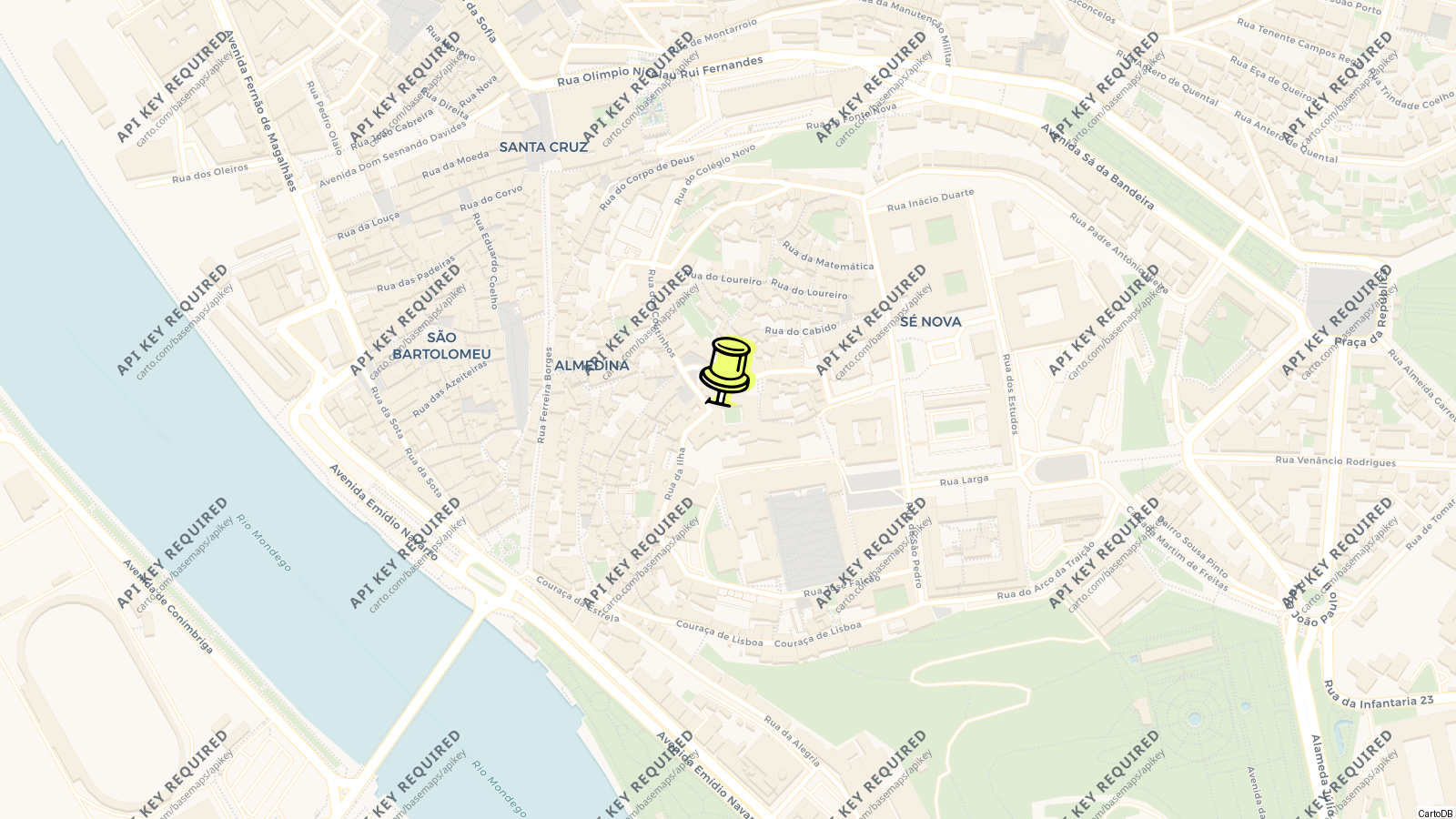
Essential info
Visit details
Overview
The Sé Velha is the Romanesque cathedral of Coimbra, begun after 1139 when Afonso Henriques declared himself king and chose the city as his capital, and the only Romanesque cathedral of the Reconquest in Portugal to survive more or less intact; Sancho I was crowned in it in 1185. It looks like a small fortress on the slope of the Alta, with crenellated walls and few windows, because it was built in a time of war.
Inside are some 380 carved capitals, one of the great ensembles of Romanesque sculpture in the country, the Flemish altarpiece of 1498 to 1502 that fills the main chapel, Seville tiles of about 1500 and the Renaissance chapel and doorway of Jean de Rouen; the cloister of 1218 is the transition from Romanesque to Gothic.
History
Coimbra had a bishop from the 5th century, after the Sueves sacked Conímbriga in 468. In 1139 the king funded a new cathedral to replace a decayed one, Bishop Miguel Salomão helped pay, and the design is credited to Master Robert, probably French and then building Lisbon cathedral, with Masters Bernard and Soeiro directing the work; the building was largely finished by the early 13th century and the cloister begun in 1218 under Afonso II.
Around 1500 Bishop Jorge de Almeida covered the nave in tiles from Seville and commissioned the great wooden retable from the Flemish carvers Olivier de Gand and Jean d’Ypres; in the 1530s Jean de Rouen built the Porta Especiosa on the north side, and around 1566 the Renaissance south chapel of the apse. In 1772 the see moved to the Jesuit church up the hill, and the old cathedral kept its Romanesque bones. In 2019 a new family of fungi found in its deteriorating artwork was named Aeminiaceae after the Roman city.
Visiting
The west front is a tower-like block with a portal and a matching window above, both carved with Romanesque motifs of Arab and pre-Romanesque descent, braced by thick corner buttresses against the slope; round the north side is the three-storey Porta Especiosa, eroded but still the best Renaissance doorway in the city, and from the east the apse shows its three chapels, two still Romanesque and the southern one rebuilt, under a Romanesque lantern with Baroque touches.
Inside, the nave and aisles carry barrel and groin vaults with a triforium gallery above for overflow congregations, and every column has a carved capital: plants, geometry, paired beasts and birds, centaurs, almost no human figures, the work of Mozarabic craftsmen who had settled in Coimbra from the Muslim south. The Seville tiles survive best on the wall left of the entrance and in the chapels. The main chapel is filled by the Flamboyant Gothic retable of Mary and Christ on its Romanesque altar table; the north chapel has Chanterene’s Renaissance altar and the south chapel Jean de Rouen’s retable of Jesus and the Apostles; the transept font of 1520 to 1540 came from São João de Almedina. Along the aisles are Gothic tombs, among them that of Vataça Lascaris, the Byzantine lady who came with Isabel of Aragon and lies under a double-headed eagle. The cloister’s pointed arches each frame two Romanesque round ones.
Tips
- The Quebra Costas steps from the Baixa arrive at the door; the Pantufinhas minibus does the climb for those who would rather not.
- The capitals need light: bring your eyes to the columns near the west window and the lantern, the two sources of daylight.
- The Porta Especiosa is outside; walk round to the north side, where the street is narrow and the doorway easy to miss.
- The old cathedral is the atmospheric one and the Sé Nova the quick one; if you have time for one, this is it.
Nearby
- University of Coimbra: five minutes uphill.
- New Cathedral: five minutes.
- Machado de Castro museum and the Roman cryptoporticus: three minutes.
- Monastery of Santa Cruz: ten minutes down.
Know this destination? Help us improve
Your local experience is valuable to other travelers.