University of Coimbra
Portugal's oldest university and its baroque Joanina library

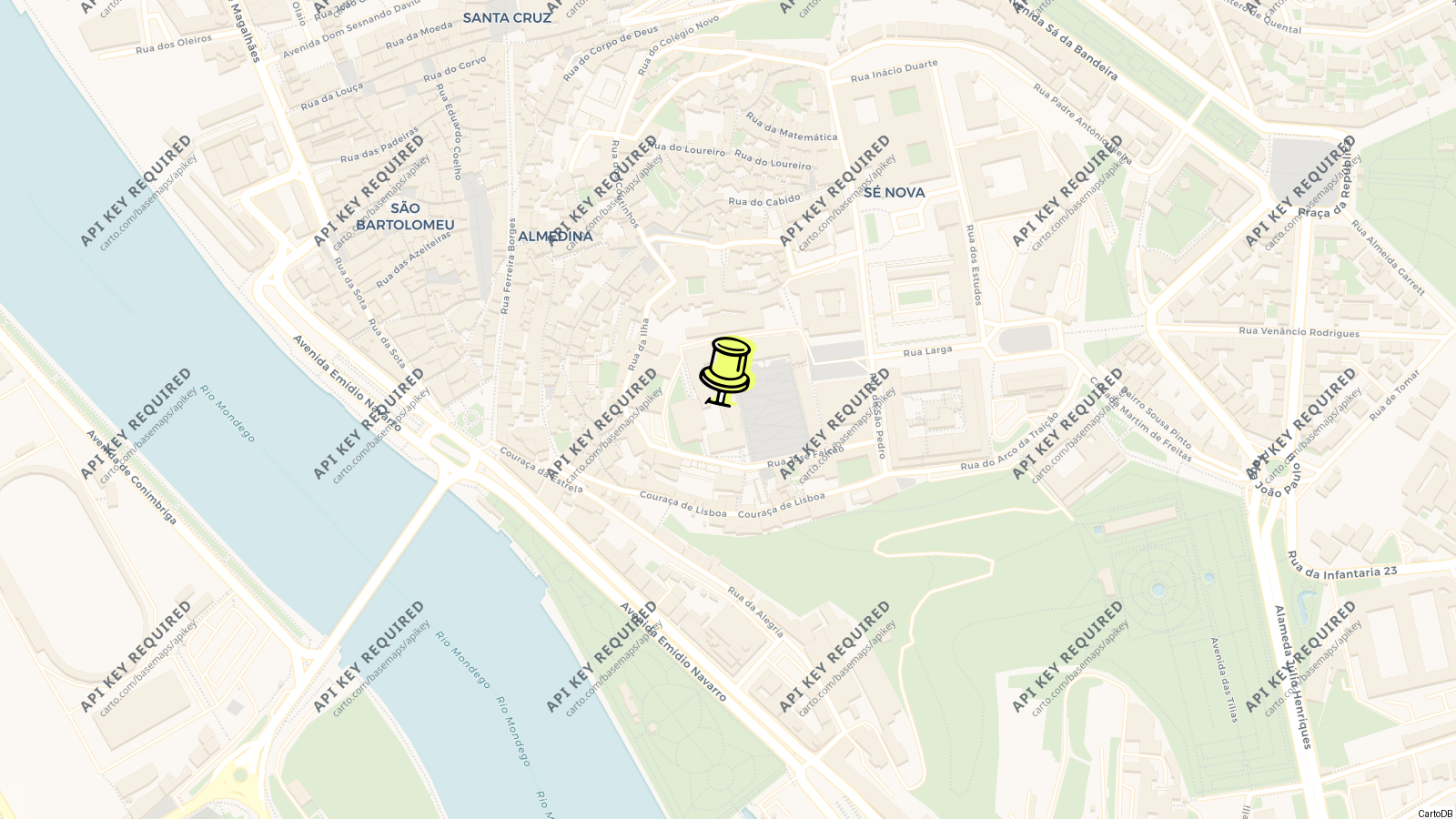
Visit details
Overview
The University of Coimbra is the oldest university in Portugal and one of the oldest in continuous operation anywhere, chartered by King Dinis on 1 March 1290, confirmed by Pope Nicholas IV that August, and settled since 1537 in the royal palace on the hilltop above the Mondego, the Paço das Escolas. UNESCO listed its buildings and the Alta around them in 2013 as a university city with ceremonies and traditions kept alive through the ages.
The visit is the courtyard and the buildings around it: the Biblioteca Joanina, João V’s baroque library of 1717 with 70,000 volumes and a colony of bats, the chapel of São Miguel, the ceremonial hall and the tower, with the view over the city and the river from the terrace. Some 25,000 students, more than 15% of them foreign, keep the place from being a museum.
History
The Estudo Geral began in Lisbon in 1290 with faculties of arts, law, canon law and medicine, moved to Coimbra in 1308 after friction with the Church and the townspeople, went back to Lisbon in 1338, returned in 1354, and left again in 1377 for a century and a half. In 1537 João III moved it to Coimbra for good and installed it in the Alcáçova palace, bought outright from the Crown in 1597, bringing professors from Salamanca and Paris and, for a time, the Scots humanist George Buchanan.
The Jesuits ran the college of arts until their expulsion in 1759; Pombal’s commission of 1770 reformed the university on Enlightenment lines, adding faculties of mathematics and natural philosophy, and the Jesuit college went to medicine. It was the only university in Portugal from 1290 to 1559 and again from 1759 to 1911, which made it the country’s political and social seedbed as much as its school; its alumni include Camões, the mathematician Pedro Nunes, most prime ministers and presidents and the Nobel laureate Egas Moniz.
Visiting
Enter the Pátio das Escolas through the Porta Férrea, the iron gate, on to the great terrace above the river with the statue of João III in the middle and the university buildings round three sides. The tower of the 18th century, whose bells still ring the academic day, the Via Latina colonnade of the palace, the Sala dos Capelos, the ceremonial hall where degrees are conferred, the chapel of São Miguel with its Manueline door, tiles and baroque organ, and the Joanina library are the ticketed route; the library is the queue.
The Biblioteca Joanina, begun by João V in 1717, is three rooms of gilded and lacquered shelving in green, red and gold under painted ceilings, holding more than 70,000 volumes of the 16th to 18th centuries; it is one of two libraries in the world, with Mafra’s, where a colony of bats is kept to eat the insects that would eat the books, and the tables are covered each night for that reason. Beneath it is the academic prison. The Science Museum by the Sé Nova, with natural history, physics and chemistry collections going back to Pombal’s reforms of 1772, is the other university visit worth the ticket.
Tips
- The Joanina queue builds by mid-morning in summer; be at the ticket office when it opens, or come late in the day.
- Students in black capes are not costume; the traje is worn to classes and ceremonies, and the Queima das Fitas in May is when the ribbons are burned and every bed in town is taken.
- Do not drive up; park by the river and take the Pantufinhas minibus or the market lift, then the stairs.
- The terrace of the Pátio das Escolas is free and open; the view over the Mondego at dusk costs nothing.
Nearby
- New Cathedral: two minutes.
- Old Cathedral: five minutes downhill.
- Machado de Castro museum: three minutes.
- Botanical Garden below the aqueduct: ten minutes.
Know this destination? Help us improve
Your local experience is valuable to other travelers.