Almudena Cathedral
Almudena Cathedral took over a century to finish and faces the Royal Palace right on Calle de Bailén, Madrid’s unlikely power duo.

Visit details
Overview
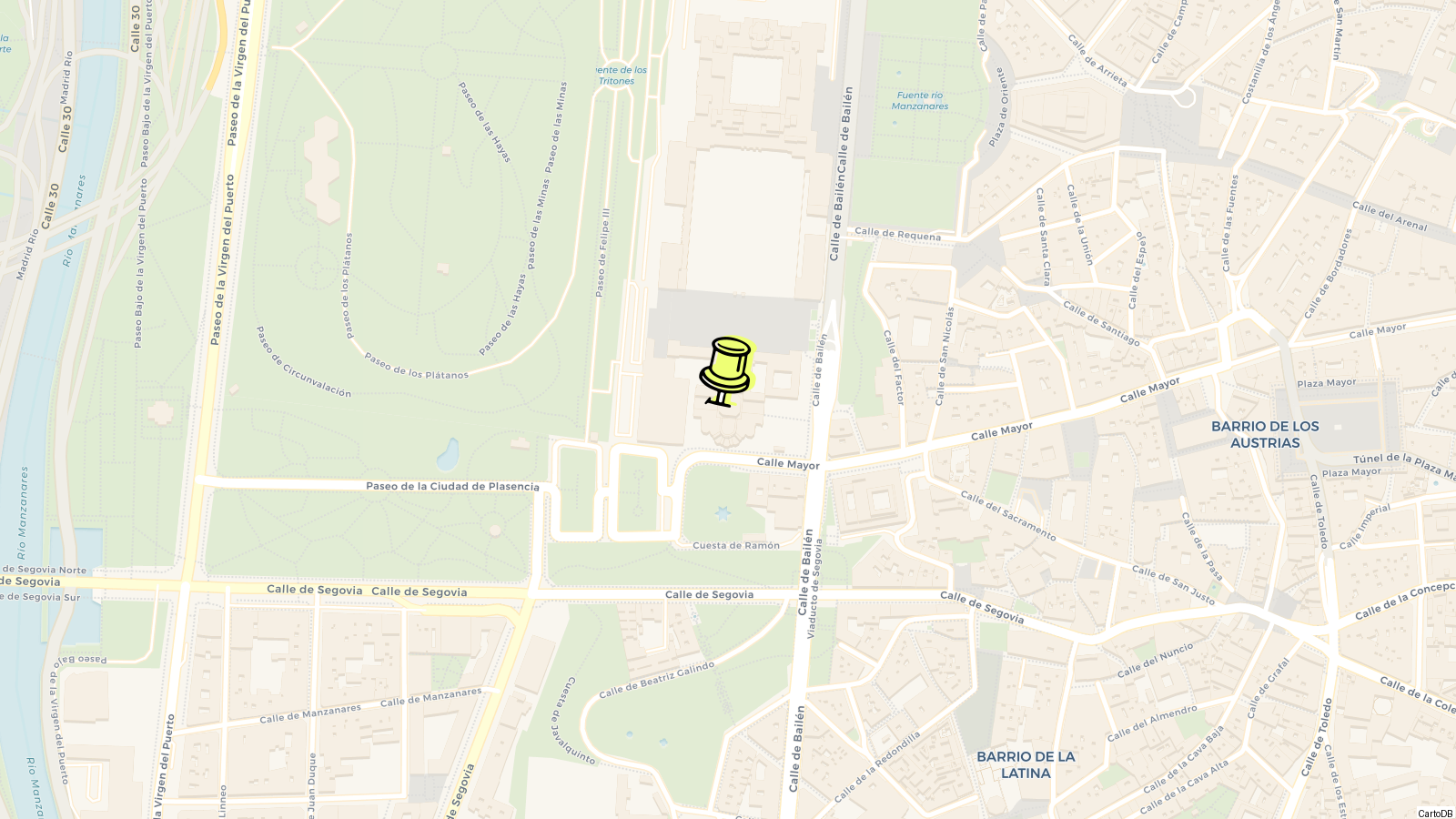
You’re standing in front of the cathedral at Calle de Bailén, 10, basically face-to-face with the Royal Palace of Madrid, about as central as it gets in this city. The Almudena Cathedral is a latecomer: the foundation stone was laid in 1883, but it took until 1993 for Pope John Paul II to consecrate it. Most people expect a centuries-old building, this one is newer than much of Madrid’s metro.
If you cross from the palace into the cathedral, you’ll notice the outside feels intentionally grand, trying to hold its own opposite all that Bourbon marble. Architect Francisco de Cubas started with a neo-Gothic plan, but later redesigns went full neoclassical on the exterior to match the Royal Palace’s facade. Inside is another story: pointed arches and a high, colorful neo-Gothic nave, but a good chunk of the chapels, icons, and even the mosaics are modern, leaning into the post-Franco era rather than the medieval one.
Entry is technically free, there’s a discreet desk just past the main doors with a sign suggesting a €1 donation, but nobody will chase you down if you walk past. The main building is open every day: 10:00–20:30 from September to June, with summer hours stretching until 21:00. There’s a separate museum and dome (look for the side entrance), open Monday through Saturday, 10:00–14:30; that’s €7 if you want to climb up for city views.
Every Madrid local seems to have walked past Almudena dozens of times, but most have never actually stepped inside. If you go, check out the crypt entrance via Calle Mayor: it’s the least visited part, feels much older, and houses a 16th-century statue of the Virgen de la Almudena. The cathedral is wheelchair accessible, with ramps and elevators (just ask if you don’t spot them).
Trains, metros, and buses all stop nearby. For door-to-door, take Metro to Ópera (Lines 2, 5, R). Otherwise, city buses 3, 31, 50, 65, 148, M3, and even the night bus N16 let you off a block away, or walk up from Cercanías Madrid-Sol station.
Museum entry covers the dome, climb the spiral staircase for a panoramic rooftop view of the palace, river, and west Madrid. If you want a guided tour (museum only), email reservasmuseo@catedraldelaalmudena.es a few days in advance; otherwise you’re fine just turning up. The staff mostly speak Spanish, but there’s English signage and a free downloadable audio guide on the official website.
History
The first stone went down on April 4, 1883, with King Alfonso XII himself presiding over the ceremony. That date is on the wall as you walk up, the whole thing took more than 110 years to actually finish, and Madrid locals joke that it sometimes still feels like a work in progress. Pope John Paul II finally consecrated the cathedral on June 15, 1993, all pomp, choirs, and TV cameras.
The spot wasn’t random. They say the cathedral stands on what was once a medieval mosque, bulldozed in 1083 during Alfonso VI’s reconquest. For centuries, Madrid was a capital without a cathedral, kings moved here in 1561, but the church’s top brass stayed down in Toledo, and building a whole new seat for the diocese was always “for next year.” By the late 1800s, with the empire crumbling and other Spanish cities building grand churches abroad, Madrid finally decided it was time.
Original plans by Francisco de Cubas were for just a parish church, but that changed fast after Pope Leo XIII created the Madrid-Alcalá bishopric in 1885. Suddenly, everyone wanted a full-on cathedral, and Cubas switched to a dramatic Neo-Gothic design. If you look up, the pointed arches still show that ambition.
Madrid’s cathedral project became a victim of its own ambitions and Spain’s constant political messes. Construction crawled, stopped, restarted, wars, bankruptcies, and changes of plan left brickwork standing in the rain more than once. The Spanish Civil War (1936–39) put everything on ice, and decades later, architect Fernando Chueca Goitia picked up the blueprints. He’s the reason the outside looks Baroque and matches the Palacio Real opposite, with that stately grey-and-white stone.
The interior, though, is a patchwork of ideas. Under Goitia’s guidance, the nave got a Neo-Gothic vibe, but with bright colors and quirky pop-art flares that feel much newer. Some chapels come straight out of a 1990s vision of spirituality, no medieval darkness, all light and modern lines. The crypt under the main floor, with its Neo-Romanesque arches, hides a 16th-century image of the Virgen de la Almudena and a surprising amount of local history.
At each stage, funding crisis, war, palace intrigue, old plans got ripped up and replaced. So when you step inside, you’re walking through a century of Spanish politics, design trends, and compromises made visible in stone and glass.
Some details reflect Madrid’s perpetual game of catch-up with “real” cathedral cities. The enormous Neo-Romanesque crypt is one of the few finished early, locals used it for daily worship while the rest sat wrapped in scaffolding for decades. The main cathedral finally opened just in time to host the wedding of then-prince Felipe (now King Felipe VI) and Letizia Ortiz in 2004, which everyone watched on TV so they could say they “finally saw inside.”
Nearly every big Madrid family with political clout wanted a burial spot here at one point. You’ll find tombs of Queen María de las Mercedes (wife of Alfonso XII), various princes and princesses of Bavaria, and Carmen Franco (Franco’s daughter), alongside architects like Francisco de Cubas himself.
If you look for historical leftovers, head to the crypt. The air feels different (damp, sometimes genuinely cold) and the stonework settles into that older, heavier mood. The contrast with the bright, recently completed spaces upstairs makes the timeline visible: down below, family coats-of-arms and battered sculptures from the 1800s; up above, bold stained glass and modern iconography.
The final result isn’t classical and isn’t futuristic. It’s a collage of Madrid’s “almosts” and “actually completeds” across a century when Spain itself kept changing the rules. The fact that entrance is now free (with a suggested €1 donation in 2026 for upkeep) would have surprised all those old patrons who expected private chapels and eternal construction bills.
Visiting
The main entrance is right on Calle de Bailén, and you can walk in for free any day between 10:00 and 20:30 (extended to 21:00 in July and August). They’ll ask for a voluntary €1 donation, but it’s not required. Inside, expect to see security and sometimes guards redirecting visitors during Mass. Dress isn’t policed, but it’s still a working cathedral, don’t show up in a swimsuit.
The nave runs the length of the building, a huge, luminous space with modern stained glass and painted ceilings. Check out the pop-art style decorations and the mosaics in the Blessed Sacrament Chapel, no, you’re not imagining it, that’s recent art, not some hidden medieval gem. People move quietly even when snapping photos (allowed, except during Mass). Weddings happen here, though not every day, a big one was the royal wedding of King Felipe VI and Letizia Ortiz in 2004.
Look for stairs (or elevator, full accessibility throughout the building) and head down to the crypt. It’s not as grand as Madrid’s bigger churches, but you do get to see some curious tombs and a 16th-century statue of the Virgen de la Almudena.
If you want the best view in central Madrid, pay for the museum and dome access. The museum and dome are open Monday to Saturday, 10:00–14:30, and you have to go earlier than you’d think if you want to avoid a queue, crowds are mild off-season, but in summer, count on 20+ minutes just to get in. Tickets are €7 for adults, €5 for students under 25, seniors 65+, and free for kids under 10. This gets you into the small museum of religious art (past bishops’ fancy hats, old altar pieces, royal wedding memorabilia), then a spiraling staircase up to the dome for a quick panoramic of the Royal Palace, Campo del Moro, and Casa de Campo.
Guided visits to the museum require booking via email (reservasmuseo@catedraldelaalmudena.es), but you can wander by yourself without any advance plans. The main cathedral has good multilingual signage, and staff speak enough English to solve any confusion. Wheelchair users get ramps, elevators, and accessible restrooms throughout the building.
Step-by-step: the typical visit
- Entry: Walk in from Calle de Bailén. Security check is minimal. Donation box for €1 is near the door.
- Main nave: Cross the nave, pausing to look up, the ceilings are more colorful than most cathedrals in Spain.
- Chapels: Side chapels, notably the modern mosaic work and contemporary sculptures, are freely accessible except during religious ceremonies.
- Crypt: Stairs (and elevator) lead down to the crypt, open during main cathedral hours; occasionally closed for funerals.
- Museum and dome: Buy a ticket at the side entrance; museum covers Catholic relics and royal history, and the dome (ask staff, as the route is unsigned) is up a winding staircase, with views over the Royal Palace.
- Gift shop: At the exit; basic souvenirs, nothing fancy.
Mass times
Regular Mass is held daily, but schedule changes often during religious holidays. Sundays and feast days are busy with locals. Sightseeing is discouraged during Mass, and access to chapels may be restricted.
Toilets and facilities
Restrooms are free, with accessible stalls. Drinking fountains are just outside the museum entrance.
To get here from the rest of Madrid, take Metro L2, L5, or R to Ópera and walk five minutes, or bus 3, 31, 50, 65, 148, M3, or N16. Madrid-Sol Cercanías is about a 10-minute walk. Taxis will drop you by the palace steps. There’s zero parking at the cathedral and nearby street parking is resident-only, you’ll get a fine if you risk it.
Tips
-
Bring some coins for the “voluntary” donation box at the entrance. They technically don’t require it, but you’ll get the slow side-eye from locals if you march in without leaving at least €1. Cards aren’t accepted for this.
-
The cathedral itself is free, but if you want to go up to the dome and museum, budget for €7 (€5 if you’re an EU citizen over 65, a student under 25, or have a disability; kids under 10 are free). The dome has the best view back toward the Royal Palace and over the city, but you’ll need to climb around 200 steps, no elevator for that part.
-
The dome and museum close at 14:30 and don’t open on Sundays. The staff is strict about this, if you come after 14:00 they’ll usually tell you there’s no time left.
-
Aim for late afternoon if you want sunlight through the stained glass in the nave, but visit the dome in the morning for clearer views, you’ll be shooting westward in the afternoon, and the glare can ruin photos.
-
Masses can close the nave, especially midday on Sundays and religious holidays. If the choir is rehearsing, main access might be roped off for 30–40 minutes. Check the cathedral’s own site for liturgical schedules before you go.
- The crypt is worth a detour if you like old stones and quiet corners (look for the 16th-century Virgin statue and the tomb of Queen María de las Mercedes). Bring a jacket; even in Madrid’s summer, it’s chilly underground.
The crypt entrance is on Calle Mayor, not at the main doors. Admission is separate, around €2, cash only, and opening hours are even shorter (roughly 10:00–13:00, but check posted times). Unlike the bright main cathedral, the crypt’s Romanesque columns and dim lighting make it feel closer to a medieval church than anything upstairs.
-
Wheelchair access is decent, there are ramps and accessible bathrooms, and most of the signage is in both Spanish and English. The dome, though, is stairs-only.
-
Guided tours of the museum are only by reservation (email reservasmuseo@catedraldelaalmudena.es at least a week ahead), but you can visit solo without booking. Groups are limited, so plan ahead if you’re trying to go with more than five people.
-
Nearest metro is Ópera (Lines 2, 5, and R). It’s a 4-minute walk, mostly downhill. Bus lines 3, 31, 50, 65, 148, M3, and N16 also stop near Plaza de Oriente.
-
If you’re here for the music or want to see the organ up close, ask at the entrance about rehearsal times, sometimes you can sit quietly in the nave while the organist practices for upcoming ceremonies.
-
Food and drinks aren’t allowed inside, and security actually checks bags at the dome/museum entrance. There aren’t any lockers, travel light or plan to carry your stuff.
-
Big events (like coronations or royal weddings) shut the whole cathedral, usually with little notice. Don’t bet a single day on your visit if that would ruin your plans.
Know this destination? Help us improve
Your local experience is valuable to other travelers.