Museo Nacional Centro de Arte Reina Sofía
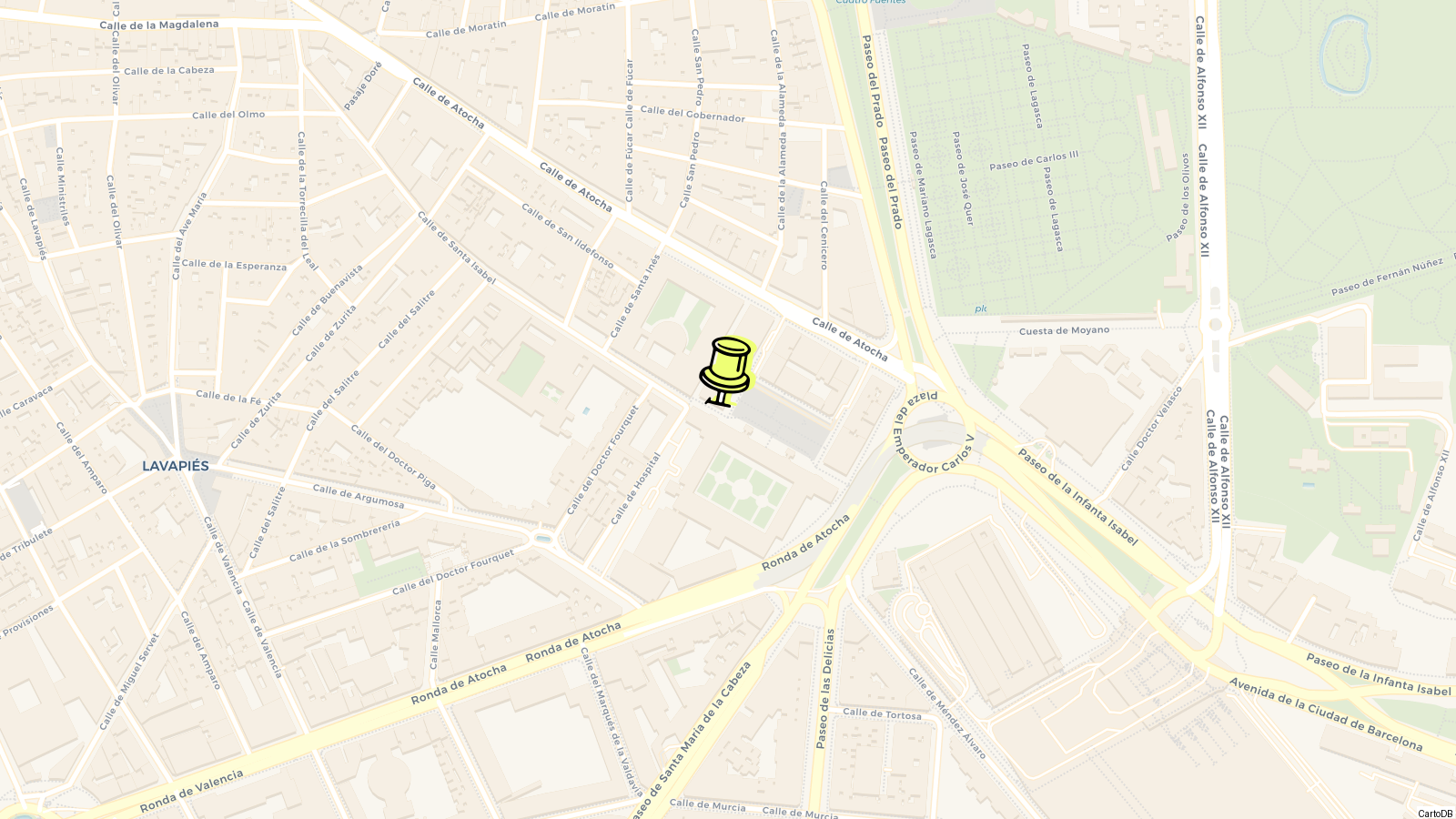
Picasso’s Guernica takes up an entire wall here, watched by 1.6 million visitors every year at Calle Santa Isabel 52.

Visit details
Overview
Picasso’s Guernica has hung here since 1992, guarded by thick glass and crowds with their phones out. The Museo Nacional Centro de Arte Reina Sofía sits at Calle Santa Isabel 52, a block from Atocha station, and focuses on Spanish 20th-century art, especially work from Picasso, Miró, Dalí, Juan Gris, and Maruja Mallo. General admission is €12, but the museum is free in the last two hours before closing (19:00–21:00 Monday, Wednesday–Saturday, and 12:30–14:30 Sunday). In 2025, 62% of people who came didn’t pay anything thanks to these hours or discounts.
The collection runs from late 19th-century painting and sculpture to wild multimedia installations: there’s nearly 25,000 pieces all told. You’ll see rooms devoted to the Spanish Civil War, surrealism, early abstraction, Catalan and Basque artists, plus a rotating mess of temporary exhibitions, sometimes international names, sometimes radical stuff no one outside Spain has heard of. Dalí’s avant-garde works arrived as a bequest in 1990, just before Guernica was transferred from the Prado the following year. Even if you just come to stand in front of Guernica, you’ll likely get swept up in the way the galleries put it in context, surrounded by preparatory sketches and works by its contemporaries.
The main site is housed in a former 18th-century hospital, so expect a hodgepodge of old courtyards, glassed-in elevators, and a slick Jean Nouvel extension with temporary shows, a bookshop, and two places to eat, Arzábal for plates like artichokes with jamón, and Nubel for international brunches. There’s also a library with over 100,000 art books and a sharp focus on contemporary theory.
The Reina Sofía’s building was designed by Francesco Sabatini and originally intended as the General Hospital of Madrid in the late 1700s, but only a third of the project was completed. It became a museum in 1992 after renovations and major additions in the 1980s and 2000s, including Ian Ritchie’s glass towers and Jean Nouvel’s sprawling extension. In addition to the main site, the museum holds temporary exhibitions at the Crystal Palace and Velázquez Palace in Retiro Park.
Masterpieces on view go beyond the big names: look for María Blanchard’s “Woman with guitar” (1917), Robert Delaunay’s “Portrait of Tristan Tzara” (1923), and Richard Serra’s minimalist sculpture. The permanent collection shifts focus every few years, often highlighting new acquisitions or movements from the international avant-garde.
Collection
Picasso’s Guernica fills its own high-ceilinged gallery here, but the permanent collection covers almost 25,000 pieces from the late 19th century to now, spread across three main buildings: the Sabatini (the core, former hospital), the Nouvel extension, and two historic pavilions inside Retiro Park (Palacio de Cristal and Palacio de Velázquez). The curation leans hard on Spanish artists, besides Picasso, you’ll come across surrealism from Dalí (The Great Masturbator, Enigma of Hitler), Miró’s experiments with color and shape, and the crisp Cubism of Juan Gris and María Blanchard. Maruja Mallo and Luis Gordillo are two more local names you actually see on the walls, not just in labels.
You’re not limited to Spaniards. The museum has a real investment in international postwar art, so expect rooms devoted to Francis Bacon, Kandinsky, Rothko, Magritte, Bruce Nauman, Joseph Beuys, Cindy Sherman, and more. There’s sculpture (Calder, Chillida), video art from Nam June Paik, monumental steel by Richard Serra (Equal-Parallel/Guernica-Bengasi), and works from across Europe, Latin America, and the US. The focus isn’t just “who’s famous”, you’ll run into less obvious picks, like Wolf Vostell’s early video installations, or Sarah Grilo, key to the Latin American abstraction wing.
The modern layout gives each collection its own floor, with 20th-century Spanish artists on the second and third floors of Sabatini, and temporary blockbusters or thematic shows downstairs or over in the newer Nouvel wing. Not everything is chronological, recent curation groups works by theme or context, like “War and Politics” or “Art and Technology.” A single visit can feel overwhelming, so if you want to see “just the Spanish big names,” focus on Floor 2: Room 206 (early 20th-century movements), 207 (Cubism), and 206.06, which is Picasso’s Guernica and its preliminary sketches.
More than paintings
There’s a library open to all (over 100,000 art books), and the museum leans into the “center” part of its name: there are regular film screenings, lectures, reading groups, and performance art. Public program attendance jumped 7.5% in 2025, with over 66,000 people joining discussions or events. If you’re a student, you can use the library for research without a ticket (you’ll need to check your backpack in a locker).
Retiro Park venues
The Palacio de Cristal and Palacio de Velázquez inside Retiro Park host temporary exhibitions, often large-scale installations. They’re included with your ticket and worth a detour if you want to stretch your legs or see art in a glass conservatory surrounded by ducks and trees. Sometimes these venues close for restoration (2025 saw partial closures), so check the official site ahead of time.
Recent acquisitions have boosted the gender and international range, they spent €402,760 in 2026 on new works from 14 living artists, including nine women, at the ARCO art fair. You’ll also find more post-1975 material than before, with whole galleries devoted to La Movida and Spanish political art since the end of the dictatorship.
Finally: photography is allowed almost everywhere, but never in front of Guernica or where explicitly marked, and never with flash, tripods, or selfie sticks. Check your bag at the free cloakroom, and go early or during the last free hours (especially Sundays, 12:30–14:30) to avoid school groups and the biggest crowds.
Visiting
Arrive at 52 Calle Santa Isabel and the first thing you’ll do is choose which entrance line to suffer (or skip), the main one can drag, but there’s an accessible side entrance near the bookstore that’s almost always shorter. Security is bag-scanning and moves faster than at the Prado, but don’t expect to breeze through if you arrive around 11:30 or after 18:30 (when the free evening stampede hits).
Ticketing is in the modern Nouvel building. General admission is €12, or you can buy a two-visit pass valid for a year for €18. Free entry kicks in Monday, Wednesday, Thursday, Friday, and Saturday from 19:00–21:00 and Sundays from 12:30–14:30, but you still need to collect a timed free ticket at the desk or online. Busiest is 19:00–21:00: the after-work crowd floods in, and 62% of annual visitors get in free.
The visit breaks down into two big zones: the Sabatini building (old hospital, mainly the permanent collection) and the Nouvel extension (temporary shows, library, auditorium, big bookstore, and the terrace that nobody seems to notice). Bags and big backpacks aren’t allowed in the galleries, a free coat check operates just past security.
You can take photos for personal use anywhere except where signs say otherwise, as long as you skip flash, tripods, and selfie-sticks.
Enter the Sabatini building and you’ll find three main floors around a cool, leafy central courtyard. Route planning depends on your art tolerance: most people just carpet-bomb the highlights, but if you want to actually SEE instead of glance, pick a couple of favorites. Level 2 is where the 20th-century Spanish icons (including Guernica) live, look for the glass elevator banks, then follow the flow of crowds dragging you in the right direction, even if you have no sense of museum geography.
Suggested plan:
- Start on the second floor of Sabatini for the Spanish modern core: after Guernica and the Civil War galleries, branch east for Miró and Gris, or west for Dalí and the surrealists.
- Wander down to Level 1 for less-crowded rooms dedicated to Spanish abstraction and postwar art.
- If you snag a ticket for a temporary show in the Nouvel, cross through the connecting passageway (signposted in English and Spanish) and check out whatever’s on; these rotate every few months, sometimes with works by living artists or experimental installations.
- The Crystal Palace and Velázquez Palace out in Retiro are separate with REINA SOFÍA branding, but you don’t need a main ticket for those, just show up during their limited open hours.
- For a breather (and actual daylight), pop into the Nouvel bookshop or upstairs to the cafeteria terrace.
Facilities: Arzábal does the classic sit-down lunch (last risotto about 16:00), while Nubel in the newer wing gets busier during brunch and for coffee. Accessible restrooms and routes exist everywhere, with ramps and elevator buttons marked in braille.
The museum closes at 21:00 (14:30 Sundays), but galleries start clearing 15 minutes before and the ticket desk closes half an hour earlier, don’t aim for a last-minute sprint. Tuesdays, and major Spanish holidays, closed. Check the official site if you need specifics.
Practicalities: lockers are free but you can wait during rush hour. No food allowed in galleries. The place is fully wheelchair accessible, and there’s a medical point onsite. If you need the art library, register at the front desk; no same-day tourist walk-ins.
Museum fatigue is real here; nobody does all of it in a single go and stays sane. Hit your highlights, break for coffee, and don’t stress about skipping a wing full of endless conceptual videos.
History
You’re standing in what was once Madrid’s main hospital. King Ferdinand VI kicked off construction in the mid-1700s when the city’s patchwork of old hospital buildings just couldn’t keep up. The Italian architect Francesco Sabatini did most of the work, but by 1805, they’d only built a third of the original design. This hospital rattled along for the next 160 years, picking up odd renovations and uses, until it finally shut its doors as a hospital in 1969.
It sat empty for a bit, then the Spanish government decided to turn the space into an art museum. The transformation wasn’t quick, modern renovations kicked off in 1980 and lasted through the decade. By 1986, art exhibitions took over the old wards. In 1988 it officially earned its “national museum” status. London architect Ian Ritchie gave the building its glass elevators in 1989, if you see the glass towers from the street, that’s him. The main Reina Sofía building as you visit it today officially opened in September 1992.
It opened with a decent collection, but the big arrivals that made the museum famous happened in the early 1990s. Salvador Dalí’s complete avant-garde works arrived by bequest in 1990. Just as importantly, Picasso’s Guernica moved over from the Prado in July 1992, without this, Reina Sofía would probably see half the visitors it does now. The first surge of visitors followed quickly, and the museum continues to break attendance records, in 2025, it logged over 1.6 million visitors.
From Hospital to Museum: The Full Story
Madrid’s main hospital was first planned out to unify several smaller medical facilities scattered around the city. Sabatini was brought over from Italy in the 1700s, he also built the Royal Palace’s grand staircase, so you get an idea of the scale intended. Budget shortfalls and wars slowed construction; finally, by the time the hospital opened in 1805, it was only a shadow of the original plans.
Throughout the 19th and 20th centuries the building played every hospital role imaginable, military, general, even maternity near the end. Bits were swapped out, expanded, or repurposed. Come the late ’60s, public health policy changed, and this building was too outdated, so it was shuttered. Artists and planners started agitating for a new art centre to house modern and contemporary Spanish works. Demolition was considered, but the bones of the place were solid, and Sabatini’s neoclassical core was now protected as a monument (“bien de interés cultural” since 1978).
When authorities officially green-lit the art centre in the 1980s, adapting an old hospital proved tricky. The gallery spaces came through first; then the famous glass elevators sprouted up in 1989. By then, the biggest coup was still ahead: Guernica finally coming “home” to Spain, and then to Reina Sofía, after decades in exile.
The 2005 Jean Nouvel expansion was the last huge shakeup, stretching the building’s footprint and adding space for concerts, lectures, and blockbuster exhibits. Even today, the museum still operates the historic Crystal Palace (Palacio de Cristal) and Velázquez Palace inside Retiro Park for temporary shows, so it’s never just about the main site.
The story’s not all positive. In 2026, the museum hit the headlines for expelling three Israeli visitors after complaints about visible Jewish symbols, a decision caught on video and hotly debated in Spain, raising issues about security, public policy, and freedom of expression. This isn’t the first time Spanish museums have had to navigate politics and public opinion, it comes with housing the country’s most incendiary painting.
Tips
- Tickets are €12 for adults, but you can enter for free Monday, Wednesday, Thursday, Friday, and Saturday from 19:00 to 21:00, and Sunday from 12:30 to 14:30 if you reserve a free-entry ticket in advance. Free admission tickets are required even during free hours, book them ahead online if you want to avoid the ticket desk queues.
- The largest crowds hit after 19:00 on Wednesdays, Fridays, and Saturdays, especially during free hours. For a quiet visit, go mid-afternoon on a weekday (not Tuesday).
- The main entrance line can be slow. There’s an accessible side entrance near the bookstore that’s almost always shorter.
- Last entry is 30 minutes before closing, and they start clearing the galleries 15 minutes before close. Don’t cut it close or you’ll be rushed out.
- The place is closed every Tuesday, plus January 1, January 6, May 1, May 15, November 9, December 24, 25, and 31.
- Photography is fine (no flash/tripod/selfie stick). Check signage, some temporary exhibitions ban photos.
- Metro Line 1 (Estación del Arte/Atocha) drops you a block away. Lavapiés station (Line 3) is a 5-minute walk.
- If you want to see Guernica without 50 phones in your face, get there just after opening or during lunchtime lull.
- Wear comfortable shoes, you’ll cover a lot of ground across multiple wings, and the floors are hard.
- Bags bigger than a small purse must go in the cloakroom, bring a €1 coin for the lockers. Avoid big backpacks; you’ll waste time checking them in.
- If you need a break or actual food (not just snacks), the on-site cafés have proper meals, Arzábal is more classic Spanish, Nubel does brunch and coffee.
- The museum is fully accessible: ramps, elevators with braille, accessible restrooms, and medical assistance on call.
- If you want to browse the art library, bring ID and allow time for security; there’s free WiFi, but you can’t bring food or large bags in.
- Most people only see the main building, but the Reina Sofía also has temporary exhibitions in the Velázquez Palace and Crystal Palace in Retiro Park, worth checking if you’re already headed to El Retiro.
Know this destination? Help us improve
Your local experience is valuable to other travelers.