Museo del Prado
Las Meninas is just five minutes from the entrance, always surrounded by a sea of phones and that low museum hush you only notice when it’s gone.

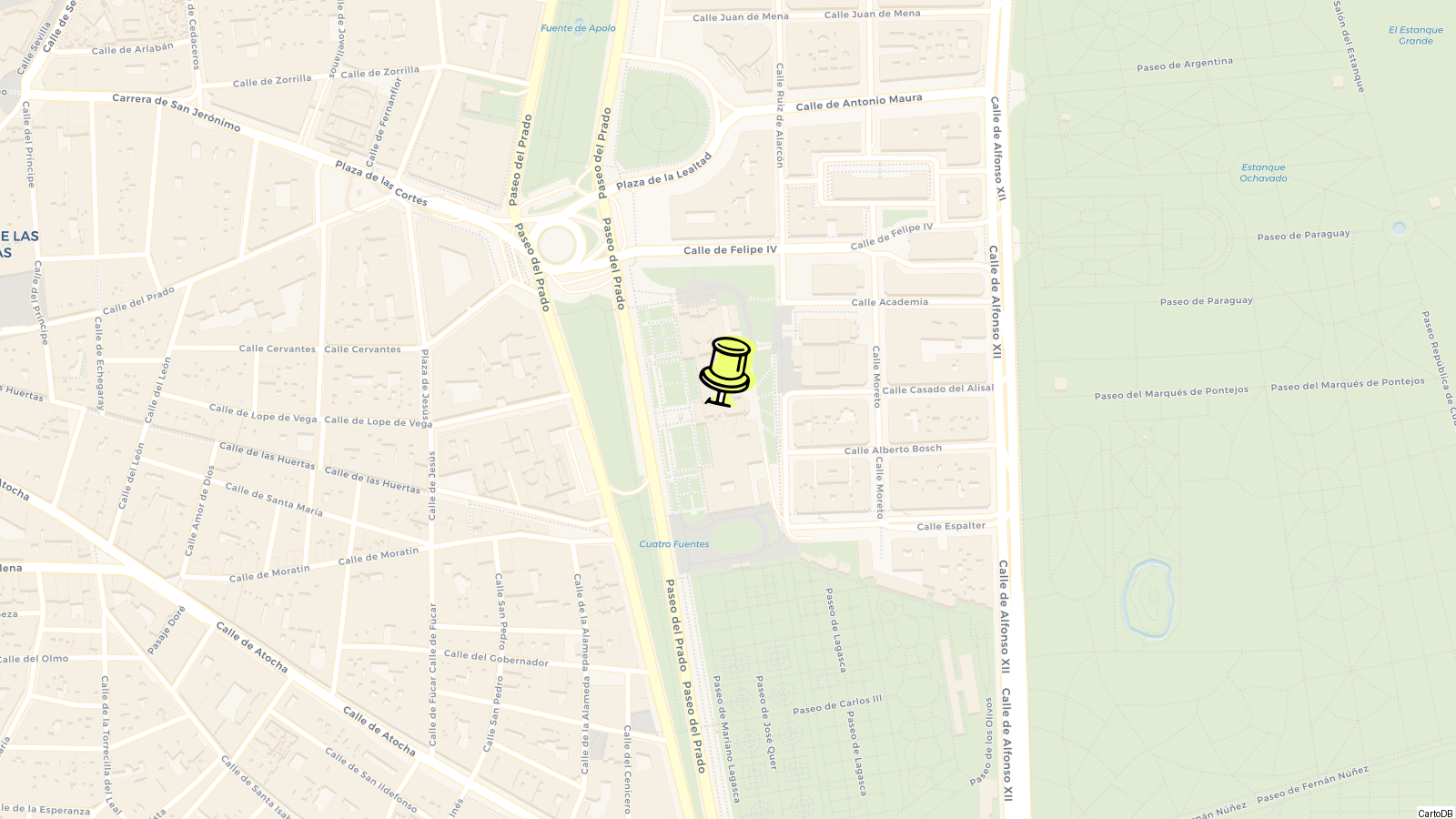
Overview
Las Meninas hangs a few minutes from the main doors, with hundreds of phones pointed at it every hour of the day. Museo del Prado has been open since 1819 in the same neoclassical building on Paseo del Prado, designed by Juan de Villanueva, originally for natural history specimens, not paintings. Today it’s the busiest art museum in Spain, with 3.2 million visitors in 2024 and lines most mornings even in winter.
The collection isn’t just Spanish painting, the core is works from the royal collection, much of it acquired by Habsburg and Bourbon monarchs between the 16th and 18th centuries, but there’s a serious haul of Flemish, Italian, and even German and French pieces, spanning 12th to early 20th century. Goya is everywhere, with “The Third of May 1808,” the Black Paintings (you’ll spot “Saturn Devouring His Son” in at least 100 T-shirts outside), and portraits of half the Spanish court and their less-flattering friends. Velázquez’s “Las Meninas” gets the crowds, but you’ll actually get a moment of silence with Bosch’s “Garden of Earthly Delights,” Rubens’ “The Three Graces,” or the Raphael and Titian halls if you dodge peak hours.
As of 2024, there are around 7,600 paintings, 8,200 drawings, 4,800 prints, and 1,000 sculptures in the collection, but only about 1,300 works are on display at once, the rest rotate or are on loan. Don’t expect to see it all in a day. Even with a map and a plan, you’ll end up sidetracked by something wildly odd, like the room of Antonio Gisbert’s executions or the scattered paintings from the Museo de la Trinidad.
Practicalities matter here. Full-price adult admission is €15; students under 26 and kids under 18 get in free, and everyone can enter free for the last two hours of the day (weekdays 18:00–20:00, Sundays 17:00–19:00), which is when locals actually visit and the lines spike again.
Prado’s Place in the “Golden Triangle of Art”
Prado isn’t a one-off stop. Walk five minutes east and you hit Thyssen-Bornemisza’s encyclopedic sweep from the Renaissance to Pop Art. Cross south and Reina Sofía covers Picasso, Miró, Dalí, and all things 20th-century (Guernica included). All three together make up what Madrid officials keep calling the “Triángulo del Arte.” If you’re on a museum binge, go for the Paseo del Arte pass (€32.80), one ticket, valid for entry at each institution.
Architecture: From Villanueva to Moneo
Villanueva’s 1785 original building is still the heart, though it went through expansions and a major overhaul in 2007 by Rafael Moneo, who added almost 16,000 extra square meters underground for temporary shows, a shop, and cafeteria. The glass entrance isn’t pretty, but it swallowed most of the school group chaos and lines inside. The Goya façade faces north, the Murillo entrance south, but everyone lines up by Velázquez’s statue on the west.
Collection
The Prado’s collection is a crash course in Spanish and European art from the 15th to the early 20th century. Goya takes up more space than anyone, his “Black Paintings” (Saturn Devouring His Son, The Dog) get their own spooky gallery, and you’ll find both The Nude Maja and The Clothed Maja nearby. Velázquez anchors the set pieces, especially Las Meninas (the most photo-mobbed painting in Spain), The Surrender of Breda, and The Triumph of Bacchus. Bosch’s The Garden of Earthly Delights is here, and people sprint straight for it. Expect a ring of visitors around the triptych almost every hour.
You’ll pass through rooms packed with Titian’s portraits and mythologies, Rubens’s fleshy allegories (The Three Graces, The Judgement of Paris), and a hall of El Greco’s strange, elongated saints. Other highlights include Fra Angelico’s Annunciation, Rembrandt’s Artemisia, Dürer’s Adam and Eve, Raphael’s Madonna of the Pearl, and several Bruegel landscapes. There’s also an impressive lineup of Zurbarán, Murillo, and Ribera, especially if you’re into still life and intense religious scenes.
Most of what you see are paintings, but the permanent collection actually covers over 7,600 paintings, more than 8,000 drawings, around 4,800 prints, and roughly 1,000 sculptures. You’ll only see about 1,300 works on display, rotation and loans are part of the deal.
How the Prado Organizes Its Galleries
The main building (Villanueva) is divided by centuries and schools. Spanish painting is the backbone, especially on the first floor: Goya, Velázquez, Zurbarán, Murillo, Ribera, and El Greco each get focused sections, generally moving in chronological order. The ground floor covers Flemish (Bosch, Rubens, Bruegel) and Italian (Raphael, Titian, Tintoretto) painting, with temporary exhibitions usually in the new extension.
Sculpture and the smaller drawings/prints collections usually appear as supporting displays scattered between rooms, so don’t expect an entire room of marble. The museum map (free at the entrance or downloadable online) is not optional, without it, you’ll miss half of what you came for.
Special exhibitions frequently showcase works from closed-off reserves or international loans, so check the museum’s site for what’s moved temporarily or what major painting is out on loan.
You’ll be frustrated if you try to cover everything in one go. Most regulars settle on a single era for each visit: 17th-century Spain, then maybe a corridor of Titian or Rubens, and finally two or three personal oddities (like Patinir’s “Charon Crossing the Styx” or Zurbarán’s “Agnus Dei”).
Works Not to Miss (and Why)
- Goya: His “Black Paintings” are in rooms 67-70. If you want to compare early and late Goya, hit his portraits back in rooms 32-36.
- Velázquez: Las Meninas is usually Room 12, but check the signs, sometimes the gallery changes for renovations or crowd control. Don’t miss The Triumph of Bacchus and The Surrender of Breda in nearby rooms.
- Bosch: The Garden of Earthly Delights is the main draw, but The Haywain Triptych and The Seven Deadly Sins are close by in the same Flemish section.
- Rubens: His mythologies and The Three Graces hang together in larger galleries on the ground and first floors.
- El Greco: His most famous painting here is The Nobleman with his Hand on his Chest (Room 8), but his altarpieces and portraits fill several adjacent rooms.
- Italian Masters: Titian, Raphael, Caravaggio, and Tintoretto are grouped together by period on the ground floor.
Check for the current gallery numbers both on the map and digital signs, as major rehanging happens every few years.
Not everything is old master oil painting. There’s a small but solid group of late-19th-century canvases from the absorbed Museo de Arte Moderno, think Sorolla, Rosales, or Madrazo, though these can rotate or be shifted into temporary exhibitions.
You can spend €5 for an audio guide (in 15 languages, covers 250+ works) or pony up another €10 for a 90-minute guided tour (in English or Spanish, specific times only, book online or at the info desk). These help if you’re picky about context, but the wall texts don’t skimp on detail.
Sculptures, Prints, and Other Surprises
Most people don’t realize the Prado has more than paintings. The sculpture holdings are strongest in Renaissance and Baroque pieces, with a few Greco-Roman examples, scattered through the main floor and sometimes shown in special themed galleries. Prints and drawings are heavily restricted for conservation, but occasional exhibitions draw on the more than 8,000 works.
If you catch a temporary show in the new wing, it’s worth it, they’ve recently displayed everything from Fra Angelico to Picasso on loan from the Hermitage or updates from recent acquisitions.
If you’re here for a marathon, try the Paseo del Arte multiday pass. €32.80 gets you into the Prado, Reina Sofía, and the Thyssen-Bornemisza, and you’ll spot works passed between them over the years. The Prado is about depth and options, the highlights can be covered in 90 minutes, but the collection could honestly take days to work through.
Visiting
Entrance is €15 for adults, €7.50 for over-65s, youth card holders, and large families, and free for under-18s, students aged 18–25, unemployed, teachers, journalists, and people with disabilities (bring ID or proof). You can skip the ticket line by buying online at the official website. During the last two hours (Monday–Saturday 18:00–20:00, Sunday and holidays 17:00–19:00) everyone gets into the permanent collection free, but expect a queue and little peace in front of Las Meninas or The Garden of Earthly Delights.
The main entrance is on Paseo del Prado. Lines can get silly, especially in spring and autumn, so showing up early or booking a slot online is worth it. Big bags go through X-ray and you’ll sometimes have to check them. Strollers are allowed; wheelchairs can be borrowed at the desk. The museum is fully accessible, with lifts and ramps on all public routes.
Once inside, you’ll pass through security and into a lobby full of day packs and umbrellas. Most people aim for the ground floor (paintings by Bosch, El Greco, Velázquez) or the Goya rooms. The famous ones (Las Meninas, The Triumph of Bacchus, The Third of May) are best seen first thing or late, before local school groups or tour groups block every sightline.
Classic Route for First-Time Visitors
If you only have an hour or two, head straight to these rooms:
- Ground floor: Bosch’s The Garden of Earthly Delights, El Greco’s Nobleman with his Hand on his Chest
- First floor: Velázquez’s Las Meninas (Room 12), The Surrender of Breda, Goya’s Black Paintings (easy detour)
- Don’t miss Rubens’ The Three Graces (Room 29) and Titian’s Bacchanal of the Andrians (around Room 49)
- If you like 19th-century painting, Sorolla, Rosales, and Madrazo are on the top floor
For a more relaxed visit, skip the audio tour mob and focus on one wing, Italian and Flemish rooms are often emptier than the central Spanish highlights.
Guided and Audio Tours
- Audioguide: €5, covers 250+ works, in 15 languages
- Guided visit: €10 extra (on top of ticket, 90 minutes, in Spanish/English, mornings and afternoons)
- Private morning tours: 9:00–10:00, €50/person (must book for a group, min 12 people)
Actual decent English language info can be patchy in the galleries; grab a leaflet at the entrance.
Don’t try to see everything unless you have a specific reason for combing through 7,600 paintings. About 1,300 are on display and the rest are in storage. If you’re short on time, choose either the ground floor (Renaissance and Baroque) or the first floor (17th–19th century, plus Goya’s Black Paintings in the annex). Famous works are signposted, follow the crowds for a crash course in art, pick a side corridor for peace.
You can visit the shop and cafe without a ticket, both are in the extension, down the ramp from the main entrance. Lockers, toilets, and info desks are also here. The museum is closed on January 1, May 1, and December 25. It closes early (10:00–14:00 only) on January 6, December 24, and December 31.
History
When Prado’s doors opened to the public in November 1819, most of the 1,510 paintings on site had been hauled over from royal palaces and monasteries. Queen María Isabel de Braganza (wife of Fernando VII) pushed for a “Royal Museum of Paintings and Sculpture” so Spain could show Europe it could go toe-to-toe with Italy and France, at least in art. The original space was never meant for paintings, a full generation earlier, Carlos III had commissioned Juan de Villanueva to build him a Natural History Cabinet on the Paseo del Prado, part of his Enlightenment drive for fancy science institutions.
Stuffing all those canvases into Villanueva’s neoclassical halls didn’t always work. By the late 1800s, the Prado kept growing: smaller Madrid museums (like the Museo de la Trinidad in 1872, and the Museo de Arte Moderno in 1971) were liquidated and their collections dumped into the Prado, along with private bequests that ranged from medals to entire painting series. There’s a reason so much 19th-century Spanish art is crammed into the back halls: it came with the museum from the now-defunct Museo de Arte Moderno.
The place has been national property since 1868, when Isabel II was send packing and Spain briefly dabbled in being a republic. During the Franco years, government trucks even hauled paintings off to embassies around the world for a bit of soft power. But the Civil War was the real test. When bombs started falling on Madrid, a handful of museum staff and a League of Nations team wrapped, crated, and evacuated more than 350 key works (plus the Dauphin’s Treasure), moving them from Valencia to Geneva in roundabout, nerve-wracking freight trains. Everything got sent back and rehung after WWII.
How the building evolved
Villanueva’s main rectangle is older than Belgian fries, but much of what you walk through today is patchwork. The first extensions, short rear pavilions, went up between 1900 and 1960. In 2007, Rafael Moneo (the guy behind the new Atocha station) added a wedge-shaped expansion and a sunlit underground entrance area, mostly to get the shops and cafeteria out of the way so there’s more gallery space. The old Jerónimo cloister was moved, stone by stone, to stabilize the new build. The separate Casón del Buen Retiro now handles study and exhibitions, and the long-neglected Hall of Realms (part of the old Buen Retiro Palace) is finally getting renovated, Norman Foster and Carlos Rubio’s 36 M€ plan is dragging a bit, but sometime in the late 2020s the Prado will get roughly 5,700 more square meters for display.
The first catalogue (1819) only admitted Spanish paintings, but the Bourbon and Habsburg kings had grabbed masterpieces from Italy, Flanders, and Germany, Bosch, Titian, Rubens, Dürer, Raphael, the works, so the core collection got international fast. Donations and strategic purchases kept coming: Goya’s “Black Paintings” came as a bequest in 1881; new purchases have included pieces by El Greco (“The Fable,” “Flight Into Egypt”), Goya (“The Countess of Chinchón”), and Bruegel (“The Wine of Saint Martin’s Day”) even in the last two decades.
Loans, government funding changes, and the ever-present issue of space keep pushing the Prado to renovate and adapt. The museum was funded almost entirely by the state up to the 2000s; after 2004, corporate donors and merchandising took a larger share.
Madrid’s “Golden Triangle of Art”, Prado, Reina Sofía, and Thyssen-Bornemisza, all cluster in about half a kilometer, pulling in over five million visits a year pre-pandemic.
Tips
-
Book tickets ahead on the official website if you want to skip the line, especially in spring and autumn, weekends, and whenever there’s a major exhibition. The wait for walk-up entry can reach an hour or more by midday.
-
Go early or late. Doors open at 10:00, but crowds are thinnest right at opening and during the last two hours, when entry is free (Mon–Sat 18:00–20:00, Sun/holidays 17:00–19:00). Last entry is 30 minutes before closing; guards start clearing galleries 10 minutes before the hour.
-
Large bags and backpacks go into the (free) cloakroom. But keep wallets, passports, and any valuables on you. Water bottles (up to 500ml, plastic only) are allowed, but food, umbrellas, tripods, and selfie sticks aren’t.
-
Mondays and Wednesdays usually see fewer tour groups than Fridays and weekends. School groups ramp up in May and June.
-
If you want a guided tour (offered in English and Spanish), book it at least a day ahead, spots are capped at 20 people per group as of 2026. Audio guides are five euros and cover over 250 works in 15 languages.
-
Wheelchair users can borrow a chair or use ramps and elevators throughout. The museum is fully accessible and guide dogs are welcome. Strollers are allowed, but you may be asked to take a museum-provided lightweight buggy in some areas.
-
You’ll need 3–4 hours to see the main works without rushing. Trying to see it all in one shot is overwhelming: focus on one or two wings, take a break in the café, and save the rest for another day.
How to prioritize if you’re short on time
If you only have an hour, head straight up the grand staircase from the Velázquez entrance to Floor 1, Room 12 (Las Meninas, Velázquez), detour to Room 32 (The Garden of Earthly Delights, Bosch), then check out Goya’s Black Paintings in the ground floor galleries (Rooms 67–68). To hit El Greco and Rubens, use the free museum maps, they show locations of every major painter. Don’t underestimate the walking: just the main loop is over a kilometer.
-
Photos are forbidden in almost all galleries (including with your phone), except in specific temporary exhibition zones. Staff are strict about this.
-
The café and museum shops are in the Rafael Moneo extension, accessible without leaving the secure zone. Both get crowded around 13:30 and 17:00; there are usually no lines after 15:30.
-
The museum is closed: January 1, May 1, December 25. On January 6, December 24 and 31, it closes early (at 14:00).
-
If you plan to visit Reina Sofía or Thyssen-Bornemisza too, look into the Paseo del Arte pass for €32.80, it’s easier than buying separate tickets if you want to visit all three within a year.
-
There’s no dress code, but the climate control can be chilly, especially in the older rooms. Bring an extra layer, even in summer.
Pro-level: morning strategy
Arrive 10–15 minutes before opening (09:45 latest) and use the Goya entrance for pre-booked tickets; avoid the Velázquez doors, as those lines fill with day-tripper groups. You’ll have the top-floor galleries almost to yourself for 45 minutes. By 11:30, the main wings get crowded and it’s much harder to see the famous works up close.
Know this destination? Help us improve
Your local experience is valuable to other travelers.