Pena Palace
Ferdinand II's red and yellow Romantic castle on the summit

Visit details
Overview
The Pena Palace is the red and yellow Romantic castle on the summit above Sintra that Ferdinand II, the German consort of Maria II, built between 1842 and 1854 out of a ruined Hieronymite monastery, with the Baron von Eschwege as his architect: a deliberate jumble of neo-Gothic, neo-Manueline, neo-Moorish and neo-Renaissance with a drawbridge, a Moorish arched courtyard, a clock tower and a window copied from the Convent of Christ at Tomar. It is the most visited monument in Portugal, a World Heritage site since 1995 and one of the Seven Wonders of Portugal; on a clear day it is visible from Lisbon.
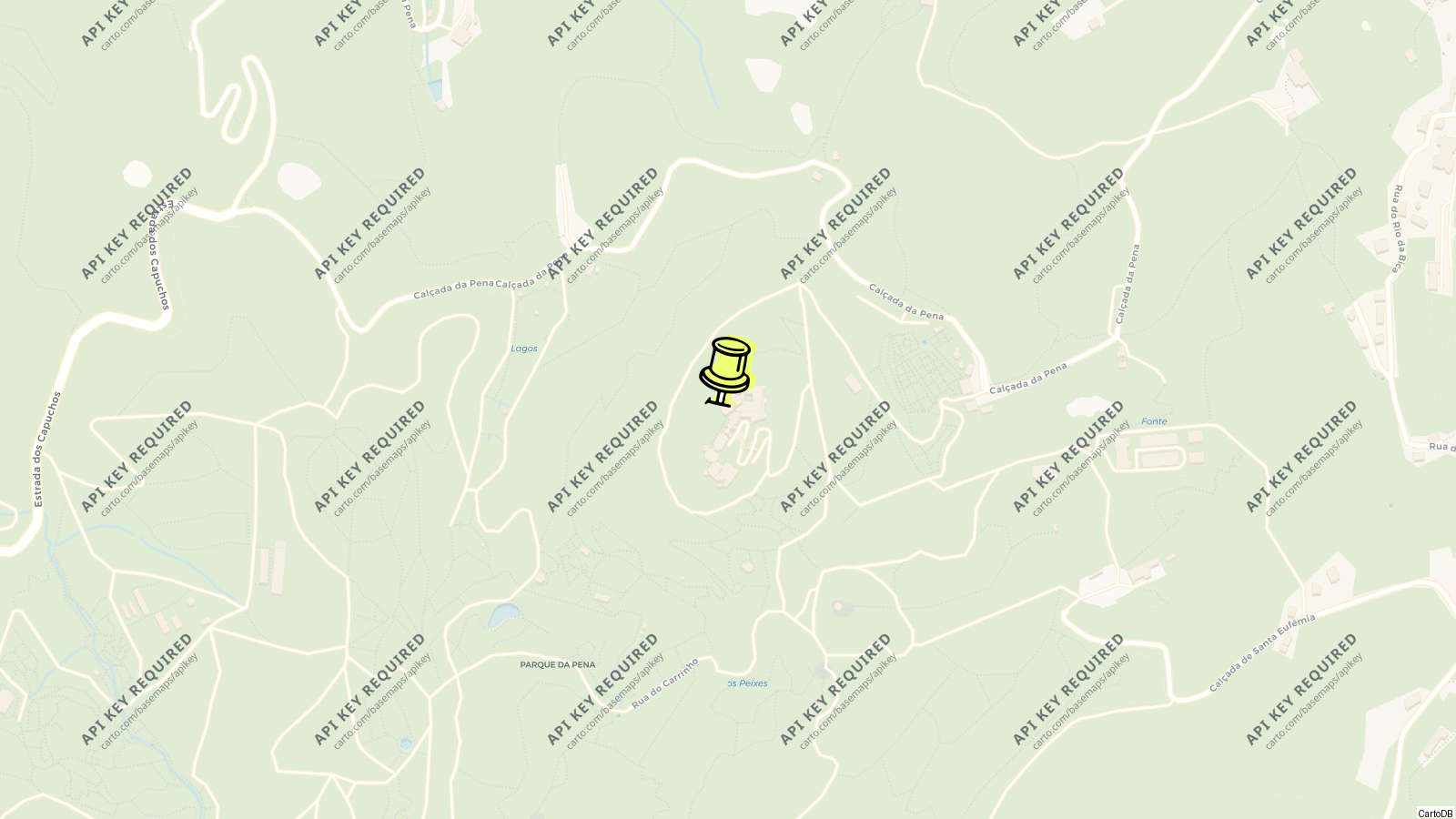
The palace stands in a park of 200 hectares that Ferdinand planted with sequoias, cypresses, ginkgos and Australian tree ferns, laced with paths to lakes, follies and viewpoints; the palace is open daily from 10:00 to 18:00 and the park has its own ticket.
History
A chapel to Our Lady of Pena stood on the hill in the Middle Ages, João II made a pilgrimage to it in 1493, and Manuel I built a small monastery for the Hieronymites, never more than 18 monks, whose chapel with its marble and alabaster altarpiece by Chanterene survived both the lightning strike of the 18th century and the earthquake of 1755 that ruined the rest. The young Prince Ferdinand was struck by the ruins, bought them in 1838 with the Castle of the Moors and the surrounding land, and set Wilhelm Ludwig von Eschwege, a mining engineer and amateur architect who knew the Rhine castles, to turn them into a summer palace; the king and queen intervened in every detail, and Ferdinand himself designed the great window on the main facade.
The palace passed on his death to his second wife, the Countess of Edla, who sold it to King Luís; the state bought it in 1889 and made it a museum after 1910, and Queen Amélia spent her last night in Portugal here before exile. The colours faded to grey over the following decades and were restored only at the end of the 20th century.
Visiting
The palace divides into four: the outer walls with their two gates, one with a drawbridge; the restored monastery with its cloister, refectory, sacristy and Manueline chapel, and the clock tower of 1843; the Arches Yard before the chapel with its wall of Moorish arches; and the new palace with its round bastion and the state rooms. The Queen’s Terrace, with the sundial cannon that fired at noon, is the spot to see the whole building at once.
The interiors were fitted as the summer home of the royal family and were left as they were in 1910: stuccoed and trompe-l’oeil rooms, 19th-century tiles, the Arab Room, the dining room in the old refectory, the queen’s rooms and the king’s bedroom, the great kitchen. Then the park: the Queen’s Fern Garden, the Valley of the Lakes, the Chalet of the Countess of Edla and the High Cross, the highest point of the range.
Tips
- Tickets are timed and sell out; book the palace slot online days ahead in summer and be at the gate for the earliest one.
- Bus 434 from the station loops to the castle and Pena; the queue for it can be an hour in high season, and a taxi or tuk-tuk shared between four costs little more.
- Fog on the summit is common in the morning; if the hill is in cloud, do the town first.
- The walk down through the park to the town takes 40 minutes and is the best part of the day for many; go out by the lower gate.
Nearby
- Castle of the Moors: 10 minutes along the road.
- Chalet of the Countess of Edla: in the park.
- Sintra National Palace: in the town below.
- Cruz Alta: the summit of the range, in the park.
Know this destination? Help us improve
Your local experience is valuable to other travelers.