Sintra National Palace
The medieval royal palace with the two conical chimneys

Essential info
Visit details
Overview
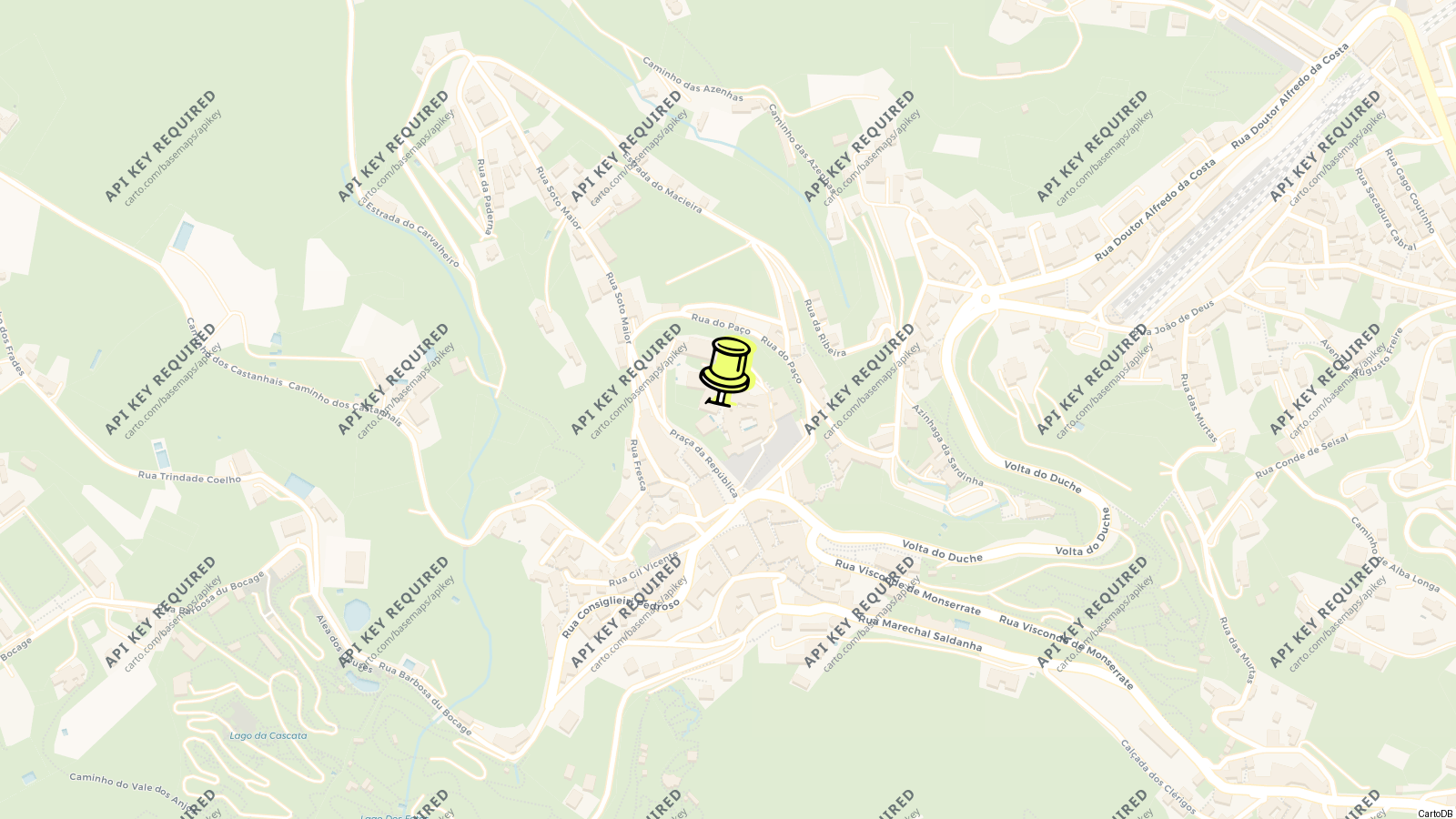
The Sintra National Palace, the Palácio da Vila, is the royal palace in the middle of the town with the two conical white chimneys, the best-preserved medieval royal residence in Portugal, lived in from the early 15th century to the end of the 19th and built mainly by João I from about 1415 and Manuel I between 1497 and 1530 on the site of the palace of the Moorish governors of Lisbon. It is part of the Sintra World Heritage landscape and the one palace of the town that needs no bus.
The rooms are the visit: the Swan Room with its painted ceiling, the Magpie Room, the Arab Room with its fountain, the Coats-of-Arms Room with the 72 shields of the nobility under a domed wooden ceiling, and the kitchens under the two chimneys.
History
The Moors had two castles at Sintra, the hill fortress and this palace below it, first mentioned by the geographer al-Bakri; Afonso Henriques took both in 1147. Nothing Moorish survives, and the earliest part is the chapel, probably built by Dinis in the early 14th century, with a tiled floor laid like a carpet and a Moorish lattice ceiling. João I began the great campaign around 1415 that gave the central courtyard, the facade with its arches and paired windows, the Swan Room, the Magpie Room and the tiled patios; his son Duarte loved the place and described it, Afonso V was born and died here, and João II was acclaimed king in it.
Manuel I added the Manueline wing to the right of the facade, the Coats-of-Arms Room of 1515 to 1518, and tiles made for him in Seville with Mudéjar patterns. Afonso VI, deposed by his brother, was confined here from 1676 until his death in 1683. The earthquake of 1755 brought down the tower over the Arab Room, Maria I redivided the Manueline wing, and the 19th-century kings used the palace often, Queen Amélie drawing it. It became a national monument in 1910 and was restored by Raul Lino in the 1940s with furniture brought from other palaces.
Visiting
The route begins in the Swan Room, the great hall where the ceiling carries 30 painted swans, one for each year of the Infanta Isabel’s age when she married Philip the Good of Burgundy, then the central patio with its tiles and pool, and the Magpie Room, where magpies with the motto “por bem” in their beaks recall João I caught kissing a lady-in-waiting and answering “for the good”; he painted one magpie for every gossiping woman at court.
Upstairs are the Arab Room with its Moorish fountain and 16th-century tiles, the chapel, and the Coats-of-Arms Room, the finest heraldic hall in Europe, with the king’s arms in the centre of the dome, his children’s around it and the 72 noble families on the drum, one shield scraped blank where the Távoras’ hung before their execution for the plot against José I. The kitchens end the visit, two vast rooms of ovens under the chimneys, which are the palace seen from anywhere in the town.
Tips
- This is the palace to do first, at opening, before the day-trippers reach town on the 09:00 trains; it is five minutes from the historic centre bus stop and ten from the station.
- Buy the combined ticket for Sintra sights online if you are doing Pena too; the queue here is short but the Pena slot is the one to secure.
- The palace is not step-free and the Coats-of-Arms Room is up two flights.
- The square in front is where the tourist office, the cafés and the bus stops are; lunch is better a street back.
Nearby
- Quinta da Regaleira: 10 minutes’ walk.
- Castle of the Moors: 40 minutes uphill or bus 434.
- Pena Palace: by bus 434.
- Sintra station: 10 minutes.
Know this destination? Help us improve
Your local experience is valuable to other travelers.