Alfama
The oldest quarter, a maze of stairs, miradouros and fado

Overview
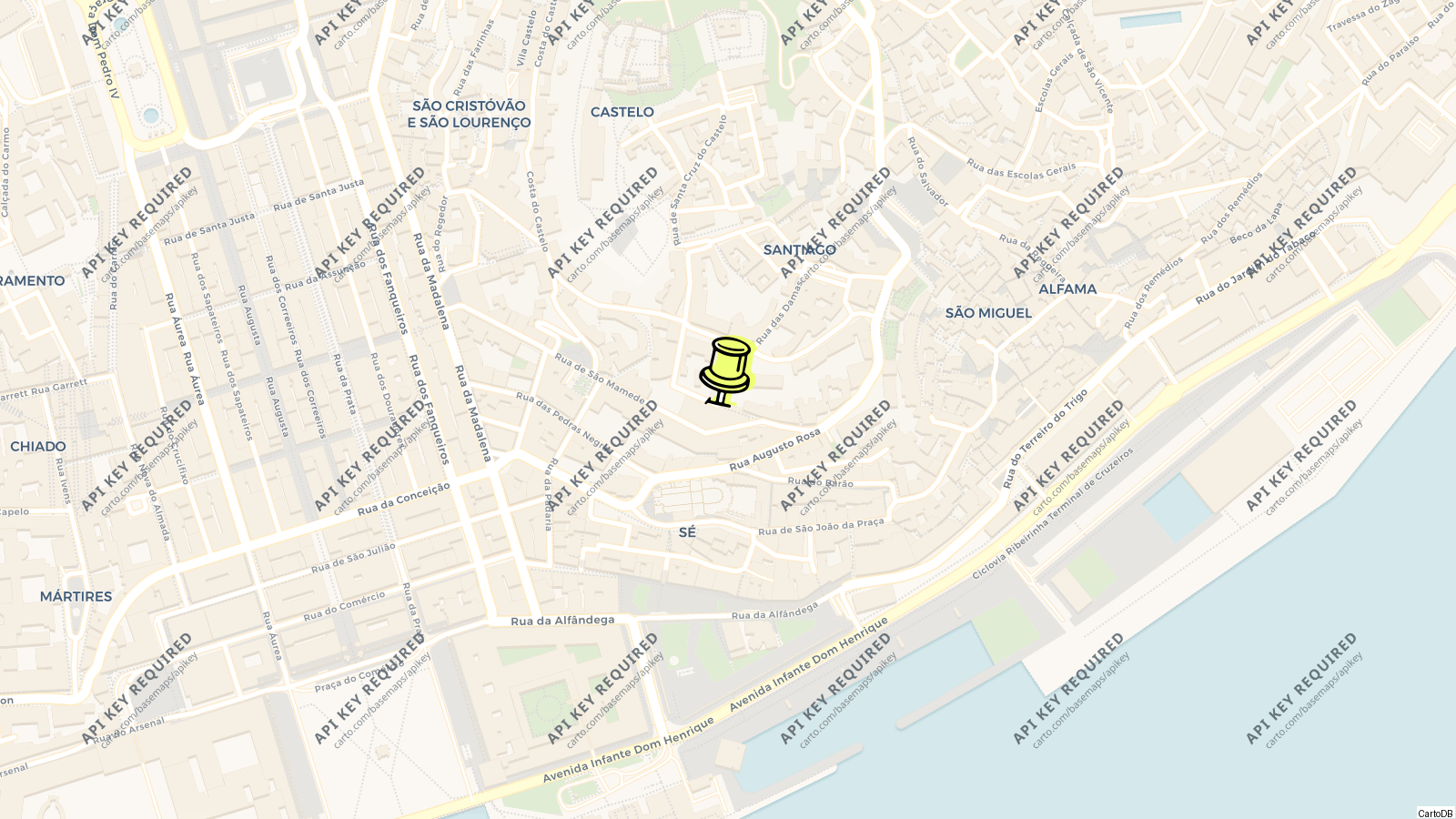
Alfama is the oldest quarter of Lisbon, the slope between the Castle of São Jorge and the Tagus that was the whole of the Moorish city, and the one part of the centre the 1755 earthquake left standing; the name is the Arabic al-hamma, the hot springs, and the plan is still a maze of stairways, alleys and small squares between the cathedral and the river. It was the district of fishermen and the poor for centuries and remains, for all the renovation and the fado houses, a place where people live.
There is no single sight; the quarter is the sight. The Cathedral stands at its western edge, the miradouros of Santa Luzia and Portas do Sol on the tram route above it, the National Pantheon and São Vicente de Fora on its eastern hill, and the Feira da Ladra flea market between them on Tuesdays and Saturdays.
History
Under the Moors Alfama was the city, and only later did Lisbon spread west into what became the Baixa; after 1147 the wealthy gradually moved out and the quarter was left to fishermen and the poor, a condition it has kept into the present. The earthquake of 1755, which flattened the Baixa, spared the hill, which is why the streets keep their medieval pattern, with the remnants of the Moorish walls under the Miradouro de Santa Luzia.
Its churches are its landmarks: the 12th to 14th-century cathedral to the west, the Convento da Graça of the 18th century by the castle, the Mannerist monastery of São Vicente de Fora of the late 16th to 18th centuries where the Braganza kings lie, and the Baroque Santa Engrácia, made the National Pantheon in the 20th century. Since 2012 Alfama has been part of the parish of Santa Maria Maior.
Visiting
Take the tram up from the Baixa or walk from the cathedral; the tram stops at the Miradouro de Santa Luzia, a free terrace over the rooftops and the river beside the church of the same name, and at the Portas do Sol a few steps on. Next to Santa Luzia is the Museum of Decorative Arts in a 17th-century mansion. From there wander downhill: the lanes below the castle towards the church of São Miguel and Santo Estêvão, the stairways of the Beco das Cruzes and the Rua de São Pedro, the small squares with a fountain and a grocer, and the riverside at the bottom where the cruise terminal now stands.
Uphill and east are the Campo de Santa Clara, where the Feira da Ladra spreads on Tuesday and Saturday from 06:00 to 17:00, and the two great churches, São Vicente de Fora with its Braganza pantheon and Santa Engrácia with its dome and roof terrace. The fado houses are in the lanes at the foot of the hill; they serve dinner with the singing and start late.
Tips
- Go early; by mid-morning the tram is full and the lanes around Santa Luzia are a tour-group corridor. Evening, when the fado starts, is the other Alfama.
- Wear shoes for cobbles and stairs; there is no flat route through the quarter.
- The Feira da Ladra has been a market since the 12th century and has carried the name since the 17th; watch your pockets, as the name warns.
- The Santo António festival in June turns every square into a grilled-sardine party; book a room well ahead for those nights.
Nearby
- Lisbon Cathedral: at the western edge.
- Castle of São Jorge: above the quarter.
- National Pantheon: on the eastern hill.
- National Tile Museum in the Madre de Deus convent: 2 km east.
Know this destination? Help us improve
Your local experience is valuable to other travelers.