Lisbon Cathedral
The Sé of 1147, a Romanesque fortress at the foot of Alfama

Visit details
Overview
Lisbon Cathedral, the Sé, is the oldest church in the city, begun in 1147 on the site of the main mosque after Afonso Henriques and the crusaders took the city, with the English crusader Gilbert of Hastings as its first bishop; it has survived every earthquake since, been rebuilt after each and stripped in the early 20th century to look Romanesque again, and stands like a fortress with two crenellated towers at the foot of Alfama. It is the seat of the Patriarch of Lisbon and a National Monument since 1910.
The Romanesque nave with its gallery and rose window, the Gothic ambulatory with three 14th-century tombs, the cloister with its excavations of the Roman and Moorish city, and the treasury are the visit; hours are 09:00 to 19:00 Tuesday to Saturday and 09:00 to 17:00 on Sunday and Monday.
History
The first building went up between 1147 and the early 13th century in late Romanesque, and the relics of St Vincent, Lisbon’s patron, were brought here from the Algarve. Dinis added a Gothic cloister at the end of the 13th century; Afonso IV replaced the apse with a Gothic main chapel and ambulatory as a royal pantheon; the merchant Bartolomeu Joanes built his funerary chapel by the entrance around 1300; and in 1498 Queen Leonor founded in a cloister chapel the brotherhood that became the Santa Casa da Misericórdia. During the crisis of 1383 the crowd, suspecting the bishop of dealing with Castile, threw him from the north tower.
Earthquakes in the 14th and 16th centuries did damage, and that of 1755 destroyed the main chapel with the royal tombs, ruined the cloister and burned many chapels; the main chapel was rebuilt in neoclassical and Rococo style, and the restoration of the early 20th century removed the neoclassical dressing to give the church its present medieval look. Excavations in the cloister from 1990 found a Roman street with shops and a sewer, Visigothic remains and the red walls of the mosque, which the culture minister ordered preserved in 2020.
Visiting
The west front is Romanesque: two towers, battlements, a portal with carved capitals and a rose window rebuilt from fragments in the 20th century. The nave is barrel-vaulted with a triforium gallery above the aisles and lit by the rose windows and the lantern over the crossing, the same plan as the Old Cathedral of Coimbra of the same years.
The ambulatory behind the main chapel is the best Gothic in the building, a ring of radiating chapels with a clerestory that floods it with light, and holds the mid-14th-century tombs of Lopo Fernandes Pacheco, sword in hand and a dog at his feet, his wife Maria de Vilalobos reading her Book of Hours, and an unnamed princess; one chapel keeps a Romanesque iron gate. The Bartolomeu Joanes chapel by the door has his tomb and a Nativity crib by Machado de Castro. The cloister, entered separately, is where the archaeology is; the St Vincent Panels that once hung in the ambulatory are now in the Museum of Ancient Art.
Tips
- The church itself is free; the cloister and treasury are ticketed and the cloister is worth it for the dig.
- Mass times close parts of the building; Sunday morning is for worship, not sightseeing.
- The tram stops at the door and so do the tour groups; the ambulatory is quiet when the nave is not.
- Look up on the way out: the tower the bishop was thrown from is the one on the left.
Nearby
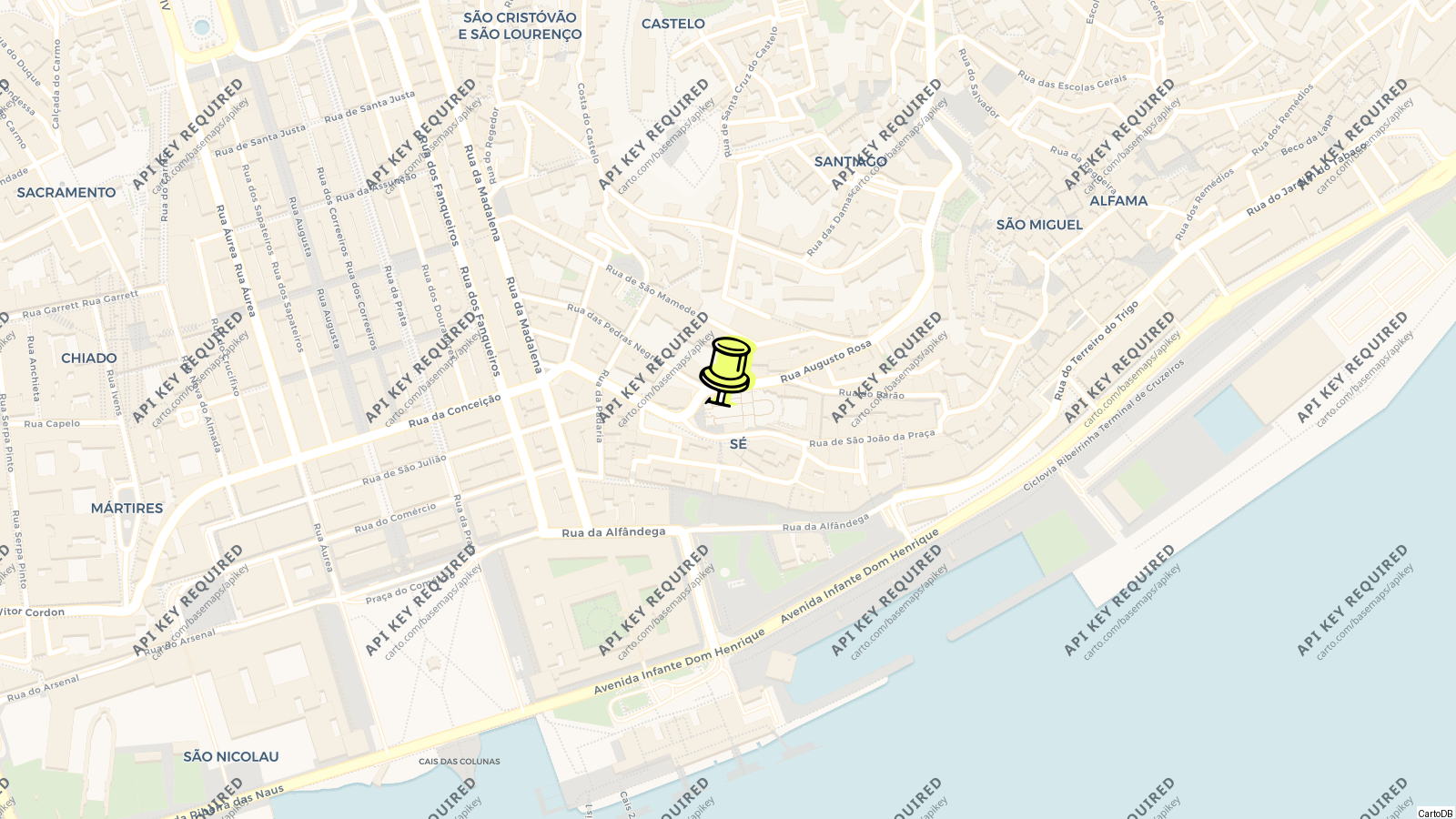
- Alfama: begins at the east end.
- Santo António church, the saint’s birthplace: next door.
- Castle of São Jorge: 10 minutes uphill.
- Praça do Comércio: five minutes down.
Know this destination? Help us improve
Your local experience is valuable to other travelers.